Dozens of residents, students, scientists, and community leaders gathered at the Guam Museum in Hagåtña for Our Ocean, Our Voice: A Community Workshop for Comments on Deep Sea Mining, a collaborative event hosted by the Office of the Governor of Guam and Lt. Governor, and facilitated by the University of Guam Center for Island Sustainability and Sea Grant and Guam Green Growth aimed to support public engagement in a critical federal decision affecting the region’s marine environment.
The workshop aimed to equip attendees with the information and tools needed to submit effective comments on the Bureau of Ocean Energy Management’s proposal to open federal waters near the Marianas Trench, Guam, and the Commonwealth of the Northern Mariana Islands to deep-sea mining. The public comment period closes at 2:59 PM Guam time on Tuesday, January 13, 2026.
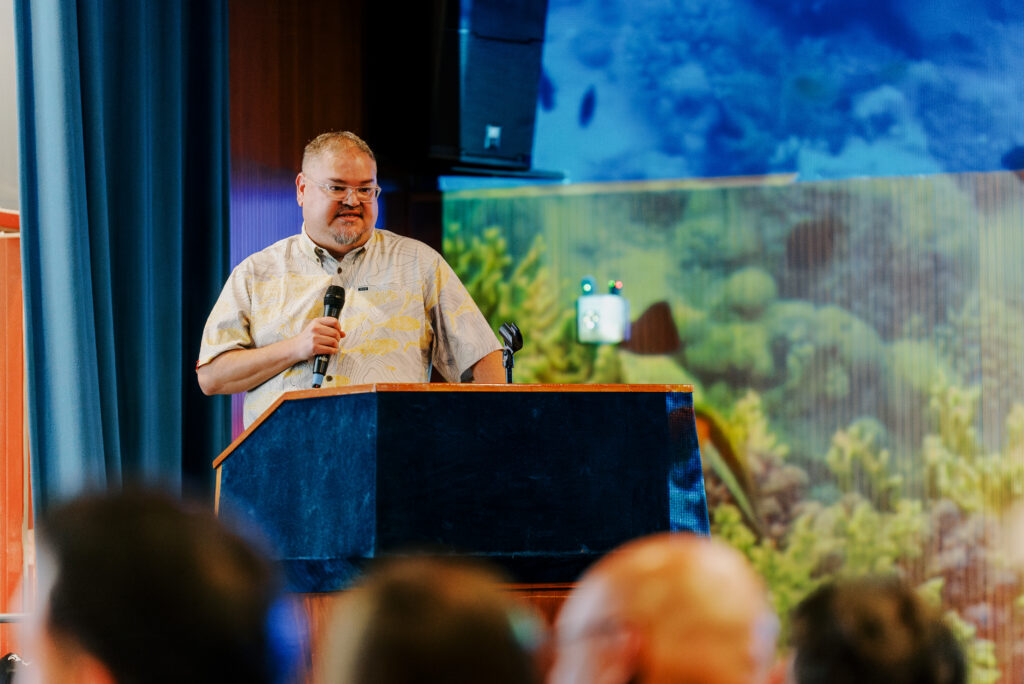
Governor Lou Leon Guerrero opened the event with remarks, noting that while the discussions on federal leasing of lands for seabed mining have left the people of the Marianas out, together the people of Guam and the CNMI must make their voices heard.
“Things are moving without us being at the table,” said Leon Guerrero. “With us being the most impacted and having the burden of negative consequences of seabed mining, we need to, and as a united front, make a statement.”
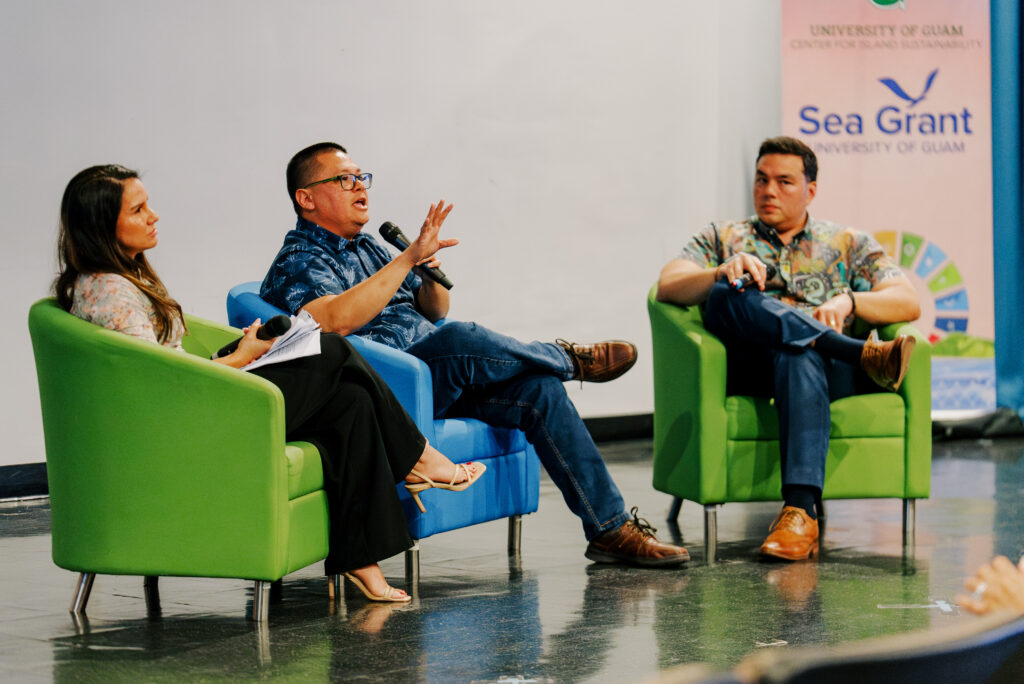
Subject matter experts from the Pacific took to the stage to provide insight and education on deep-sea mining. Jeffrey Drazen Ph.D. from the University of Hawaii in Manoa, superintendent of the Mariana Trench Monument Sean MacDuff Ph.D., and Blue Ocean Law’s Isa Ariolla Mook Ph.D. and Julian Aguon J.D presented on various aspects of the potential impacts of the mining process.
Drazen discussed the various types of potential mining and the effects that they could have on the seabed ecosystems, home to many species that could see long lasting destruction. He said, “The largest interest today are in seamount crusts and manganese nodules [to extract cobalt and nickel]. This is to generate lithium ion batteries. All of us, if you have a cellphone in your pocket, you have a little bit of nickel and a little bit of cobalt with you because that’s a lithium NMC battery. So that is what the interest in those metals is for. Terrestrial sources of these exist, but are becoming harder to access because of political issues and other things.”
Lieutenant Governor Joshua Tenorio called upon the community to make their voices heard.
“Our ocean is not for sale, and we have this responsibility because we’re living today in 2026 to fight to do whatever we can to protect this for everybody after us. That’s our responsibility as CHamorus and Guamanians and Pacific Islanders and people that actually care about what’s happening,” said Tenorio.
Aguon and Mook were very clear on their concerns regarding the entire process.
“The Bureau of Ocean Energy Management (BOEM), the federal agency at issue, are operating under the claimed authority under a new statute: the Outer Continental Shelf Lands Act (OCSLO), but the problem is this act has been in operation for seven decades in only one way: oil and gas leases,” said Aguon. “That’s a problem because they’re basically wholesale cutting and pasting this entire legal framework and then applying it to a frontier activity to deep seabed mining activity and exploitation.”
MacDuff says that making the connection between science, our culture and the people is a big part of why protecting sites like the Marianas Trench is so important and a big part of the goals of the trench management plan.
“Our job is to connect the stories that Dr. Drazen finds when he goes out and does all these expeditions. We tell these stories on their behalf to our communities,” said MacDuff. “We try to provide opportunities for tourism, recreation, economic ventures and recovery, [in addition to] protecting threatened and endangered species. These are our high level goals that are connected throughout our management plan.”
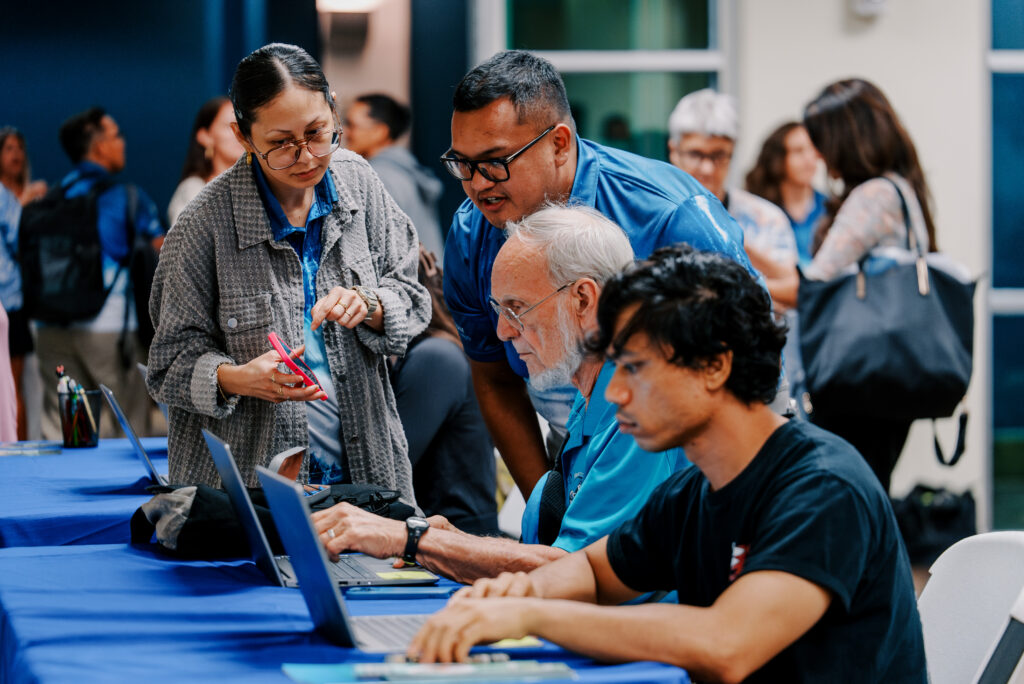
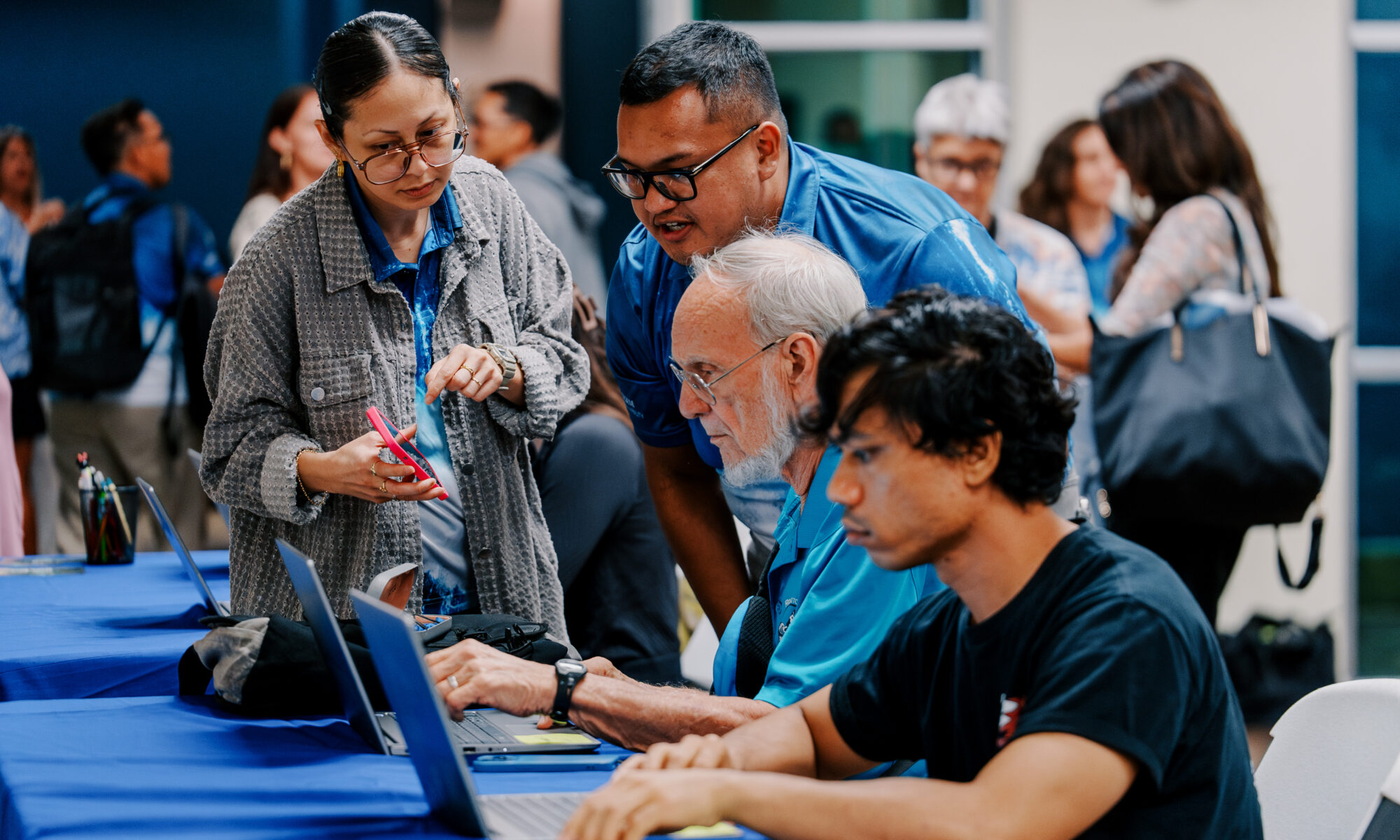
Following the presentations, the support workshop began with computer devices set up for commenters. Attendees were also provided physical postcards for comments to be written on and mailed in by organizers.
Comments can be submitted by any member of the public including diaspora who may currently reside off-island. Those who want to submit comments can do so by visiting https://www.regulations.gov and accessing docket BOEM-2025-0351-0001.