

CIS2026 FRIDAY: Rethinking ocean waste in the Pacific
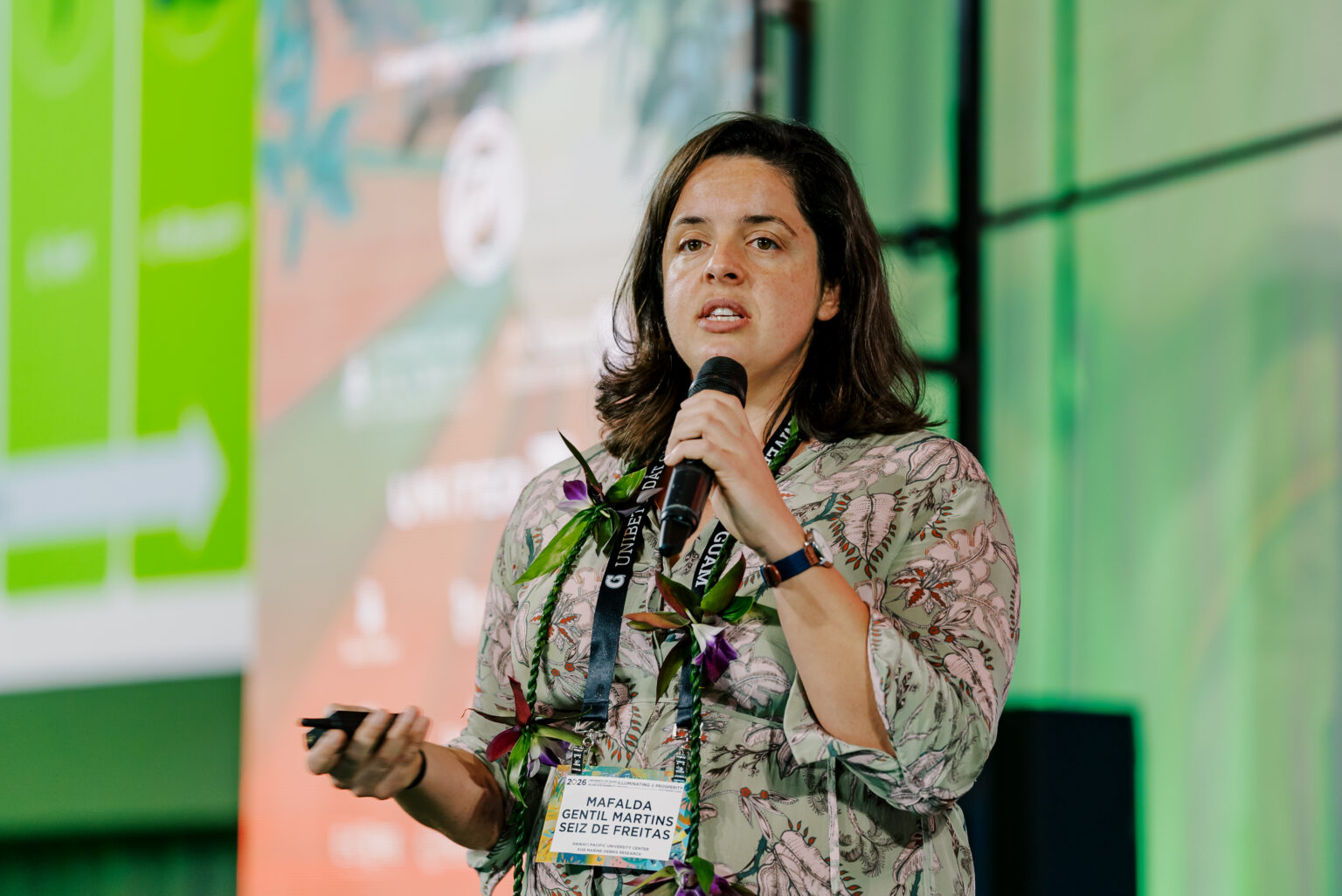
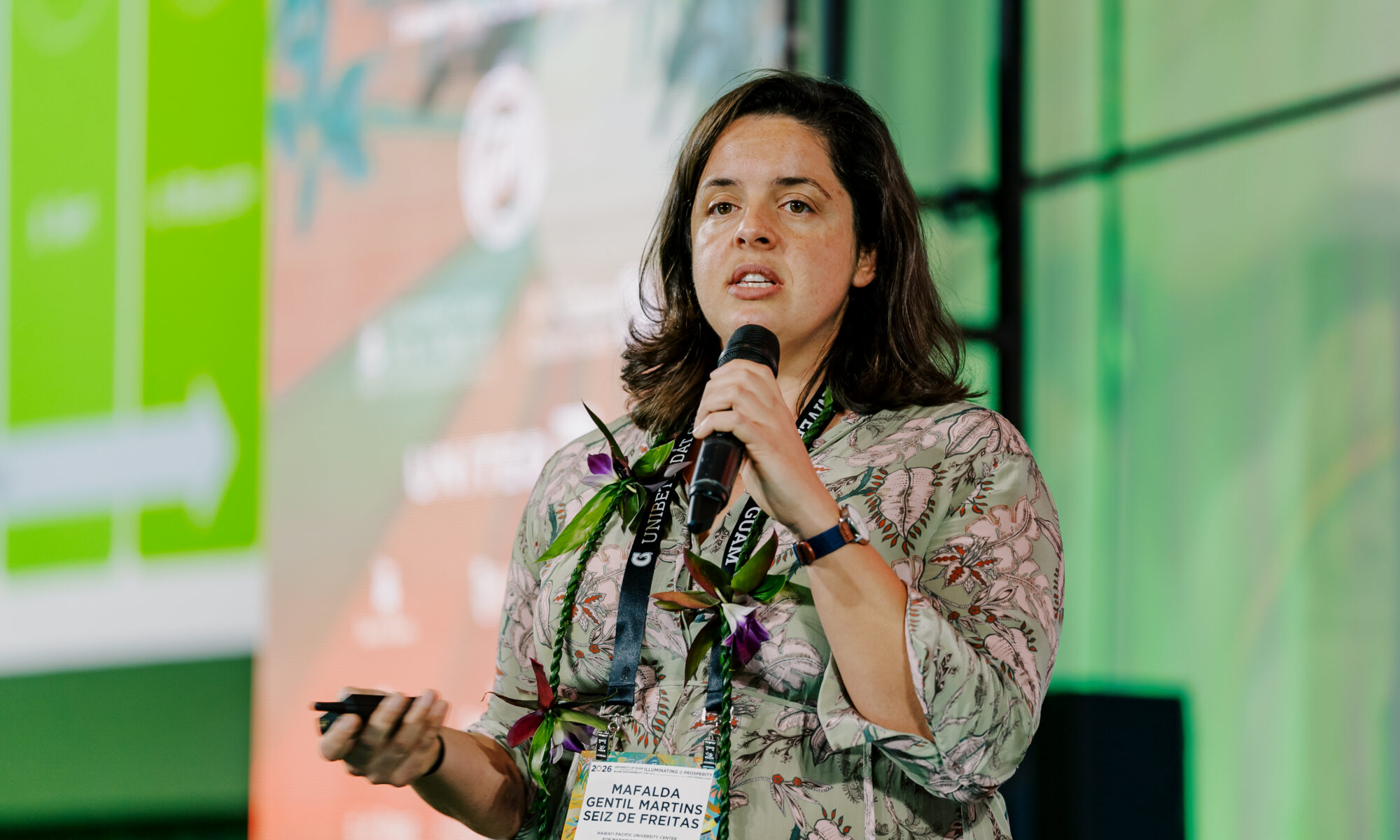
At the 17th Conference on Island Sustainability, marine biologist Mafalda Gentil Martins Seiz de Freitas delivered a presentation grounded in urgency and innovation, drawing directly from her work addressing marine debris across the Pacific.
De Freitas, megaplastics program director at Hawaiʻi Pacific University Center for Marine Debris Research, began by describing the essential role of oceans in sustaining life and livelihoods. “A healthy ocean is fundamental to the life on earth. It sustains millions of jobs worldwide, it feeds billions of people worldwide, and it renegades our climate,” she said.
At the same time, she emphasized the mounting pressures facing marine ecosystems. “Our oceans are at risk and under increasing stress,” she said, pointing to overfishing, climate change, and widespread pollution as key drivers.
She said these global challenges are especially visible in the Hawaiian Archipelago, where geography makes the islands particularly vulnerable. Due to its proximity to the North Pacific Garbage Patch, Hawai‘i experiences a constant influx of debris carried by ocean currents.
“Contrary to popular belief, the North Pacific Garbage Patch is not a physical island that you can live on,” de Freitas explained. “It is more of a soup that wobbles back and forth between the Hawaiian islands and the U.S. mainland.” As this “soup” shifts, the islands act as a natural trap, accumulating large volumes of waste along their shores.
“What does this look like when it reaches Hawaii? It looks like this. Huge accumulations of nets, lines, hard plastic mesh,” she said. Over time, this material breaks down further: “If you’re to go to any wooded beach on the Hawaiian islands, you will find microplastic pollution in the sand.”
The consequences extend beyond environmental damage. Marine debris impacts tourism, fisheries, and community safety. “Nobody wants to go to a beach that’s filled with marine debris or just not clean and risk becoming entangled themselves in marine debris,” she said.
Disposal presents another major challenge. “In Hawaii, there is no commercial plastic recycling at all,” de Freitas noted. “Everything gets landfilled or incinerated.” For island communities, she added, expanding landfills is not a viable long-term solution.
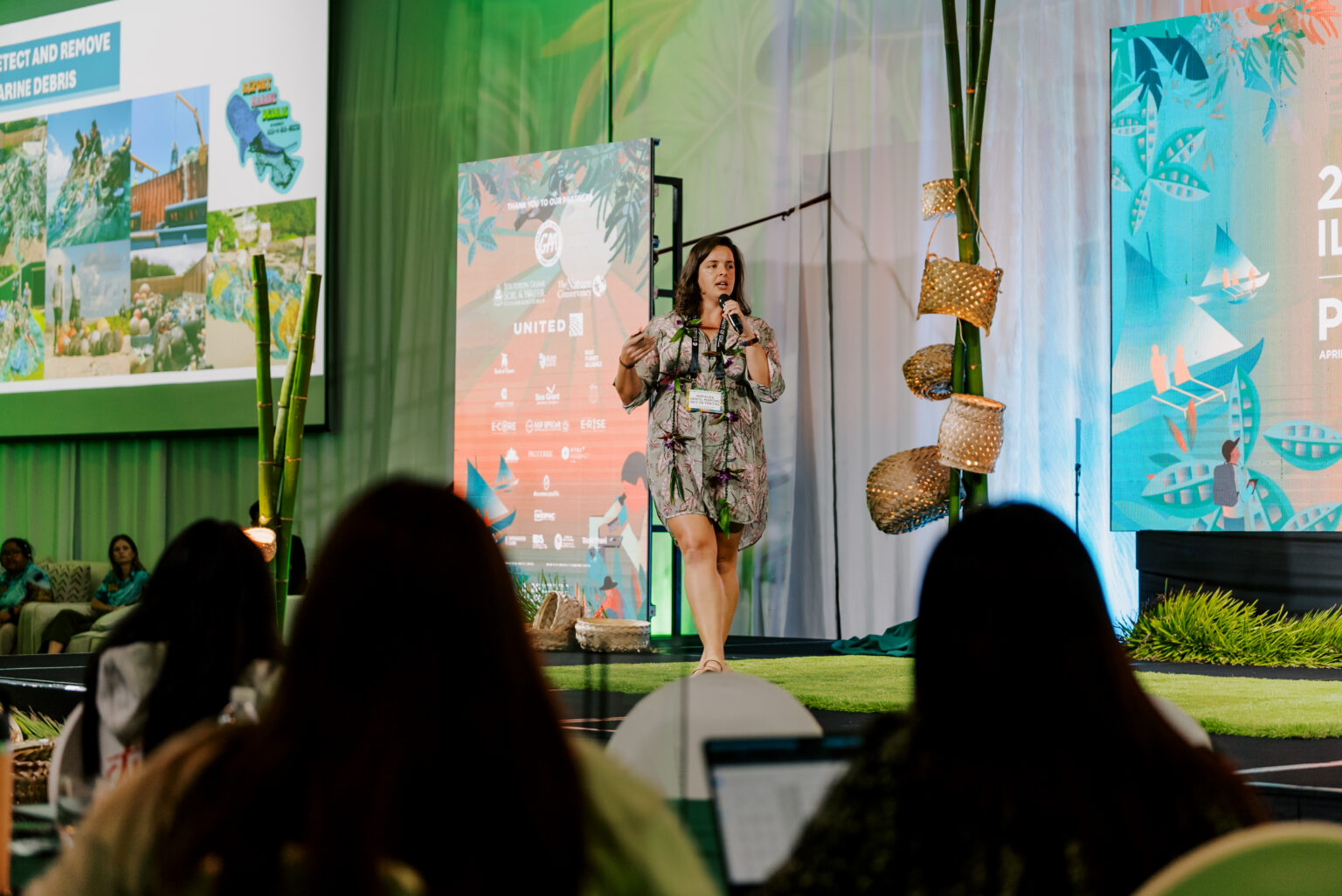
In response, de Freitas and a coalition of partners launched a multi-stage initiative supported by the Hawaii Sea Grant. The effort spans detection, removal, processing, and research, all aimed at both managing and preventing marine debris.
One key component is a fishing gear bounty program that incentivizes recovery efforts at sea. “Since the beginning in 2022, we have removed over 191,000 pounds from the Pacific Ocean and intercepted it, preventing it from washing up on the reefs and our shorelines,” she said.
Once debris is collected, the next step is understanding its origins. “We need to sort it to understand what is it? Where does it come from? What kind of gear is it?” she explained. Through detailed analysis, her team found that “over 80% of what washes up on our shores is direct fishing gear,” much of it from outside Hawai‘i.
“If you know the nets and you know the plastic, then you can know the source and type of fisheries that uses them,” she said, describing how material composition helps trace debris back to specific fishing practices and regions.
But the work does not stop at identification. A central goal of the initiative is to transform waste into usable materials, creating a circular economy model for island communities.
“So how can we now use it for good? How can we turn this trash into a local treasure that has copies for our community?” she asked.
Among the solutions being tested are infrastructure applications. “We have incorporated our drone fishing gear, HDPE tool nets, into asphalt road products,” she said, describing pilot projects that integrate recycled plastics into road construction. Another effort focuses on converting debris into plastic lumber for uses like fencing and decking.
“These trials… just goes to show that it is possible to make a circular economy with marine debris at the source,” she said.
Beyond innovation, de Freitas emphasized the broader implications for island resilience and self-sufficiency. “As we talk about resilience and prosperity… being able to empower local communities to use their waste for local goods, their infrastructure, is really important,” she said.