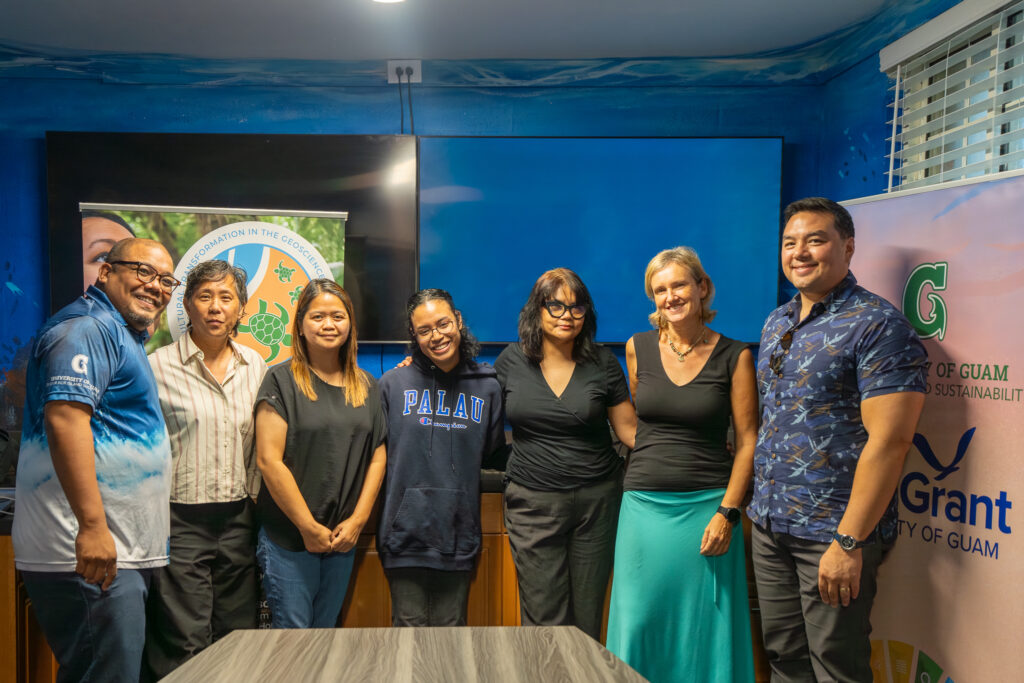
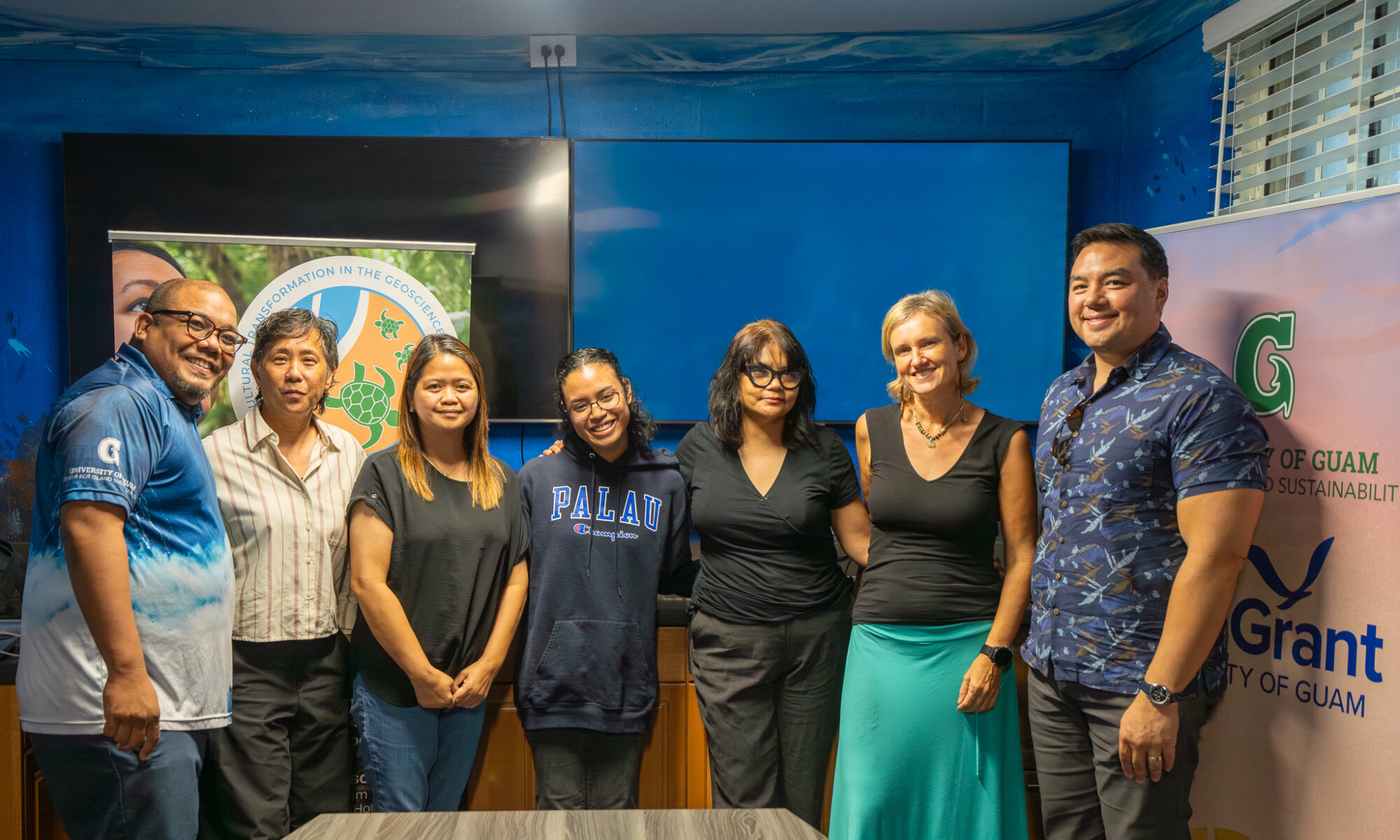
True science communication also honors the human stories behind the programs, behind research. Serving as a mentor for the Navigating Home program this year gave me a renewed appreciation for this truth. While I have guided reporters and community educators in the past, mentoring Kira Reklai—a fellow with a background in early childhood education—for Navigating Home was a uniquely rewarding journey.
Drawing from her experience, Kira brought a thoughtful pedagogical perspective to her work that immediately connected with my own roots in community development and media. Rather than starting from scratch, our mentorship felt like a meeting of minds; we were instantly aligned in viewing science communication as a fundamentally people-centered practice.
I accompanied Kira on most of her field interviews, but a clear highlight was our visit with Mr. Tony Naputi, one of the inaugural recipients of our very own Community Backyard Aquaponics System (CBAS). I was so proud to watch Kira’s story expand far beyond a standard report on a program. Over a wonderful meal prepared by the Naputi family, Kira learned how the system had integrated into their daily lives. What started as a hobby Mr. Naputi picked up post-retirement now complements the existing vegetable garden on his property. Maintaining the CBAS set-up also developed into a shared routine between family members with an impact that is as practical as it is recreational.
Kira also discovered how naturally community-building came to Mr. Naputi. She documented how he actively maintains his system through local trading and how he regularly speaks to subsequent program cohorts to share his insights, advising newcomers to listen closely to their systems and to “not take it for granted, but take advantage of it.”
From our one-on-one story planning sessions to our on-the-ground reporting, Kira and I continuously engaged in conversations about the core framework of our work—examining not just how we create science communication products, but why we structure them in ways that truly respect and serve our communities.
Before her fellowship concluded, Kira and I collaborated on creative concepts for CHalan Deskubre, including an interactive game designed for kids. She also took the initiative to visit the Yo’Åmte (traditional healers), immersing herself in their stories and learning firsthand about the medicinal properties of local plants. To top off her journey, she documented her experience in reflection posts (A Day In The Life) on social media, stepping into the role of both storyteller and subject.
Which brings me to a personal reflection: I am really grateful for this mentorship. I fondly remember bonding over a Filipino meal (adobo and banana lumpia) and post-workshop snacks with Kira, exchanging personal stories of growing up in our respective communities, and sharing our perspectives as a Pinay and a Palauan. Through the commonalities in our stories, I was reminded that we as communicators are molded by our lived experiences. To be truly effective, we must learn from one another—and in those moments, the storyteller becomes the subject, and the mentor truly becomes the mentee.