

Fishing is who we are. Can it stay that way?
By Leilani Sablan Naden, program lead for Guihan for Guåhan
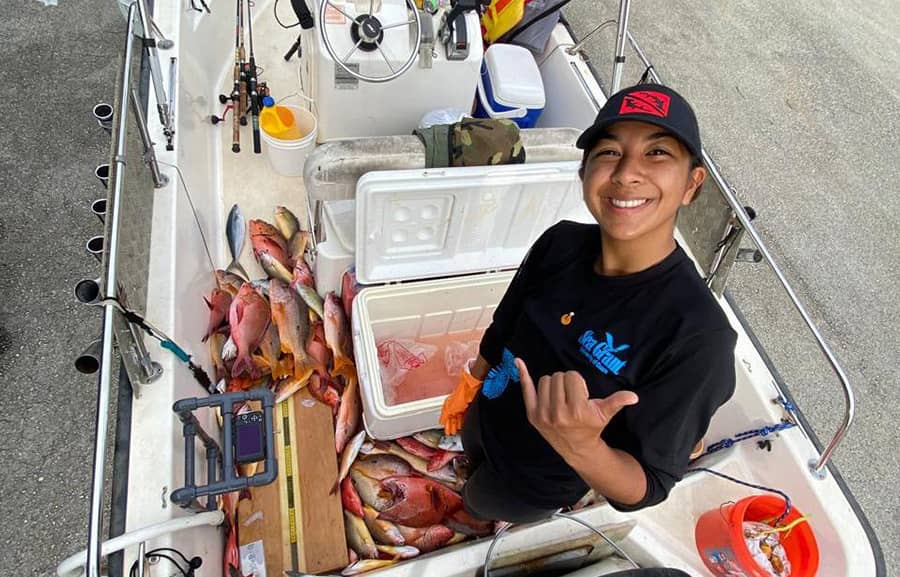
Ask a fisher about fishing in Guam today, and you may hear a familiar sentiment: it just isn’t like it used to be. Trips that once brought home a cooler full of fish may now require more time and effort for a smaller catch. For many, these changes are not abstract scientific observations. They are lived experiences, passed through conversations at the boat ramp, around the dinner table, and among generations of fishers.
Our fisheries are shaped by many factors, and understanding their changes requires us to look at both the pressures they face and the ways we manage them. In 2020, Guam enacted a ban on SCUBA spearfishing, marking an important step toward reducing fishing pressure on reef fish. Since then, some fishers have observed encouraging changes in certain species and fish sizes. Yet recovery has not been uniform across all species, and the experiences of fishers continue to vary. The progress is worth recognizing, but it also raises an important question: What more can we do to sustain the fisheries that sustain us? That question is at the heart of the Guam Coastal Fisheries Management Plan (FMP), an effort led by the Guam Department of Agriculture to develop a path toward more sustainable fishing while recognizing the needs of the people who depend on it.
Guam’s fisheries are central to our island’s food security, cultural identity, and way of life. Fishing connects families to the ocean and carries forward knowledge built over generations. But our marine resources are not limitless. When fishing pressure exceeds what populations can sustain, the consequences can extend beyond individual catches, affecting the availability of fish for our communities and future generations.
The challenge is not simply to protect fish. It is to find ways to sustain healthy fish populations while preserving meaningful opportunities for people to fish, feed their families, practice their traditions, and share their knowledge. That means considering how we fish, which species we harvest, and whether our current practices can remain sustainable over time.
Developing a fisheries management plan requires difficult conversations. Proposed measures, including species protections, size limits, and gear-based restrictions, can affect people differently depending on how, where, and why they fish. For some, regulation may feel like a restriction on a tradition that has always been part of island life. For others, it may represent an opportunity to help rebuild the resources they have watched change over the years.
This is why collaboration matters. The FMP process brings fishers, scientists, and natural resource managers into the same conversation to develop management approaches grounded in both scientific information and the knowledge of the people who fish these waters. Through community discussions and public engagement, the goal is to develop a plan that is not only ecologically responsible, but also practical, culturally informed, and responsive to the needs of Guam’s fishing community.
At its core, fisheries management asks us to consider a difficult trade-off: are we willing to place some limits on what we take today to help ensure that fish remain available tomorrow? A management plan cannot promise that every measure will be easy or that every stakeholder will agree. But doing nothing is also a choice, one that carries consequences of its own.
We cannot know exactly what Guam’s fisheries will look like decades from now. We can, however, make deliberate choices about the future we want to work toward. A future where our children and grandchildren can experience the excitement of a good catch, learn from experienced fishers, and continue traditions that connect them to the ocean is worth planning for today.
Ultimately, the Guam Coastal Fisheries Management Plan is about more than regulations. It is about deciding what we want to preserve and recognizing that preserving it may require us to change. If we want fishing to remain part of Guam’s future, we must be willing to have those conversations, consider the evidence, listen to one another, and work together toward a fishery that can continue providing for generations to come.