

Shelton: Circularity is already here. Let’s tap into it.
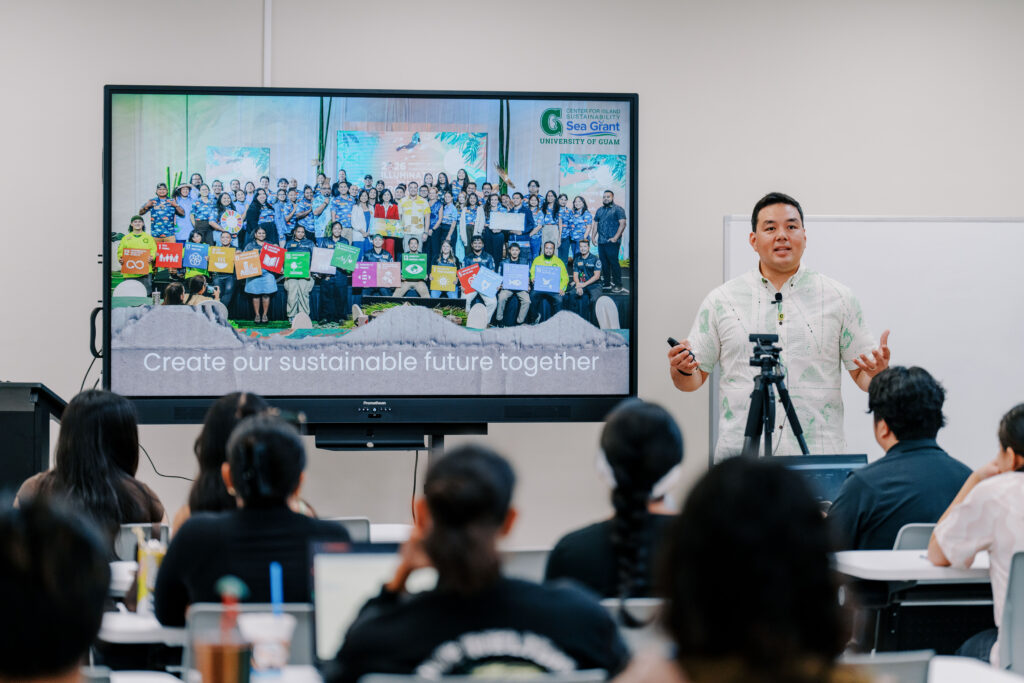
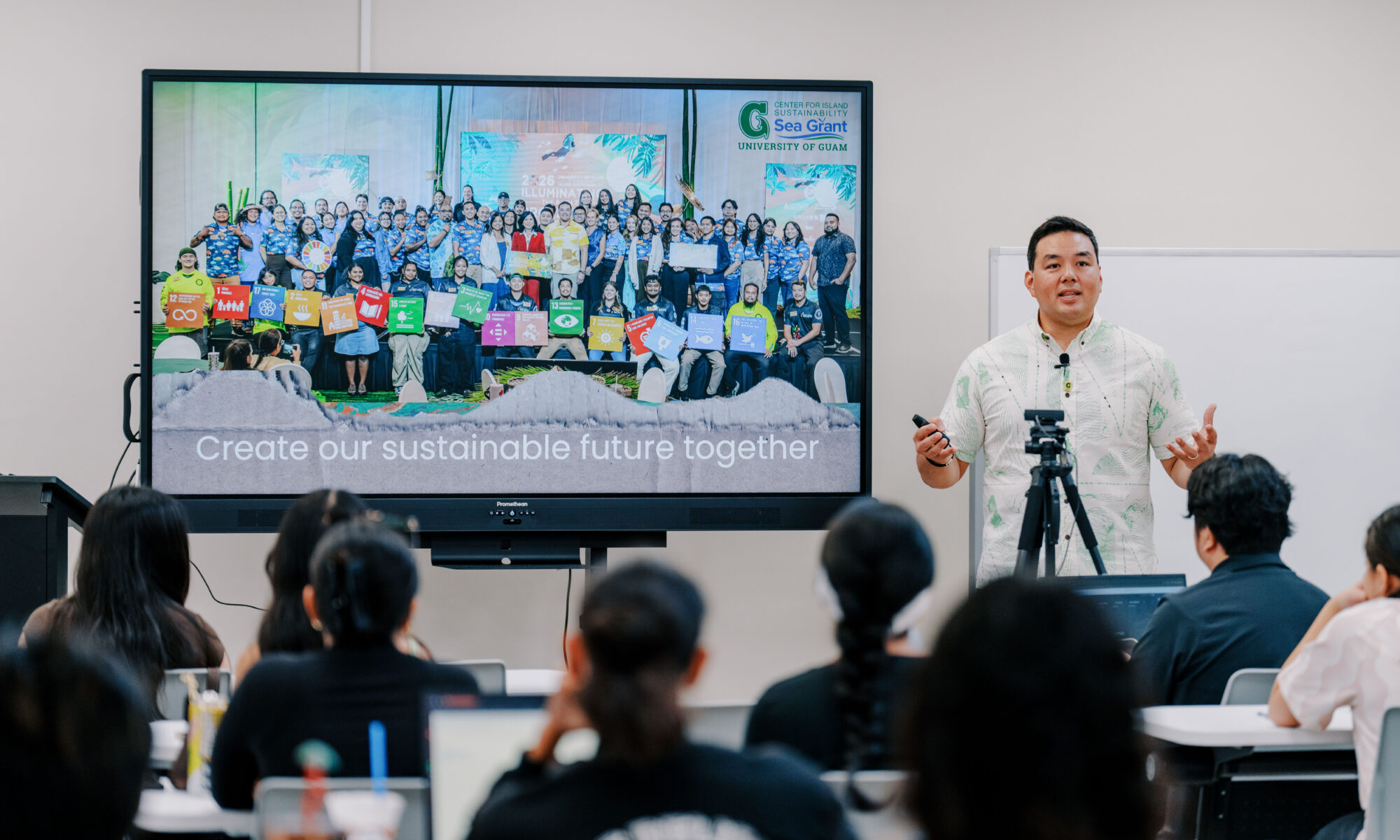
Speaking to students at the University of Guam School of Engineering in a talk titled “Circular Economy 101: Advancing Circularity in Guam,” Austin Shelton, Ph.D., director of the UOG Center for Island Sustainability and Sea Grant, argued that Guam does not have to invent a circular economy, only return to one, and that the engineers of tomorrow will help rebuild it.
Long before “circular economy” became a term, the CHamoru people lived in it. For 3,500 to 4,000 years, they thrived on Guam using what the island and ocean provided, Shelton said. Early explorers marveled at their ingenuity, especially their swift flying proas, most of which colonization later destroyed. Traditional navigation survived, and so did the know-how. Shelton urged the students to help the island move beyond that interruption.
Shelton’s own start reflects the principles of reuse and recycling and their connection to conservation. As a child, he rinsed out glass soda bottles and reused them to send messages out to sea, gaining pen pals in the Philippines. In high school, he built an ocean-current generator from junkyard parts to power his family’s home, winning a science fair award and scholarships. Guam has over 375 coral species, but many reefs are dying, he said, and saving them means tackling climate change, storms, and rising seas together. His shorthand for sustainability is “living on our island like we intend to stay here.”
Today, he said Guam runs on a line instead of a loop. It imports over 90% of its food and goods, and Typhoon Pongsona in 2002 and Typhoon Mawar in 2023 exposed the risk through fuel shortages. At the other end, Guam sends about 1.2 million pounds of waste to its landfill daily; roughly a quarter of it is plastic waste.
According to Shelton, the circular economy replaces “take, make, use, throw away” with a loop that reuses waste, keeps materials in use and regenerates nature. Shelton said, “We’ve got to stop looking at all of this stuff as trash and start thinking about it as resources.” He called it part of an economic opportunity for Guam, as tourism lags and military spending may not last.
Closing that loop, he explained, rests on three pillars:
- Produce locally: Guam committed to 100% renewable energy by 2045, the first U.S. territory to do so. Community gardens, tree planting (including drone seeding) and backyard aquaponics systems boost food security, and a revamped Fadian hatchery will raise more local fish.
- Prepare for a green economy: The Guam Green Growth (G3) Conservation Corps has trained over 150 adults in skills from aquaculture and invasive species control to solar installation. The Navigating Home program addresses brain drain and pays graduates’ flights home and a year of salary.
- Circularize: Local businesses already show how, from banana-stalk paper to machetes forged from salvaged vehicle springs to products such as refurbished plastic desks made by G3 Makerspace and Innovation Hub.