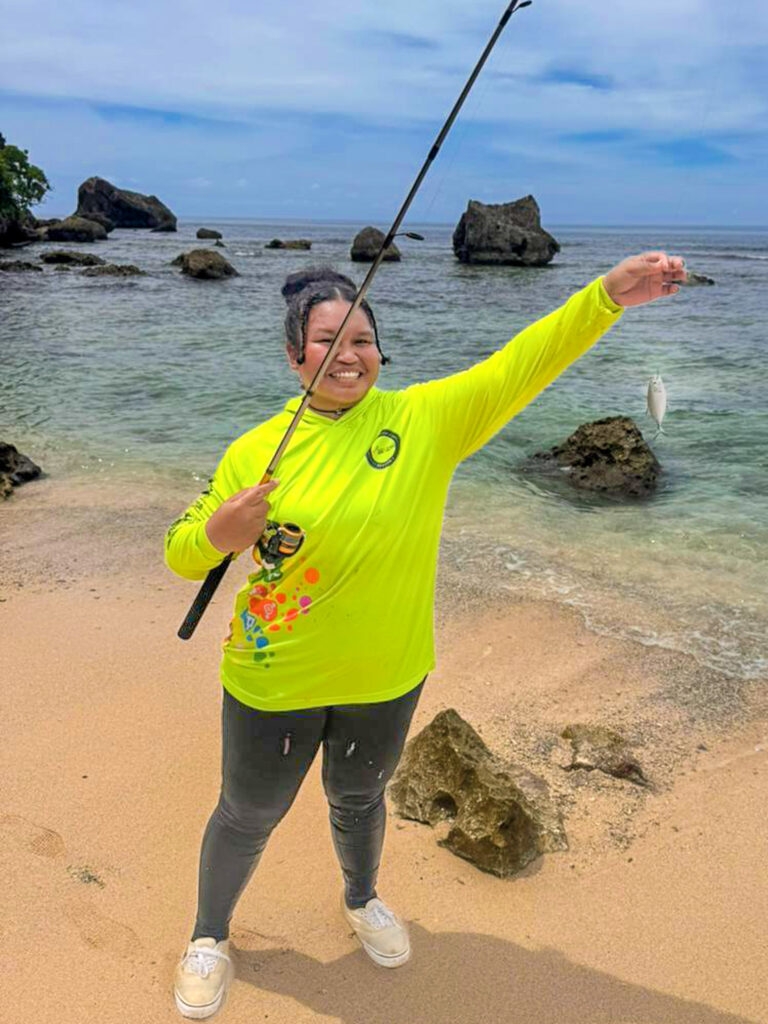
G3CC Dives into Fisheries Management at Week-Long Workshop

G3WIR

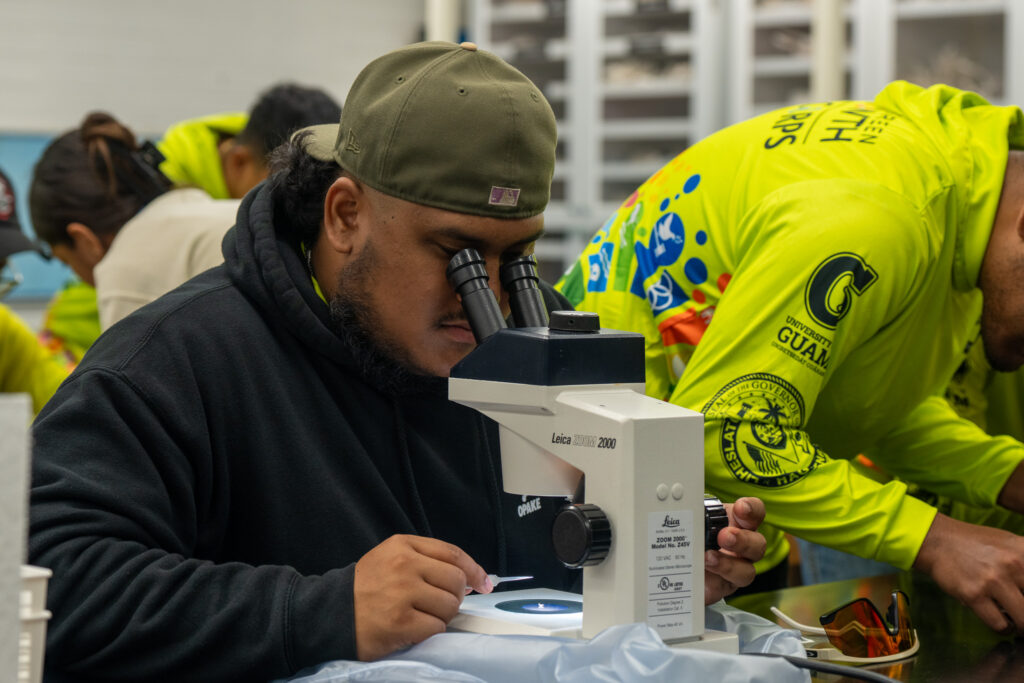
The Guam Green Growth Conservation Corps (G3CC) went fishing for new skills with the experts from the University of Guam Center for Island Sustainabilty & Sea Grant (UOG CIS & Sea Grant), diving into the biological and cultural aspects of sustainable fisheries.

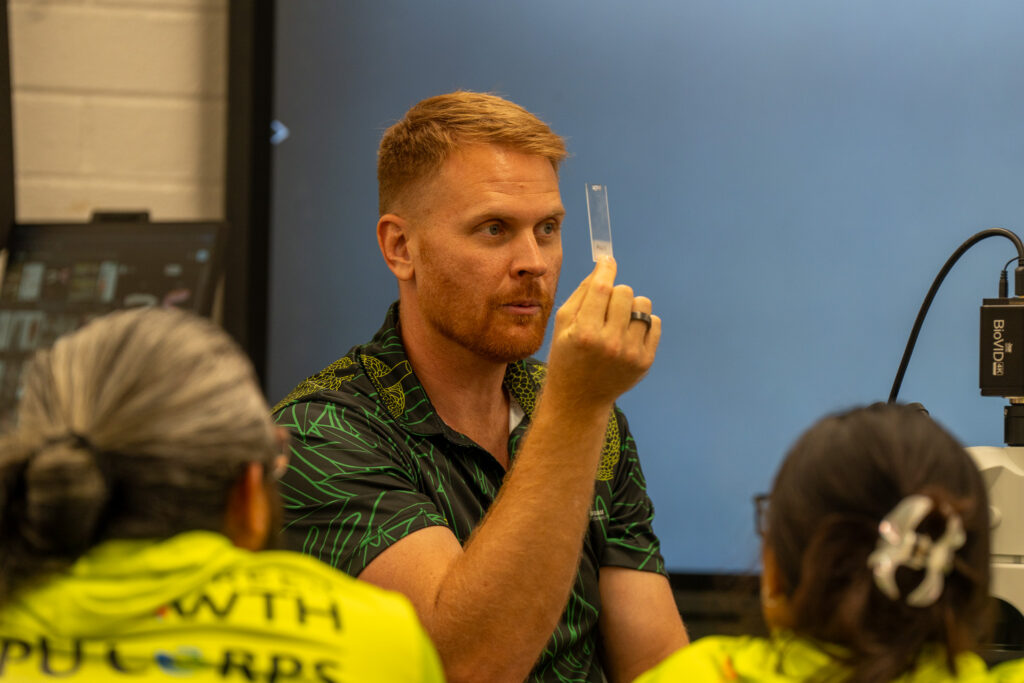
UOG CIS & Sea Grant’s Fisheries division lead the workshop, with Leilani Sablan-Naden helping to guide the G3CC along with way.

“The goal was to demystify life history research, empower community members with scientific skills, and highlight how understanding fish biology supports sustainable harvesting practices,” said Sablan-Naden.

She added, “Each day centered on a focal species or method and emphasized the important role that human behavior, tradition, and stewardship play in fisheries sustainability.”

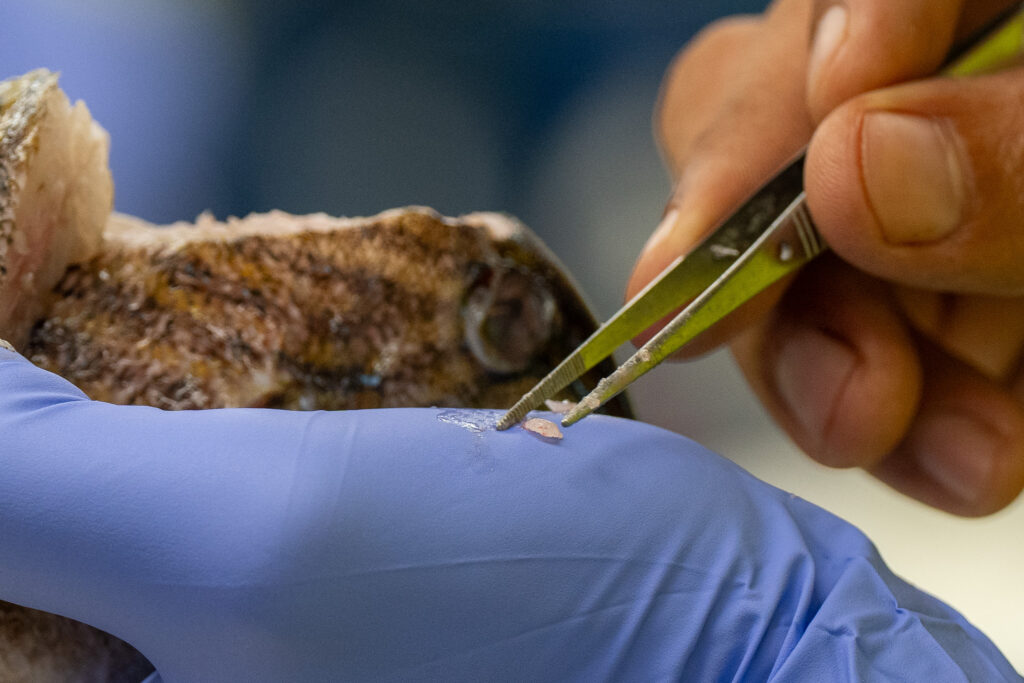
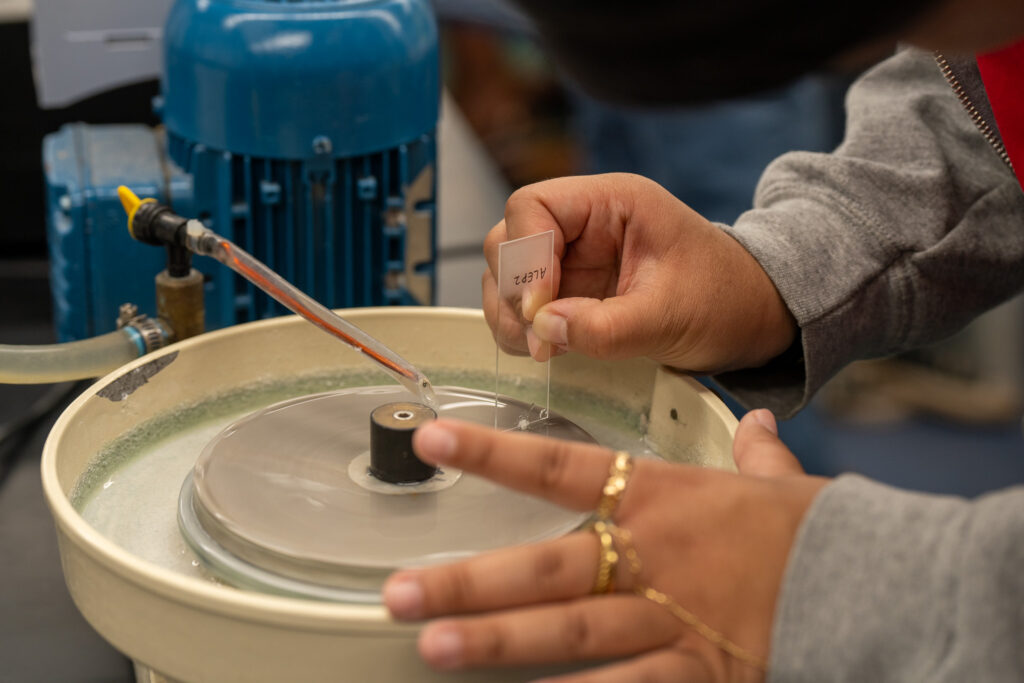
Being a beliver in “learning by doing”, Sablan-Naden set out to teach the G3CC about the concept of life history, which is the study of an organism’s age, growth and reproduction and how this information lends itself to responsible fisheries management.

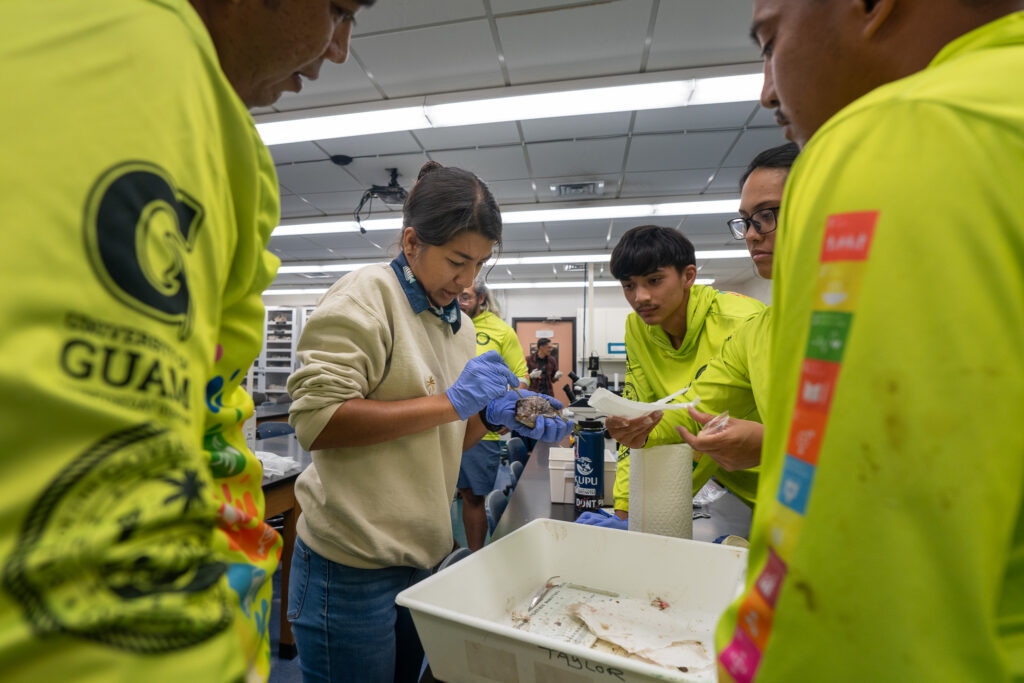
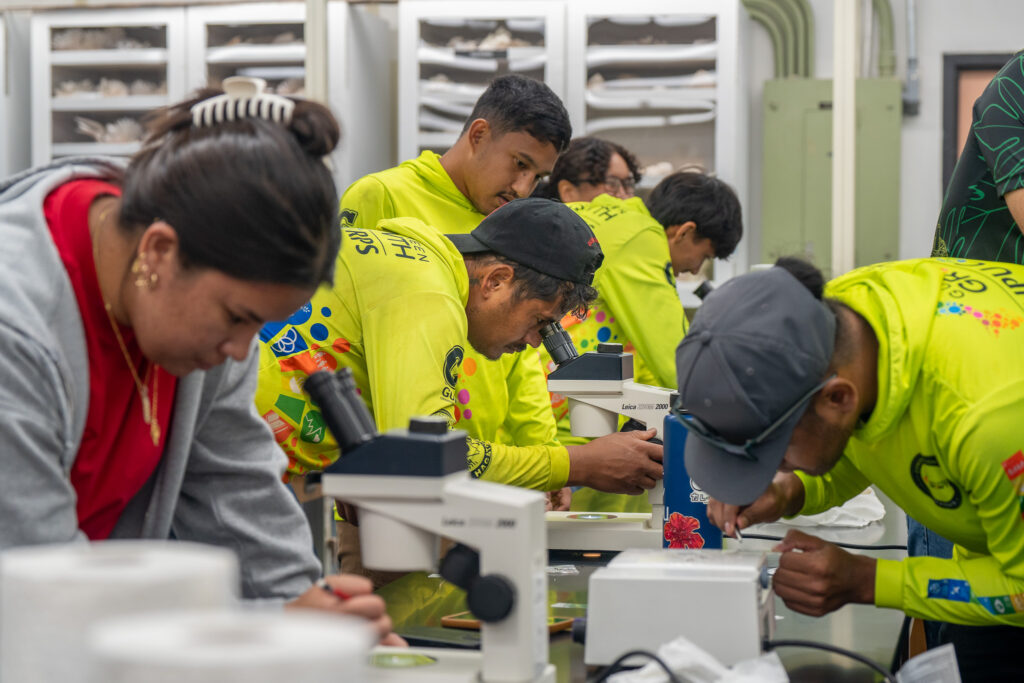
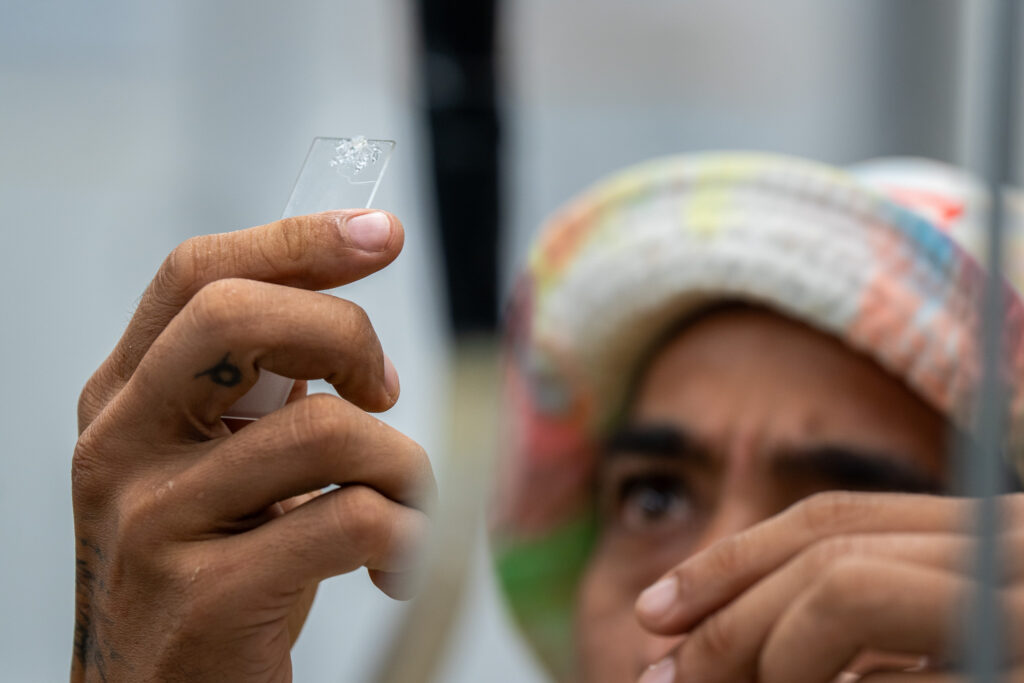
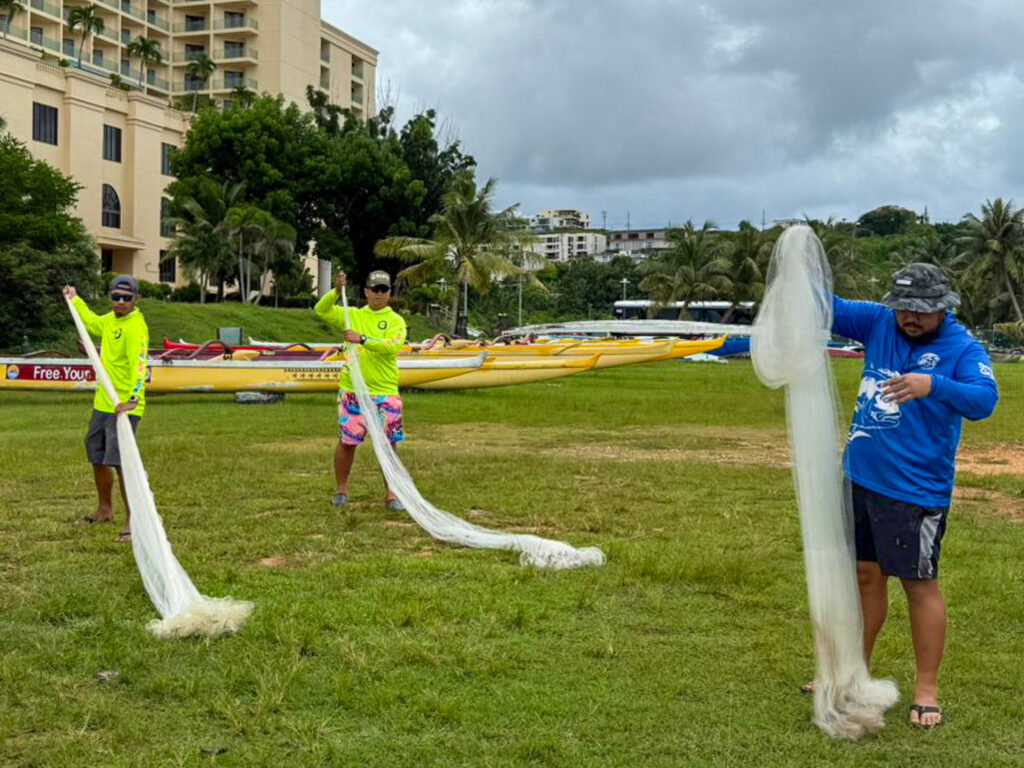
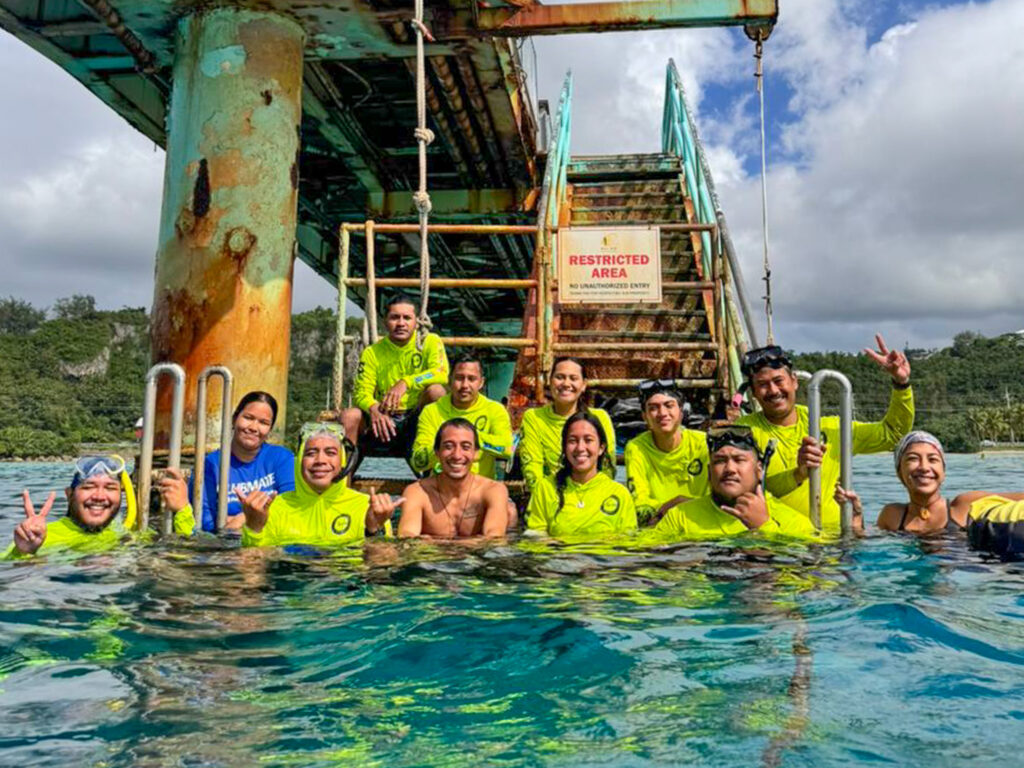
This was achieved through both lab and field work, with with lab activities like dissection of fish species to determine its sex and extracteing otoliths or “ear bones” of fish to determine its age; and field work ranging from learning traditional fishing methods like use of a talåya’ net at Tumon Bay to seeing thriving fish species swimming amidst healthy coral at places like Fish Eye in the village of Piti.

Although these activities are certainly scientific in nature, Sablan-Naden finds them necessary to showcase the accessibility of crucial information regarding Guam’s fish species while also being imperative to sustainability management.

Mi’Yah Max, a member of the G3CC’s fifth cohort participated in every aspect of the UOG CIS & Sea Grant’s week-long fisheries workshop.

Max expresses excitement in having the opportunity to work with the knowledgable and passionate fisheries team. However, unlike her fellows in the G3CC, she approached this week with some hesitation.

She says, “I’m not the best swimmer, so at first I was not as excited for this week like others in my cohort were. That is, until I caught my first fish!”

For Max, in addition to learning about the science and skills of sustainable fisheries, the week was also a lesson in perseverance and courage to try something new.

“Often times people don’t think something is possible for them, until the moment they try and it works out”, she shares. “It was my first time casting a rod and reel, so imagine my surprise when I ended up catching three fish! I am now on the look out for the best fishing rod for my next try.”

As the week with the UOG CIS & Sea Grant fisheries team drew to an end, Max reflected on the lessons learned and its place within sustainability, finding its importance to be even more dire for Guam and other island communities.

She says, “Even if I never go fishing again, I still have the basic understanding that whatever happens on the land affects the ocean, and whatever happens in the ocean affects the land.”

G3CC catches snakes and new skills at invasive species training

G3WIR

The Guam Green Growth Conservation Crops (G3CC) went scouting for snakes with the National Park Service and community group, Friends of Islan Dåno, learning how to track, capture and dispose of invasive brown tree snakes that have slithered throughout Guam.

Also known as Boiga irregularis, the brown tree snake continues to have adverse effects on Guam’s ecosystems, specifically ravaging Guam’s native bird population to near extinction.

With National Park Service taking the lead at Asan Beach Park on one night, and Friends of Islan Dåno leading the training in the village of Malesso’ on another, the G3CC received comprehensive training imperative to the removal of this sly snake species.

The team learned to properly bait and set snake traps, helping to lay around 64 at Asan Beach Park; how to track the presence of brown tree snakes by assessing availability of its food sources in a given area (e.g. cane toads, mourning geckos, and bird species), common areas and conditions brown tree snakes inhabit, and extermination.

Although mitigation of invasive species like the brown tree snake has been a challenge for Guam, learning fundamental skills on how to track and remove them is key to protecting the future of the island’s native beauty.

Armed with the knowledge shared by sustainability partners like National Park Service and Friends of Islan Dåno, the G3CC is now in a better position to meet this challenge, protecting our native species today so the people of Guam can continue to enjoy them in a distant tomorrow.

G3CC marches toward sustainability at 81st Liberation Day Parade

G3WIR

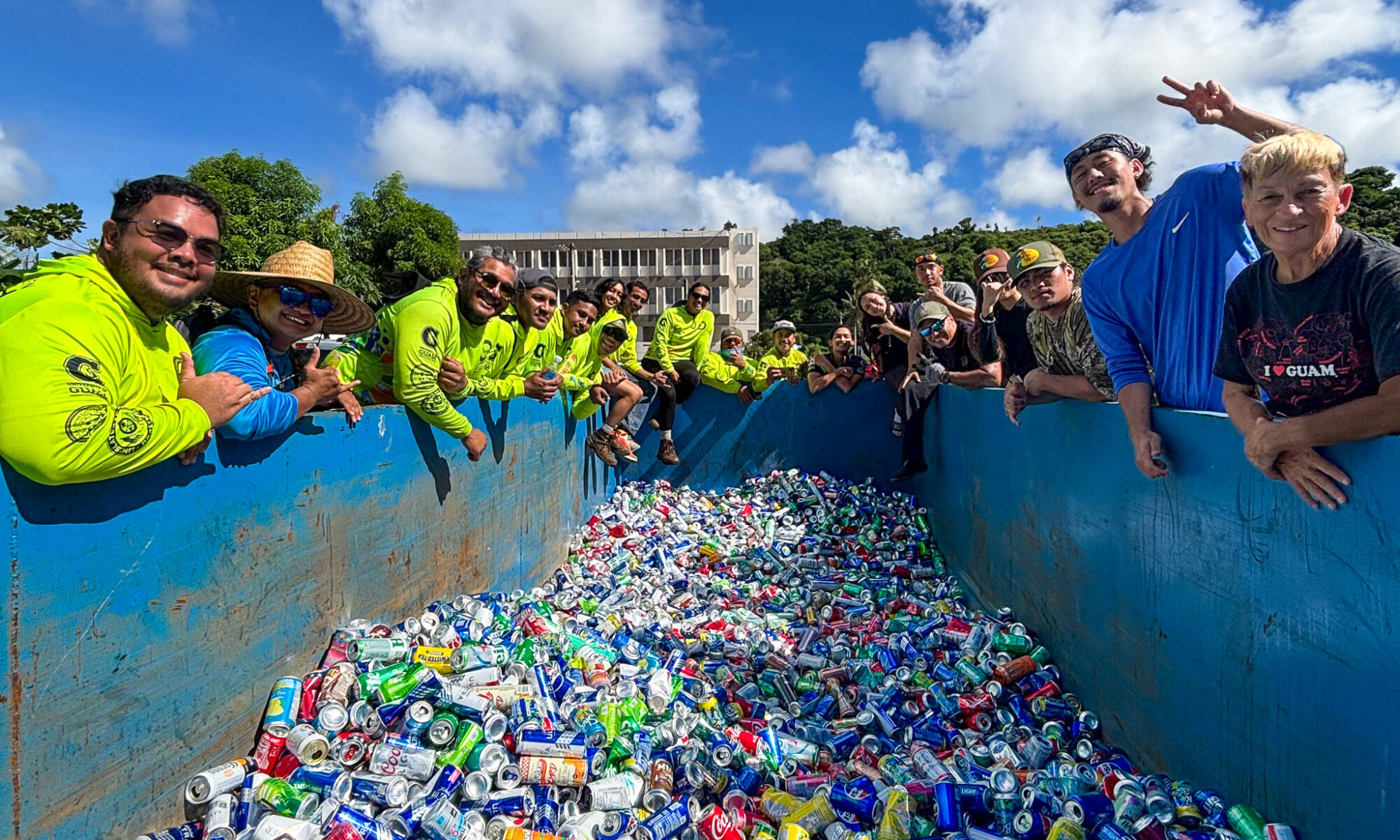
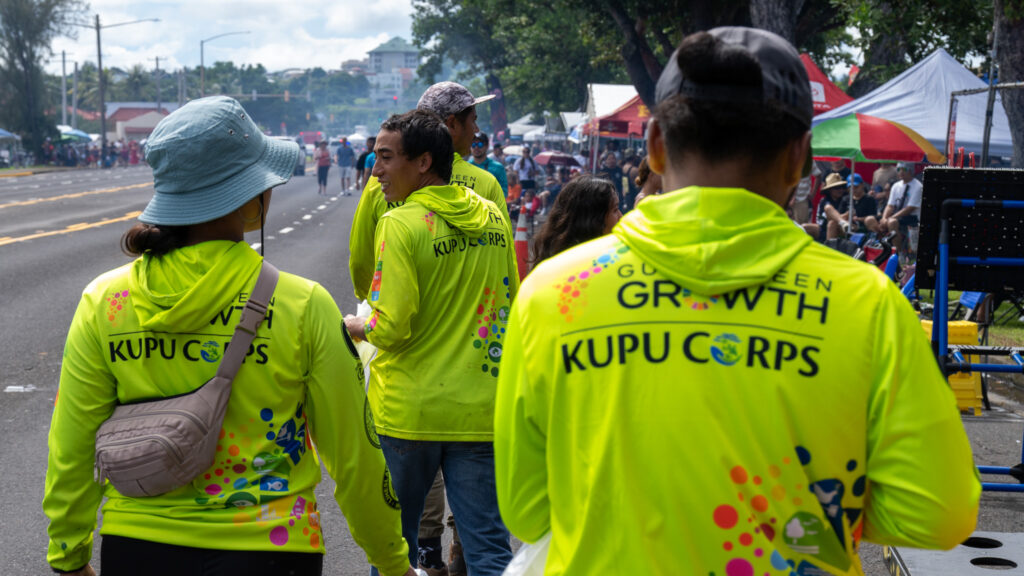
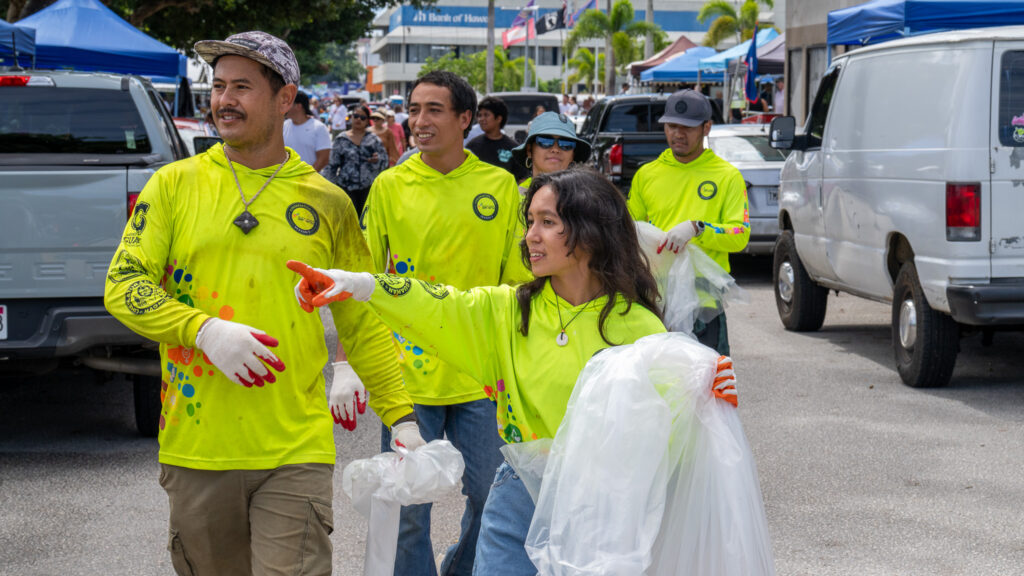
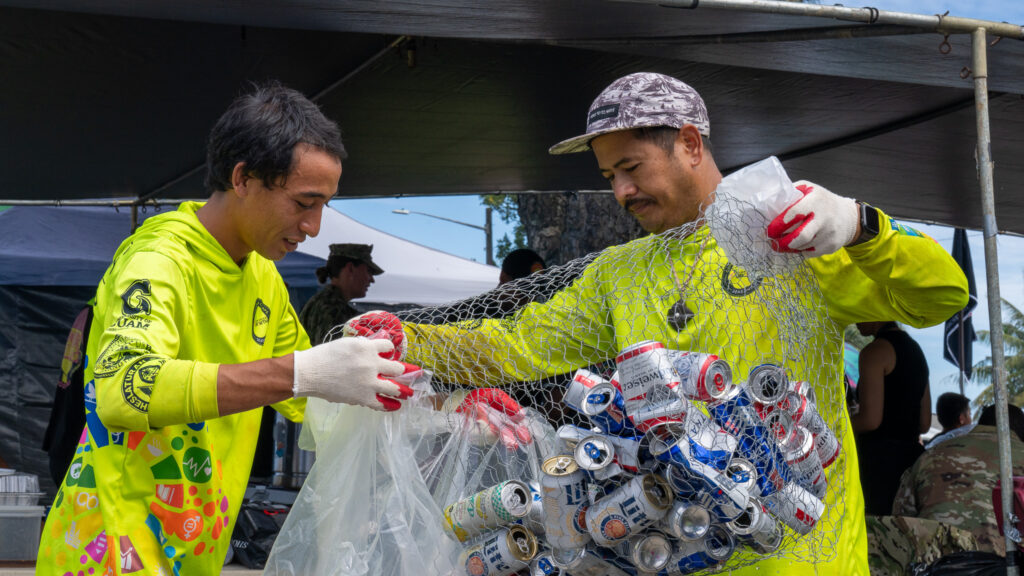
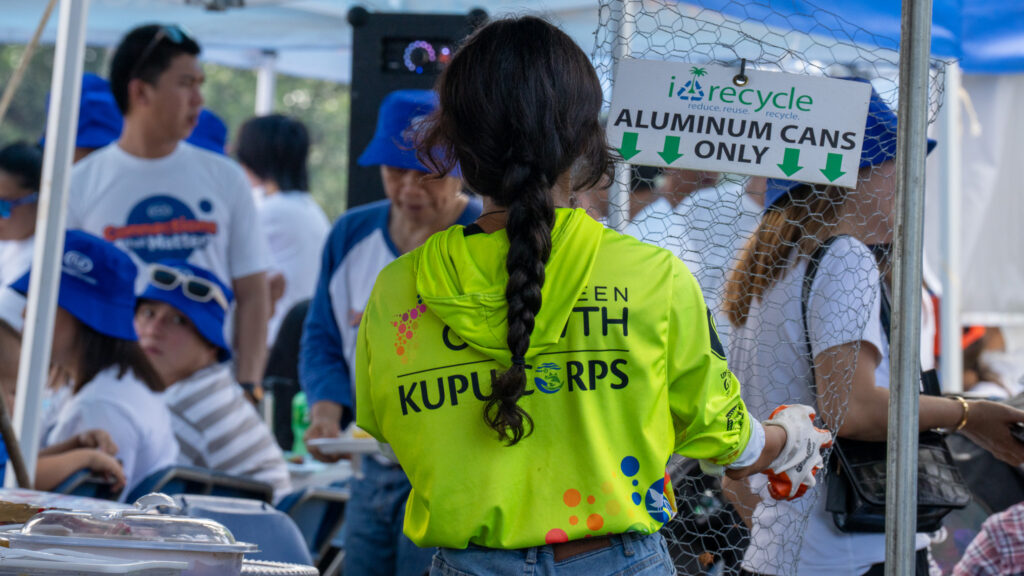
The Guam Green Growth Conservation Corps (G3CC) and the G3 GROW Corps worked together with the Governor’s Office and iRecycle to bolster recycling efforts at the 81st Guam Liberation Day Parade with the mission of keeping aluminum cans out of the landfill. 

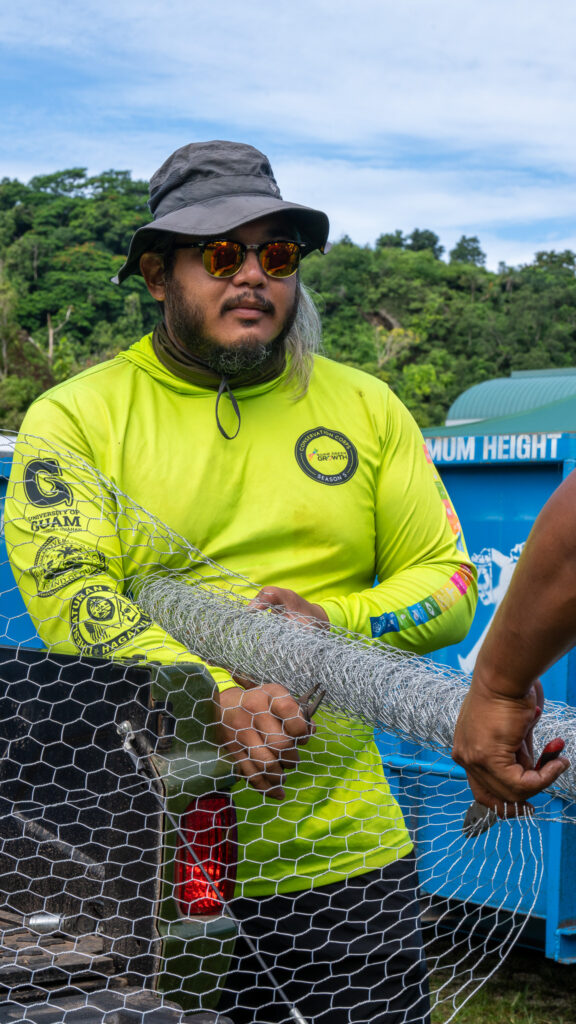
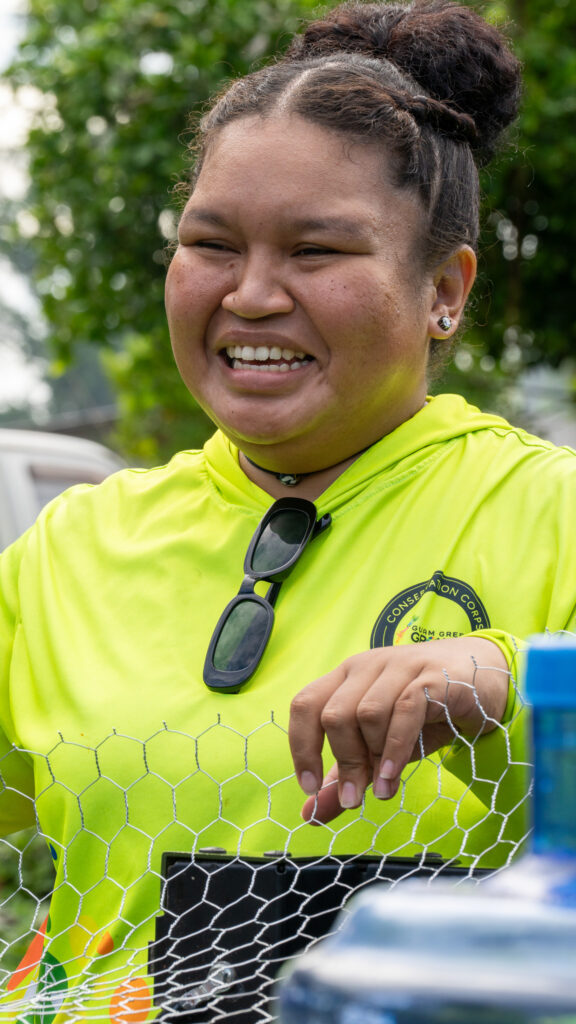
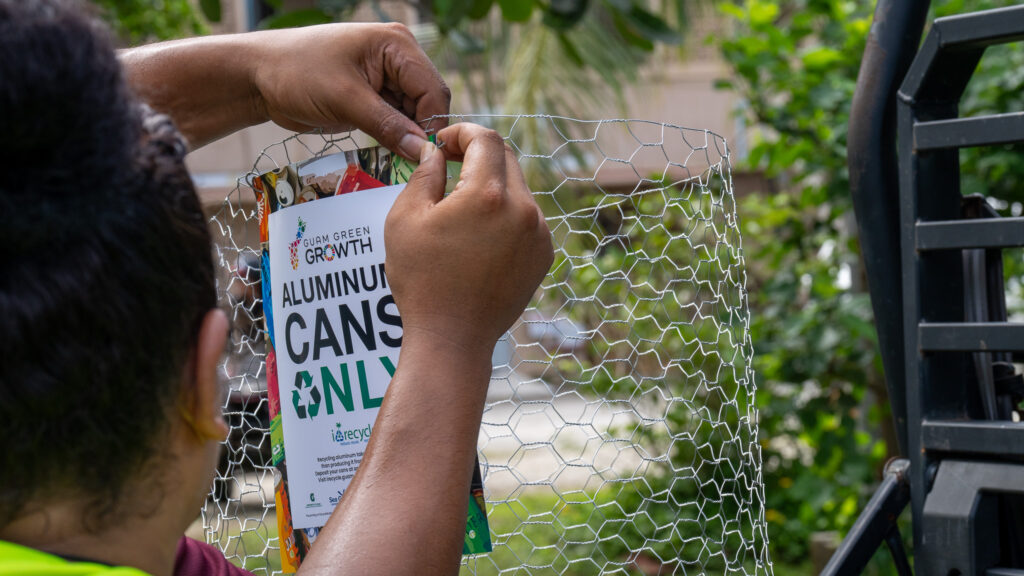
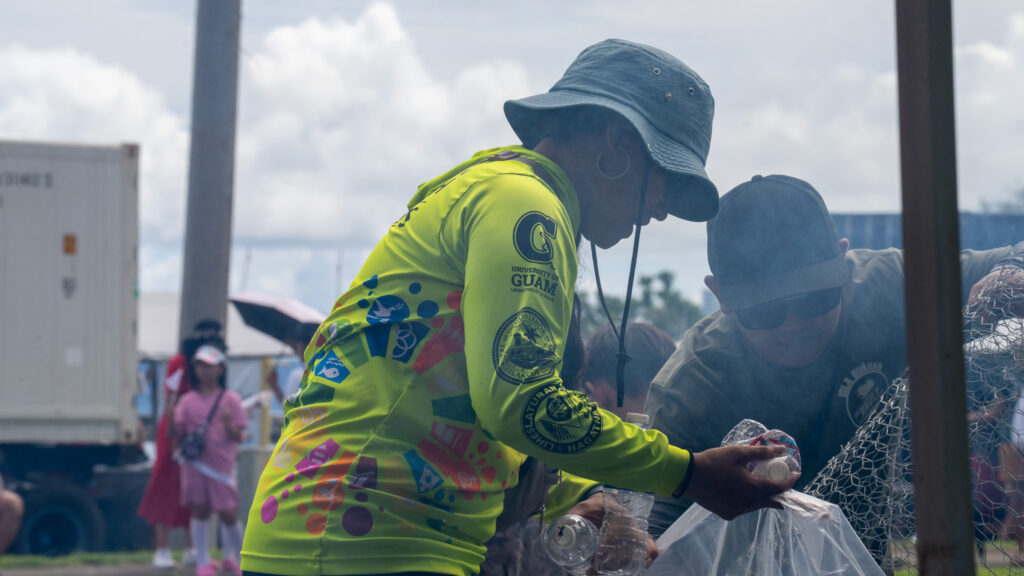
In preparation for the big community celebration, the G3CC and GROW Corps spent the week leading up to the event preparing several can bins made from chicken wire and distributing them throughout the parade route, making it easier for celebrants along Marine Corps Drive to join in on the recycling efforts.  

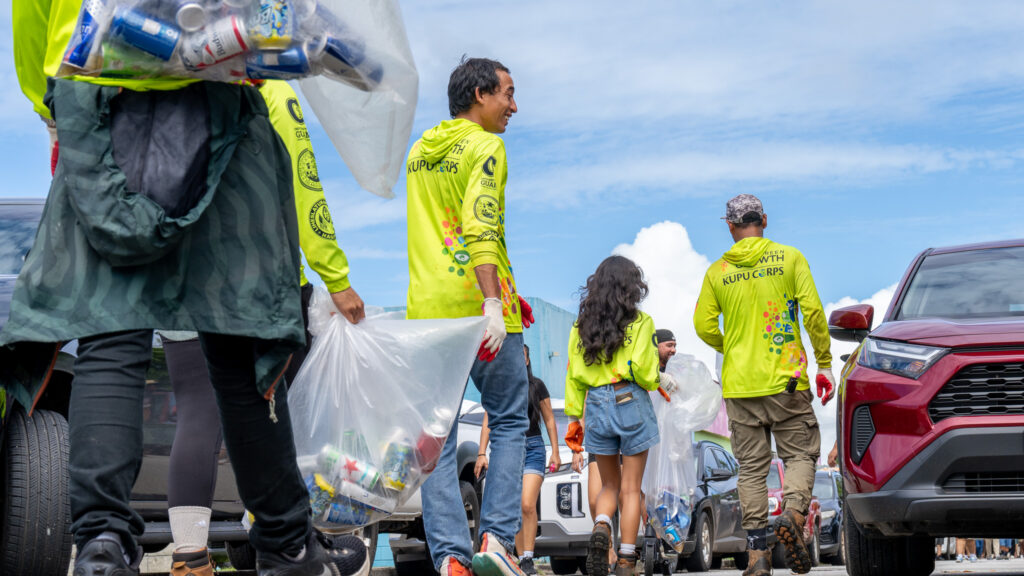
On the morning of the 81st Liberation Day Parade, the G3CC were on scene in Hagåtña bright and early, ready for the big day and determined to collect as many aluminum cans as possible.  

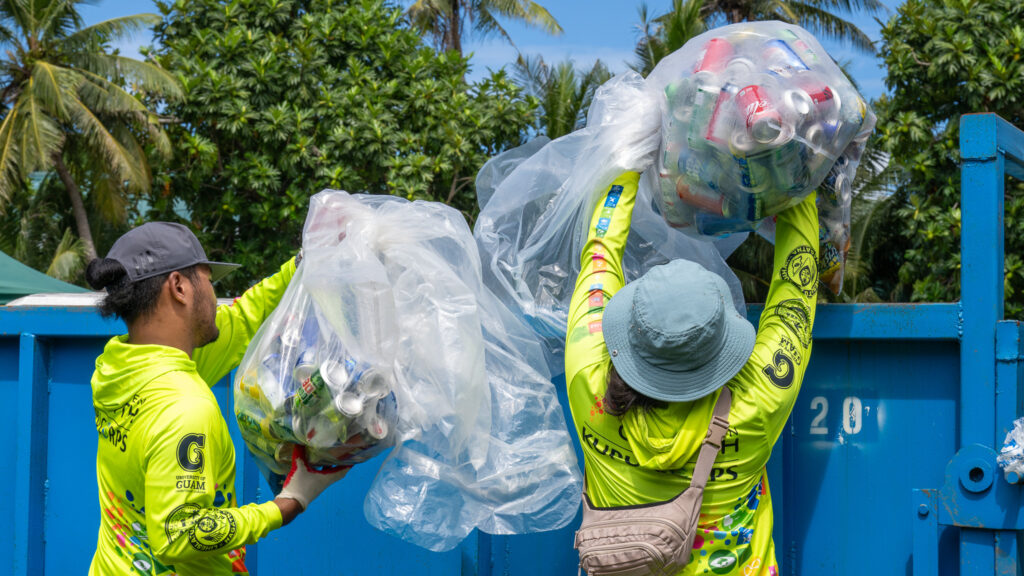
At the day’s end, the G3CC, GROW Corps and iRecycle managed to collect 20 55-gallon trash bags filled with aluminum cans, totaling approximately 4,500 cans diverted from the landfill. 

With the cans from the parade collected, they will be distributed to iRecycle bins housed at various public schools throughout Guam, with the funds raised from each recycling bin going to each school.  

For the G3CC’s fifth season and GROW Corps first season members, the mission to mitigate the impact of recyclable waste sent to the landfill through recycling was a success, through collaboration with sustainability partners like the Office of the Governor of Guam and iRecycle, and the island community at large.  

Guam Green Growth Conservation Corps clears path for youth at Island Girl Power

G3WIR

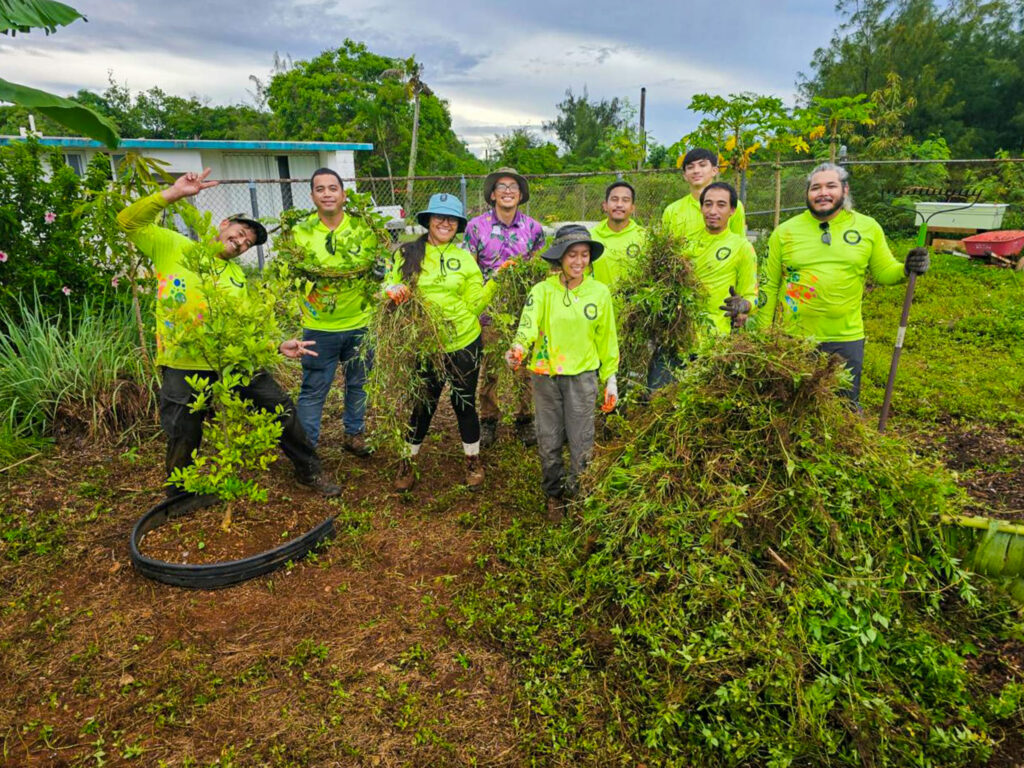
The Guam Green Growth Conservation Corps (G3CC) spent the week with Island Girl Power (IGP), a non-profit organization based in the village of Dededo which focuses on empowering young girls and their families, and a sustainability partner determined to teach the importance of food security through its community gardens and other activities.  

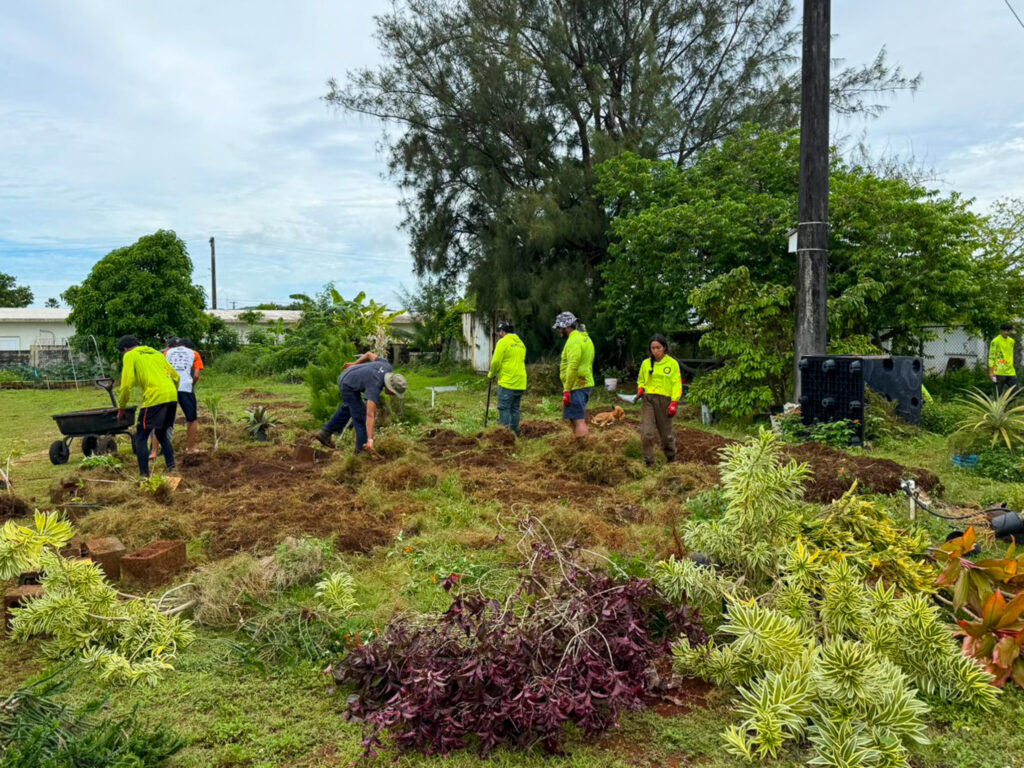
While at the Dededo facility, the G3CC learned about agroforestry, a form of agriculture relative to cultivating and conserving trees, how to identify native plant species via the iNaturalist app, and even lent a hand in IGP’s community garden to ensure fresh fruits and vegetables are available to the surrounding community.  

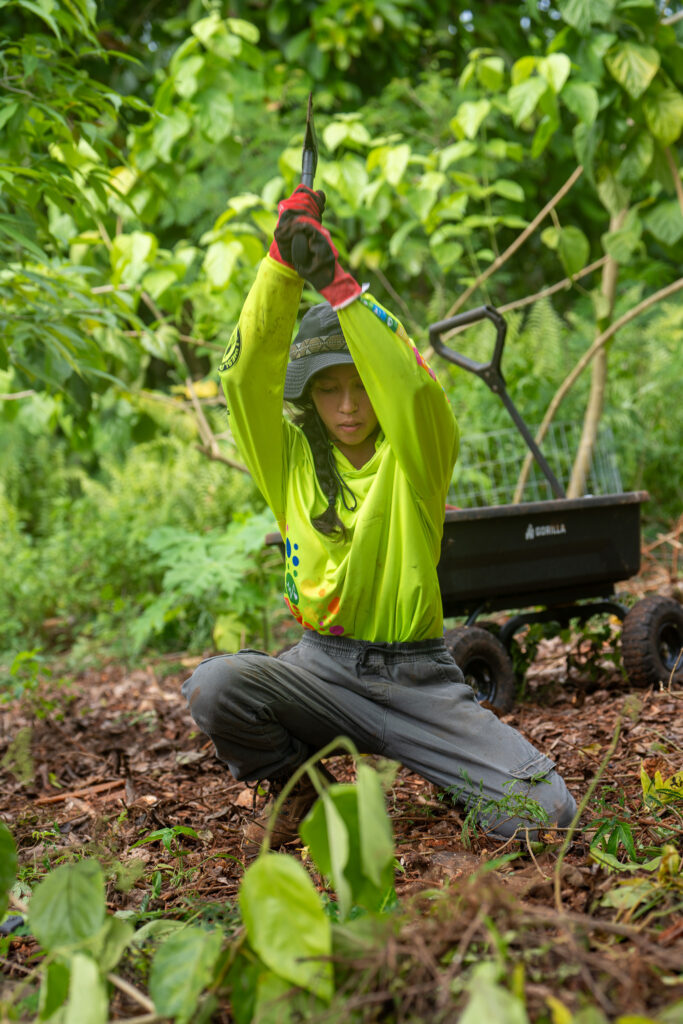
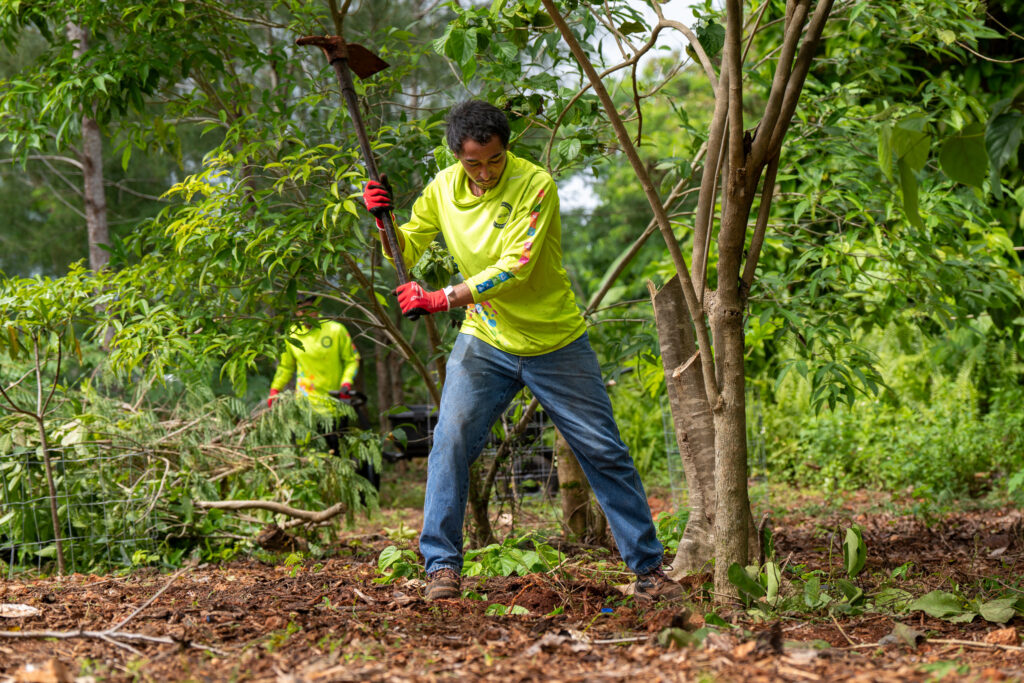
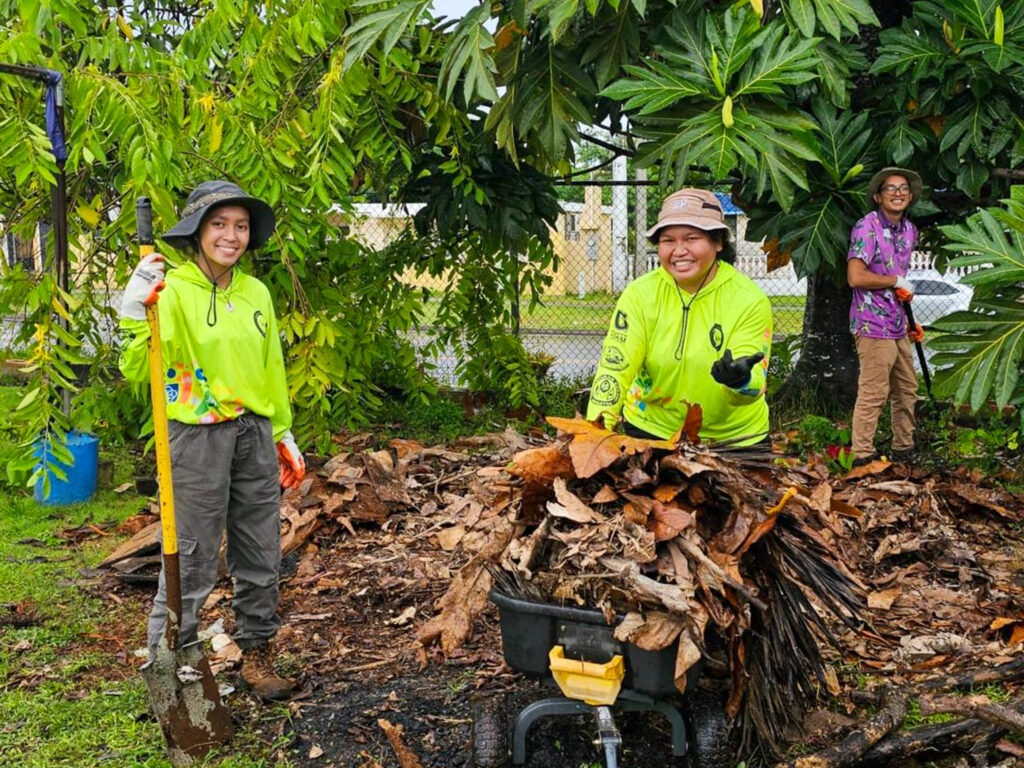
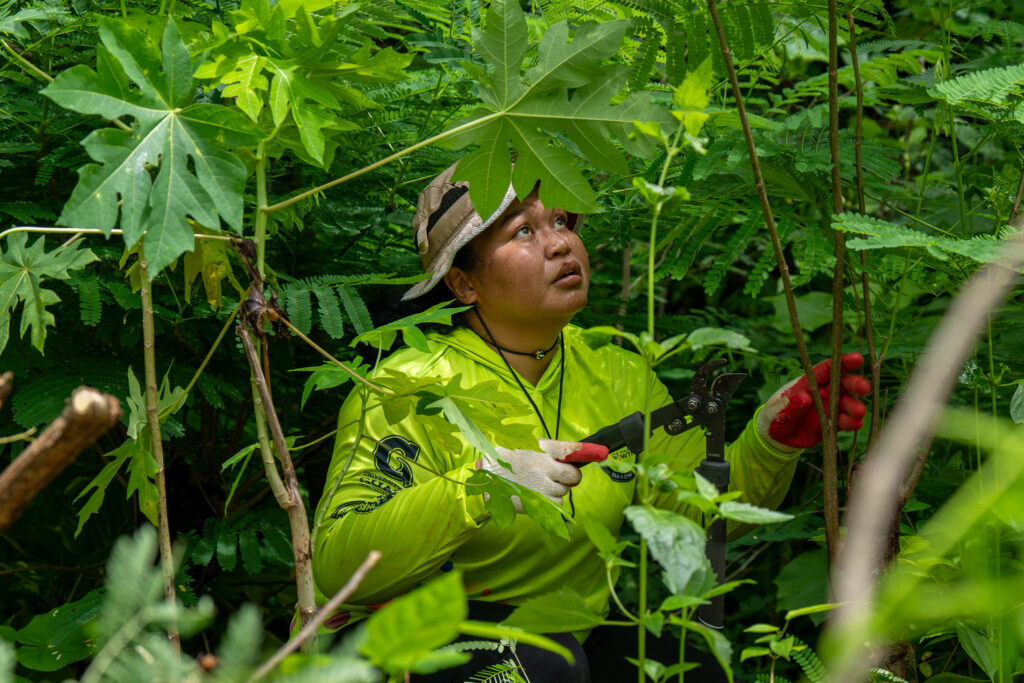
Despite scattered showers throughout the week, nothing could dampen to the spirits of the G3CC who managed to transform a portion of the IGP property from a wild jungle brimming with an overgrowth of invasive plant species to a freshly landscaped space ready for native plants. Among these invasive species removed were Leucaena leucocephala and Spathodea campanulata, two invasive species of tree, and Antigonon leptopus, most known as the Chain-of-Love vine.  

For the G3CC, the time spent with IGP was a fruitful one ripe with new ideas and skills geared toward a more sustainable community. For some members of the cohort, the fruits of their collective labor is further sweetened in the helping of IGP and the entire island to further empower young girls and their families to envision a greener Guam.  

Guam Green Growth Conservation Corps assists with sea turtle monitoring program

G3WIR

The Guam Green Growth (G3) Conservation Corps spent a week in the field immersed in vital conservation work alongside the University of Guam (UOG) Center for Island Sustainability and Sea Grant’s dedicated Sea Turtle Monitoring team. Corps members received invaluable hands-on training and education focused on the preservation of Guam’s native sea turtle populations and their crucial nesting habitats.

Throughout the week, the G3 Conservation Corps actively participated in various aspects of the sea turtle monitoring program. This included spotting turtle tracks, marking nests, conducting nest inventories, and learning how the project protects endangered green turtles.

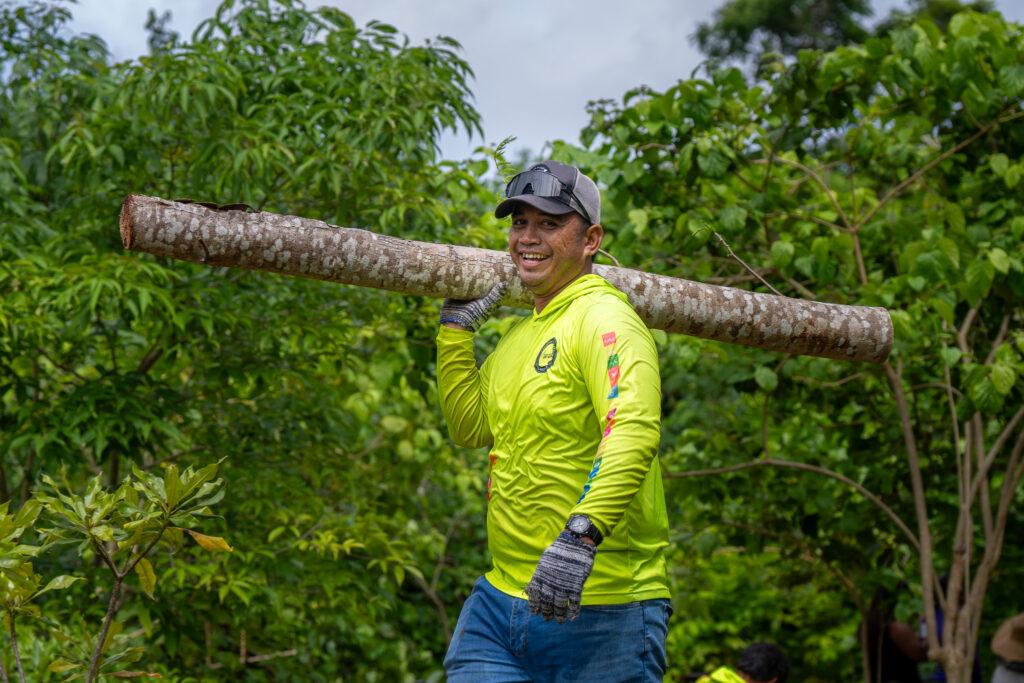
In addition to nesting surveys, G3CC also cleared survey trails and removed marine debris from nesting beaches, aiding in long-term monitoring efforts and the safety of both nesting turtles and hatchlings.

“This partnership with the G3 Conservation Corps is incredibly valuable,” said Addie Ferguson, biologist for the Sea Turtle Monitoring Project. “Their enthusiasm and willingness to learn, coupled with the manpower they provide, significantly boosts our conservation efforts. It’s inspiring to see young individuals so dedicated to protecting Guam’s haggan.”

This collaborative effort underscores the importance of community involvement in safeguarding Guam’s unique biodiversity.

By providing hands-on training and fostering a deeper understanding of local ecosystems, the partnership between the G3 Conservation Corps and the UOG Sea Grant program is cultivating the next generation of environmental stewards dedicated to the long-term health of Guam’s natural environment.

The data collected during this week will contribute to the ongoing efforts to monitor and protect Guam’s precious sea turtle populations for years to come.

This work was done in connection with research authorized under the ESA Recovery Permit ES42195A-3 and funded by the Department of Navy on behalf of Joint Region Marianas (Sea turtle monitoring, protection, and educational outreach on AAFB; cooperative agreement #N40192-23-2-8000).

Guam Green Growth Conservation Corps learns Food Security & Food Sovereignty at GSC Food Resiliency Hub

G3WIR

The Guam Green Growth Conservation Corps (G3CC) rolled up its sleeves and partnered with Guåhån Sustainable Cultures (GSC) during the week of June 9, for a deep dive into food sustainability and agriculture.

At the GSC Food Resiliency Hub in Yona, the G3CC learned about food security and food sovereignty, two pillars of sustainable food practices, the former of which ensures access to affordable and healthy food options to all people while the latter is a system wherein the people who grow, share, and eat farmed foods also govern its production and distribution.

The G3CC also helped to prepare garden beds for medicinal plants used in CHamoru culture alongside students enrolled in GSC’s summer program.

The fifth cohort of the G3CC rounded out the week at the Hub by tending to the coffee and fruit gardens on the property. They also assisted in harvesting pandanus leaves.

The group learned the proper and safest ways to plant papaya and pineapple, and helped remove Antigonon leptopus, an invasive species of perennial vine more commonly known as the “chain-of-love” vine.

With this week in books, the G3CC members now feel even more prepared for the emerging green economy with the skills shared by GSC and partners in sustainability like them.

According to members, it is through collaborations like this that the seeds of a more sustainable future for all people are grown.

Guam Green Growth Conservation Corps sprouts new skills during Farm to Table workshop at UOG Triton Farm

G3WIR

The Guam Green Growth Conservation Corps (G3CC) continues to collect seeds of wisdom this week at the UOG Triton Farm in Dededo.  

The week of June 2, 2025 was a busy one for members of the G3CC’s fifth cohort who learned about the Farm to Table process under the guidance of UOG Triton Farm Manager, Jessica Nangauta,  

While at the UOG Triton Farm, the G3CC learned different horticulture skills like air layering, a type of cloning technique used to propagate plants by encouraging root growth on branches while still attached to the parent plant.  

The team also learned how to harvest, husk and process coconuts, resulting in the G3CC extracting seventy-four ounces of fresh coconut oil from about eighty coconuts.  

Additionally, the G3CC learned how to maintain an aquaponics garden which included the removal of Rhinella marina, an invasive amphibian species in Guam commonly known as the cane toad.  

To close out the week and celebrate the team effort between G3CC and UOG Triton Farm team, both groups gathered to prepare fresh produce and livestock for a special Farm to Table lunch experience, a culmination of lessons and hand-on experience shared throughout the week. 

WEEK IN REVIEW: Guam Green Growth Conservation Corps learns about the waste system on Guam

G3WIR

Members of the University of Guam’s Guam Green Growth Conservation Corps (G3CC) recently dedicated an intensive week to understanding the complexities of waste management on the island, collaborating with industry leader Guahan Waste Control. This immersive experience is a critical component of the G3 Conservation Corps program, which aims to cultivate the next generation of environmental leaders and a skilled workforce for Guam’s emerging green economy.

Throughout the week, the cohort delved into the pressing waste issues facing Guam, from the Layon Landfill’s operational intricacies to the challenges of recycling and the pervasive problem of illegal dumping. Guahan Waste Control, a key player in the island’s waste management sector, provided the corps members with an invaluable behind-the-scenes look at their operations, including their materials sorting facility.

G3CC member Eyana Pereda was shocked, “As much as it was a great experience and a fun team to work with, the whole time I couldn’t shake the bewilderment of being surrounded by so much wastefulness.”

Pereda believes that the eye-opening experience is something everyone Guam needs to have.  

“You hear about these ongoing problems regarding our waste all the time, but to actually come eye to eye and in some cases literally be neck deep in it was definitely something I think everyone needs to experience if we want any real change within our community and culture around how we handle our trash,” she said.  “[It is] not just the amount [of trash] we produce, but the care and effort we put into sorting it the right way before it even arrives at the waste center.”

During their time with Guahan Waste Control, the G3 Conservation Corps members learned about the logistical and economic hurdles of recycling on an island, the importance of proper waste segregation, and the environmental impacts of different waste streams. Discussions also likely covered Guam’s ambitious goals towards a circular economy and zero waste, as outlined in various local initiatives.

Guam continues to grapple with significant waste challenges, including a high volume of food waste, the environmental legacy of the now-closed Ordot Dump, and the ongoing need to extend the lifespan of the Layon Landfill. Initiatives like the G3 Conservation Corps are vital in developing local expertise and fostering a community-wide commitment to addressing these issues.

The hands-on training received by the corps members is designed to prepare them for careers in sustainability-focused fields. By engaging directly with organizations like Guahan Waste Control, they gain not only technical knowledge but also a deeper appreciation for the collaborative efforts required to protect Guam’s fragile environment. 


UOG Celebrates Third G3 Conservation Corps Graduation 

G3WIR

The Guam Green Growth (G3) initiative at the University of Guam celebrated the graduation of its third conservation corps cohort on Friday, August 11, at the Sinajana Community Arts Hall.  

The innovative workforce development program is designed to prepare the island for the emerging green economy. Launched in collaboration with the UOG Center for Island Sustainability and UOG Global Learning and Engagement in 2021, the G3 Conservation Corps program is a full-time training experience spanning five months each year.   

Participants received instruction on a wide range of sustainability topics, covering areas such as agriculture, aquaculture, island beautification, invasive species removal, reforestation, circular economy, ocean conservation, and renewable energy.  

The latest batch of G3 Conservation Corps members who successfully completed the comprehensive program include Maria Balbin, Jace Blas, Zeriah Blas, Cassie Bordallo, Michael Herbert, Michael Jude Hernandez, Connor Law, Laura Layan, Javier Mercado, Ciara Taijeron, Michael Torres, and Elisa Rose Padilla.  

“We’ve learned a lot here and from all of our partners,” said Balbin, who served as corps crew supervisor. 

Also at the graduation, UOG President Anita Borja Enriquez hailed the graduates as conservation corps warriors. “You are a special group of conservation leaders. You represent us as ambassadors to our youth and to members of our community through your experiences…Congratulations! We look forward to seeing you do amazing things.” 

Governor Lou Leon Guerrero also commended the graduates. “The 12 of you are very significant to the conservation of our island. You have gone through an experience that we will probably never go through,” she said.  

Meanwhile, Austin Shelton, UOG Center for Island Sustainability and Sea Grant director, highlighted the unique experience of the third batch of conservation corps. He said the process prepared the corps for the environmental challenges that are occurring in the region and the rest of the world. 

“This season was a little bit different. We had an unexpected typhoon, and we had to do things differently. You got on-the-job training for what is becoming the new reality. Climate change is here, and we are seeing an increasing frequency of storms and rising sea levels,” he said. 

Shelton also mentioned the impactful multiplier effect generated by the G3 Conservation Corps program, especially in partnership development. For example, he said the program facilitated the establishment of the G3 Art Corps and the newly formed G3 Kupu Corps collaboration with Kupu, a Hawai’i’-based youth leadership development program, now providing eight additional year-long corps positions in Guam and CNMI.   

He also underscored G3’s ongoing commitment to expand the movement. He said current efforts of the program attracted new federal funding, enabling the future development of G3 partnerships across Micronesia and the Pacific. 

Making a difference: G3 Conservation Corps cleans up local school

G3WIR

The Guam Green Growth (G3) Conservation Corps recently lent a helping hand to the island’s Southern community by joining forces with volunteers to clean up M.U. Lujan Elementary School in Yona on Wednesday, August 2. This cleanup marked their final volunteer effort before they graduate from the program later this month. 

The team worked together to give the school a fresh makeover. Laura Layan, a member of the G3 Conservation Corps, shared their efforts, “We had a team sorting out things. Another team is also painting and helping the staff at the school,” she said. 

Layan is the first G3 Conservation Corps member from Yap. After graduating with a major in tropical science, she wants to give back to the community by applying what she learned from university and from the conservation corps program. 

Another corps member, Michael Herbert, highlighted his involvement in preparing the school for the upcoming school year, “Today we are assisting with the opening of the school by helping with debris removal, painting so the school can be ready for inspection.” 

Herbert’s dedication to conservation and environmental awareness shone through as he shared his experiences as a corps member, “I’ve learned about farming, aquaculture, and different things, like separating different household goods. I’ve also learned about marketing and the need to bring in more people for the circular economy, the green economy.” 

After the program, Herbert wants to go back to school and become a sea turtle biologist. “Because I am very passionate about marine life and turtles,” he said. 

Cassie Bordallo, another active corps member, expressed her thoughts on the conservation corps experience, “It’s been amazing. It’s been hard but still amazing to be part of it (G3 Conservation Corps). It opened my eyes to things that I hadn’t thought about before.” 

The G3 Conservation Corps, consisting of twelve members, underwent comprehensive training over the past five months. They learned about various sustainability topics, such as agriculture, aquaculture, recycling, and renewable energy. The program equips these young eco-enthusiasts with valuable skills and knowledge to contribute to Guam’s emerging green economy.  

Skip to content