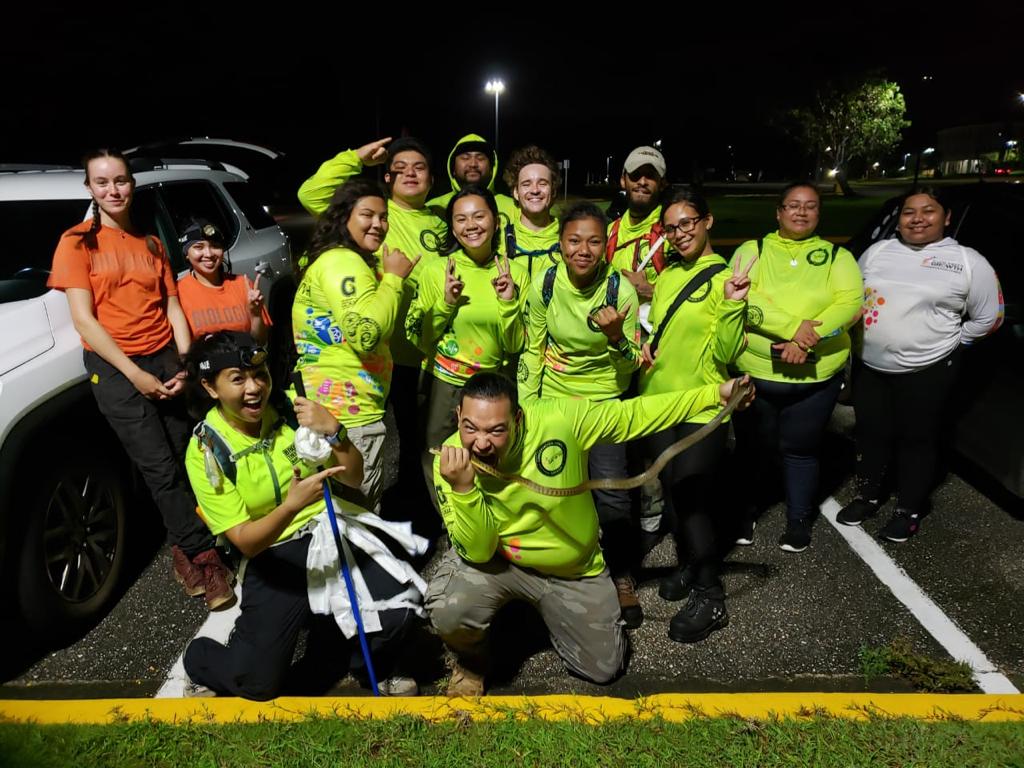
Guam Green Growth Conservation Corps hunt for invasive brown tree snake

G3WIR

In June, the Guam Green Growth Conservation Corps (G3) took on the most notorious invasive species on island, the Brown Treesnake (BTS). No matter what their level of comfort for handling snakes, they all enthusiastically entered the classroom at USGS (United States Geological Survey) in Ritidian and got down to the business of learning about BTS.

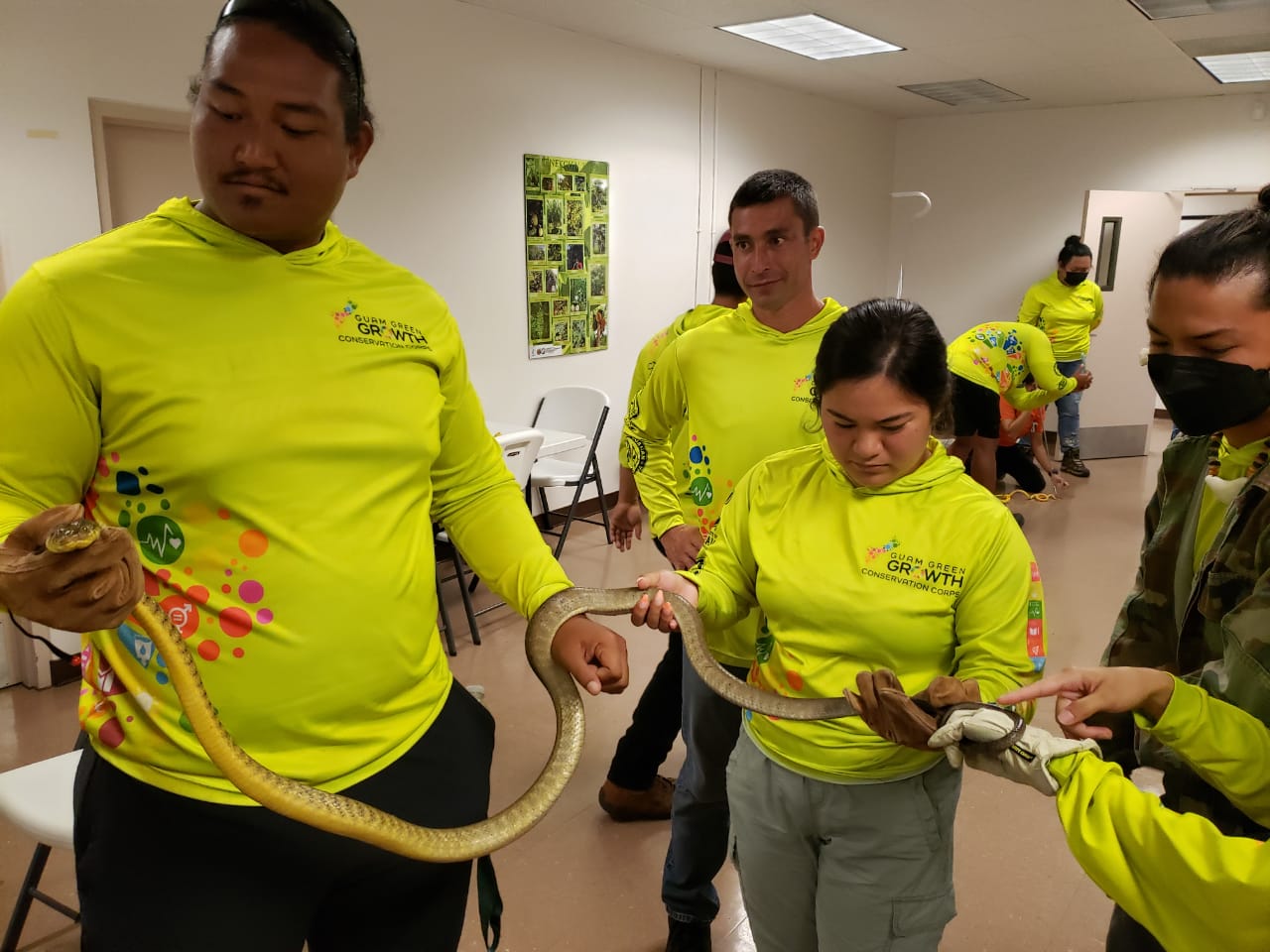
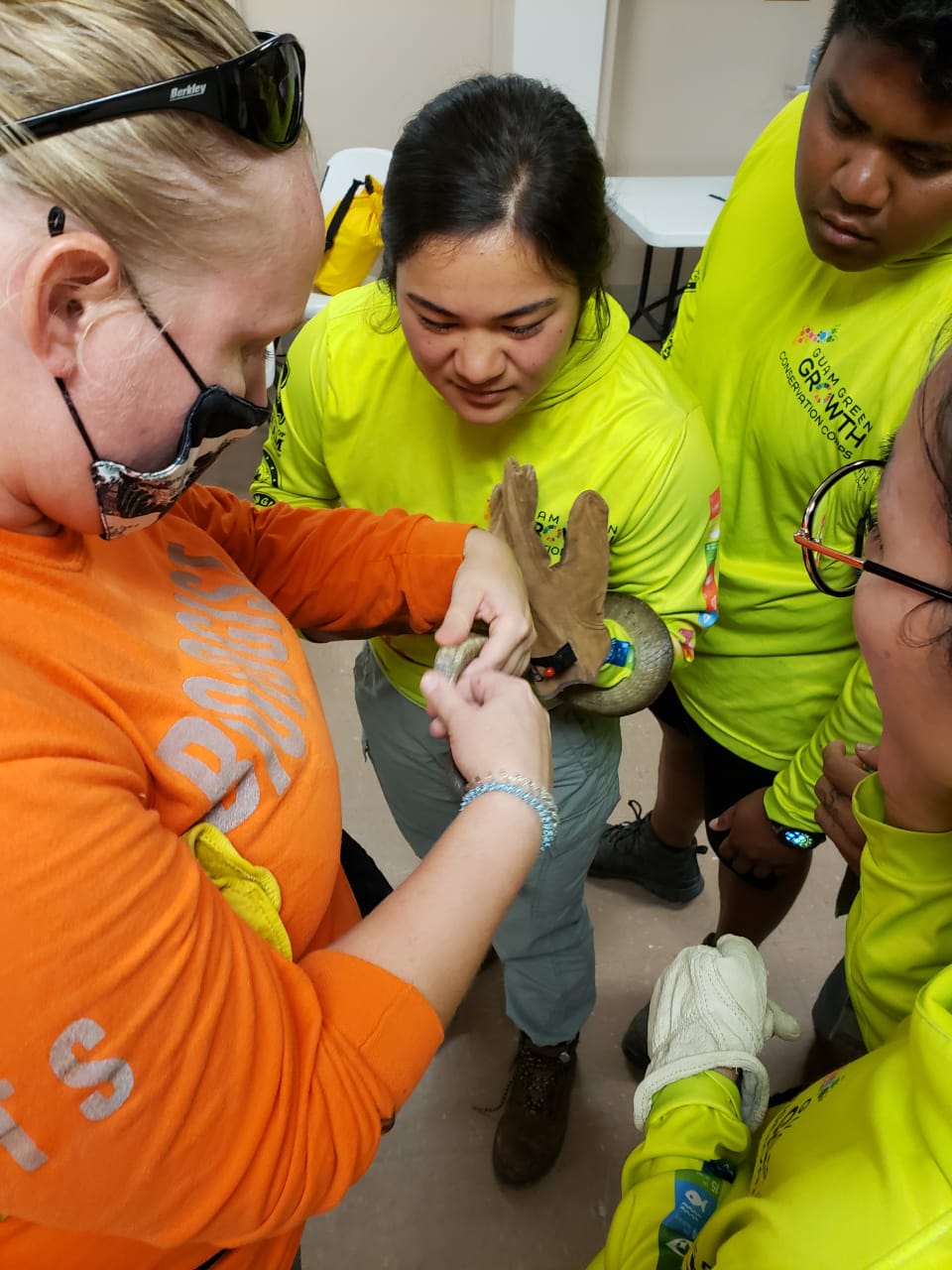
USGS biologists delivered a PowerPoint presentation with photographs of snakes in various species of trees and tangled vines to help the G3 group hone their BTS search image. Biologists Charlene Hopkins and Marijoy Viernes expertly answered numerous questions from G3 participants. Afterwards, they brought out colorful rubber snakes to allow everyone to practice handling skills and field euthanasia stress free. Then, the live snakes were released from their snake bags and things got very animated!
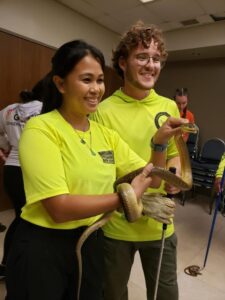
Divided into two groups, participants got hands-on experience in using a snake stick as well as how to safely pick up snakes in a controlled environment. It was difficult for the snakes to get traction on the shiny, waxed floors, but for some first-time wranglers it still was a challenge.

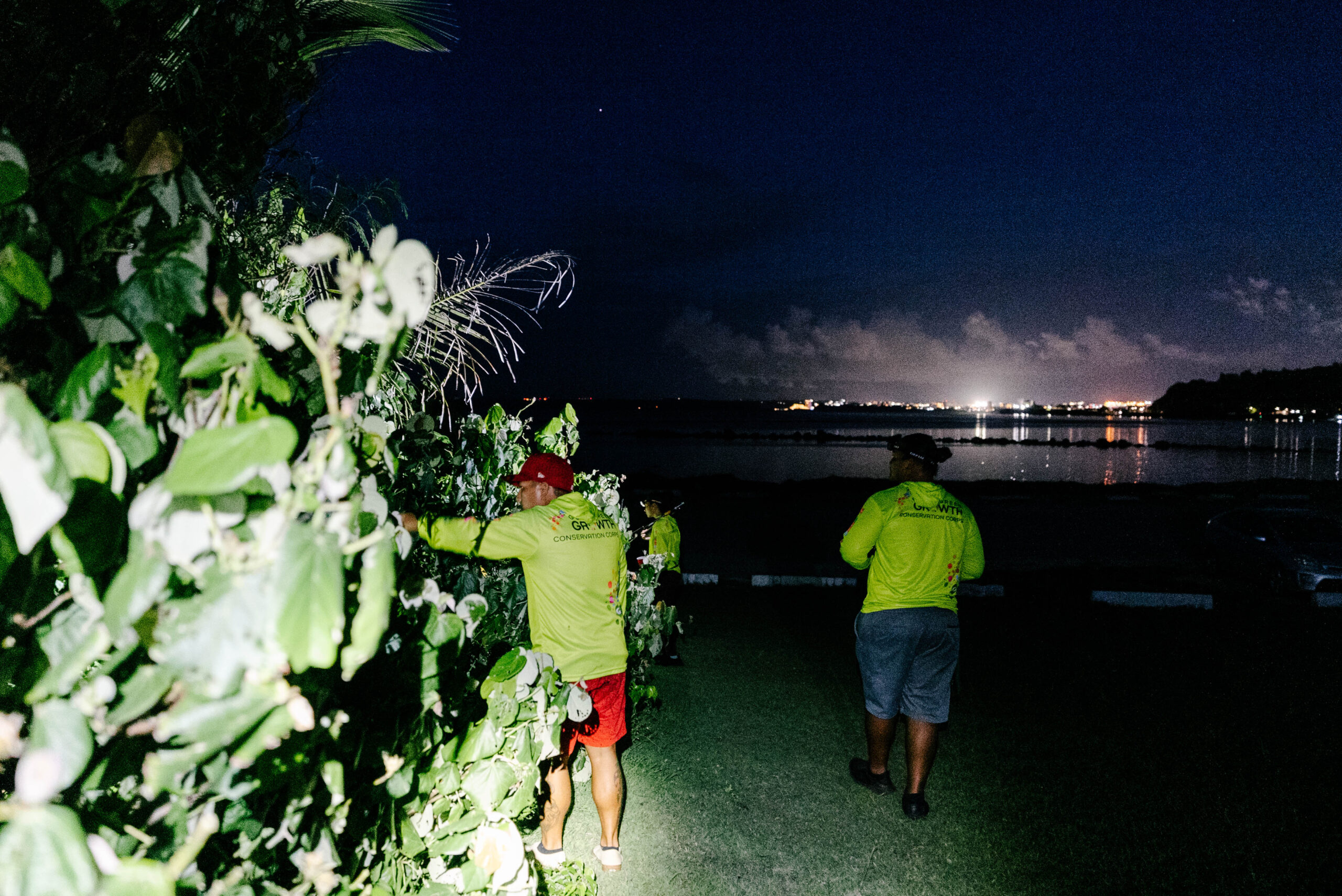
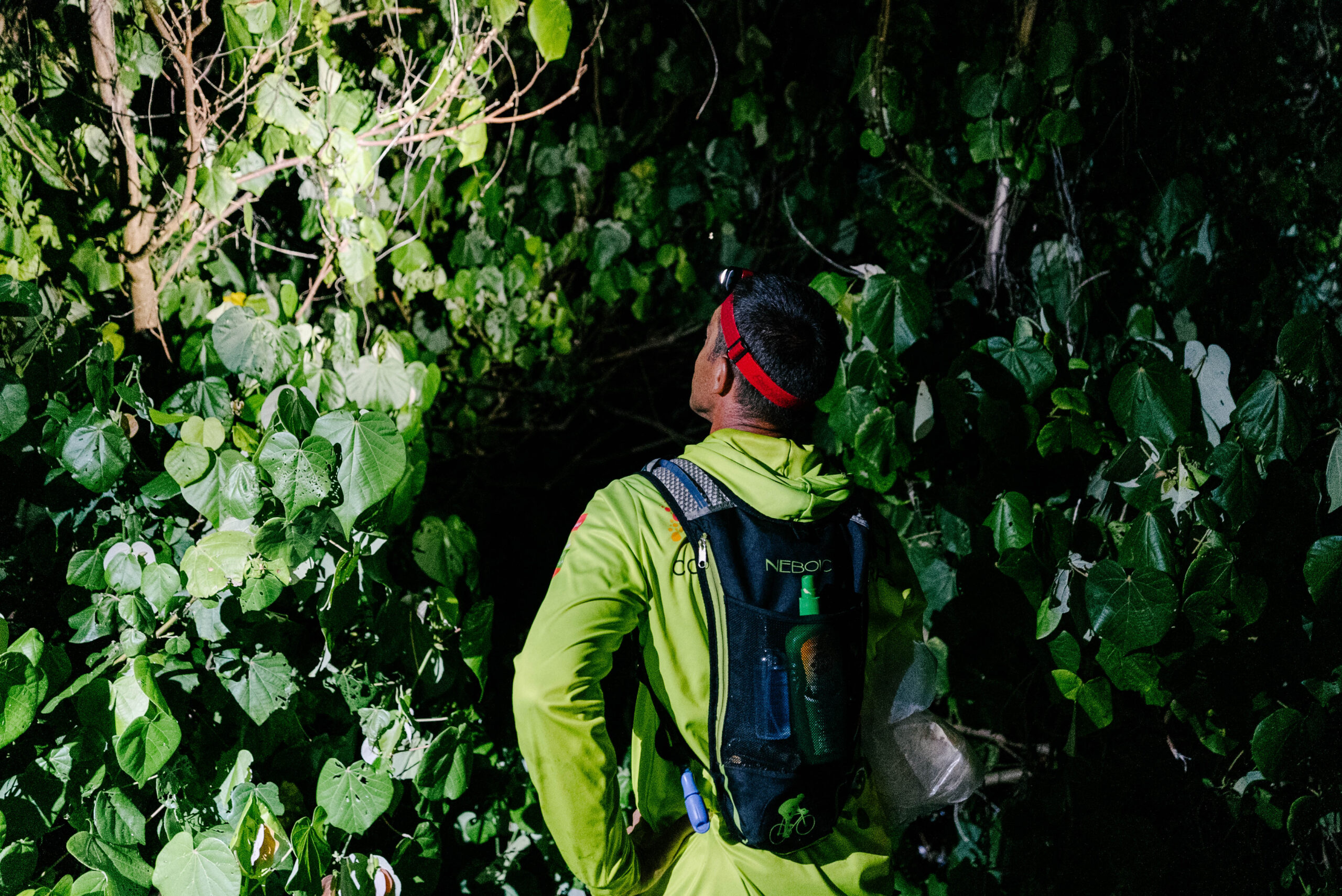
As the sun went down, it was time to head outside to search in the wilds of Harmon! Dividing into three teams with a USGS biologist leading each, everyone began walking slowly and purposefully along the roadside near Two-Lovers Point meticulously searching the vegetation for snakes. The extra-bright headlamps provided by USGS made it easier to see the shine on their sinuous bodies as they slid through the trees.

One team was successful in capturing seven snakes with one snake each from the other two teams. In total, nine snakes were captured and euthanized. Viernes said of the G3 team, “They were wonderful to work with. Everyone in my group during the search had many good questions about BTS, which showed their interest.”

Feedback from G3 participants was positive. “After the training, I felt more educated on the topic of invasive snakes in Guam, learning there are no deadly venomous snakes here. My level of comfort for handling snakes is much higher now and I am better at spotting them,” said Chansey Rios.

Ryan Perez stated, “The training was very good. I have killed snakes before when they have come around my house, but now I know how to handle them properly and humanely.”

This G3 cohort continues to make advancements toward a healthy, sustainable environment for Guam.

G3 Conservation Corps digs into Biosecurity with the DoAg

G3WIR

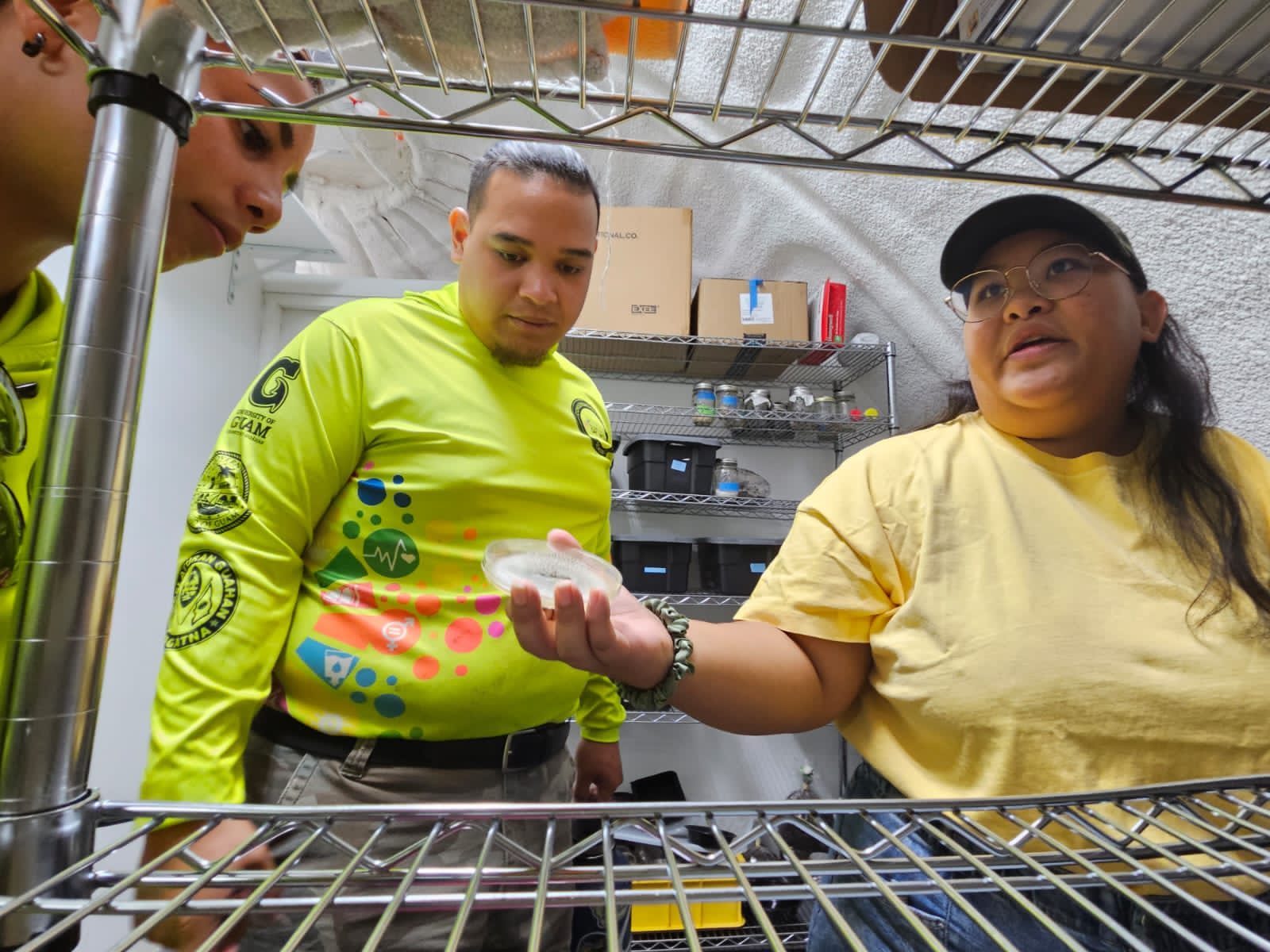
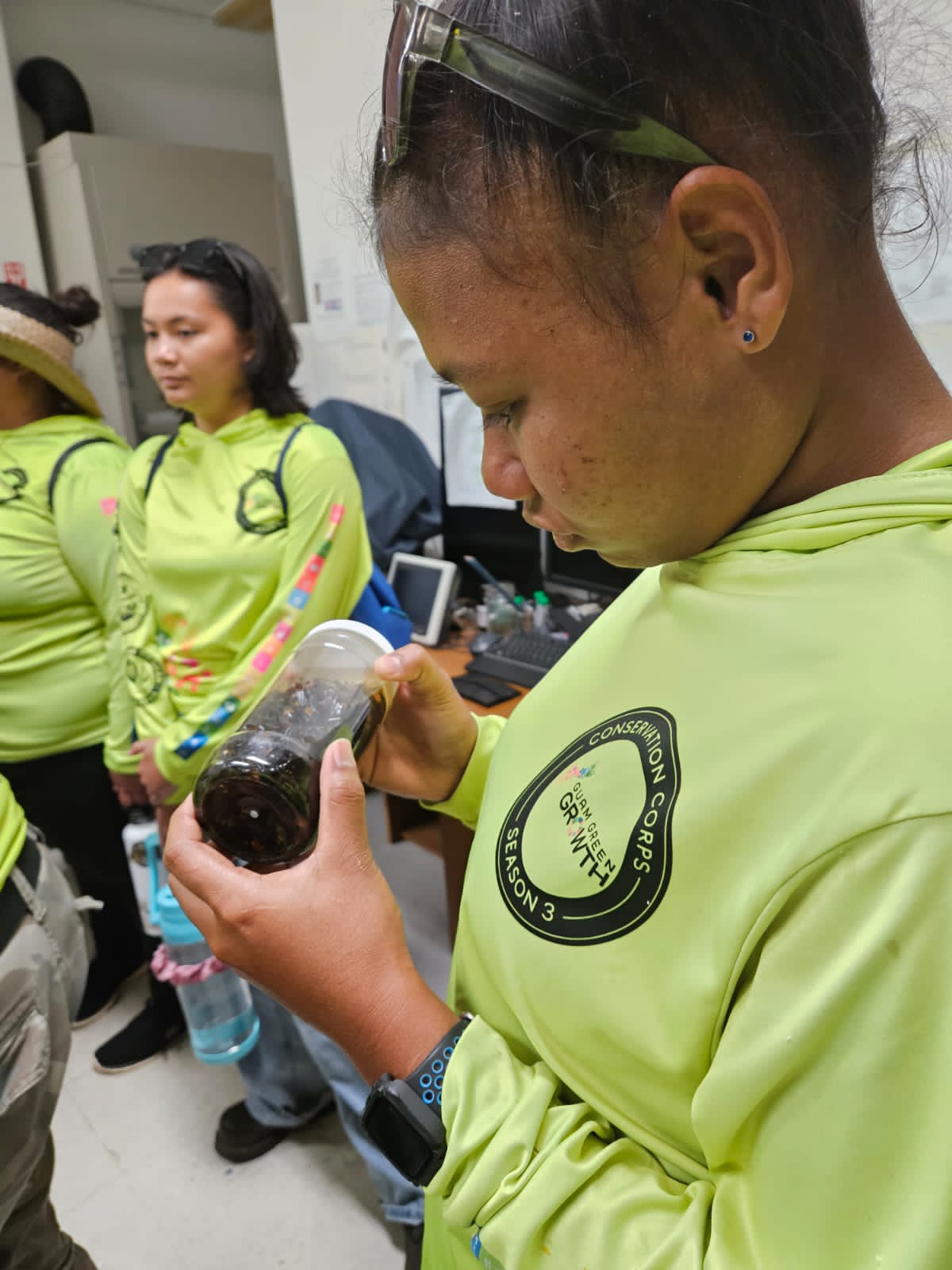
The Guam Green Growth Conservation Corps dug in and learned about protecting our island and our resources as they spent the week with the biosecurity team at the Department of Agriculture. 


The members of the corps got a closer look at the invasive species that have made their way to our island and continue to cause destruction in the local and native landscape including the infamous Rhino Beetle and the Brown Tree Snake.


For many, this was the first time they were given this crash course in biosecurity and had the opportunity to see the pests up close and personal.


The team learned about prevention of invasive species, how to collect them and how the Department tracks traps and deals with creatures caught in them.


Gallery: CHamoru Village cleanup work by G3CC

G3WIR

The Guam Green Growth Conservation Corps joined the CHamoru Village community in the cleanup efforts at the Hagatna landmark. 

The group helped remove blown down trees and shrubbery along with other debris that blew into the iconic area. 

CHamoru Village is also the home to the Guam Green Growth Circular Economy Makerspace and Innovation Hub.


Gallery: G3CC assists at the debris station

G3WIR

The Guam Green Growth Conservation Corps volunteered alongside the Guam Environmental Protection Agency and the Army Corps of Engineers at the debris and waste collection site in Tiyan, Barrigada. 

The site collected household debris from Typhoon Mawar as residents continued cleanup efforts following the storm. 

Members of the Corps assisted in check-in of residents, offering directions to proper drop-off points and classification of debris. 

They also assisted community members with offloading their debris at the site. 

The Guam Green Growth Conservation Corps volunteered at the site for the whole week.

“(The Guam Green Growth Conservation Corps) were very helpful.  They were assisting the manamko and other people with their dumping,” said Barrigada resident Ryan Shayne. 


UOG Guam Green Growth Conservation Corps recruiting 12 

G3WIR

Green Economy: Members of the Guam Green Growth Conservation Corps will be engaged in education and development modules for five months including work in renewable energy, zero waste, watershed restoration, endangered species preservation, agriculture, aquaculture, circular economy, invasive species removal, and more.

The University of Guam is recruiting for the third cohort of the Guam Green Growth Conservation Corps (G3CC).

The five-month workforce development program is looking for 12 new members.

The group will be involved in weekly modules that will help prepare them for a career in the emerging green economy.

Focus areas will include renewable energy, zero waste, watershed restoration, endangered species preservation, agriculture, aquaculture, circular economy, invasive species removal, and more.

“We are excited to begin the third season of the G3 Conservation Corps,” said Director Austin J. Shelton of the UOG Center for Island Sustainability and Sea Grant. “This program is preparing our people to enter the growing field of green jobs and help create a sustainable future for our island at the same time.”

According to program coordinator Phillip Cruz, G3 Conservation Corps gives members in-depth and in-person exposure to sustainable disciplines and work areas.

“G3CC members will literally get their hands dirty, and their feet wet, with the various activities in conservation and sustainability across the island,” said Cruz. “Experts will mentor the cohort each week, giving them hands-on experience in the various fields.”

Along with professional development opportunities, the corps can also earn 10 continuing education units (CEU) from the University of Guam’s Global Learning and Engagement program for every 10 hours worked, up to 80 for the entire five-month program.

According to Cruz, of the 12 positions available, 10 are for Conservation Corps leaders who will receive a bi-weekly stipend of $1,300 and two are for Conservation Corps supervisors who will receive a bi-weekly stipend of $1,500.

Interested individuals can apply here with applications being accepted from Jan. 11 to Feb. 1, 2023.

Guam Green Growth celebrates Conservation Corps graduates

G3WIR

Members of the Guam Green Growth Conservation Corps capped off their five months of full-time hands-on training through a graduation ceremony held on Wednesday, August 18, 2022, at the Ricardo J. Bordallo Governor’s Complex (Adelup) in Hagåtña.  

The ceremony recognized its second batch of conservation corps graduates since the members were recruited in March 2022.  

The graduates include Jenelle Aguilar, Rejean Benavente, Johnny Borja, Jacob Concepcion, Remilou Hannigan, Dulce Imbo, Wade Kitalong, Ryan Perez, Christopher Quichocho, Hila’an San Nicolas, and Tre Starr. 

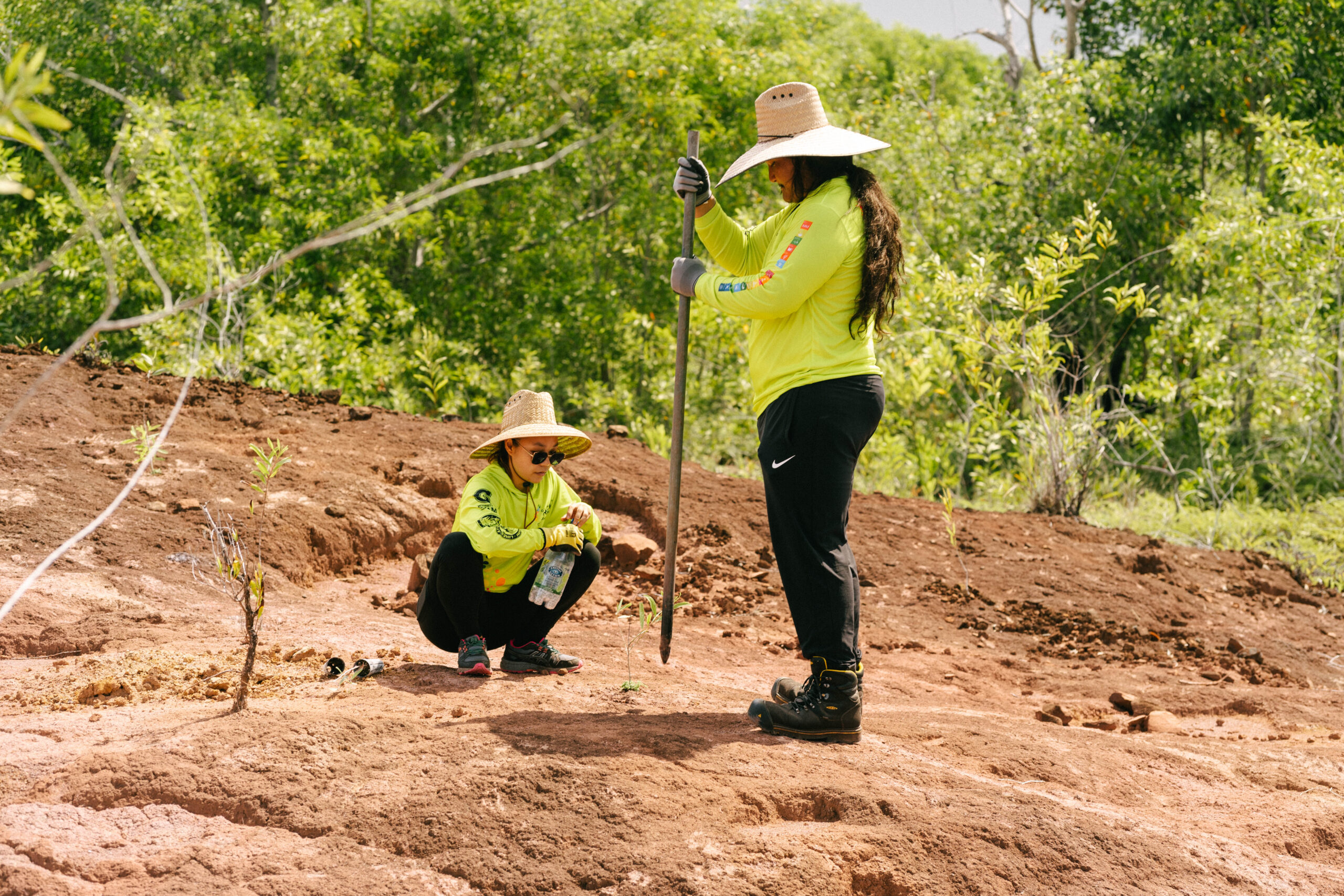
Over the course of the last five months, the cohort gained experience through various aspects of sustainability such as agriculture and aquaculture, island beautification, invasive species removal, reforestation, circular economy and recycling, and renewable energy.  

“What you’ve done is tremendous,” said UOG President Thomas W. Krise as he addressed the graduates. “You’ve inspired other people just by your efforts. In terms of the cleanups, when you see somebody on the road and improving the road, it deters you from throwing something away as you drive by. You’re helping to change the feeling of how people treat the environment. You’ve done tremendous work and I’m very proud of you.”  

During the graduation, Austin Shelton, director of the Center for Island Sustainability and Sea Grant program, highlighted the cohort’s contributions to the community. 

“You have this training. You have this awareness and skills that you’ve built over these past five months that you can take into any career that you go into. That’s a very powerful force and you’re a part of this movement and we’re very proud to have you as part of G3. We’d love to continue to support you in any way that you may need in the future,” said Shelton.  

From March 14 to August 18, the G3 Conservation Corps:  

  • Collected and recycled 55,618 aluminum cans;  
  • Planted 1,705 food crops and pruned 2,986 trees;  
  • Built 81 feet of erosion control devices;  
  • Removed 321 white goods and bulky waste;  
  • Removed 19 brown tree snakes, 40 invasive frogs, and 27 gallons of invasive algae;  
  • Completed 15 roadside cleanups and 5 beach cleanups;  
  • Participated in 2 painting projects.  

 
During the ceremony, Lt. Governor Joshua Tenorio commended the cohort for their service to the island.  

“The five months you were able to embark and work together collectively not only has benefited yourself, but it has also benefited the people of Guam. For that, I want to thank all of you for your individual role. I hope you’ll be able to maintain that advocacy through your work,” said Tenorio.  

Dulce Imbo, a Conservation Corps graduate, was elected as the cohort’s representative to celebrate their completion of the program.  

“Sustainability starts within our own lives and habits by knowing and understanding our own story and truth,” said Imbo. “The past five months has allowed us to deepen our own understanding and reflect on who we are as individuals and use our own healing and as a way to propel ourselves in the work that we do.”  

About Guam Green Growth  

Guam Green Growth (G3) is the island’s most comprehensive public-private partnership created to achieve a sustainable future. Aligned with the 17 UN Sustainable Development Goals, G3 cultivates an ecosystem for transformative action to achieve our island’s sustainable, prosperous, and equitable future. UOG facilitates the island-wide initiative in cooperation with the  Office of the Governor of Guam and the 99 members of the G3 Working Group representing all sectors of our society.     

G3 first launched the Conservation Corps in partnership with UOG Center for Island Sustainability and UOG Global Learning and Engagement department to establish a foundation for workforce development to support an emerging green economy in June 2021.  

G3CC teaches recycling along Liberation Day parade route

G3WIR

The Guam Green Growth Conservation Corps crafted recycling bins and distributed them to parade goers as the Liberation Day parade returned after a two-year hiatus due to the pandemic.
 
The Corps distributed the bins free of charge as families fired up the grills and gathered to celebrate the 78th anniversary of Guam’s liberation from occupation and the end of World War 2.
 

During the parade, the group made their way up and down Marine Corps Drive and assisted families, collecting aluminum cans that will be donated to the IRecycle program to raise money for local schools.

“I think this is a great idea,” said Michelle Perez who attended the parade with her family. “(The Conservation Corps) even showed the kids what kind of cans were recyclable.” 
 
Perez was just one of the many people who participated in the recycling efforts and used the bins provided by the second cohort of the workforce development program. 
 
According to UOG Center for Island Sustainability’s sustainability coordinator Phillip Cruz, the Corps collected dozens of large trash bags of aluminum cans that were diverted from the landfill and will make their way to school bins to help raise funds for student activities. 
 
“I hope the hard work of the Conservation Corps goes a long way to not only help get some of the cans out of the landfill, but also inspire people to continue recycling,” said Cruz.  “The families were able to keep the bins we made and hopefully they will continue using them at their homes.”
 
If community members would like to donate cans and help recycle, they can deliver them to the Guam Green Growth recycling bins at Mayor’s offices or in IRecycle bins at participating schools.
 

G3CC gains insight with module on renewable energy and solar power 

G3WIR

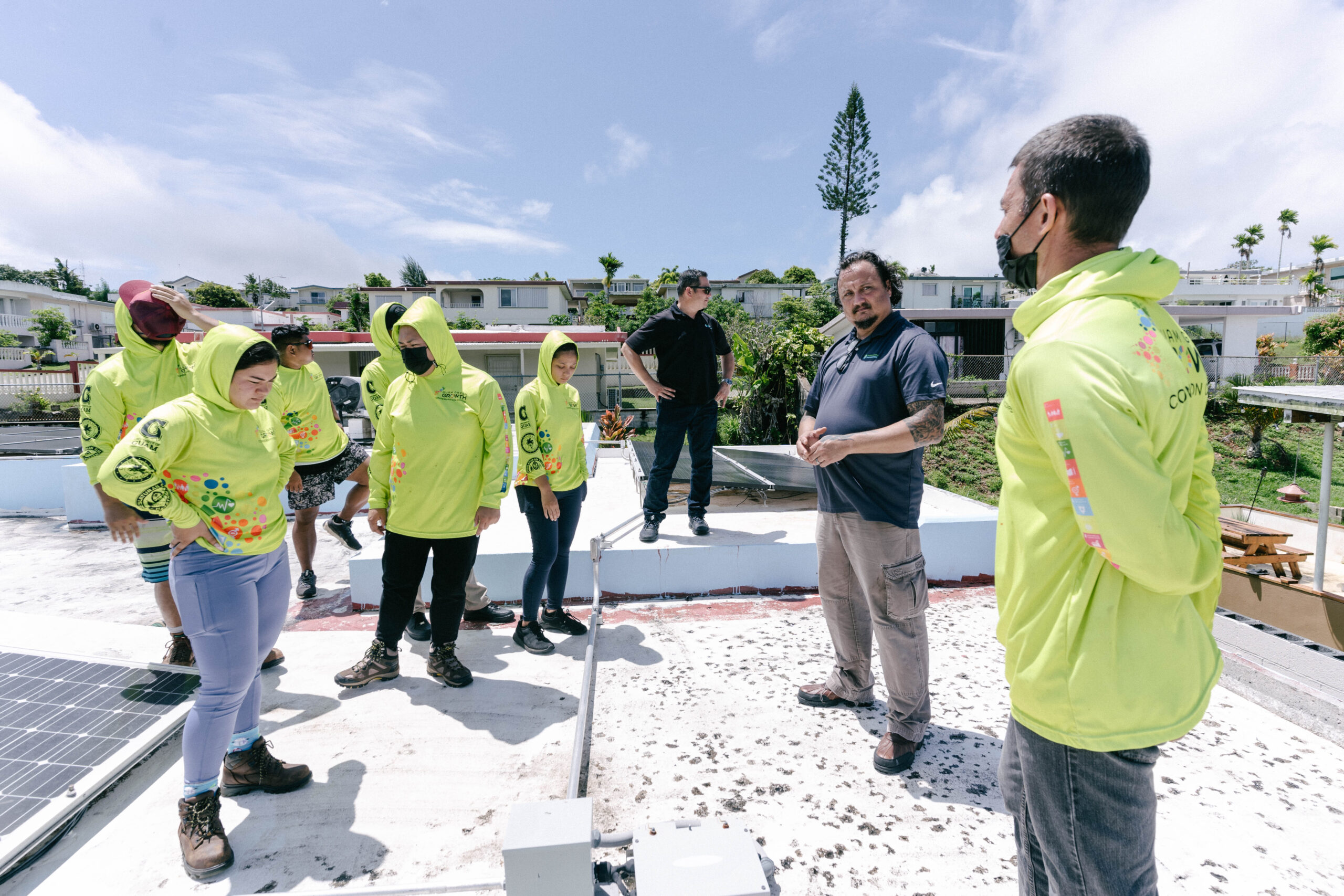
A tour organized by a local solar energy company spurred interest among the members of the University of Guam – Guam Green Growth Conservation Corps to explore the available career opportunities in this growing industry on island.  

A team from Pacific Solar & Photovoltaics, led by general manager Scott Hagen, organized the tour on July 11 for the G3CC members. The company has been setting up photovoltaic systems for residential, commercial, educational, and military clients on Guam and in the Marianas since 2008. The University of Guam and the Guam Community College are among the multiple clients of the company. 

The G3CC members visited commercial and residential sites and heard about the current career programs offered by the company. The Pacific Solar team also showed their new hydroponics system in Dededo.  

The G3CC members said the orientation offered a glimpse into career opportunities that could help boost the development of a renewable energy workforce on island.  

According to G3CC member Ryan Perez, the Pacific Solar team encouraged them to take classes because there is a shortage of renewable energy staff on Guam. “He showed us these different courses that we can take off-island or online,” Perez said.  

For those who are interested in expanding their career path, the company could help them get a foot in the door by supporting them while they get certified for certain high-demand jobs, according to G3CC member Johnny Borja. 

Borja added that Pacific Solar also has a program that encourages more women to enter the renewable energy industry. “With that whole push of getting females into STEM (Science Technology Engineering and Mathematics), they are trying to get them out into the field or to try designing the systems themselves,” he said.  

G3CC member Rejean Benavente agreed that the incentive provided by the company to help get more women into the renewable energy industry is a good step for widening interest in STEM. But she said getting the word out into the community also helps increase awareness and interest in the program.  

The G3 Conservation Corps program prepares the community for the emerging green economy. All program cohorts participate in a 5-month workforce development program that covers various industries —- from invasive species management to energy conservation and renewable energy.   

About G3 
Aligned with the 17 U.N. Sustainable Development Goals, the Guam Green Growth Initiative, or G3, cultivates an ecosystem for transformative action to achieve a sustainable, prosperous, and equitable future for Guam. The University of Guam facilitates the island-wide initiative in cooperation with the Office of the Governor of Guam and the 100 members of the G3 Working Groups, representing all sectors of society. 


Guam Green Growth Conservation Corps faces invasive species problem with snake hunt

G3WIR

In a recent lesson, the Guam Green Growth Conservation Corps (G3CC) took on the most notorious invasive species on island, the Brown Tree snake (BTS).  

No matter what their level of comfort for handling snakes, they all enthusiastically entered the classroom at the United States Geological Survey (USGS) in Ritidian and got down to the business of learning about the invasive pests. 

USGS biologists Charlene Hopkins and Marijoy Viernes delivered a PowerPoint presentation with photographs of snakes in various species of trees and tangled vines to help the Corps hone their BTS search image.  

Afterwards, they brought out colorful rubber snakes to allow everyone to practice handling skills and field stress-free euthanasia. Then, the live snakes were released from their snake bags and things got very animated! 

Divided into two groups, participants got hands-on experience in using a snake stick as well as how to safely pick up snakes in a controlled environment. It was difficult for the snakes to get traction on the shiny, waxed floors, but for some first-time wranglers it still was a challenge. 

As the sun went down, it was time to head outside to search in the wilds of Harmon. 

Dividing into three teams with a USGS biologist leading each, everyone began walking slowly and purposefully along the roadside near Two-Lovers Point meticulously searching the vegetation for snakes. 

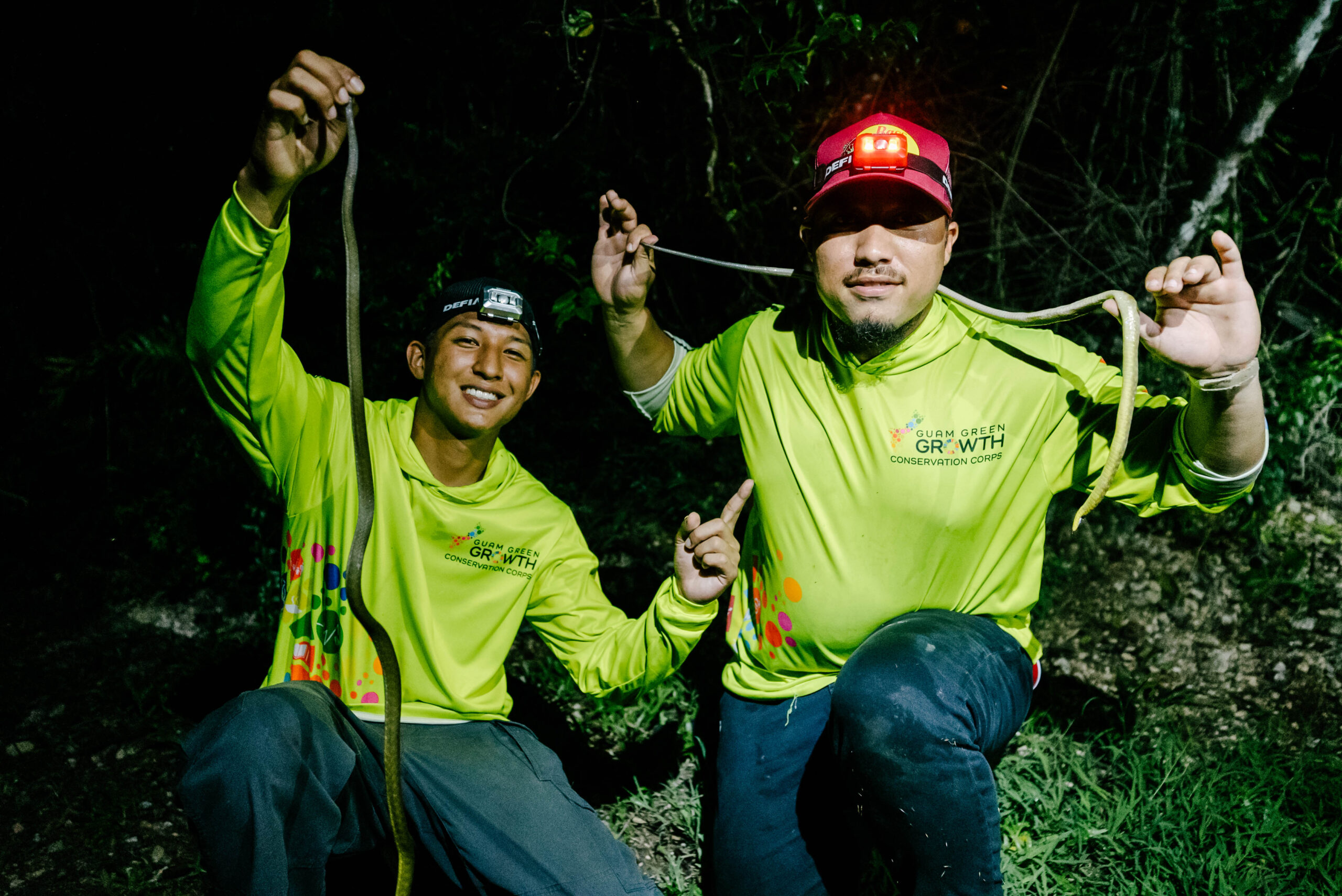
The extra-bright headlamps provided by USGS made it easier to see the shine on their sinuous bodies as they slid through the trees. 

One team was successful in capturing seven snakes with one snake each from the other two teams. In total, nine snakes were captured and euthanized. Viernes said of the G3CC team, “They were wonderful to work with. Everyone in my group during the search had many good questions about BTS, which showed their interest.” 

Feedback from G3CC participants was positive. “After the training, I felt more educated on the topic of invasive snakes in Guam, learning there are no deadly venomous snakes here. My level of comfort for handling snakes is much higher now and I am better at spotting them,” said Chansey Rios. 

Ryan Perez stated, “The training was very good. I have killed snakes before when they have come around my house, but now I know how to handle them properly and humanely.” 

This G3 cohort continues to make advancements toward a healthy, sustainable environment for Guam. 
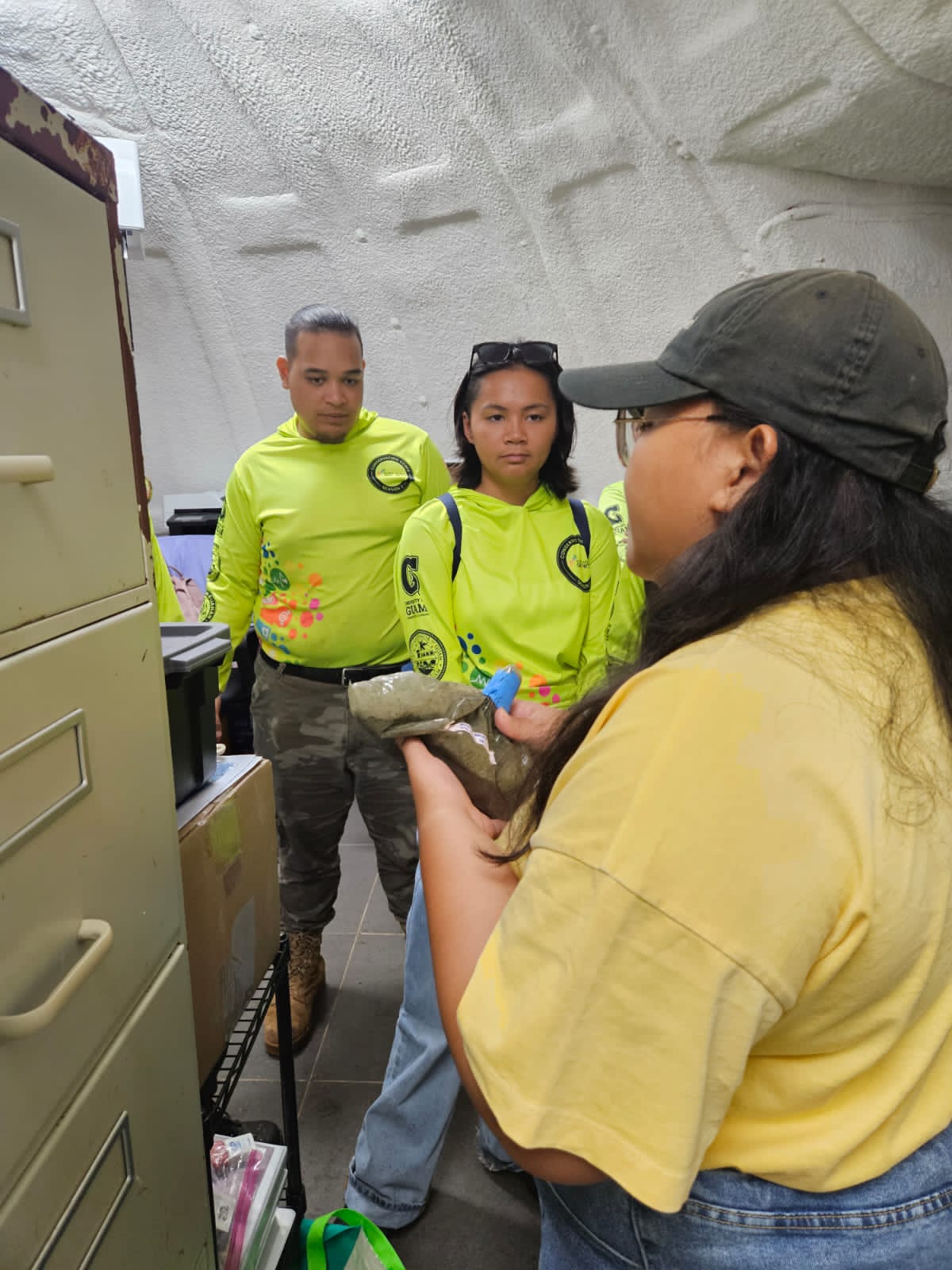
The Corps will continue work with invasive species through the rest of the program’s run including a scheduled module removing invasive algae from Guam’s beaches and shores.  

Conservation Corps members get their hands dirty at the Triton Farm

G3WIR

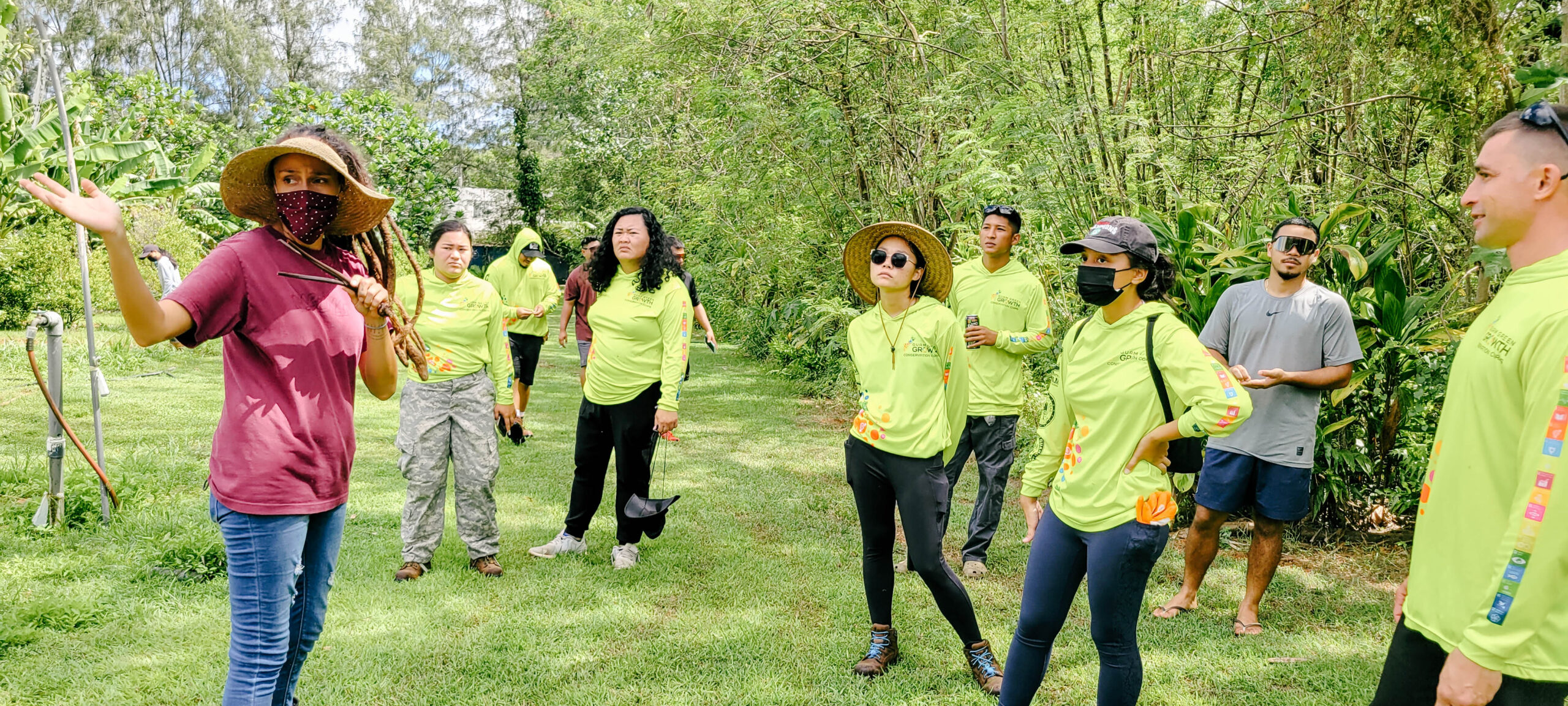
The Guam Green Growth Conservation Corps participated in a week-long training in June at the University of Guam Triton Farm, where members gained real-life skills while learning about various sustainability topics.  

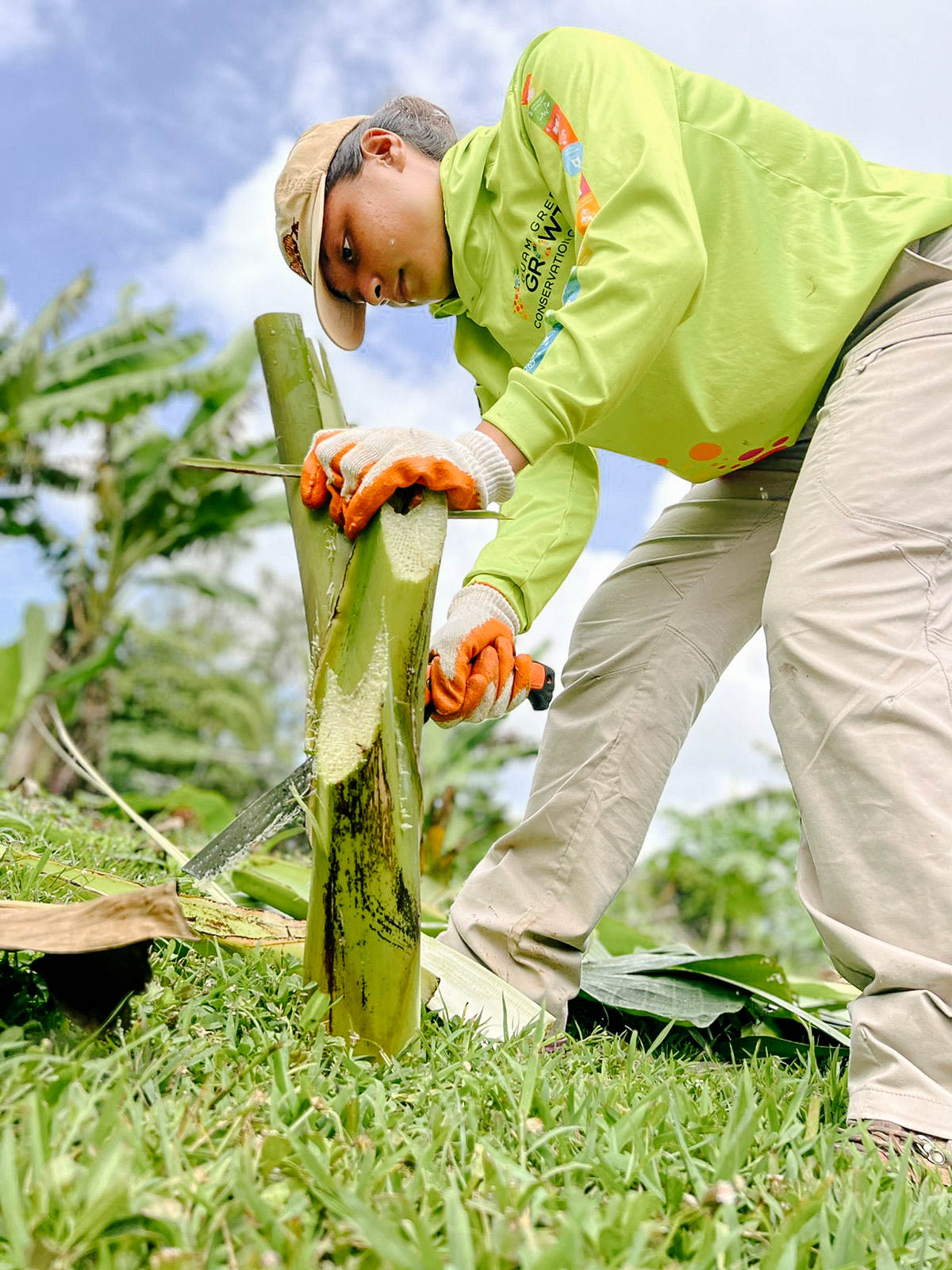
For several days, the Conservation Corps members learned about food security, invasive pest management, and culturally appropriate agricultural and horticultural techniques under the guidance of farm manager Jessica Nangauta and staff.  

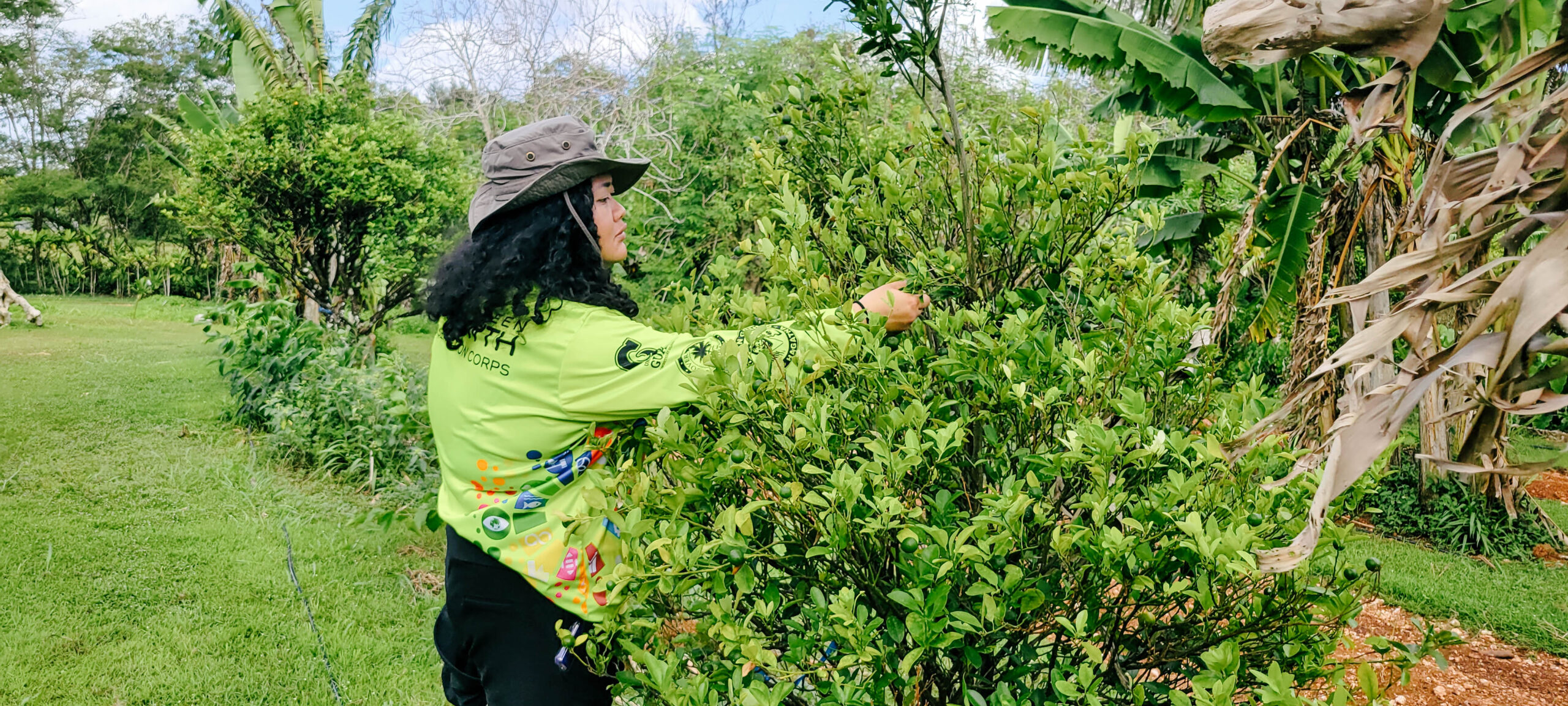
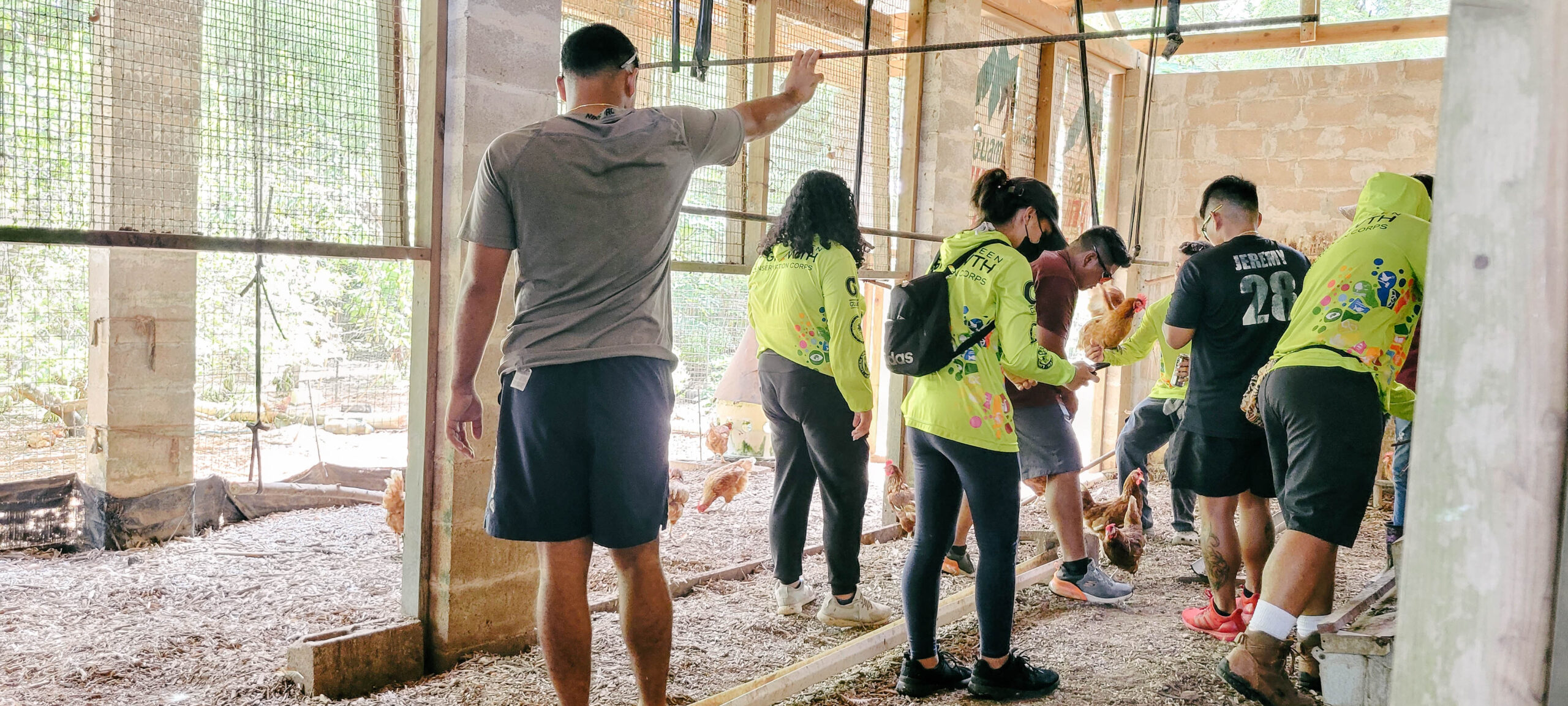
We are an integrated farm system. We have four acres here. We do aquaponics. This is where we raise tilapia, and grow leafy greens like lettuce, basil, and mint. We have a horticulture field where we plant a lot of native plants on the ground like taro, tapioca, calamansi, lemmai, banana, and different types of ground and seasonal crops. And then we have an animal husbandry area where we raise over 800 egg-laying hens for the community,” Nangauta said. 
The main goal of the farm is to increase food security, food sovereignty, and to invite the public over to learn about what it is like to grow food on Guam, according to Nangauta. The farm provides fresh farm products to the community as well as local restaurants, hotels, and other businesses.  

During their service at the farm, the Conservation Corps members: 

  • Culled approximately 40 invasive frogs/toads as part of aquaponics pest management.  
  • Planted approximately 430 plus lettuce sprouts in the aquaponics raceway and harvested and prepped 5 lbs. of lettuce for sale. 
  • Collected and washed approximately 300 eggs from the hen houses. 
  • Prepped around 200 ft or drip irrigation. 
  • Planted around 200 taro seedlings, air layered 7 branches of lemmai, and planted 17 lemmai seedlings in pots. 

Conservation Corps member Ryan Perez, the training experience at the farm exposed him to another aspect of sustainability. “This is an eye opener to see what other people on Guam are doing for food security and sustainability.” 

The multi-acre organic farm in Yigo provides training, research, and outreach opportunities to the community in sustainable agriculture and food production. As a unit affiliated with the College of Natural and Applied Sciences and other colleges and schools of the University of Guam, the farm also hosts demonstrations and workshops on farming systems that integrate the island’s environmental, socio-economic, and cultural conditions. 

“We are open from Monday thru Friday, between 9 to 4, and people usually call-in advance to let us know what they would like to order and to know what is available in the week. We also do farm tours. So, we invite the public over, from pre-school to the manamko to have them tour around the farm and do some hands-on work and volunteer,” Nangauta said.   

For more information about the UOG Triton Farm, check out https://www.facebook.com/UOGTritonFarm 

Skip to content