
Guam welcomes regional conservation leaders for NACD Pacific Southwest meeting
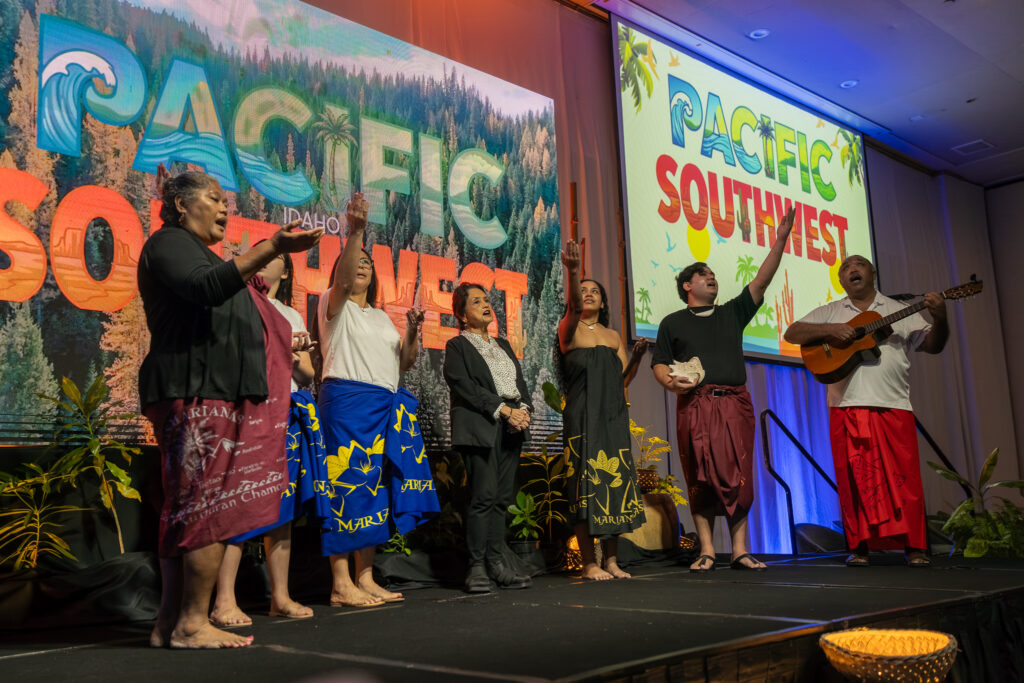
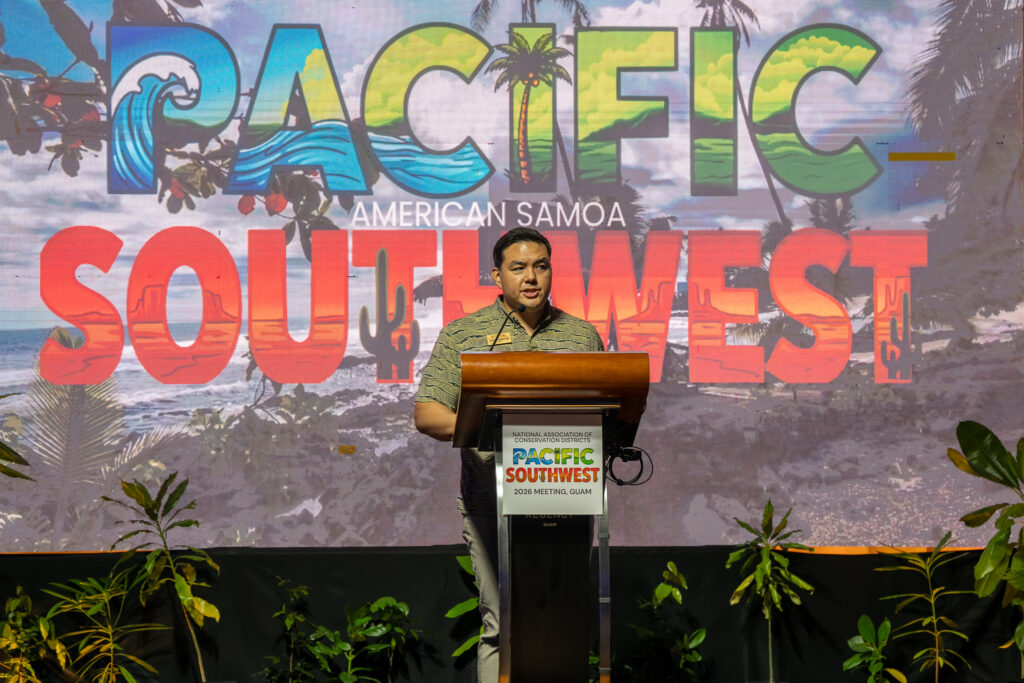
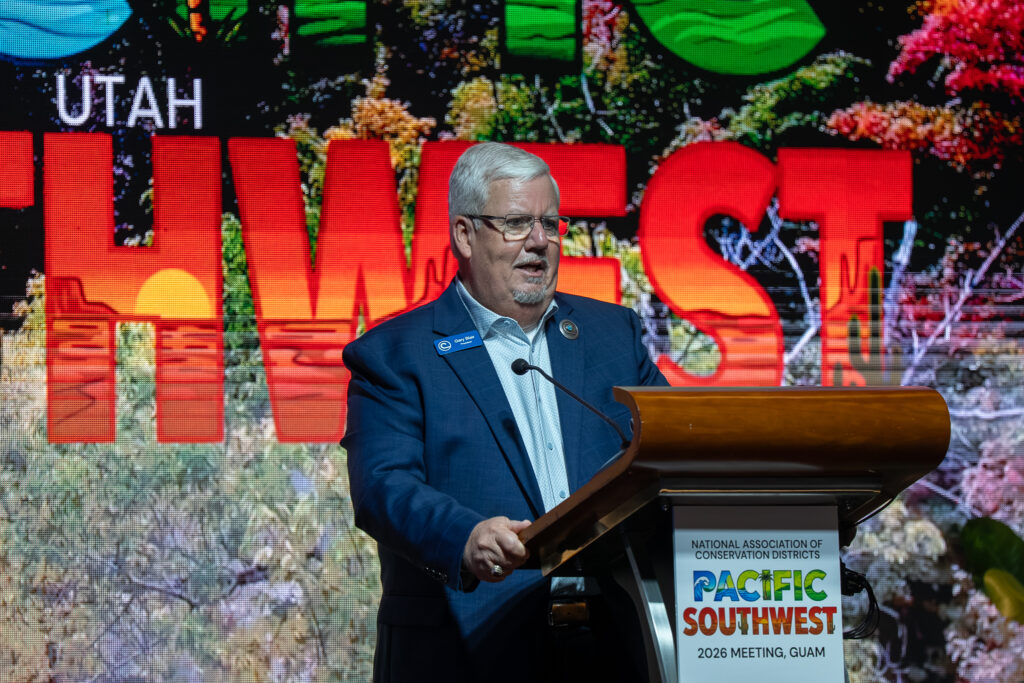
Conservation leaders from across the Pacific and Southwest gathered on Guam recently to exchange ideas, strengthen partnerships and explore solutions to some of the region’s most pressing soil, water, and natural resource challenges.
The 2026 National Association of Conservation Districts Pacific and Southwest Joint Regional Meeting, held at the Hyatt Regency Guam, brought together conservation district leaders, researchers, natural resource professionals and community partners under the theme “Currents of Conservation: Navigating Soil & Water Stewardship.”
The gathering was hosted in partnership with the Northern Guam Soil and Water Conservation District and Southern Guam Soil and Water Conservation District and the Office of the Governor of Guam with the University of Guam Center for Island Sustainability and Sea Grant helping facilitate the meeting and support from UOG’s Global Learning and Engagement team.
Hosting the regional meeting on Guam provided an opportunity to bring conservation leaders directly into the island community and showcase both the environmental challenges Guam faces and the locally driven work underway to address them.
Over several days, participants discussed issues including agriculture, watershed management, water quality, invasive species, wildfire, conservation planning and the use of emerging technologies and data to better understand and protect natural resources.
The meeting also featured multiple breakout tracks and tours of both northern and southern Guam, giving visiting participants an opportunity to see the island’s conservation needs and projects firsthand.
For Guam’s conservation districts, the regional gathering provided an important platform to share the island’s perspective with colleagues whose communities face many similar challenges.
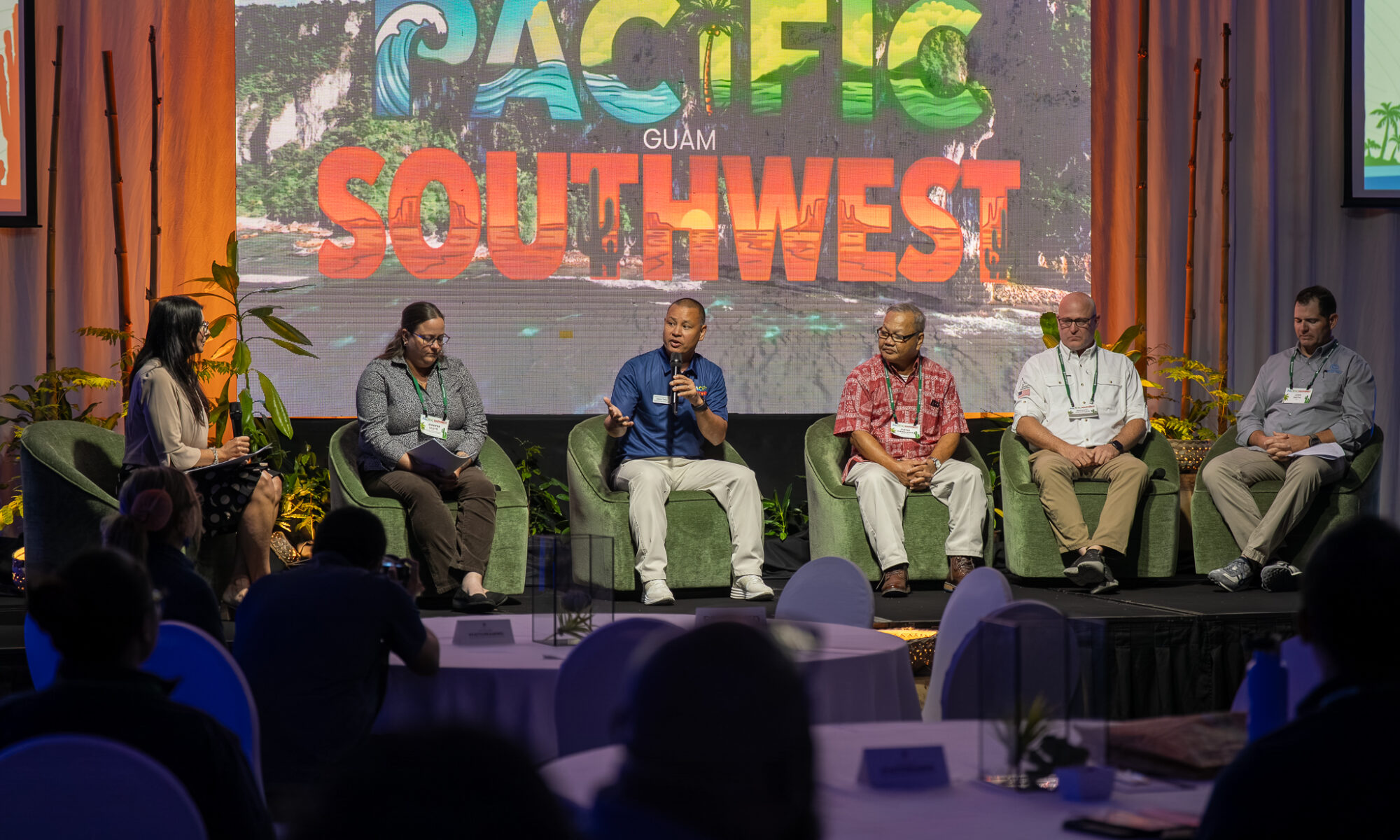
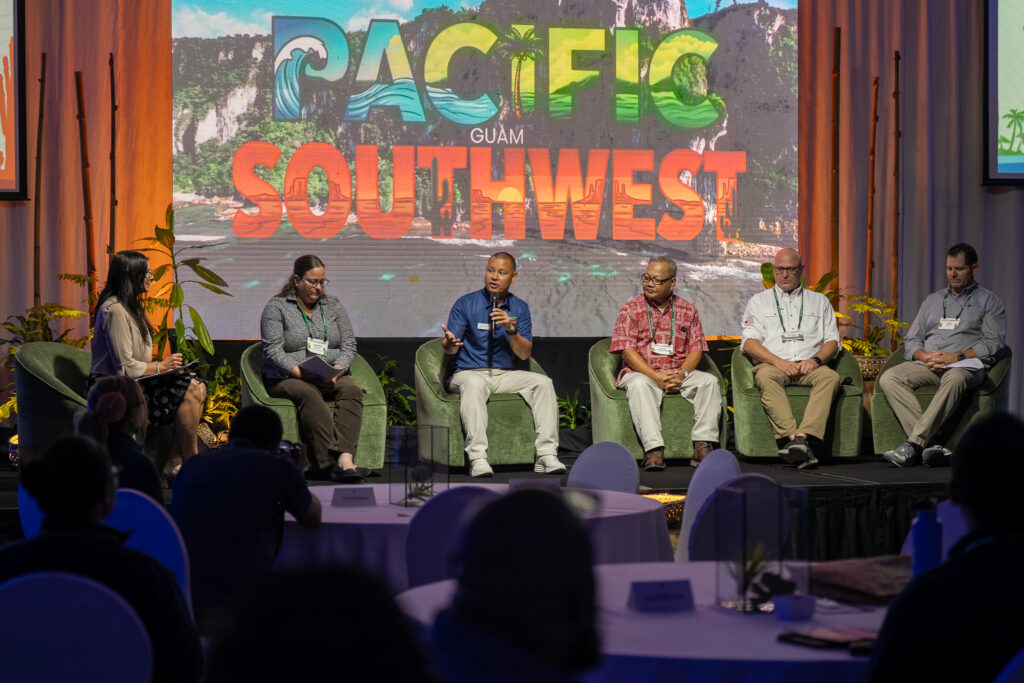
“Today, we have a group of professionals, changemakers and stakeholders from all around the Pacific and Southwest, and our mission is clear – discuss, share and collaborate to help provide solutions for our people who are fighting to conserve our lands across this region,” said main stage facilitator Kyle Mandapat during his opening remarks.
Island environments are particularly connected systems, where decisions made on the land can quickly affect watersheds, groundwater, coastal ecosystems and ultimately the ocean. Guam’s two Soil and Water Conservation Districts work with government agencies, farmers, landowners and other partners to encourage responsible management and conservation of these resources. The Northern Guam district, for example, is a Government of Guam board established by law to promote conservation of the island’s soil and water resources.
The University of Guam was also represented through its research community.
Researchers from UOG’s Water and Environmental Research Institute of the Western Pacific (WERI) presented work examining Guam’s freshwater resources and landscape. Recent UOG graduate Mary Clare Snaer presented an immersive look at the Northern Guam Lens Aquifer, while WERI hydrologist Nathan Habana shared research with participants during the regional meeting.
The presentations highlighted the importance of connecting scientific research with conservation work happening on the ground — particularly as Guam and other island communities confront changing environmental conditions and increasing pressure on limited natural resources.
UOG Center for Island Sustainability and Sea Grant’s involvement also helped connect the university’s research, sustainability and community-engagement work with conservation professionals from throughout the region.
Beyond the presentations and field activities, the meeting provided an opportunity for conservation leaders to learn from one another. Although communities throughout the Pacific and Southwest differ considerably in geography and scale, many share challenges involving water security, sustainable agriculture, healthy watersheds, invasive species, wildfire and the long-term stewardship of natural resources.
Bringing those perspectives together on Guam allowed local organizations to share approaches developed specifically for an island environment while learning from conservation work underway elsewhere in the region.
The gathering also strengthened connections between Guam’s conservation districts, the University of Guam and regional and national partners — relationships that can lead to future research, training, technical assistance and collaborative conservation projects.
For Guam, hosting the NACD regional meeting was more than an opportunity to welcome conservation professionals to the island. It placed Guam’s environmental challenges, research and community-driven solutions into a larger regional conversation and demonstrated the role island communities can play in shaping the future of conservation.
As participants returned to their respective communities, they took with them a firsthand look at Guam’s natural resources — and the people and partnerships working to protect them.