

Navigating Home Fellow profile: On the invasive frontline with Kaylen Cruz
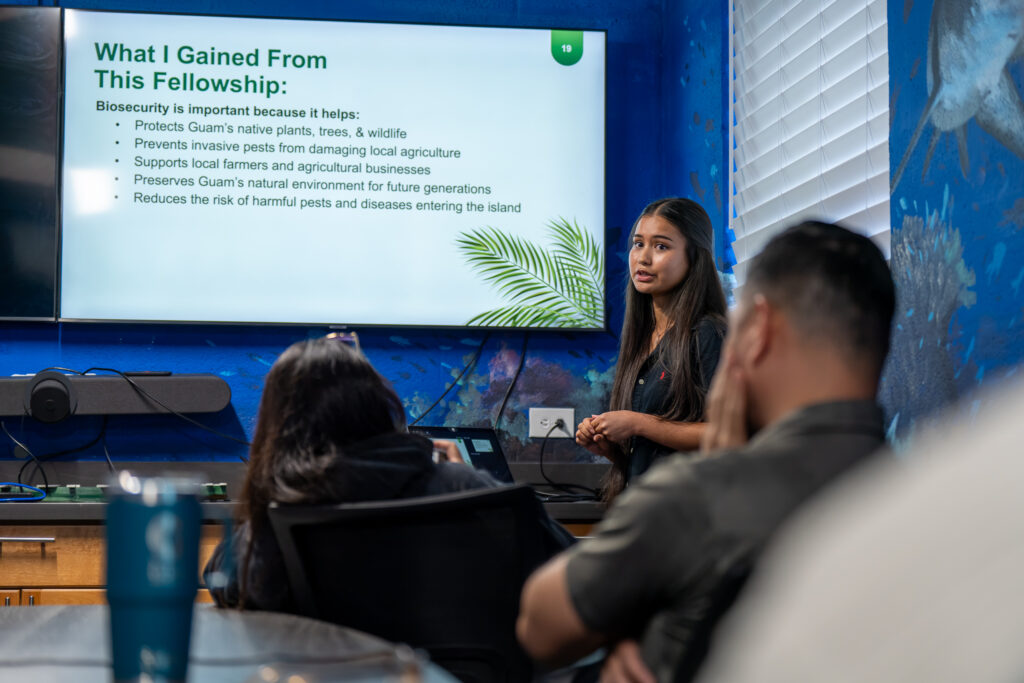
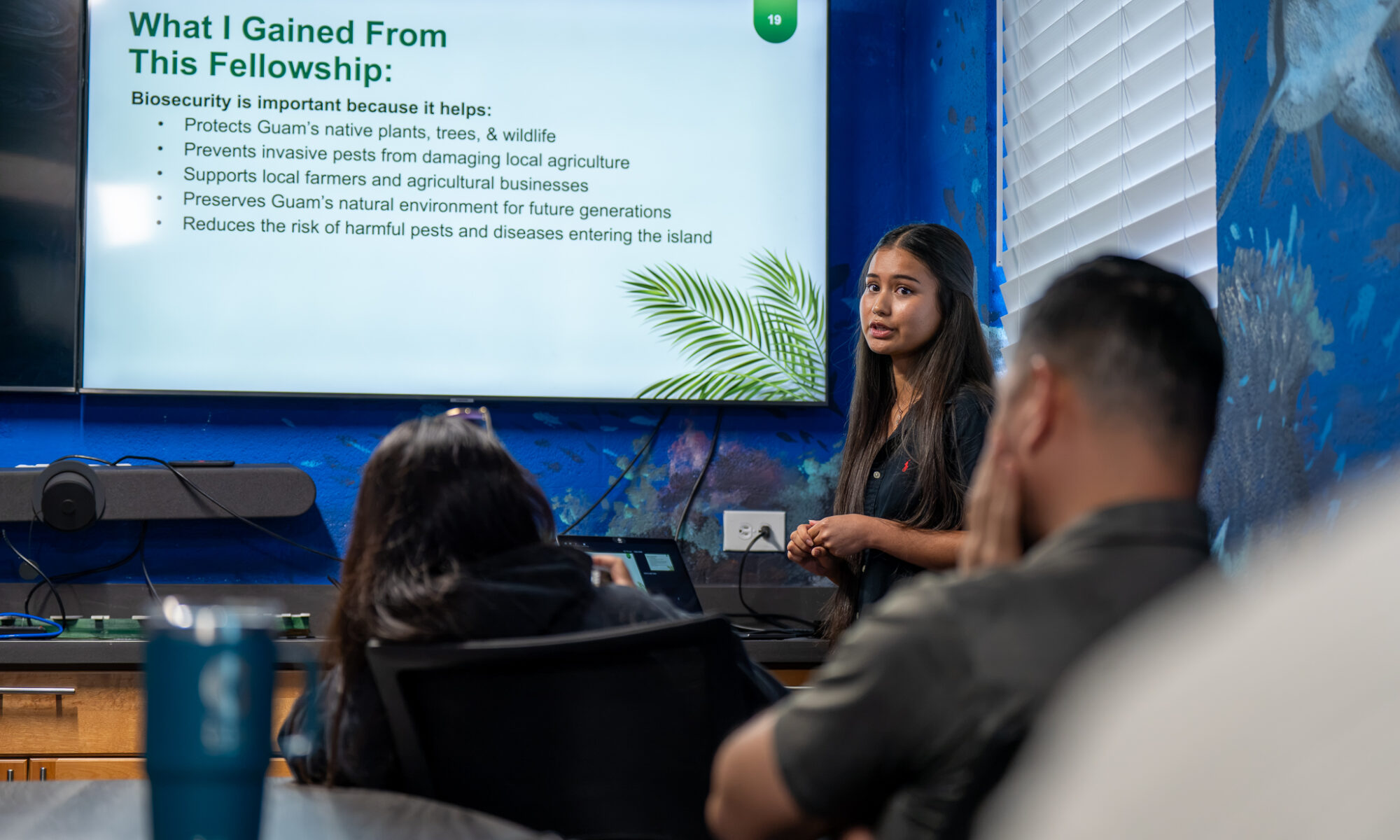
“As you know, we’ve been experiencing a lot of typhoons recently,” Navigating Home short-term fellow Kaylen Cruz told the audience at her final presentation this week. She said the fallen trees and vegetation those storms leave behind may harbor little fire ants and help them spread.
Her placement with the Guam Department of Agriculture’s Biosecurity Division put her on the front line: setting peanut butter bait flags, checking beetle and fruit fly traps, and learning how the island defends itself against invasive pests.
Cruz holds a bachelor’s degree in biology, with a focus on applied biology, from the University of Guam. She sought hands-on experience preventing and managing invasive species and agricultural pests. Her mentor was State Entomologist Chris Rosario, whose division works to protect Guam’s ecosystems, agriculture, and economy from invasive species, pests, and diseases.
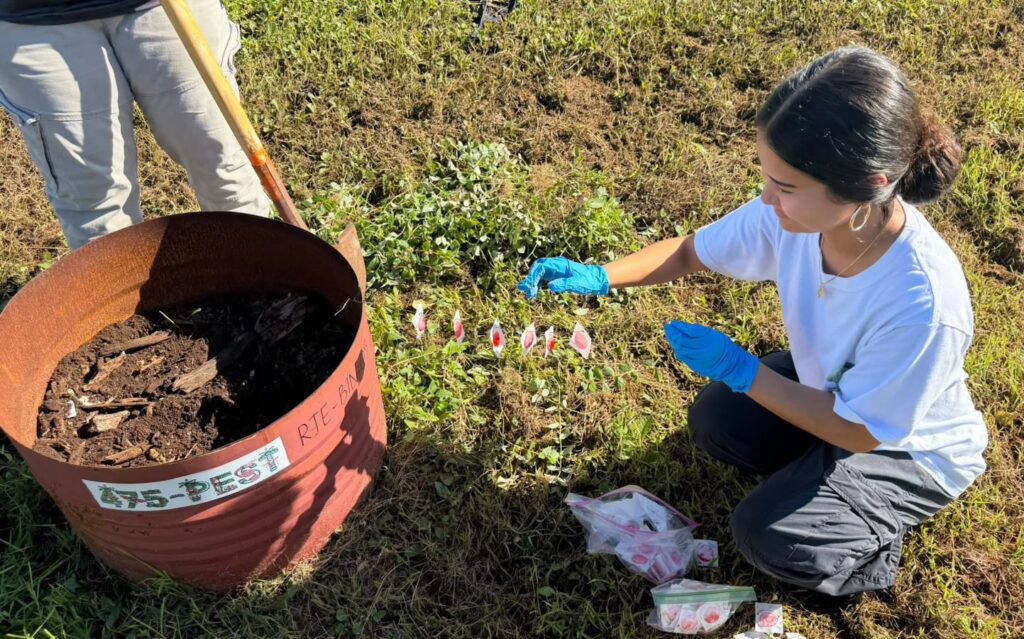
Cruz’s main project was monitoring little fire ants (Wasmannia auropunctata) at green waste sites around Guam. At each site, she helped place peanut butter bait flags along vegetated borders and returned after 35 to 45 minutes to check for ants. She marked each flag’s GPS location as positive or negative and entered the data into Epicollect, a free mobile and web platform for collecting field survey data. She said at one small site, nine of 36 flags were positive.
When the team found hotspots, Cruz helped apply two treatments. Tango bait, an insect growth regulator, stops larvae from developing into adults and sterilizes egg-laying queens. Siesta fire ant bait kills the entire colony, because workers carry the granules back to the nest and feed them to the queen and larvae. Regular surveys help guide where those treatments go.
Cruz also supported other monitoring efforts:
- Coconut rhinoceros beetle: She counted and sexed captured beetles, logged trap data, and cultured and applied Metarhizium fungus, a biological control agent, at breeding bins.
- Stored-product beetles: She inspected traps in warehouses and grocery stores, replacing lures every two weeks.
- Fruit flies: She checked traps near farms and host plants, identifying and counting insects to track population trends.
“I gained so much from this fellowship,” Cruz told the audience. She said biosecurity protects Guam’s native plants and wildlife, supports local farmers, preserves the environment for future generations, and reduces the risk of harmful pests arriving on the island. The experience deepened her understanding of environmental protection and strengthened her professional skills.
Navigating Home is a workforce development fellowship that brings graduates with Guam roots back home to build local sustainability and resilience. The University of Guam’s Center for Island Sustainability and Sea Grant (UOG CIS & Sea Grant) leads the Guam hub, which launched in 2023, in partnership with the National Science Foundation (NSF) INCLUDES SEAS Islands Alliance.