

The tiny creatures Guam forgot: SACNAS award-winning poster presentation brings insects back into focus
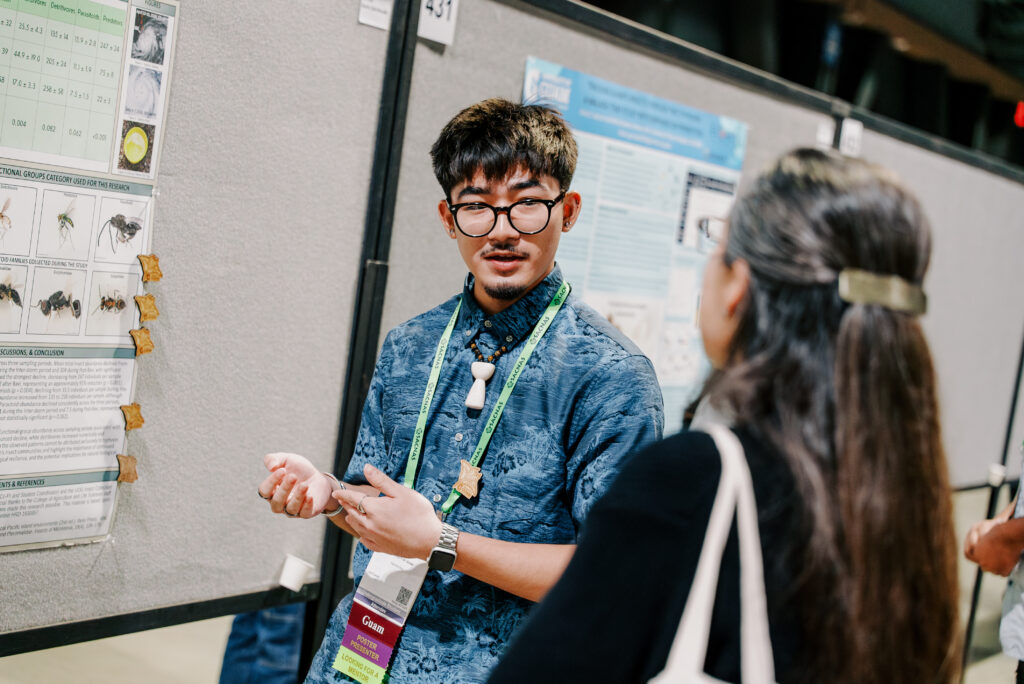
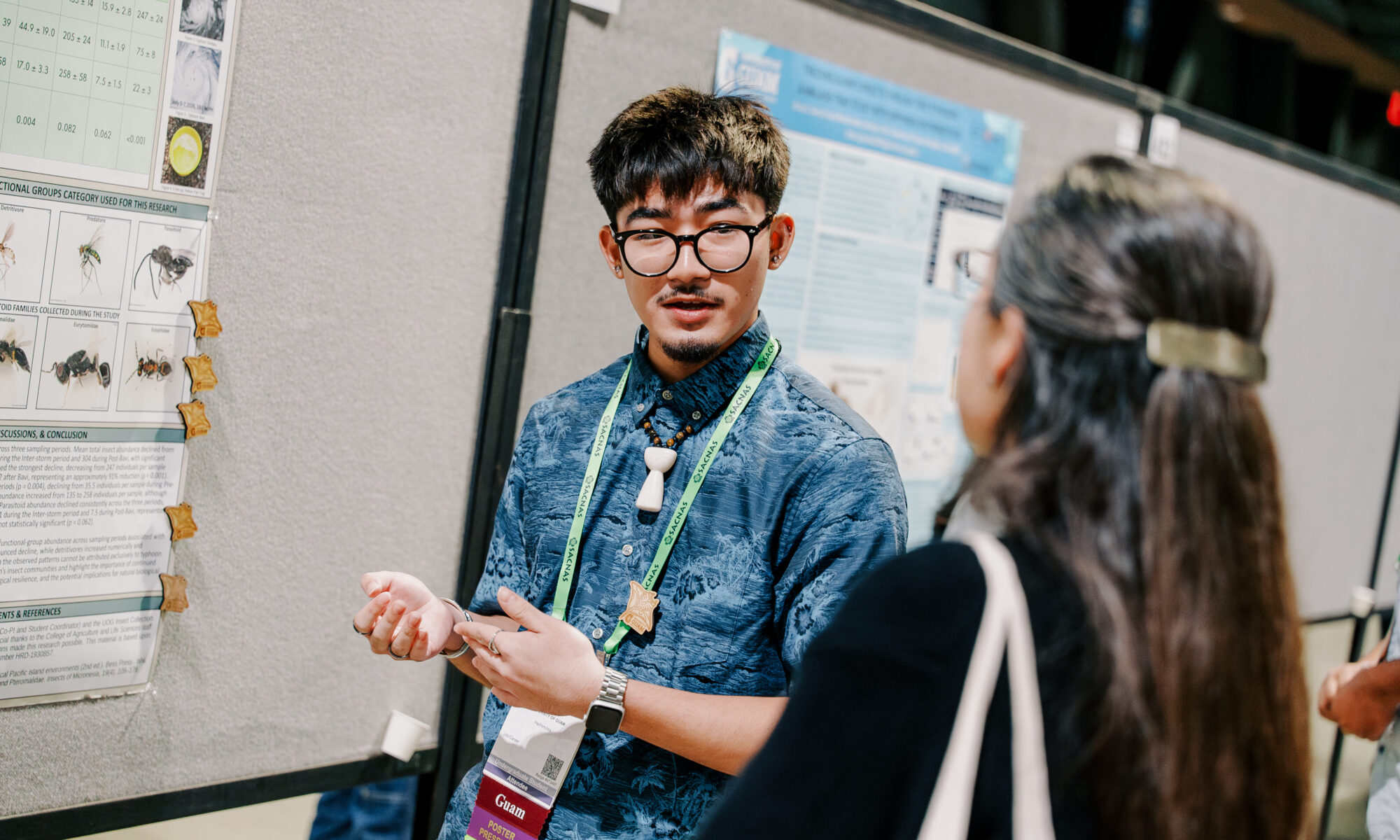
When two super typhoons hit Guam this year, University of Guam undergraduate Segundo Garrido was already out in the field counting insects. His research now provides the island’s first parasitoid inventory in about 60 years and earned him recognition in the undergraduate poster presentation category for life sciences/environmental sciences at the 2026 SACNAS Annual Conference in Long Beach, California.
SACNAS recognized more than seventy undergraduate and graduate students for their outstanding research and presentation skills. Through the presentations, Mentor Judges give students the chance to strengthen their research communication skills, receive personalized feedback, and connect with a network of peers and professionals in the scientific community.
Garrido, who worked with Daniel Alfred Johnson, Ph.D., presented a poster titled “Yellow Pan Trap Monitoring of Insect Responses to Typhoons on Guam, with Emphasis on Parasitoids.” The study tracked how insect communities changed across three periods: before Typhoon Sinlaku, between the storms, and after Typhoon Bavi.
Garrido described the project this way: “To examine the differences in insect abundance and the composition of insect functional groups across three sampling periods associated with 1) the period before the super typhoons 2) the period that super typhoons Sinlaku and Bavi hit Guam and 3) the period after the typhoons. In this study, there was particular attention placed on the parasitoids due to their ecological significance”
Using yellow pan traps placed near vegetation, the team analyzed 54 insect samples between February and September 2026. They divided the samples into four functional groups: herbivores, detritivores (decomposers), predators, and parasitoids. Parasitoids are small insects, often wasps, that develop in or on other insects and eventually kill them. This makes them natural allies against agricultural pests. They found that predator numbers fell by about 91% and plant-eating insects also declined significantly. Parasitoids dropped by about 53%, a downward trend that was not statistically significant.
The research also fills a long-standing gap. Garrido said, “Insect communities are ecologically important, but the information about many of Guam’s insects remains limited. Parasitoids are particularly interesting for this research because they can naturally regulate populations of other insects, including agricultural pests. Entomological research is lacking in Guam. Our last research done on Guam’s parasitoids was done well over 60 years ago. This research aims to fill the information gap and provide baseline data in an understudied area, while updating information on parasitoids in Guam. In doing so, it could possibly inform our next actions for sustainable biological control.”
The research was supported by the NSF INCLUDES SEAS Islands Alliance. The project also received guidance and support from Guam EPSCoR, the UOG Insect Collection Lab – Extension Entomology, and the College of Agriculture and Life Sciences. The work is based on work supported by the National Science Foundation under grant number HRD-1930857.
AT A GLANCE
- The big idea: Guam is hit by typhoons often, yet little is known about the island’s insects. This study looked at how insects changed around two typhoons, with a focus on parasitoids.
What’s a parasitoid? A tiny insect, often a wasp, that lays its eggs in or on another insect. The young wasp eventually kills its host, which makes parasitoids natural pest controllers for farmers.
What they did: Using four yellow pan traps, the team collected insects from February to September 2026, across three periods: before Typhoon Sinlaku, between the storms, and after Typhoon Bavi. They analyzed 54 samples and sorted the insects into four groups: plant-eaters, decomposers (detritivores), predators, and parasitoids.
What they found:
- Total insects dropped from about 434 per sample to 304.
- Predators dropped the most, by about 91%.
- Plant-eaters also dropped significantly.
- Decomposers went up, though not by a statistically significant amount.
- Parasitoids fell by about 53%, from 15.9 to 7.5 per sample. This was close to, but not quite, statistically significant.
What it means: The typhoons may not be the only cause of the decrease or increase in certain insect groups, but the study gives Guam its first parasitoid inventory in about 60 years. According to the presentation, continued monitoring will be important for understanding insect-community dynamics and natural biological control in tropical island ecosystems.