CIS2026 THURSDAY: Guam reaffirms 100% renewable energy commitment

CIS2026 THURSDAY: Guam reaffirms 100% renewable energy commitment
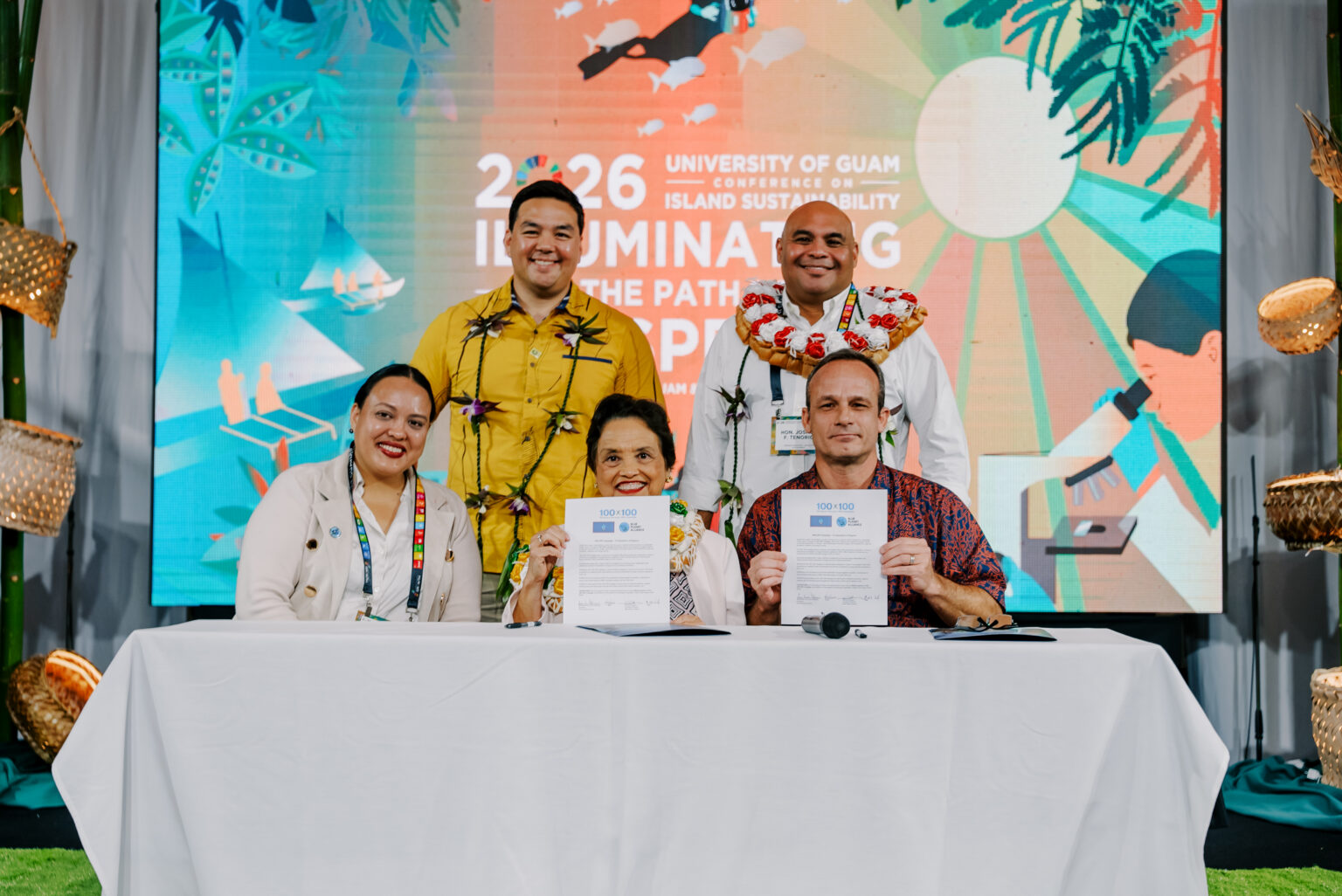
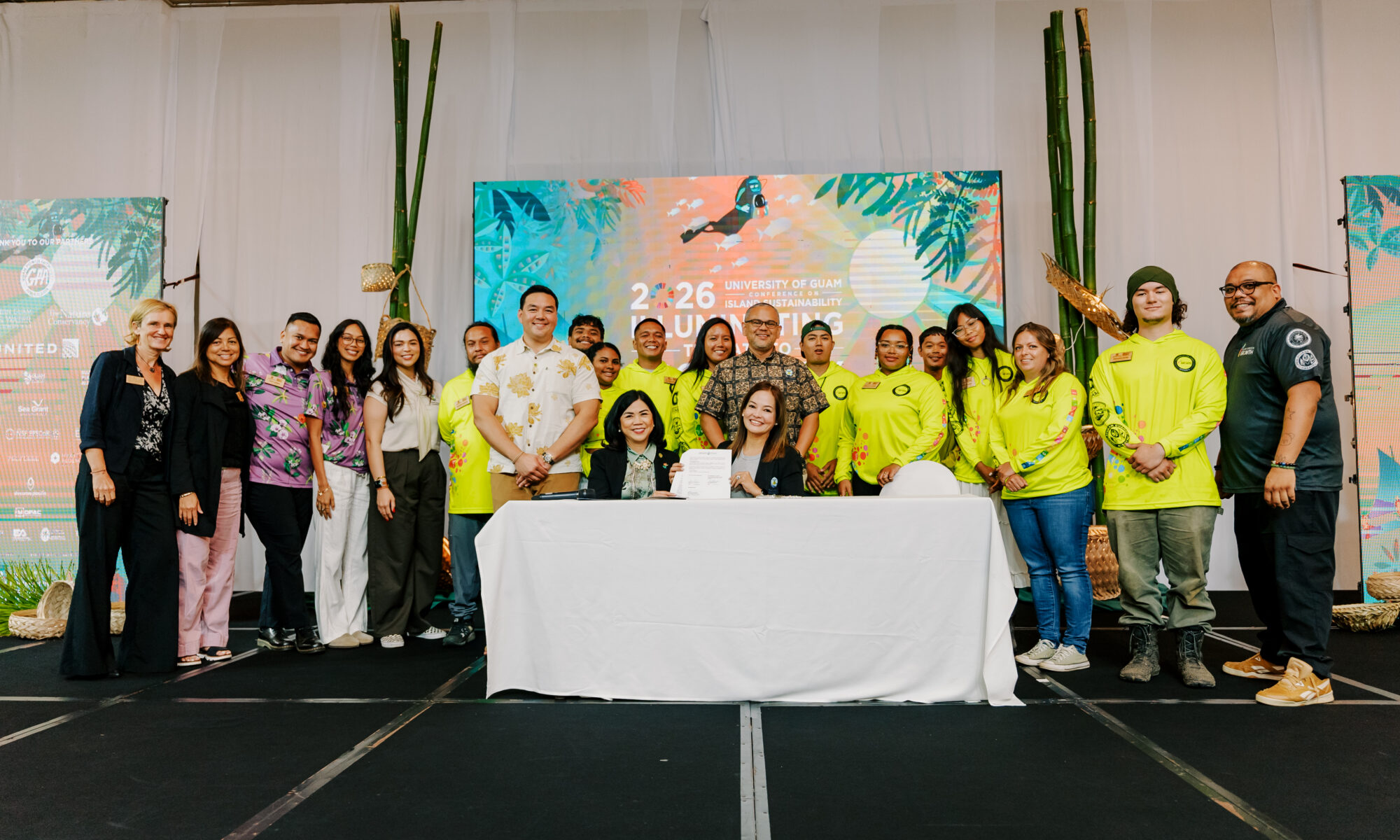
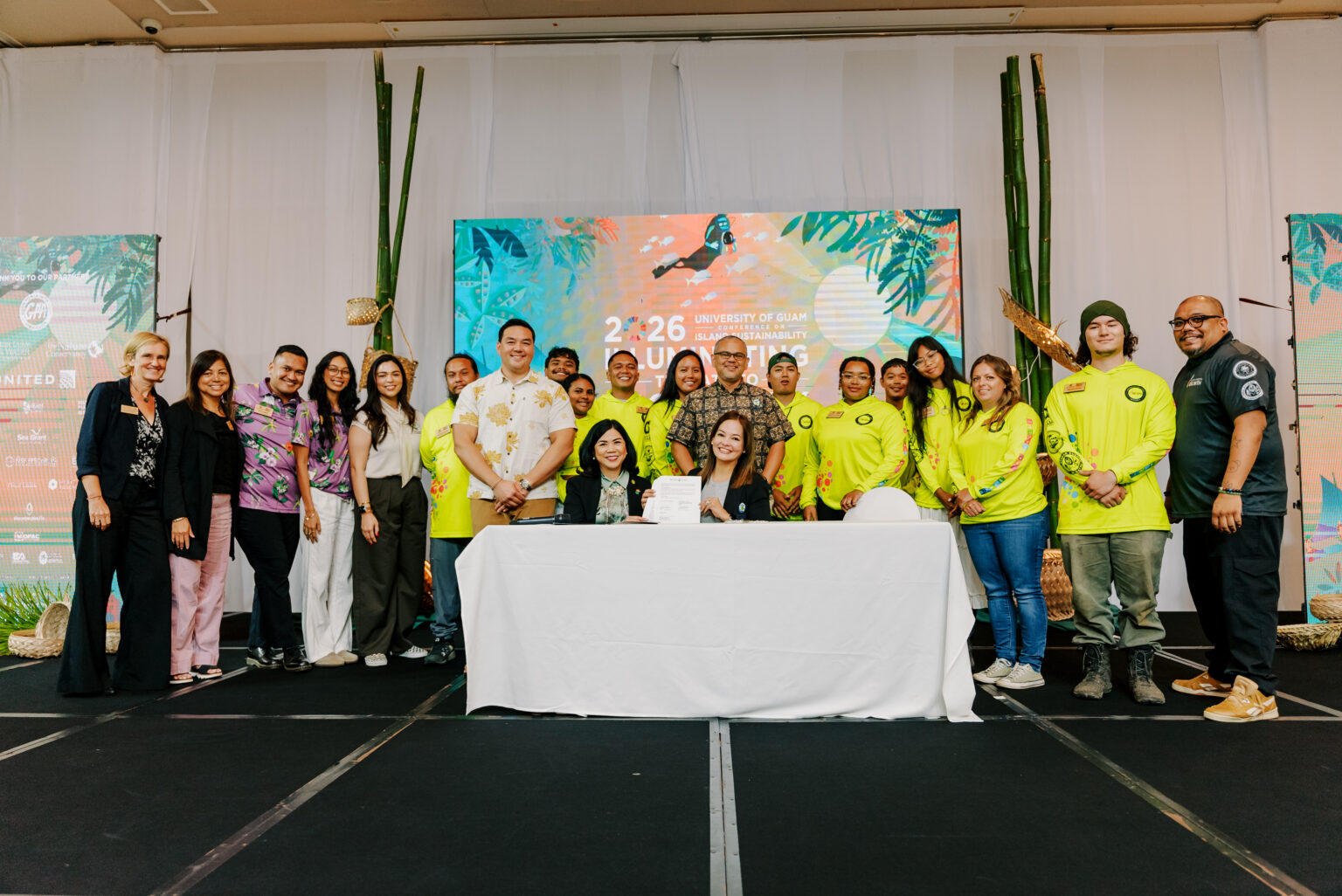
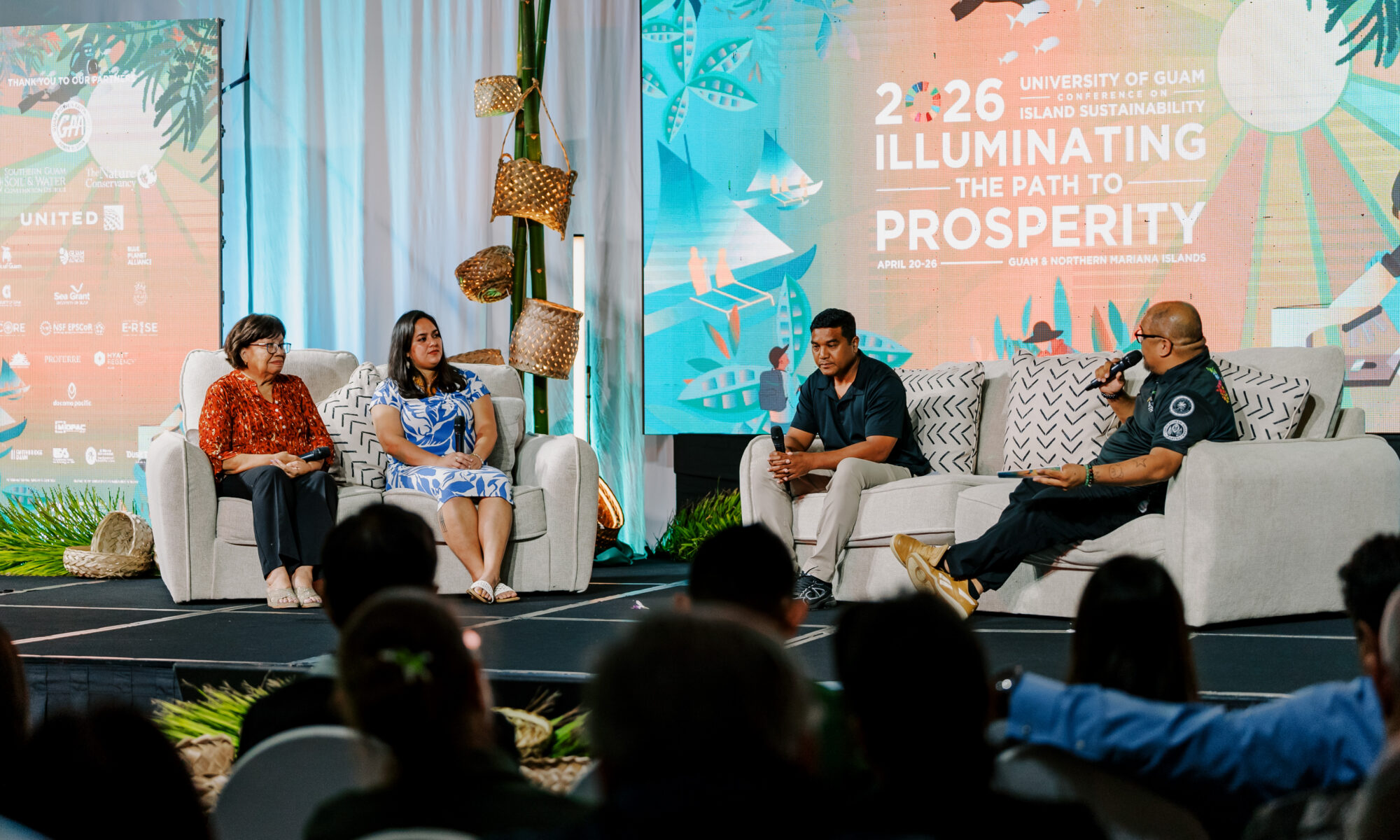
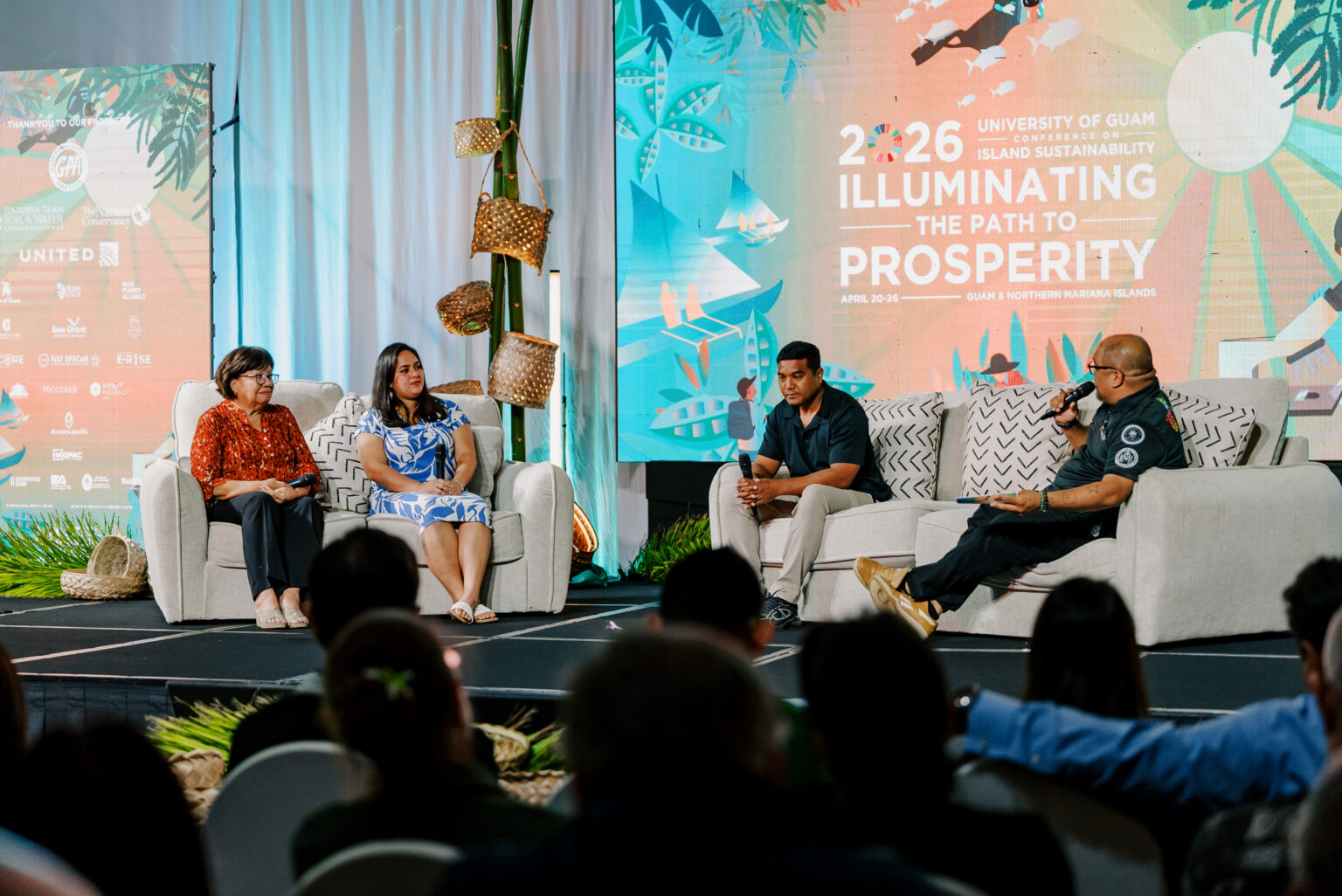
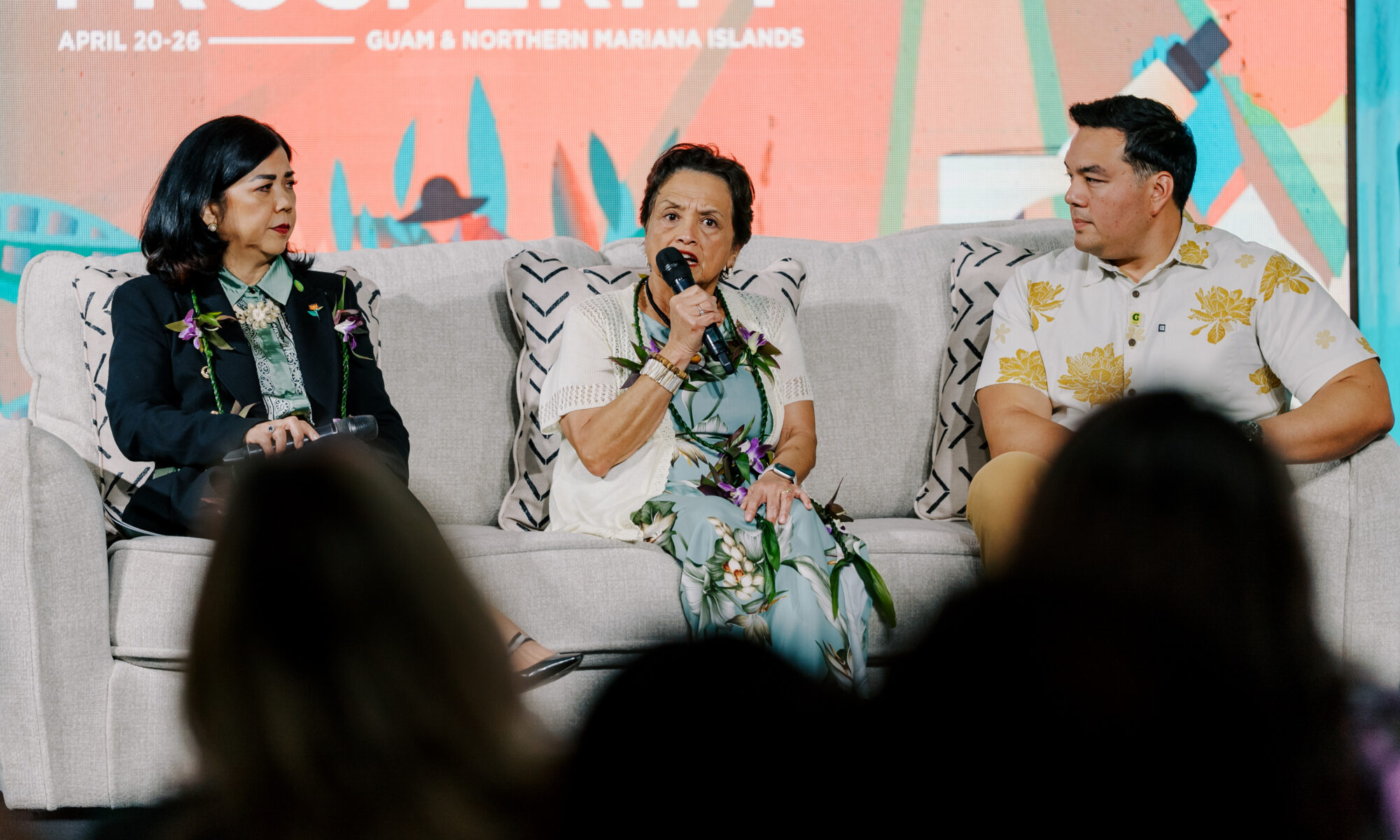
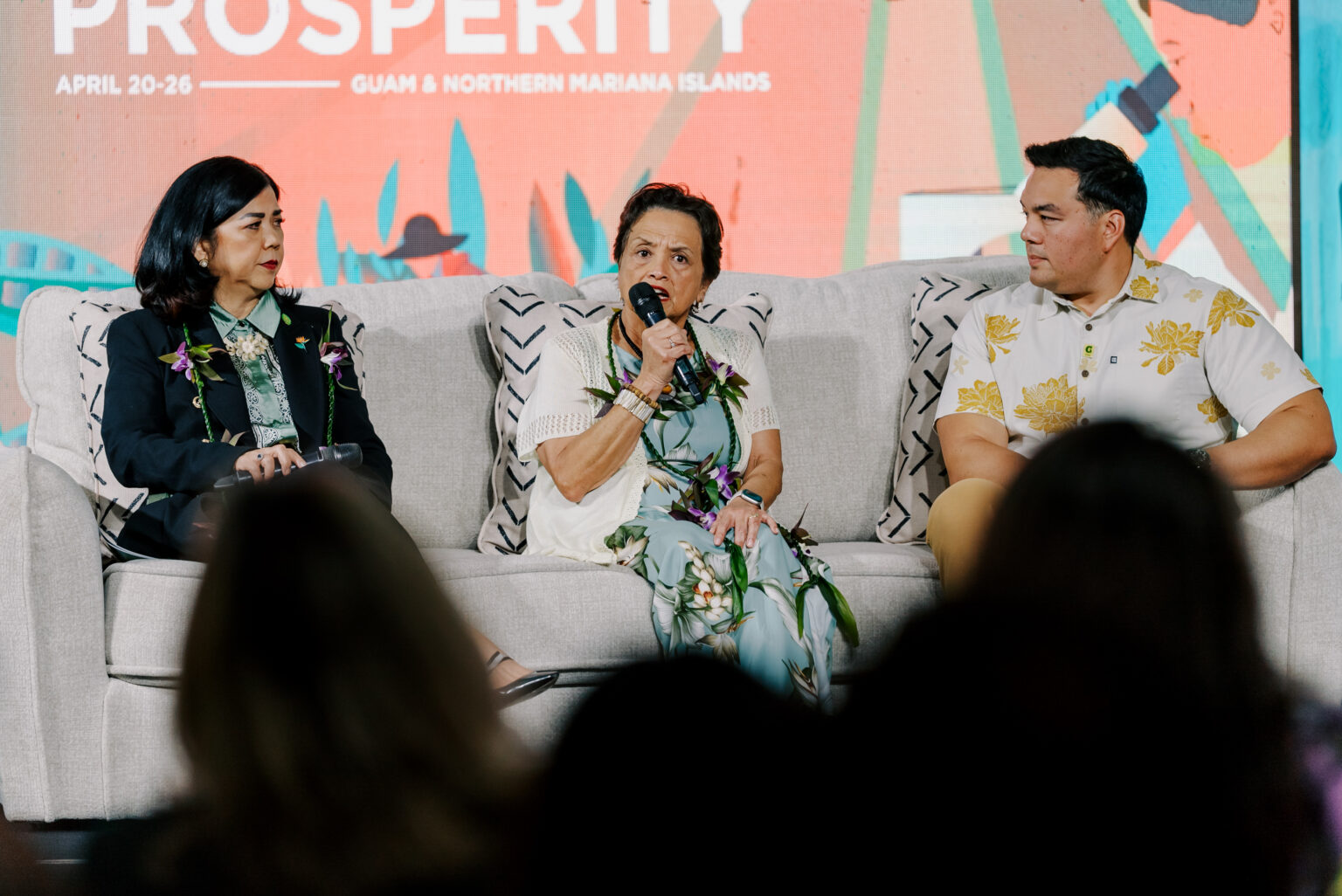
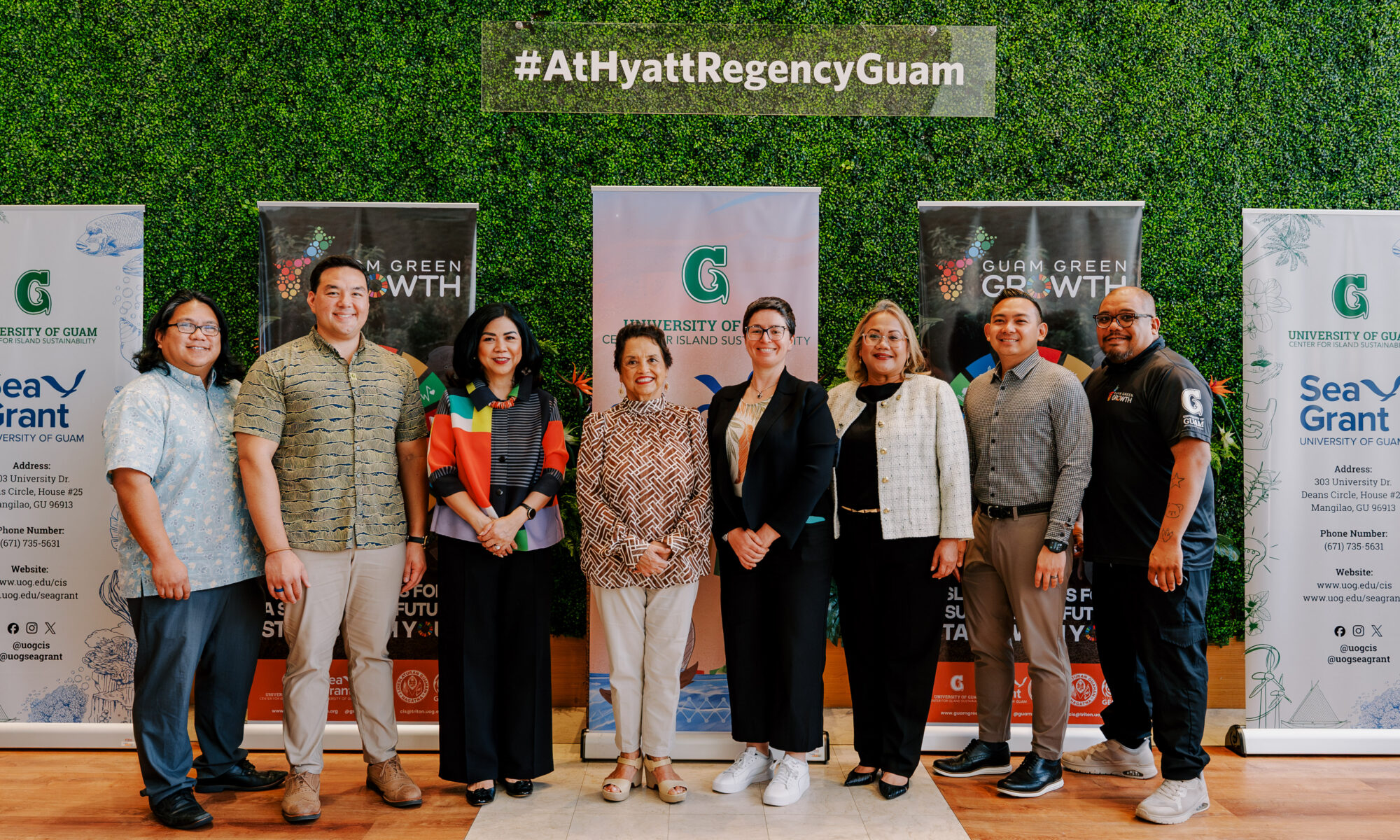
Gov. Lou Leon Guerrero, Lt. Gov. Josh Tenorio, and Blue Planet Alliance Executive Director Francois Rogers sign a document reaffirming Guam’s commitment to the 100x100 renewable energy campaign during the 17th Conference on Island Sustainability on Thursday.

Guam reaffirmed its push toward a cleaner, more resilient energy future this week with a renewed commitment to the Blue Planet Alliance’s 100 x 100 campaign, reinforcing the island’s long-term goal of reaching 100% renewable energy by 2045. 

The recommitment comes at a critical moment for the island, as recovery efforts continue following Super Typhoon Sinlaku—the strongest storm recorded globally in 2026—bringing renewed attention to the connection between energy resilience and disaster preparedness, according to the Governor’s office. 

The reaffirmation was formalized during the 17th University of Guam Conference on Island Sustainability, hosted by the UOG Center for Island Sustainability and Sea Grant. The signing ceremony brought together Gov. Lou A. Leon Guerrero, Lt. Gov. Joshua Tenorio, and Blue Planet Alliance Executive Director Francois Rogers, marking what organizers described as a “concrete action” emerging from the conference discussions on island-led climate solutions.

Speaking on the timing of the commitment, Leon Guerrero emphasized both recovery and forward momentum: “Today, as we move a step closer to full recovery from Super Typhoon Sinlaku, we also reaffirm our commitment to energy independence as a participating member of the Blue Planet Alliance.” 

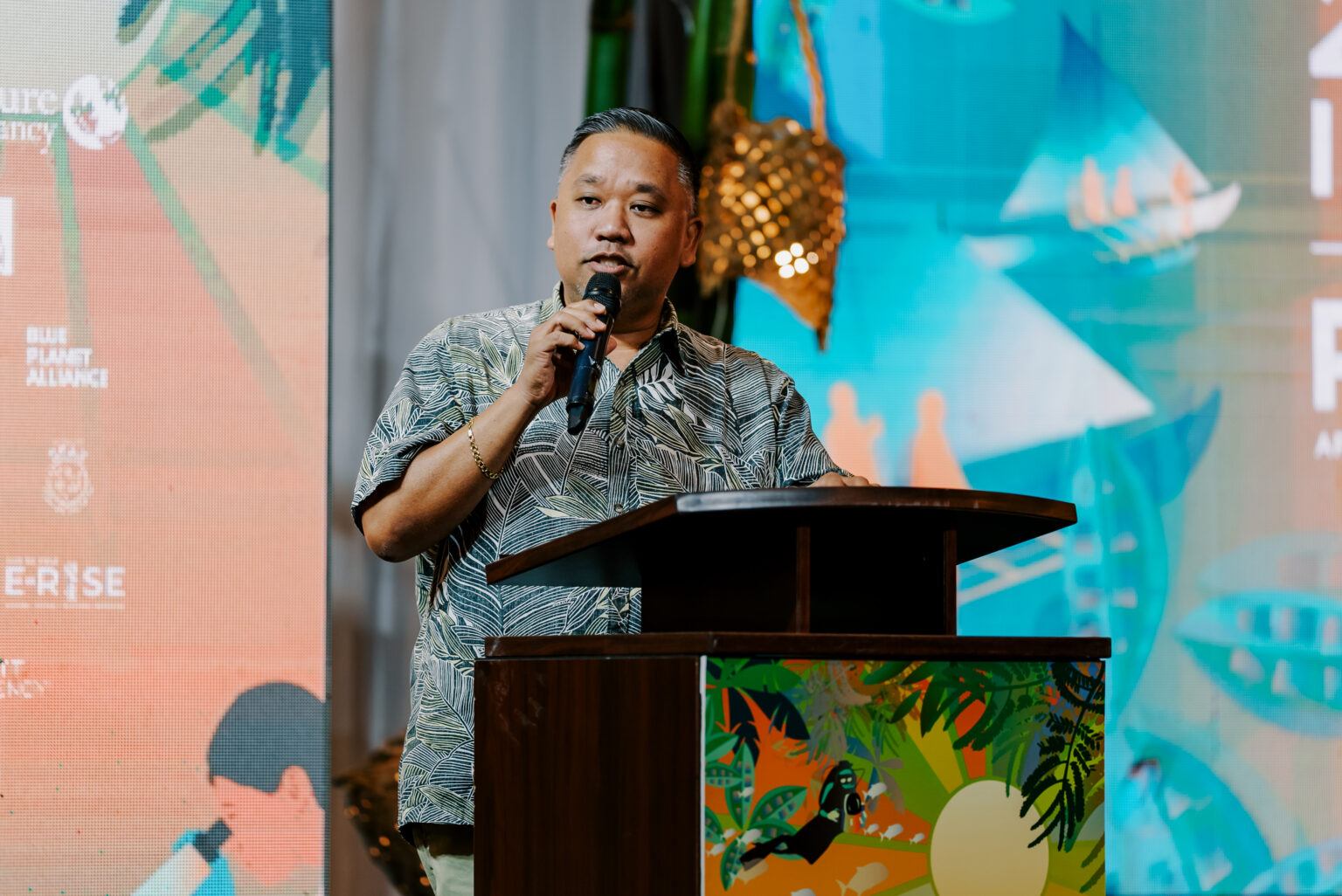
Lt. Gov. Tenorio framed the transition to renewable energy as both an environmental and economic strategy: “The goal of achieving 100% renewable energy by 2045 is also a pathway to economic prosperity, more resilient infrastructure, and a more secure future.”

At the conference, UOG Center for Island Sustainability and Sea Grant Director Austin Shelton, Ph.D., noted that Guam’s renewable energy mandate, first enacted in 2019, has since grown beyond a local policy into a wider regional effort. He pointed out that Gov. Lourdes A. Leon Guerrero signed the law setting targets of 50% renewable energy by 2035 and 100% by 2045, and said the framework has continued to build momentum over time as it is supported by both legislation and regional partnerships, with growing engagement across utility and policy sectors.

Francios Rogers, Blue Planet Alliance executive director, pointed to Guam’s leadership role in shaping broader island energy transitions, describing a growing network of island partners moving toward energy sovereignty. He also introduced the alliance’s expanded 100×100 campaign, which aims to support 100 islands transitioning to 100% renewable energy by 2030: “What this truly means is that, along with Guam, we want to be the leaders in making sure that we have 100 islands in the next five years who will become 100% renewable.”

Leon Guerrero, reflecting on Guam’s earlier commitments and ongoing progress, credited both policy and regional partnerships for helping move the island forward: “I remember, when we signed the Blue Planet Alliance document, where we became a member of the Blue Planet Alliance. As a result of that, we have really evolved and moved on with some really great progress in terms of reaching some of the goals.”

She also acknowledged the broader regional collaboration driving sustainability efforts: “I also want to just shout out to the Micronesia Challenge team, because really, they’re the ones that sort of drive some of these goals.”

Lt. Gov. Josh Tenorio, who co-chairs the Guam Green Growth Steering Committee with Shelton,  emphasized the broader significance of island-led action:

“I think that what this is demonstrating is that islands can empower themselves to make policy directions and to give direction to those that are not only providing energy, but those of us that are in the pathway to enable and get this thing done.”

As Guam continues its energy transition, officials say the renewed commitment through the Blue Planet Alliance signals not only policy continuity, but also a deepening regional alliance—one focused on energy independence, climate resilience, and a shared sustainable future for island communities.
CIS2026 THURSDAY: Investing in sustainability yields 30x return for Guam Green Growth

CIS2026 THURSDAY: Investing in sustainability yields 30x return for Guam Green Growth

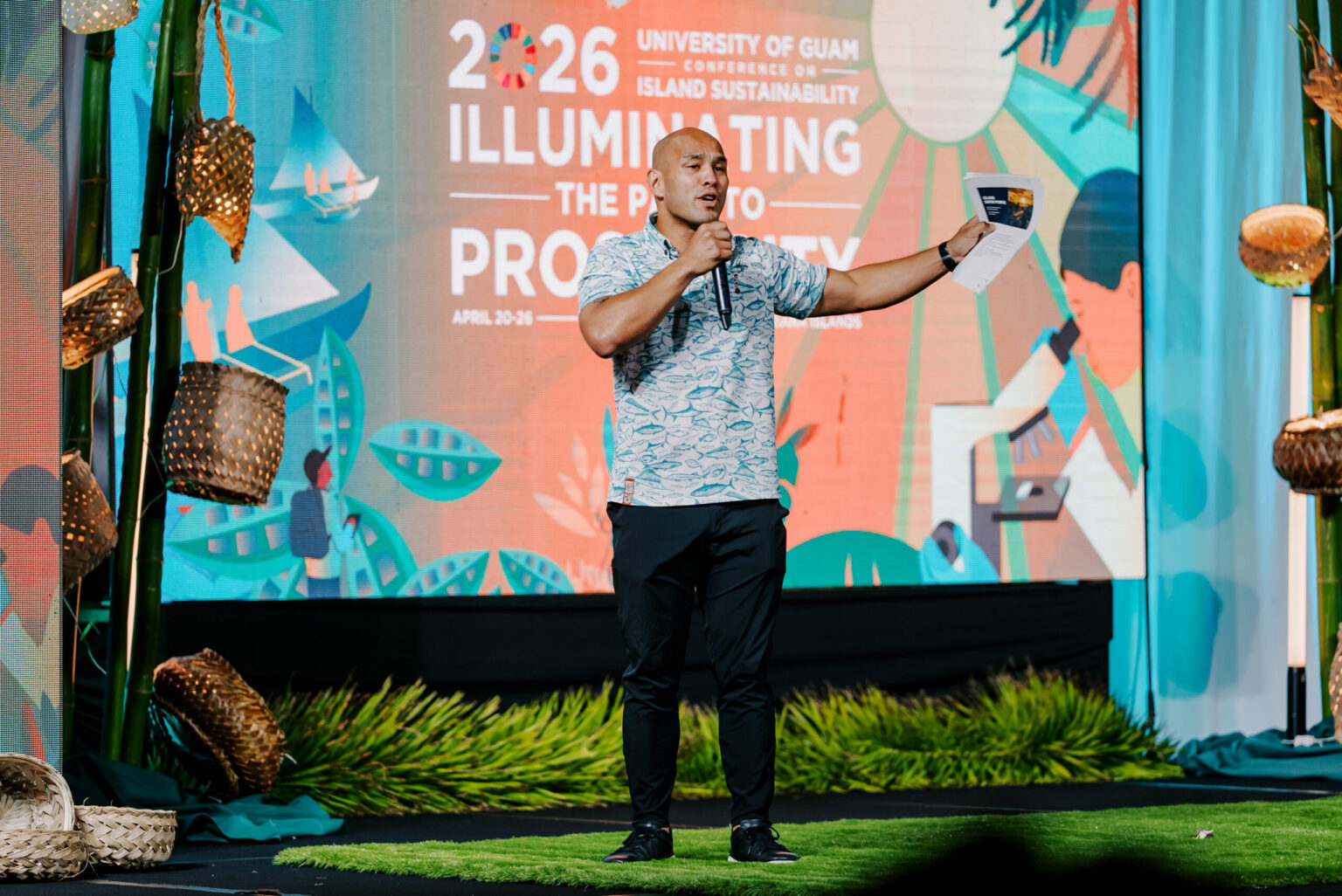
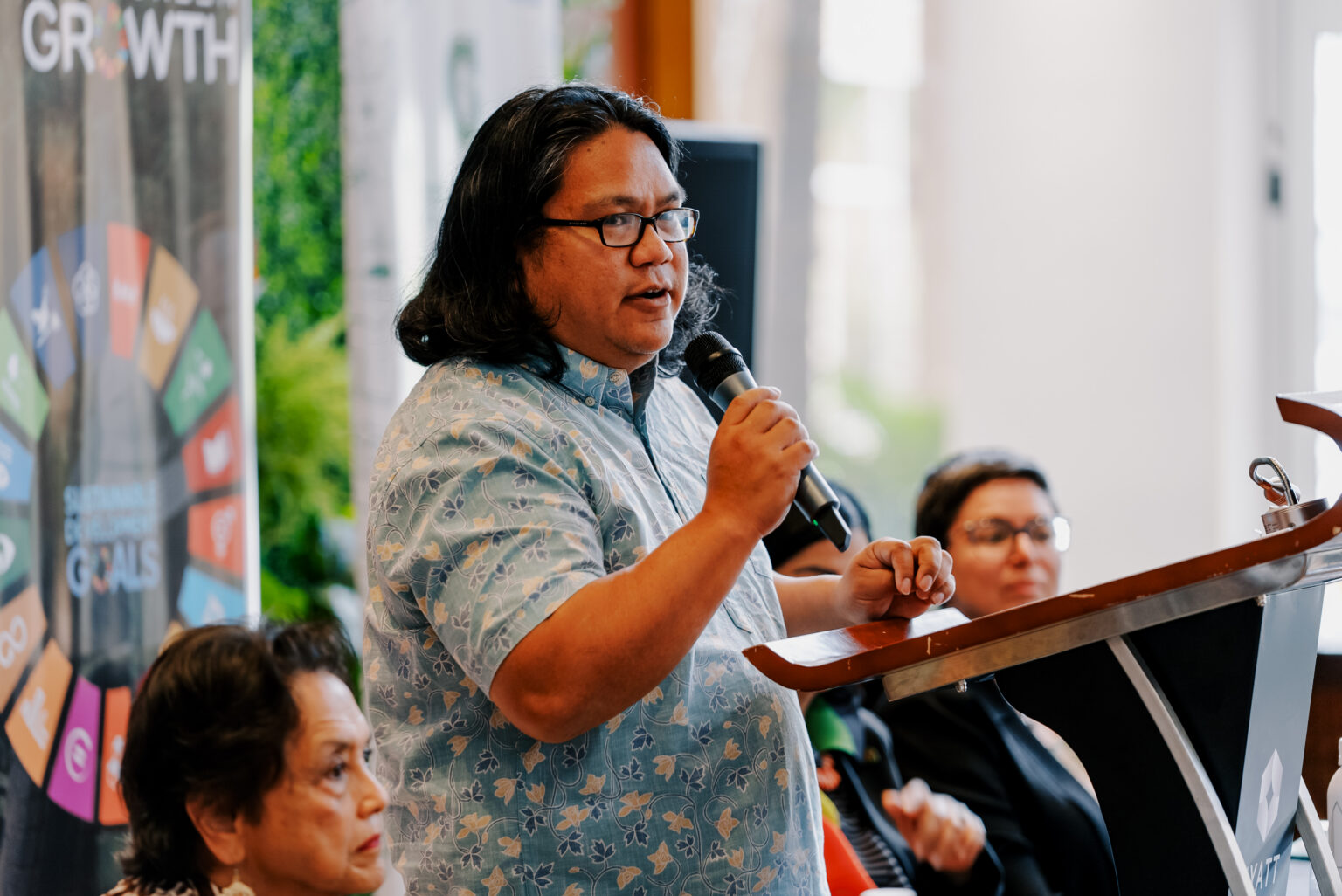
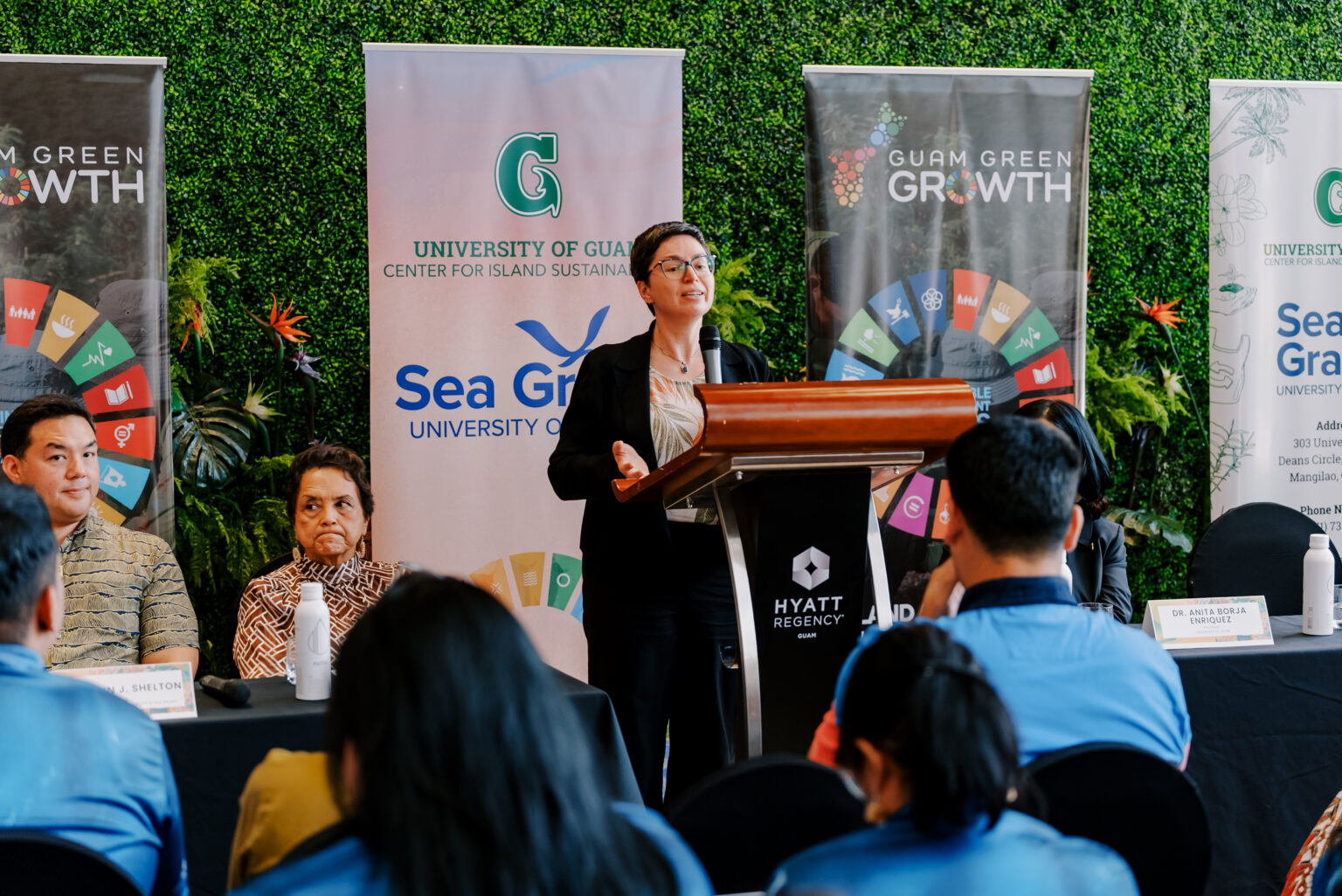
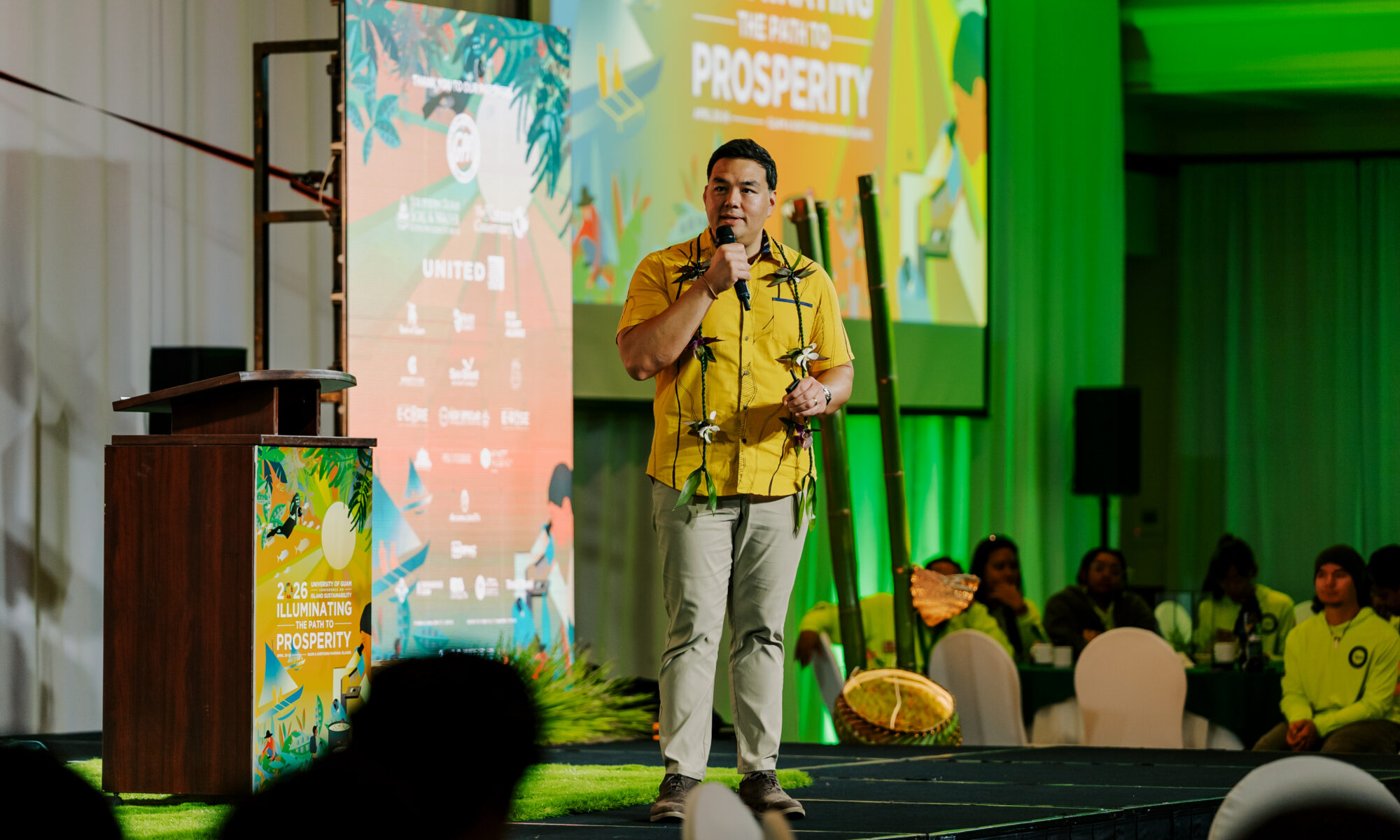
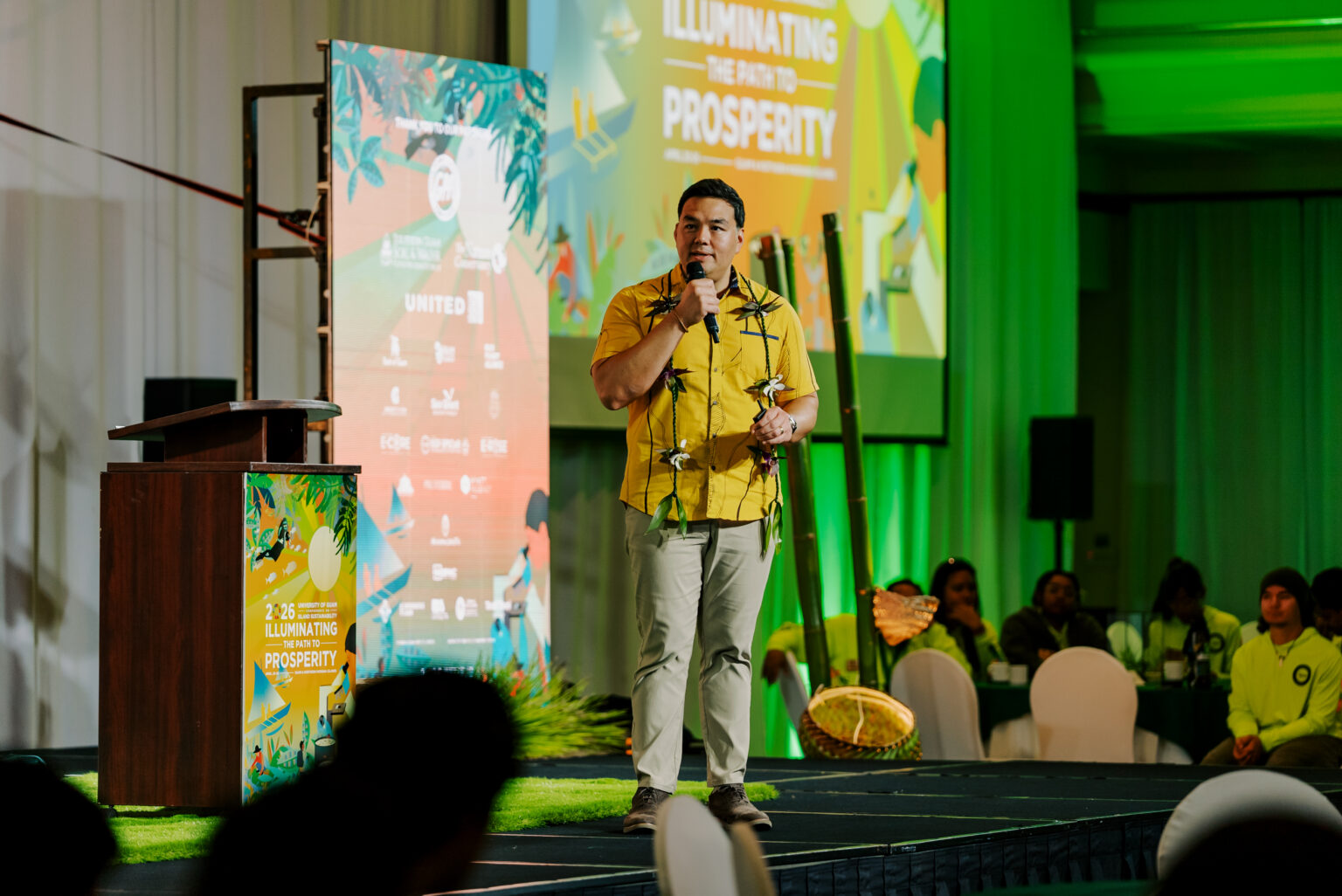
Austin Shelton, Ph.D., director of the UOG Center for Island Sustainability & Sea Grant, presents program updates during the 17th UOG Conference on Island Sustainability on Thursday.

With approximately $1 million in annual local funding, the Guam Green Growth (G3) initiative generated more than $30 million in external funding last year—an over 30-fold return that underscores the value of investing in sustainability programs, according to UOG Center for Island Sustainability and Sea Grant Director Austin Shelton, Ph.D.

“So we always want to make sure that we’re showing a great return on investment,” Shelton said on Thursday at the 17th University of Guam Conference on Island Sustainability.

G3 is a community-driven multi-sectoral partnership that turns island-wide sustainability goals into real action through programs in workforce development, conservation and watershed restoration, education, waste reduction, among others. UOG CIS & SG implements programs and facilitates collaboration with G3.

Another key focus of the presentation was the expansion of sustainable alliances. “We do a lot here locally, but we’re also reaching out to the rest of the world to move some of these efforts forward.” Through G3’s partnerships with regional and global networks such as the Local2030 Islands Network, it has helped support the development of similar initiatives in the Marshall Islands, Palau, and the Commonwealth of the Northern Mariana Islands, all aligned with the United Nations Sustainable Development Goals.

Locally, Shelton also spotlighted circular economy initiatives, particularly the G3 Makerspace & Innovation hub in Hagåtña. The space combines cultural and technical workshops—from traditional knowledge sharing to computer repair—aimed at reducing imports and minimizing waste. One standout project involves recycling plastic into durable materials used to restore damaged school desks following Typhoon Mawar.

Education and outreach remain central to the mission of UOG CIS & SG. Programs like the CHalan Deskubre, a place-based science magazine, and its newly launched educational hub at UOG Dean Circle, are helping shift learning toward local ecosystems, species, and challenges. According to Shelton, these initiatives, alongside classroom visits and outreach events are reaching thousands of students each year and inspiring a new generation of island-based scientists.

Shelton also pointed to advances in food security through aquaculture. Community-based aquaponics systems are being distributed across Guam, enabling families to produce their own fish and vegetables while reducing pressure on marine resources. The integration of locally grown fish into culinary events further demonstrates the viability of sustainable food systems.

Environmental restoration efforts are also gaining momentum. Through tree planting, carbon sequestration studies, and the reintroduction of endangered species, UOG CIS & SG is actively restoring Guam’s ecosystems. Watershed projects alone have led to thousands of trees planted annually, supported in part by innovative partnerships that engage visitors and residents alike.

Workforce development continues to be a cornerstone of Guam Green Growth. The G# Conservation Corps program has expanded significantly, now supporting dozens of participants each year. Over the past five years, Corps members have collected more than 200,000 aluminum cans, planted thousands of trees, and contributed to island-wide cleanup and erosion control efforts. These initiatives not only address environmental challenges but also prepare participants for careers in the emerging green economy.

Shelton also highlighted the “Navigating Home” program, which addresses the long-standing issue of brain drain by supporting students who pursue advanced degrees off-island to return and work in local government agencies. He said by investing in local talent, the program strengthens Guam’s capacity to lead its own sustainability efforts

Shelton also highlighted the growing scale of UOG CIS & SG, which now includes more than 80 team members working across research, education, and community programs. These efforts range from sea turtle research and fisheries management to watershed restoration and workforce development.


CIS2026 WEDNESDAY: Personal stories driving sustainability, community and action at SEED Talks

CIS2026 WEDNESDAY:  Personal stories driving sustainability, community and action at SEED Talks

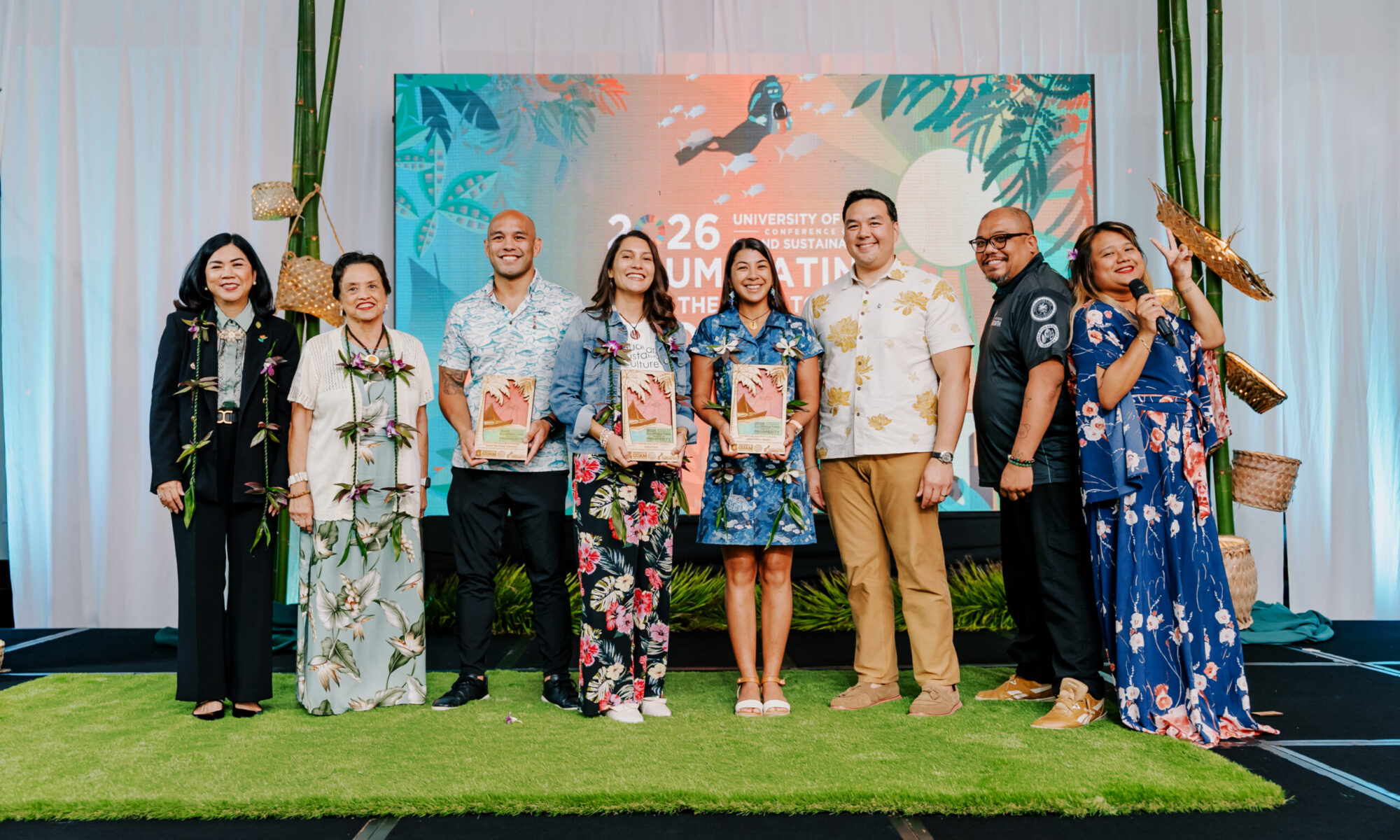
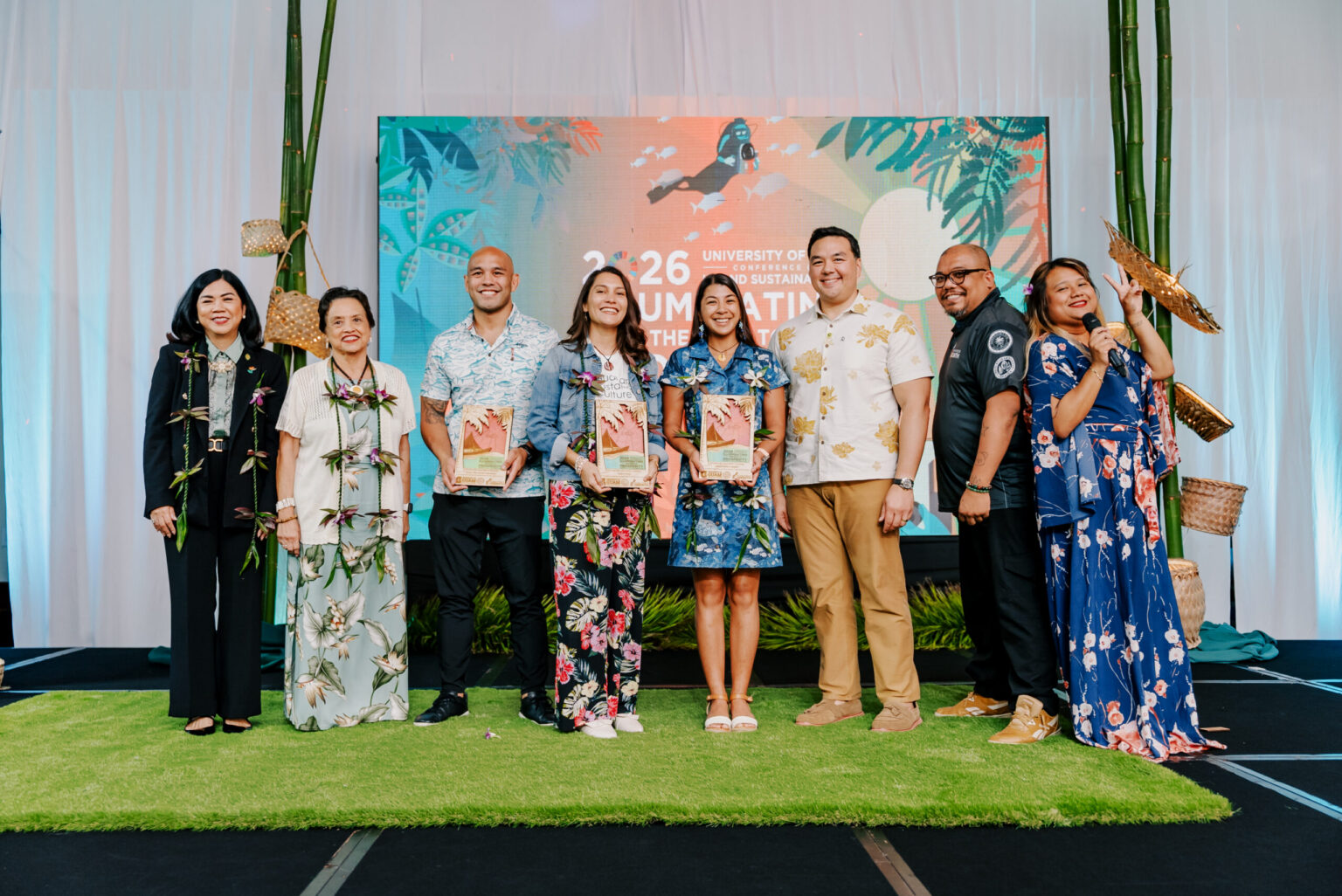
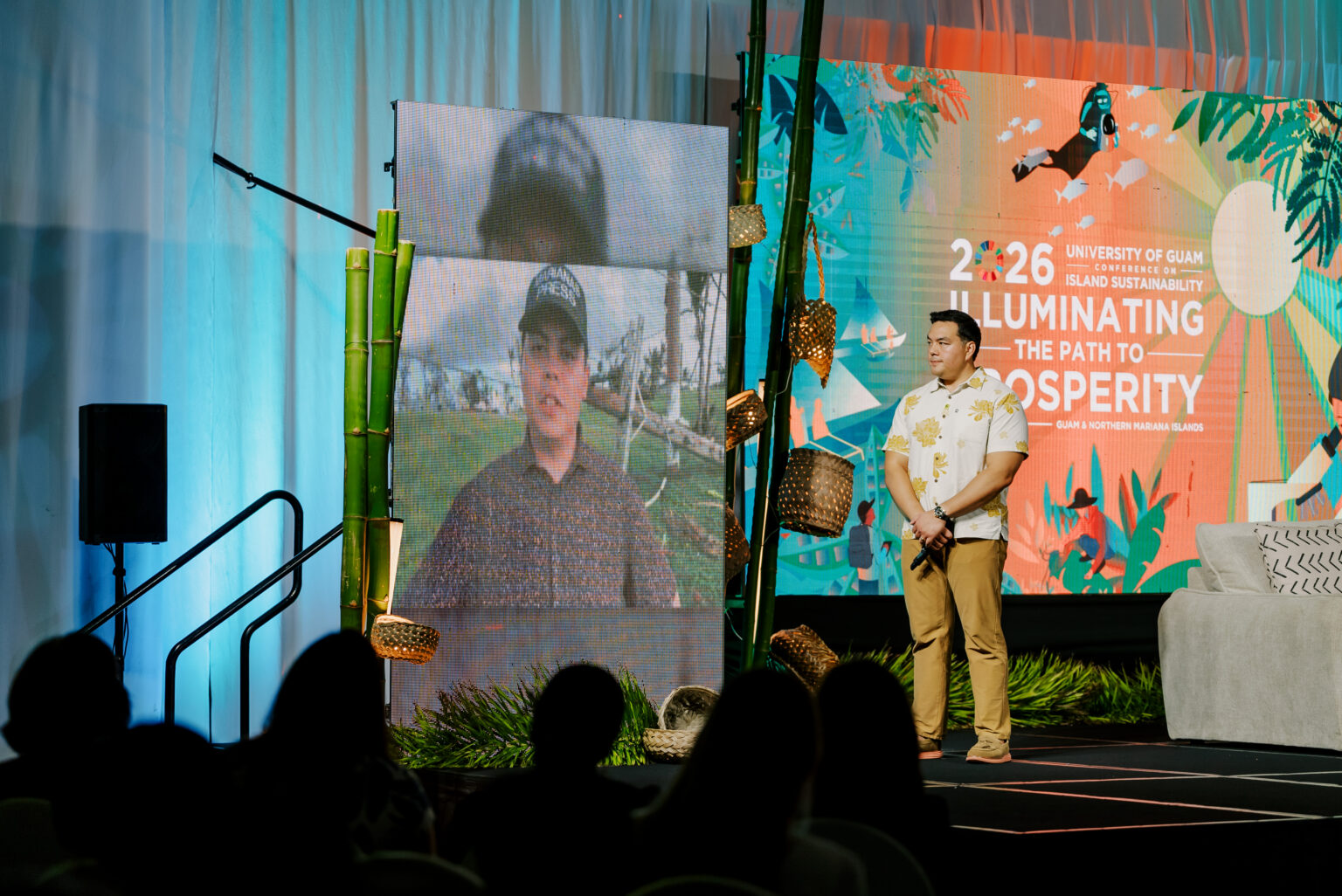
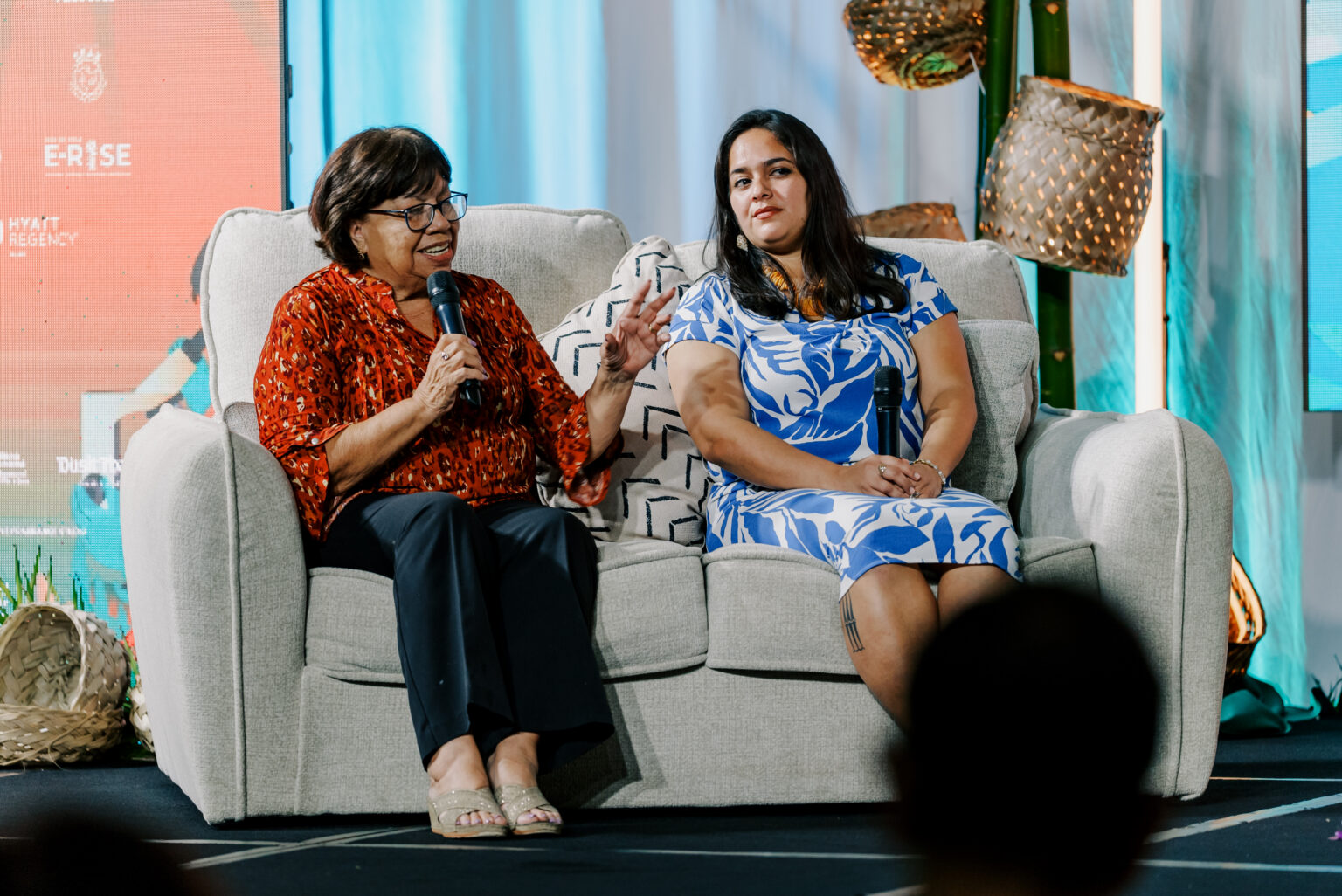
Speakers and members of the community gather at the CIS2026 SEED Talks during the 17th University of Guam Conference on Island Sustainability, where personal stories and lived experiences highlighted community, culture, and resilience in advancing island sustainability.

Stories—not just systems and statistics—defined the CIS2026 SEED Talks, where voices from across the island community transformed personal journeys into powerful calls for change. Framed as “ideas worth cultivating,” the speaker series invited participants to move beyond data and into lived experience, weaving together narratives of loss, identity, resilience, and hope. In an intimate, TED-style setting, each speaker offered a glimpse into how their own paths, shaped by culture, community, and connection to land and sea—continue to inform their work.

Held during the 17th University of Guam Conference on Island Sustainability (CIS2026), the CIS SEED Talks featured Kallen Perez of Guåhan Sustainable Culture, Leilani Sablan-Naden, a fishery biologist with the UOG Center for Island Sustainability & Sea Grant, and Frank Camacho, owner of CRANK INDUSTRIES—each bringing a distinct voice grounded in personal experience and community connection.

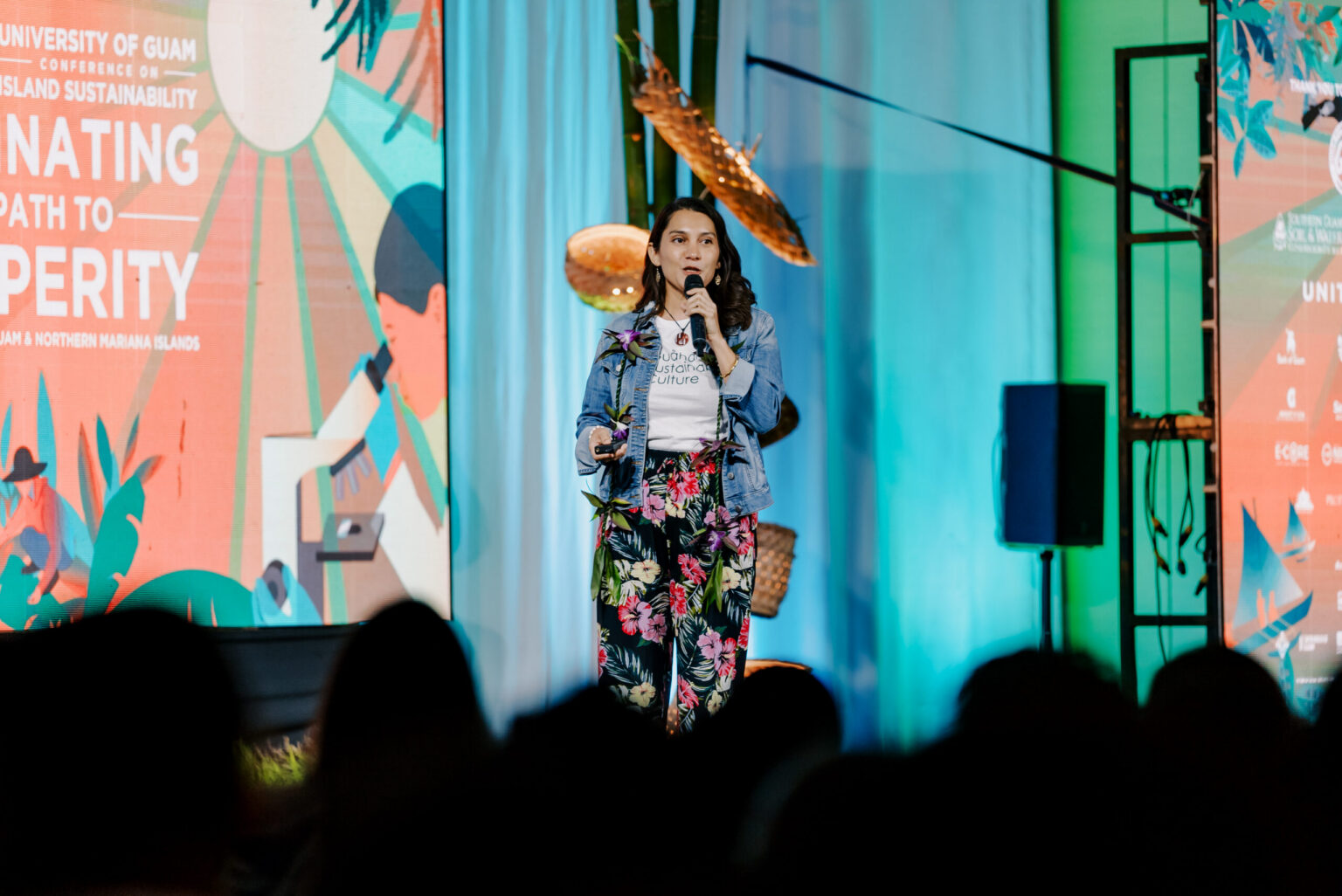
Opening the session, Kallen Perez shared a deeply personal journey into conservation, reflecting on how nature helped her heal and find purpose. “I’m not a researcher, I’m not a scientist, I don’t have any fancy data to share with you today, but I am a writer, I’m a mom of three, and I’m excited to share a story with you about my unlikely journey into conservation,” she said. Through her connection to Ritidian and her work with Guåhan Sustainable Culture, Perez emphasized the urgency of environmental stewardship, adding, “friends the land and sea are calling us let’s answer that call together.”

SEED Talks Speaker Kallen Perez

Perez traced her path from personal loss to advocacy, describing how a visit to Ritidian after the passing of both her parents sparked a deep sense of belonging and responsibility to place. That experience led her to conservation work, community advocacy, and education efforts with youth, while also shaping how she raises her own children with a strong connection to the land. She also warned of emerging threats such as deep sea mining, noting, “deep sea mining is the live fire training range of our time,” and calling for greater collective action to protect the ocean as both an ancestral source and a shared future.

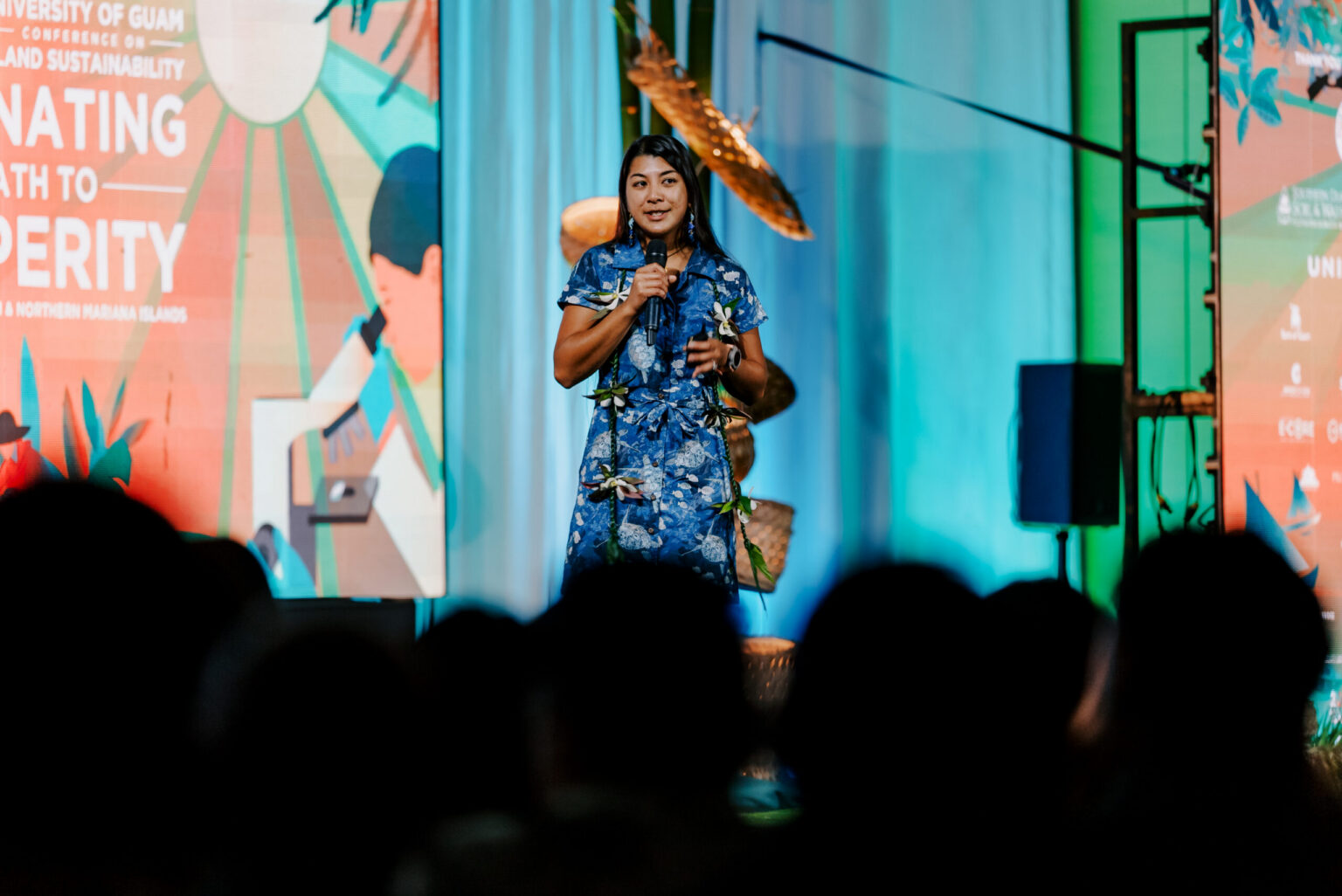
Leilani Sablan-Naden followed with a talk centered on trust and relationships in fisheries science, drawing from her experience working with Guam’s fishing community. “I’ve come to believe something simple but transformative better data starts with better relationships not better spreadsheets not better software better relationships,” she said. She underscored the importance of collaboration and respect in research, noting that meaningful data emerges when communities feel seen and valued.

SEED Talks Speaker Leilani Sablan-Naden

As a self-described introvert entering the field, Sablan-Naden recalled the uncertainty she felt approaching fishers for the first time, only to realize that trust—not technical skill—was the biggest barrier to collecting meaningful data. Over time, she built relationships by showing up consistently and connecting through her own identity as a fisherwoman. That shared experience helped transform her work from transactional data collection into a collaborative process, where fishers became active partners in research, contributing knowledge shaped by generations of experience on the water.

Closing the session, entrepreneur and former UFC fighter Frank Camacho connected sustainability to resilience and identity, particularly in the wake of recent storms across the region. “Sustainability is the ability to take a hit and stay standing sustainability is the ability to recover without losing your identity sustainability is the ability to rebuild man without losing your values,” he said. Emphasizing the strength of island communities, Camacho reminded attendees that “our real superpower is how we show up for each other,” reinforcing the role of unity and culture in shaping a sustainable future.

Drawing from his career in professional fighting and his upbringing in the Marianas, Camacho framed resilience through the lens of discipline, preparation, and community. He likened typhoons to moments in the ring that test not just strength, but character, stressing that true readiness is built long before disaster strikes. His reflections grounded sustainability in everyday island life—neighbors helping neighbors, families supporting one another, and communities coming together in times of crisis. For Camacho, the island’s greatest strength lies not just in systems, but in its people.

SEED Talks Speaker Frank "The Crank" Camacho

CIS2026 SEEDS Talk was moderated by UOG Center for Island Sustainability and Sea Grant assistant science communicator and Mix96 radio personality Reese Espinosa.

“This is my second year hosting Seed Talks, and for the second time I am truly honored to be able to introduce these distinguished speakers. They highlighted not only the issues we face in our community but also the  issues they may have had in their own personal lives and I truly believe that is the best way to captivate any crowd, especially when you can tell it comes from a place deep in their heart. I look forward to hearing next year’s Seed Talk ” Ideas Worth Cultivating.”

CIS2026 WEDNESDAY: Green Growth movement strengthens island collaboration, G3 welcomes Todu Guam as new partner

CIS2026 WEDNESDAY: Green Growth movement strengthens island collaboration, G3 welcomes Todu Guam as new partner

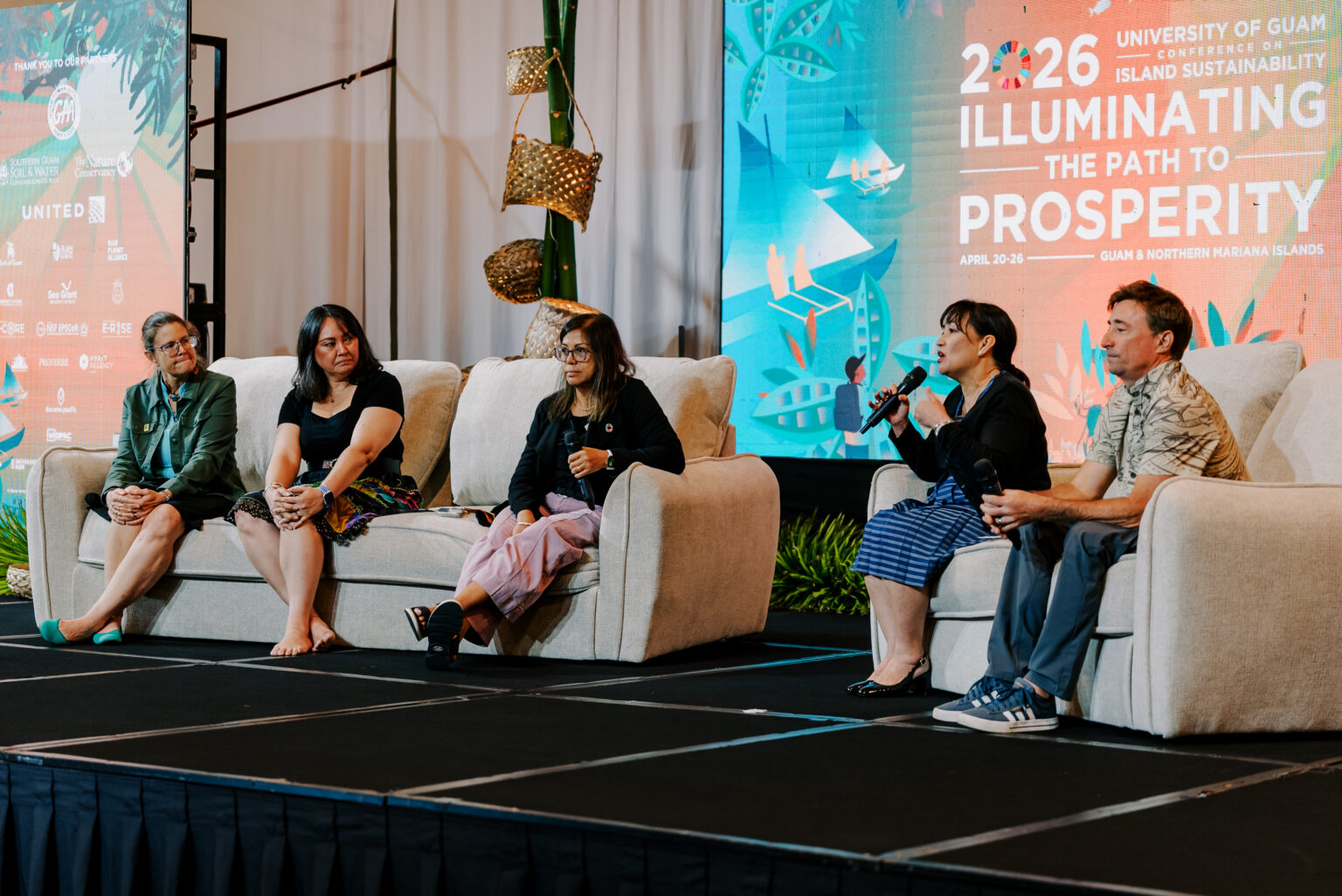
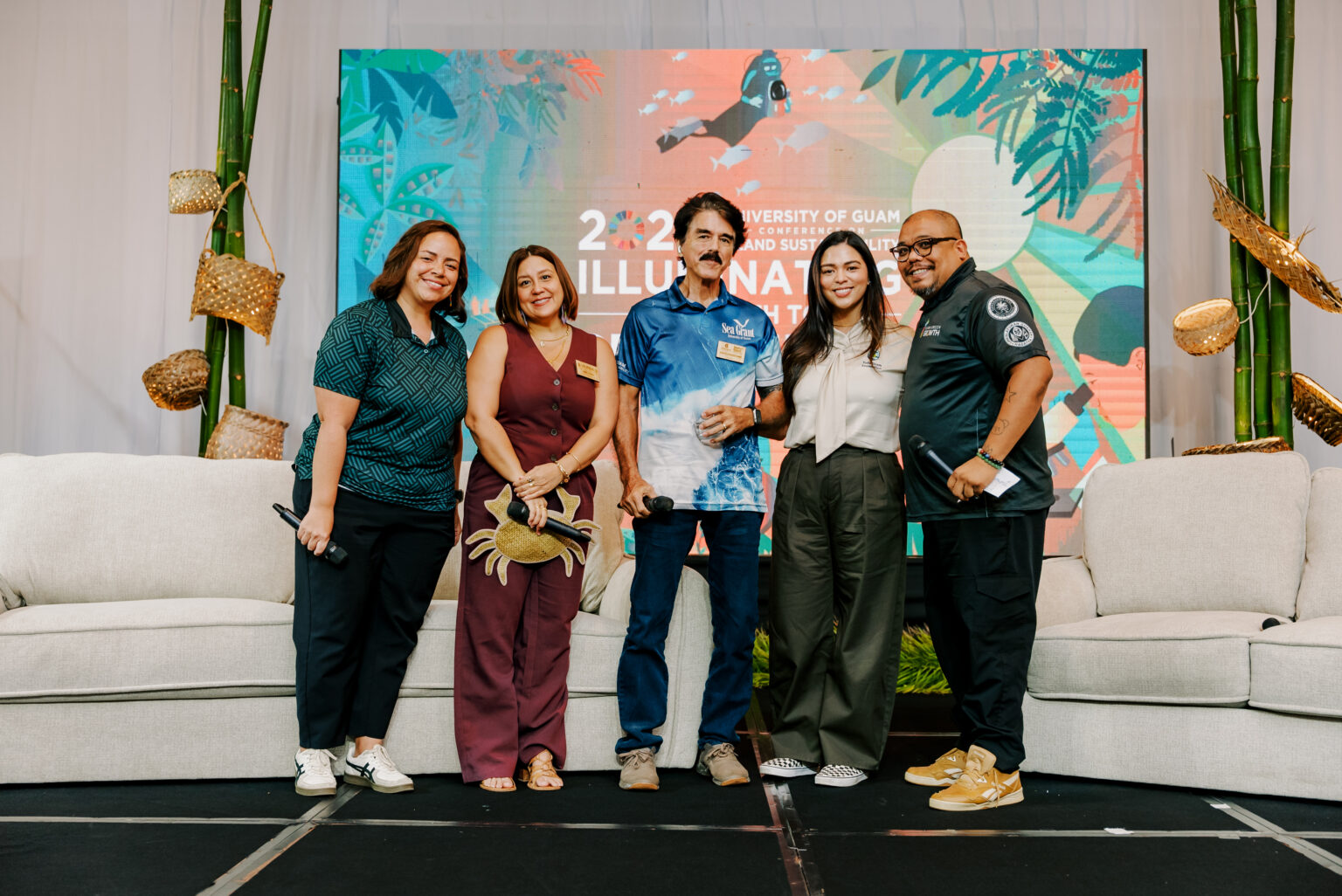
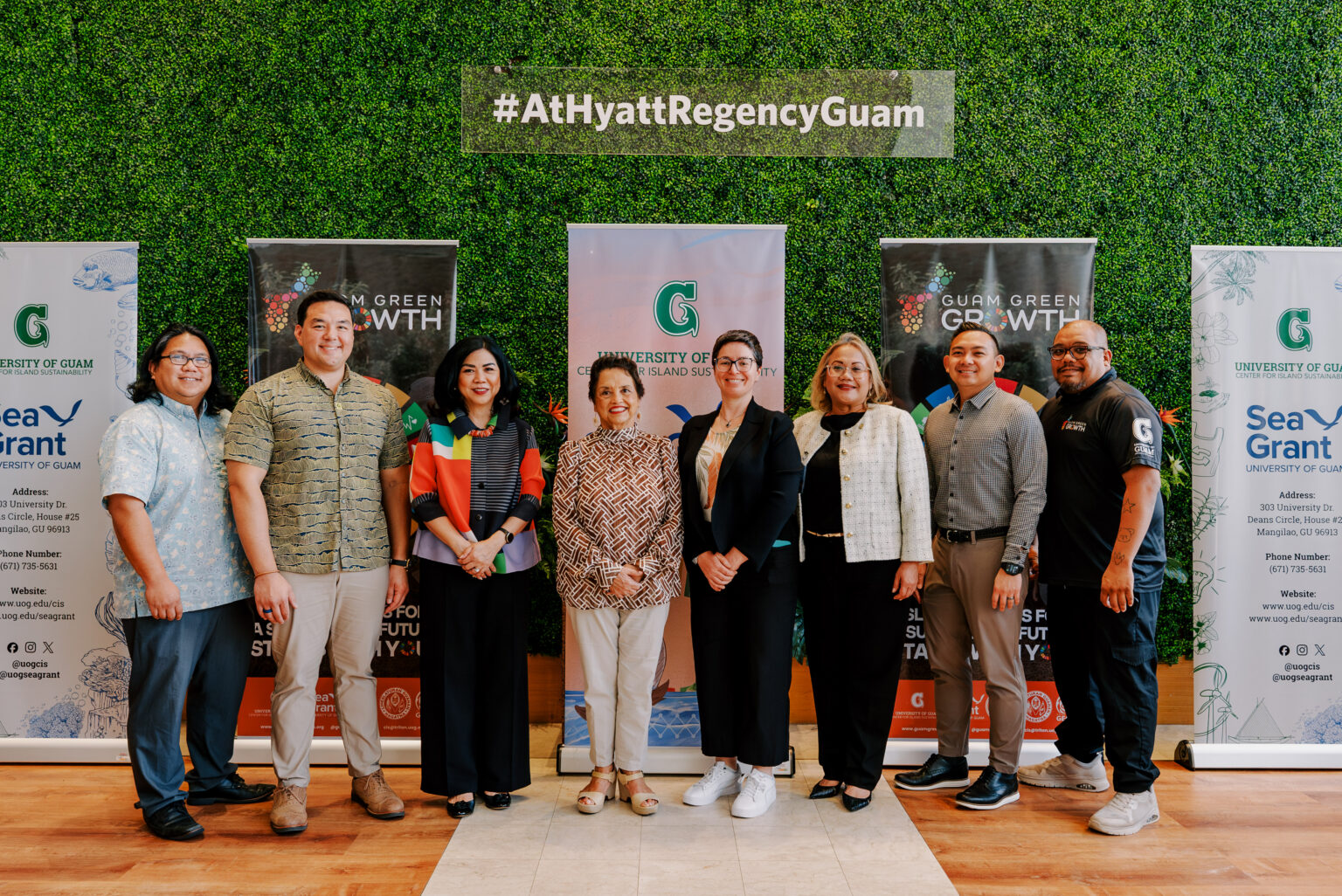
Leaders and representatives from Green Growth movements  across Micronesia and Hawaiʻi share insights and initiatives during a Green Growth Gathering at the 17th University of Guam Conference on Island Sustainability (CIS2026).

At the 17th University of Guam Conference on Island Sustainability (CIS2026), leaders and representatives from across Micronesia and Hawaiʻi gathered for a Green Growth session sharing the progress, partnerships, and shared vision driving sustainability efforts across island communities. The discussion illustrated how these initiatives are advancing solutions rooted in both traditional knowledge and modern innovation.
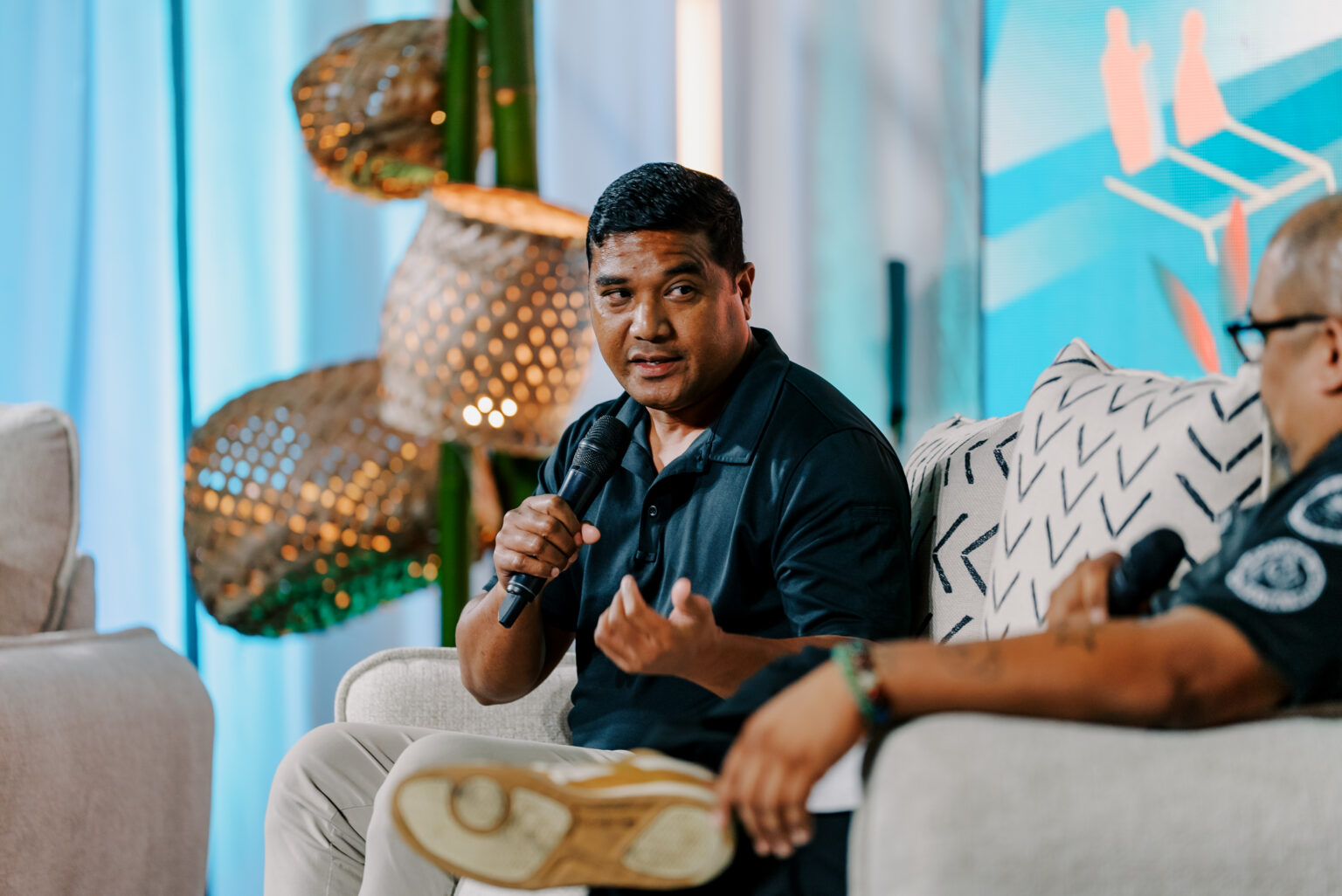
Opening the session, Austin Shelton, Ph.D., director of the UOG Center for Island Sustainability and Sea Grant, spoke about the regional roots of the initiative, Shelton noted, “Green Growth was actually inspired by something else from our region, and that was the Micronesia Challenge,” adding that the movement has now “looped back around full circle to us in Guam.” He also described the simplicity behind its  broader mission: “Sustainability is living on our islands like we intend to stay here.”

Representing the CNMI, Angel Demapan, deputy assistant secretary for Insular and International Affairs, spoke about resilience in the wake of the recent super typhoon and the importance of regional solidarity. “Events like this remind us of a simple reality. Island communities must be prepared, must be resilient, and must be equipped to recover quickly,” he said. Demapan pointed to key priorities, including affordable and dependable energy, which he said is the “backbone of economic growth” and that “food security is national security, especially for fragile island communities like ours,” while also expressing gratitude to Guam for its continued support following typhoon impacts.

Angel Demapan, deputy assistant secretary for Insular and International Affairs, during the Guam Green Growth Session

From the Republic of the Marshall Islands, Mylast Bilimon, Ph.D., chairperson of the RMI Green Growth Initiative, shared the nation’s progress since committing to the movement at the previous year’s conference. “Last year, during the 16th UOG Conference on Island Sustainability, our president Hilda Heine… signed the Blue Planet Climate Agreement,” she said, which commited the country to “reach 100 percent renewable energy by 2045.” 

Bilimon described the RMI’s integrated approach: “This initiative takes a whole of an island approach. It recognizes that sustainability is not just one sector. It’s everything. It’s environmental, economic, and social all working together.” She added that this approach reflects long-standing practices rooted in frameworks such as Raimalok, a community-driven conservation model that blends traditional knowledge with modern planning and centers on intergenerational responsibility. “Sustainability is not new to us. It has always been a part of how we live.”

Mylast Bilimon, Ph.D., chairperson of the RMI Green Growth Initiative during the Green Growth Session

Hawaiʻi, one of the pioneers of the movement, shared its continued leadership through the Hawaii Green Growth network. Network Director Samantha Happ opened by recognizing youth leadership, noting that a chant performed by members of the Hawaiʻi SDG Youth Counci to open the session had been shared on a global stage. “It’s a chant of localization that really grounds the place names and values that they have taken with them to the highest floors of decision making,” she said, connecting cultural identity to sustainability efforts. 

Supporting the perspective of the previous Green Growth speakers, Happ said that sustainability is deeply embedded in island life: “There’s no word in Hawaiʻi…in the Hawaiian language, for sustainability… that’s just part of our daily life. It is taking care of the ocean, to take care of the land, to take care of that which sustains us.”

She also pointed to measurable progress and accountability through the Aloha+ Challenge, noting Hawaiʻi’s leadership in reporting. “We are the only state to have submitted its third voluntary local review… we’re reporting our progress, we’re finding out the gaps are and what’s working.” Happ described the initiative’s “collective impact approach,” explaining that “it takes more than one sector and more than one approach… and it requires adaptive problem solving,” while also sharing new efforts such as green stormwater infrastructure, wildfire mitigation partnerships, and the launch of a new strategic plan that includes “pathways for action” and an Aloha+ fund to support community-driven projects.


Leaders and representatives from Green Growth movements  across Micronesia and Hawaiʻi share insights and initiatives during a Green Growth Gathering at the 17th University of Guam Conference on Island Sustainability (CIS2026).

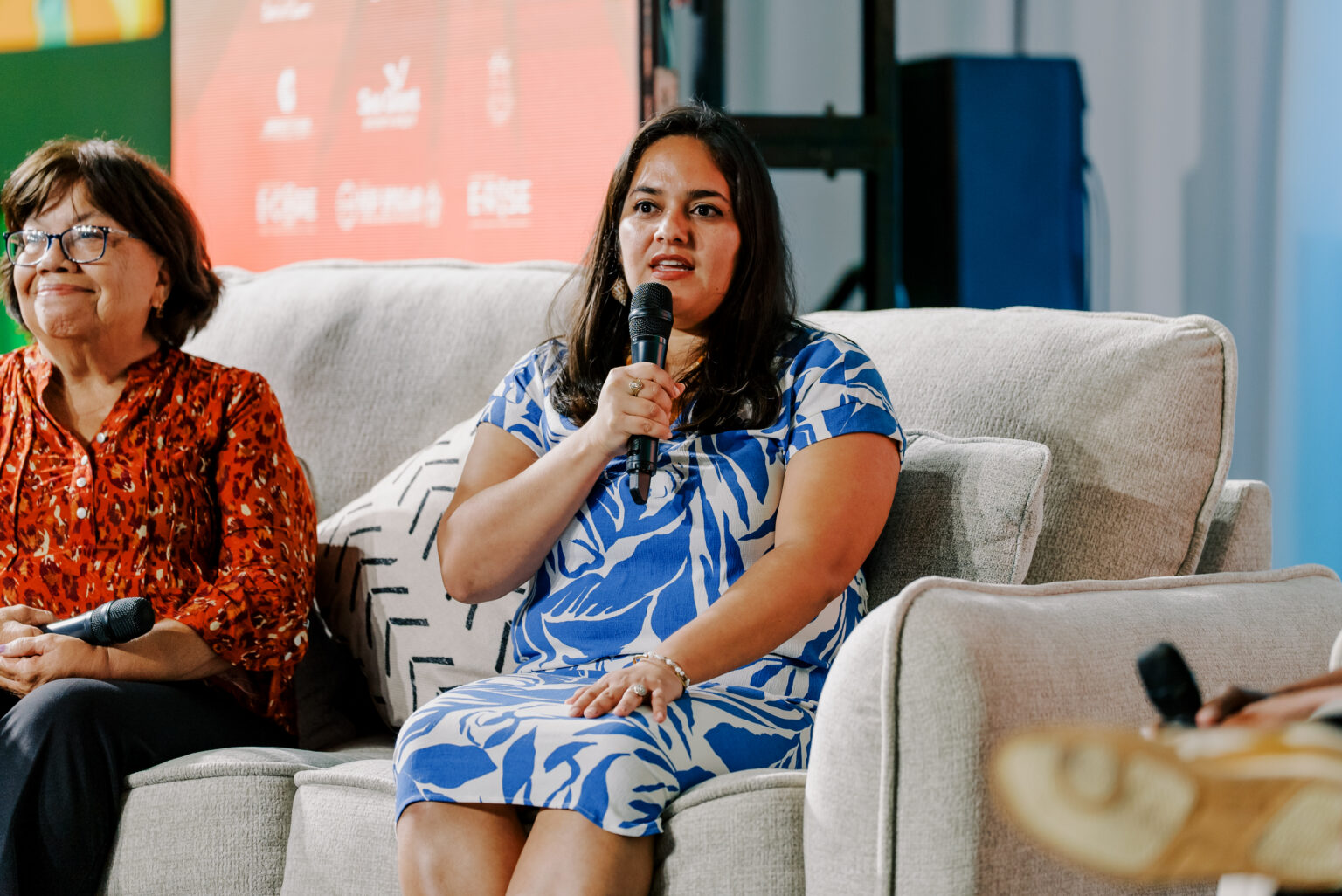
The Guam Green Growth panel further grounded the discussion in community-based action, featuring representatives from across sectors including aquaculture, finance, circular economy, and healthcare. Panelist Elizabeth Lubuag, sustainability and social impact manager with Bank of Guam framed prosperity through economic resilience: “We envision a prosperous island community where people follow their dreams and live life without financial worries… for me, it is a lot about financial resilience and being able to support ourselves through any weather.”

From the UOG Center for Island Sustainability and Sea Grant, aquaculture specialist David Crisostomo discussed food security and self-sufficiency, noting, “If you had a lot of food in your house, you were more prosperous than most people… I kind of lean a little bit more away from the wealth of land and money and more to the wealth of being able to survive and support a healthy family, a healthy community.”

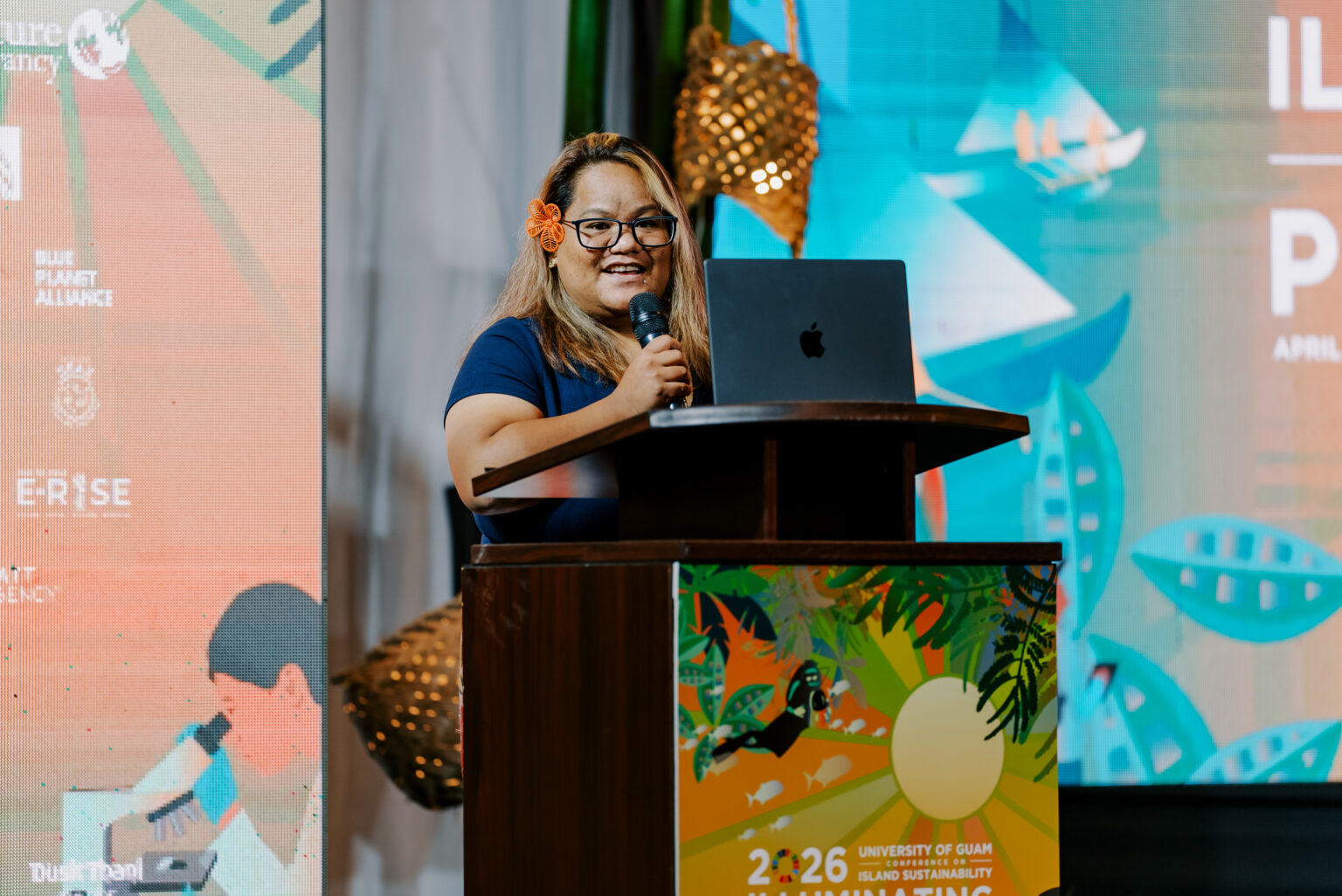
G3 Circular Economy Coordinator Abby Crain focused on innovation and skills-building at the community level: “We are really teaching people that you can make things from trash… using what we have and turning that mentality of what waste is into a resource.” Meanwhile, Ashley Calvo-Rodriguez, clinic administrator with Todu Guam spoke about the role of health in sustainability: “If we’re not healthy, if our community is not healthy, then how are we going to prosper?”

Rodriguez also reflected on the growth of community healthcare initiatives, noting, “Our goal is to provide preventive care for everyone so that you’re not going to the ER as often… and you’re able to take care of your health before it gets too serious.” Crisostomo pointed to future possibilities in aquaculture, adding that Guam’s ocean resources represent “such a tremendous resource that we have not tapped,” emphasizing the importance of doing so sustainably.

Leaders and representatives from Green Growth movements  across Micronesia and Hawaiʻi share insights and initiatives during a Green Growth Gathering at the 17th University of Guam Conference on Island Sustainability (CIS2026).

The session concluded with a milestone moment for Guam’s Green Growth movement, as organizers announced a new partnership with the Todu Guam Foundation. “We like to call it our island’s largest public-private partnership ever created to achieve a sustainable future,” Shelton said, referring to Guam Green Growth. The memorandum of agreement formalized collaboration between G3 and the healthcare nonprofit, reinforcing a central theme echoed throughout the gathering: that sustainability in island communities also depends on collective action and partnerships.

CIS2026 WEDNESDAY:  Organizations share ground response during Sinlaku recovery panel

CIS2026 WEDNESDAY:  Organizations share ground response during Sinlaku recovery panel

Panelists Carlotta Leon Guerrero, executive director of the Ayuda Foundation; Maria Hernandez May, co-director of the Micronesia Climate Change Alliance; and John Howard, president of Foneni Achocho Sensu (FAS), joined moderator Kyle Mandapat, associate director for communications and community engagement at the UOG Center for Island Sustainability and Sea Grant, during the Sinlaku Recovery Panel at CIS2026

“As I speak to you tonight, the entire island virtually of Saipan and Tinian will still sleep in darkness.”

The stark assessment from Marianas Press founder and journalist Thomas Manglona opened the recovery panel at the 17th University of Guam Conference on Island Sustainability (CIS 2026). In his live update from Saipan, Manglona described widespread power outages, limited access to running water, and hundreds of residents still taking shelter as recovery efforts continued across the CNMI (Commonwealth of the Northern Mariana Islands).

Before reaching the Marianas, Sinlaku had already affected Chuuk and other parts of the Federated States of Micronesia as it moved through the region, bringing early damage and urgent response needs to communities in its path. The system then passed Guam before striking the CNMI, stretching emergency response efforts across multiple island jurisdictions.

Marianas Press founder and journalist Thomas Manglona, giving a live update from Saipan at the CIS 2026 Sinlaku Recovery Panel

Looking back at these cascading impacts, the Sinlaku recovery panel shared what it was like working on the ground to coordinate relief and recovery efforts. Moderated by Kyle Mandapat, associate director for communications and community engagement at the UOG Center for Island Sustainability and Sea Grant, the panel featured Carlotta Leon Guerrero, executive director of the Ayuda Foundation; Maria Hernandez May, co-director of the Micronesia Climate Change Alliance; and John Howard, president of Foneni Achocho Sensu (FAS).

Mandapat opened the discussion by pointing to the gap between what disasters look like on paper and what they mean in lived experience, and invited the panelists to speak about their ongoing work in the field.

Much of the discussion centered on how community organizations quickly transitioned into full-scale response mode as the storm passed. Leon Guerrero described the immediate logistics needed to move relief supplies and set up distribution systems. “The very first thing that the Ayuda Foundation has learned how to do is, when a disaster hits, the first thing you have to do is get a site,” she said. She explained how a closed school facility was repurposed into a central hub: “It’s a school that was closed down last year, and it’s the perfect site for us. It allows people to drive in and drop off their donation and get right into a container.”

Panelist Carlotta Leon Guerrero during the Sinlaku Recovery Panel at CIS2026
Panelist Carlotta Leon Guerrero, executive director of the Ayuda Foundation during the Sinlaku Recovery Panel at CIS2026

Hernandez May described the scale of coordination across islands and the role of established networks in moving aid quickly. She pointed to systems built over years of organizing that allowed for rapid mobilization even before formal disaster declarations were in place. “We have been bringing together organizers, community organizers, people who are passionate about doing good for their communities since our inception in 2018, together to build solidarity,” she said.

She also spoke about the speed of their response efforts ahead of the storm’s impact. “Before the storm, we were already applying for the rapid response grants. We were already reaching out to all of our networks,” she said, noting that coordination stretched across territories and international partners to track funding and distribute supplies.

Maria Hernandez May during the Sinlaku Recovery Panel at CIS2026
Panelist Maria Hernandez May, co-director of the Micronesia Climate Change Alliance during the Sinlaku Recovery Panel at CIS2026

Hernandez May described the scale of coordination across islands and the role of established networks in moving aid quickly. She pointed to systems built over years of organizing that allowed for rapid mobilization even before formal disaster declarations were in place. “We have been bringing together organizers, community organizers, people who are passionate about doing good for their communities since our inception in 2018, together to build solidarity,” she said.

She also spoke about the speed of their response efforts ahead of the storm’s impact. “Before the storm, we were already applying for the rapid response grants. We were already reaching out to all of our networks,” she said, noting that coordination stretched across territories and international partners to track funding and distribute supplies.

John Howard of Foneni Achocho Sensu (FAS) described his role as a connector between organizations and affected communities, particularly in Chuuk and the broader FSM diaspora. “So I got a call from or a text message from my friend Miss Carlotta that Ayuda will do a donation to Saipan and Chuuk,” he said. “So I said, okay, I’m here to help. I will help reach out to Chuuk about what essential needs they need, and then I can relate to you.”

Howard explained that much of his work involved relaying updates through community networks and ensuring that needs identified in the islands were communicated quickly to partner organizations. “So that’s my role in this process, just relaying the message to the community to support relief efforts,” he said.

John Howard, during the Sinlaku Recovery Panel at CIS2026
Panelist John Howard, president of Foneni Achocho Sensu (FAS), during the Sinlaku Recovery Panel at CIS2026

As the discussion continued, panelists reflected on how coordination often happens in real time, shaped by urgent needs rather than formal planning structures. Leon Guerrero described constant communication among partners during the response period. “So when you find somebody and you start to move, and you need to move cargo, and you need to respond, you have to stay in touch,” she said.


Hernandez May also pointed to the efforts of local teams working long hours in affected communities. “Shout out to the food and water distribution teams that are every single day probably 18 to 20 hours, if not more,” she said. “They were up at 5 30 a.m. coordinating water, figuring out where the needs are, going door to door, doing water drops, working with the mayor’s offices.”
Across the panel, speakers returned to a shared theme of locally driven response systems and mutual aid networks that have become central to disaster recovery in the region. From repurposed facilities to cross-island coordination and community-led distribution efforts, the discussion reflected how organizations across Micronesia are continuing to respond as recovery from Sinlaku remains ongoing.

UOG launches Sinlaku relief efforts

Following the recovery panel at CIS2026, UOG President Anita Borja Enriquez, DBA, announced the launch of a coordinated relief effort mobilizing the university community to support affected islands across Micronesia, including Saipan, Tinian, Chuuk, Guam, and Rota, through donations and direct assistance.

The effort includes a goal of filling a 20-foot container with essential supplies such as non-perishable food, bottled water, hygiene and cleaning items, batteries, flashlights, solar lights, tarps, and basic household goods, as well as monetary donations to support the procurement of needed items. For more information on how to donate or get involved, visit the official UOG relief website.

CIS2026 WEDNESDAY: Conference co-chairs reflect on resilience and recovery after Sinlaku

Anita Borja Enriquez, DBA, Gov. Lou Leon Guerrero, and Austin Shelton, Ph.D., participate in the “Conversations with the Co-Chairs” session

CIS2026 WEDNESDAY: Conference co-chairs reflect on resilience and recovery after Sinlaku

Anita Borja Enriquez, DBA, Gov. Lou Leon Guerrero, and Austin Shelton, Ph.D., participate in the “Conversations with the Co-Chairs” session
UOG President Anita Borja Enriquez, DBA, Gov. Lou Leon Guerrero, and Austin Shelton, Ph.D., director of the UOG Center for Island Sustainability and Sea Grant, participate in the “Conversations with the Co-Chairs” session during the 17th University of Guam Conference on Island Sustainability, discussing resilience and recovery efforts following Super Typhoon Sinlaku.

The annual “Conversations with the Conference Co-Chairs” at the formal opening of the 17th University of Guam Conference on Island Sustainability (CIS2026) focused on a timely discussion on island resilience and recovery following Super Typhoon Sinlaku.

Governor Lou Leon Guerrero and UOG President Anita Borja Enriquez, DBA, CIS2026 co-chairs, shared insights on the island’s response and the broader path forward. Moderated by Austin Shelton, Ph.D., director of the UOG Center for Island Sustainability and Sea Grant, the session emphasized how recent experiences are shaping Guam’s approach to preparedness, sustainability, and regional collaboration.

Leon Guerrero described the storm’s intensity and prolonged impact on the Marianas. “70 to 80 miles per hour sustained winds and gusting up to almost 90. And so we actually had been in the storm for close to three days. Can you imagine 185 mile per hour winds bashing your home for three days? This typhoon was very slow moving,” she said. Despite the severity, she pointed to the resilience of island communities, adding, “we become resilient. We return and we rise up as a whole island Marianas… and we’ve had major emergencies.”

She also noted Guam’s rapid recovery as a result of coordinated response efforts. “We’ve recovered actually within two days I would say we had like 90 percent… of our power back, maybe 60 percent of our water,” she said, explaining that within just a few days, essential services were largely restored. The pace of recovery, she indicated, reflects years of planning and investment in systems designed to withstand and rebound from major storms.

Enriquez emphasized the university’s role in ensuring safety and continuity during and after the typhoon, particularly for students living on campus, many of whom come from neighboring islands including the Commonwealth of the Northern Mariana Islands, which was the area most affected by the super typhoon. “The importance of preparation and certainly internal communications and informing our students particularly how to stay in touch, what to monitor,” she said. She added that despite the storm’s impact, “we were able to resume classes this past Monday,” reflecting the university’s readiness and commitment to maintaining operations while supporting its community.

CIS2026 TUESDAY: Guam EPSCoR workshop builds research and grant capacity

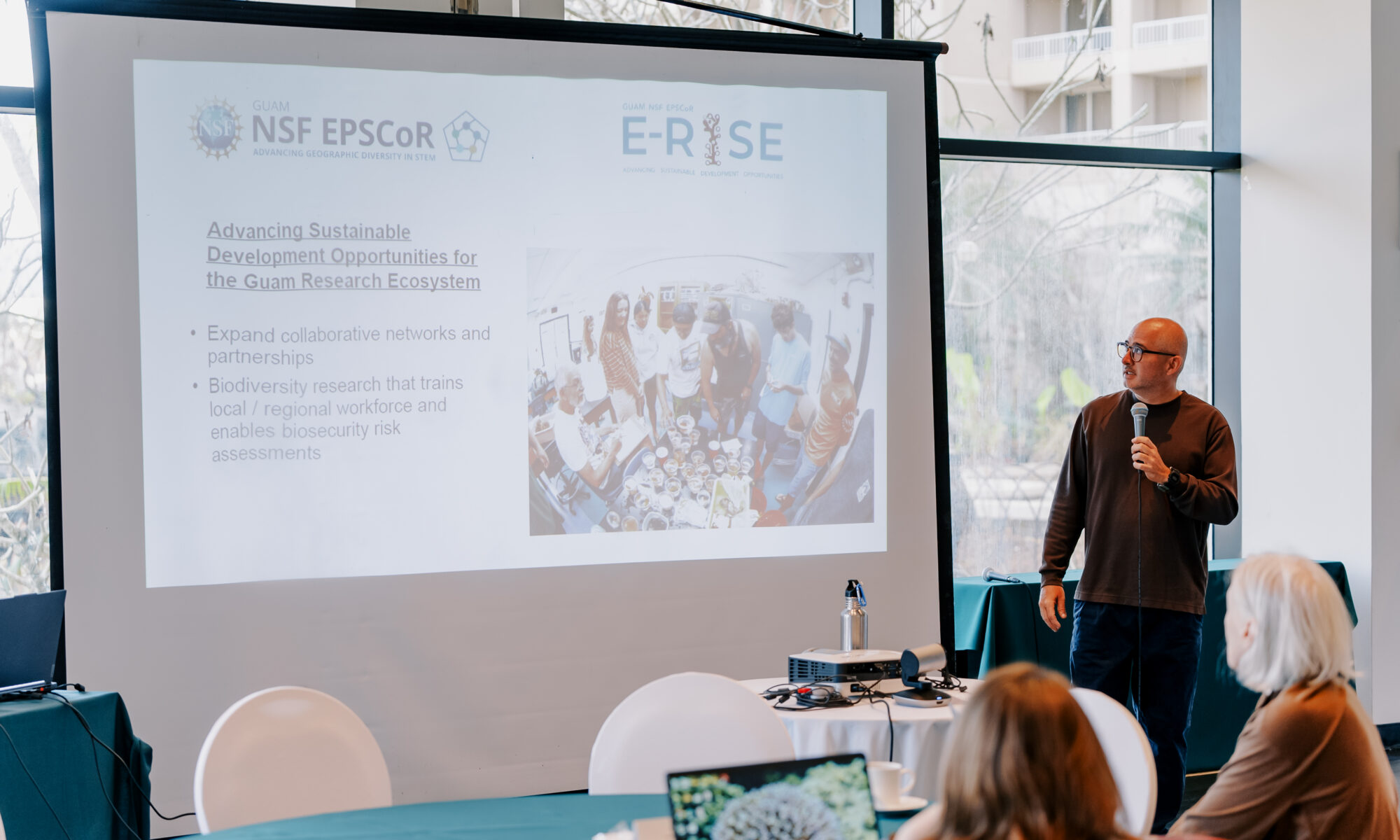
Dr. Bastian Bentlage presents at Guam NSF EPSCoR ECORE Research Grant Workshop

CIS2026 TUESDAY: Guam EPSCoR workshop builds research and grant capacity

Dr. Bastian Bentlage presents at Guam NSF EPSCoR ECORE Research Grant Workshop
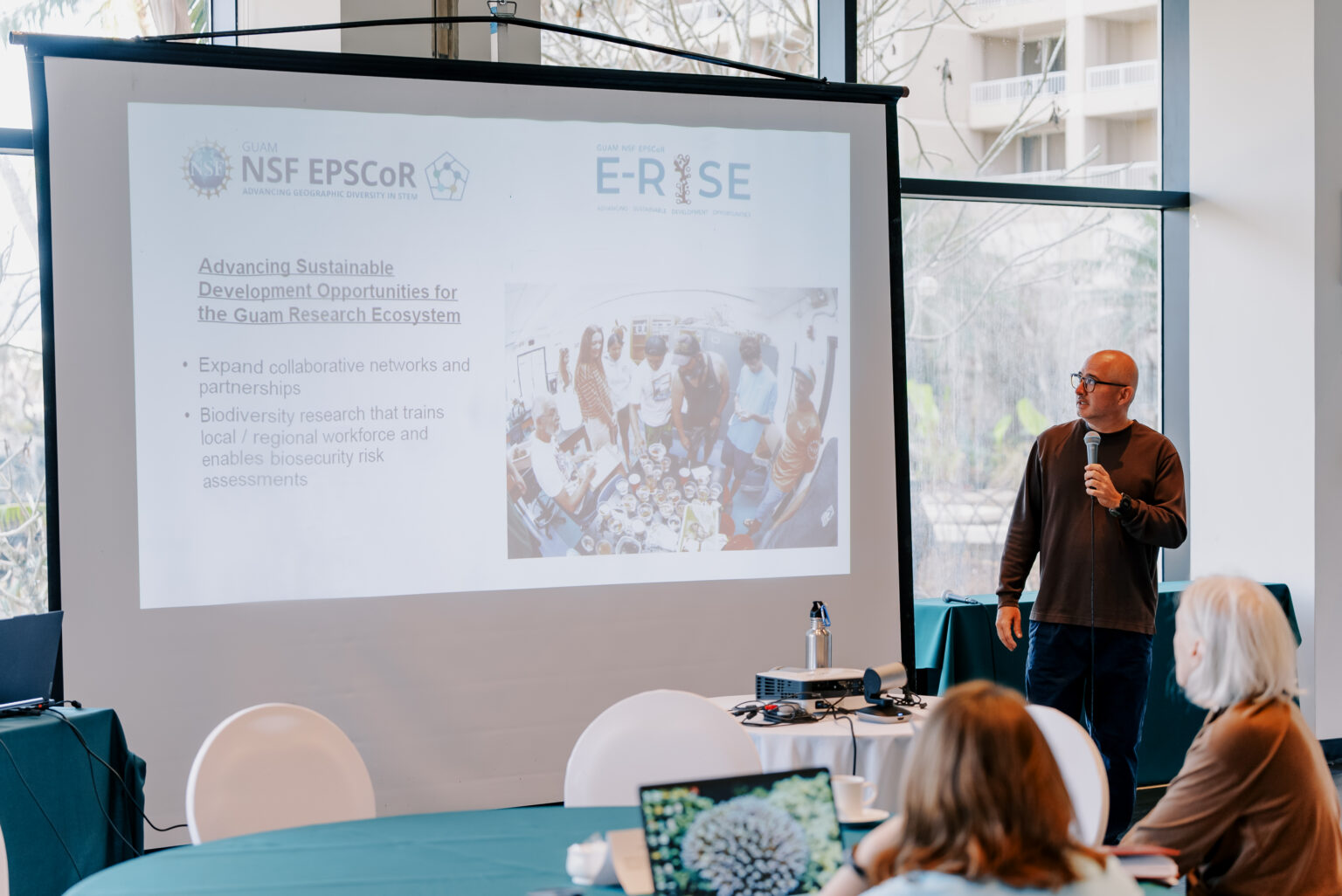
Participants engage in discussions and presentations during the Guam NSF EPSCoR ECORE Research Grant Workshop at the University of Guam, where speakers shared insights on research development, federal grant writing, and opportunities to strengthen collaboration across Guam’s research community.

UOG Associate Professor of Bioinformatics and E-RISE principal investigator Bastian Bentlage, Ph.D., set the tone for collaboration on Tuesday at the 17th University of Guam Conference on Island Sustainability as he opened the Guam NSF EPSCoR ECORE Research Grant Workshop, highlighting its discussion-driven format and calling on participants to actively exchange ideas, explore project concepts, and learn from one another.

He highlighted the goal of understanding attendees’ research interests and proposal needs in order to better connect them with resources and support systems, including the University of Guam’s research offices and partners, stating: “I also want to not just talk to you, but also learn from you what you’re actually interested in working on, what kinds of proposals or projects you’re trying to develop, so we get a better idea of how we may support you.”

He provided an overview of the NSF EPSCoR program, explaining that it was established to build research capacity in underfunded states and territories like Guam. Since 2015, EPSCoR investments have supported major initiatives, including a $6 million initial grant followed by a $20 million project focused on coral reef ecosystems, environmental resilience, and workforce development. Current efforts under the E-RISE program continue this work through research incubators, biodiversity studies, and training opportunities that extend beyond academia into local and regional agencies, while also enabling broader impacts such as biosecurity risk assessment.

The workshop includes presentations and technical sessions designed to strengthen research capacity, featuring:

      • UOG Vice Provost Pamela Peralta Taitano, Ed.D. on “The Principal Investigator’s (PI) Guide to Research;”
      • Dean of the UOG College of Natural and Applied Sciences (CNAS) Rachel Leon Guerrero, Ph.D. on “Start with the Win: Crafting Specific Aims for Success;”
      • Associate Professor of Mathematics Leslie Aquino, Ph.D., on the Guam NASA EPSCoR and its Seed Grant Program.

Additional sessions cover federal grant writing norms, characteristics of fundable proposals, and steps for turning ideas into competitive grant applications.

Bentlage also outlined the goals of the ECORE program, which aims to strengthen Guam’s research ecosystem by fostering connections among institutions, improving facilities, and creating pathways for student development and careers in science.

He stressed that projects should be designed with broader impact in mind, noting: “I would like to encourage everyone to think about your projects more broadly, in addition to the research you’re doing, how does that impact our community, our workforce, and what’s the long-term impact?”

He emphasized that the program is intended to support researchers by filling gaps, assisting with grant development, and leveraging established networks. Bentlage also expressed hope that the grant workshop would be the first in a continuing series designed to strengthen collaboration and build a more connected research community.

CIS2026 Tuesday: UOG Sustainability Conference 2026 spotlights resilience in wake of Super Typhoon Sinlaku

Speakers and conference leadership gather during a press conference for CIS2026

CIS2026 Tuesday: UOG Sustainability Conference 2026 spotlights resilience in wake of Super Typhoon Sinlaku

Speakers and conference leadership gather during a press conference for CIS2026
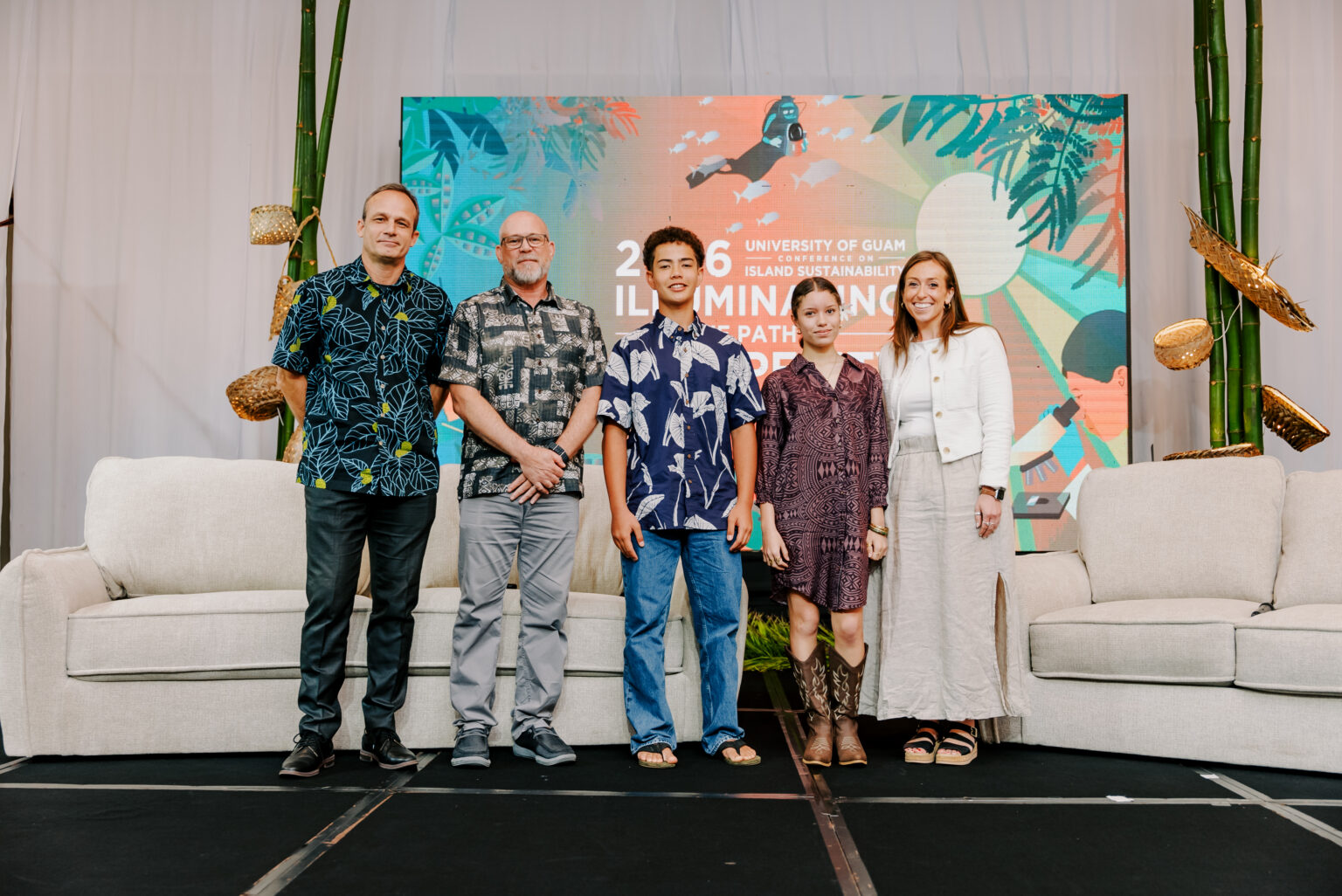
Speakers and conference leadership gather during a press conference for the 17th University of Guam Conference on Island Sustainability (CIS2026) on Tuesday, highlighting food sovereignty and ocean policy as key pillars of island resilience amid ongoing recovery efforts following Super Typhoon Sinlaku.

A press conference for the 17th University of Guam (UOG) Conference on Island Sustainability (CIS2026) on Tuesday featured speakers with expertise in food sovereignty and ocean policy, highlighting these areas as key components of island resilience—particularly as the Marianas navigate recovery efforts following the passage of Super Typhoon Sinlaku.

While the storm brought significant disruption to infrastructure across the region, especially in the CNMI (Commonwealth of the Northern Mariana Islands), conference leadership emphasized that these challenges reinforce the urgency of the week’s technical discussions.

Austin Shelton, Ph.D., director of the UOG Center for Island Sustainability and Sea Grant (UOG CIS & SG), said that after the typhoon, he consulted partners including Galvin Deleon Guerrero, Ed.D., Northern Marianas College president, about whether to postpone conference activities in Saipan, but was encouraged to move forward as a show of resilience amid regional recovery.

As Shelton recalled, “He said ‘Austin now is not the time to stand down. This is the time to stand up. This is what your conference is about.’ The sustainable future is a resilient future.”

Featured speaker William Castillo, associate professor and workforce development coordinator at Hawai’i’s Leeward Community College, connected the vulnerability of island supply chains to the need for localized food systems. Castillo said that true resiliency requires a shift away from total reliance on external imports, which are often interrupted during natural disasters.

“You know, you mentioned food sustainability. I got to give credit to the folks who’ve organized this conference for the last 17 years. It really is important to get into the same room and have these difficult conversations,” Castillo said.

“It wasn’t too long ago that both Hawai’i and Guam experienced what it looks like if tourism stops, right? It wasn’t pretty, we got through it, but it also allowed us to have those difficult conversations of how do we diversify our economy? How do we feed our own people when everyone else is dealing with different things?”

William Castillo speaks during a press conference for CIS2026
William Castillo, associate professor and workforce development coordinator at Leeward Community College, speaks during a press conference for CIS2026, emphasizing the importance of localized food systems and value-added agriculture in strengthening island resilience.

Castillo highlighted the role of value-added agriculture in stabilizing local economies, citing the use of food manufacturing facilities to process produce and innovative products. “What we’re able to do with our food manufacturing facility is give entrepreneurs the opportunity to take off-grade produce and, you know, thrive with it,” he added.

Meanwhile, Miriam Goldstein, Ph.D., executive director of the National Ocean Protection Coalition, addressed the connection between ocean health and regional security. She focused on the federal processes regarding deep-sea mining, arguing that protecting marine environments is essential to maintaining the long-term biological and economic resources of the islands.

“I’m here to talk about how deep sea mining is a false promise of sustainability. It is, there is not enough known about its impact on the environment, there is not enough known about its economics,” Goldstein explained. She emphasized that resilient solutions must be locally led: “The solutions need to come from the people who are living it.”

Miriam Goldstein, Ph.D. speaks during a CIS2026 press conference
Miriam Goldstein, Ph.D., executive director of the National Ocean Protection Coalition, addresses the role of ocean protection and the risks of deep-sea mining during a CIS2026 press conference.

UOG President Anita Borja Enriquez, DBA, said the purpose of the conference is “To bring to light the importance of sustainability, to provide the incredible amount of resource support…we want to grow all of these different initiatives that are going to keep resiliency at the forefront.”

Gov. Lou Leon Guerrero added by the importance of applying research to local industry. “Doing research in agriculture, aquaculture, engineering, all of that we offer is just more and more options and ways that we can sustain our island,” the Governor said. “We’re going to share ideas during this period of time and we’re going to take those ideas and put it into practice.”

Kyle Mandapat, MBA, UOG CIS & SG associate director for communications and community engagement noted that there are still opportunities for public involvement throughout the week. “There’s still opportunity for you to get involved, not just with the conference, but also with some of the efforts that we’re going to be leading through the week as well.”

The 17th UOG Conference on Island Sustainability continues through April 24 at the Hyatt Regency Guam. Last year’s event hosted over 1,200 participants and 190 presenters from 21 countries.

CIS MONDAY: Powering through the storm: Energy resilience at GPA’s P.O.W.E.R.ING symposium

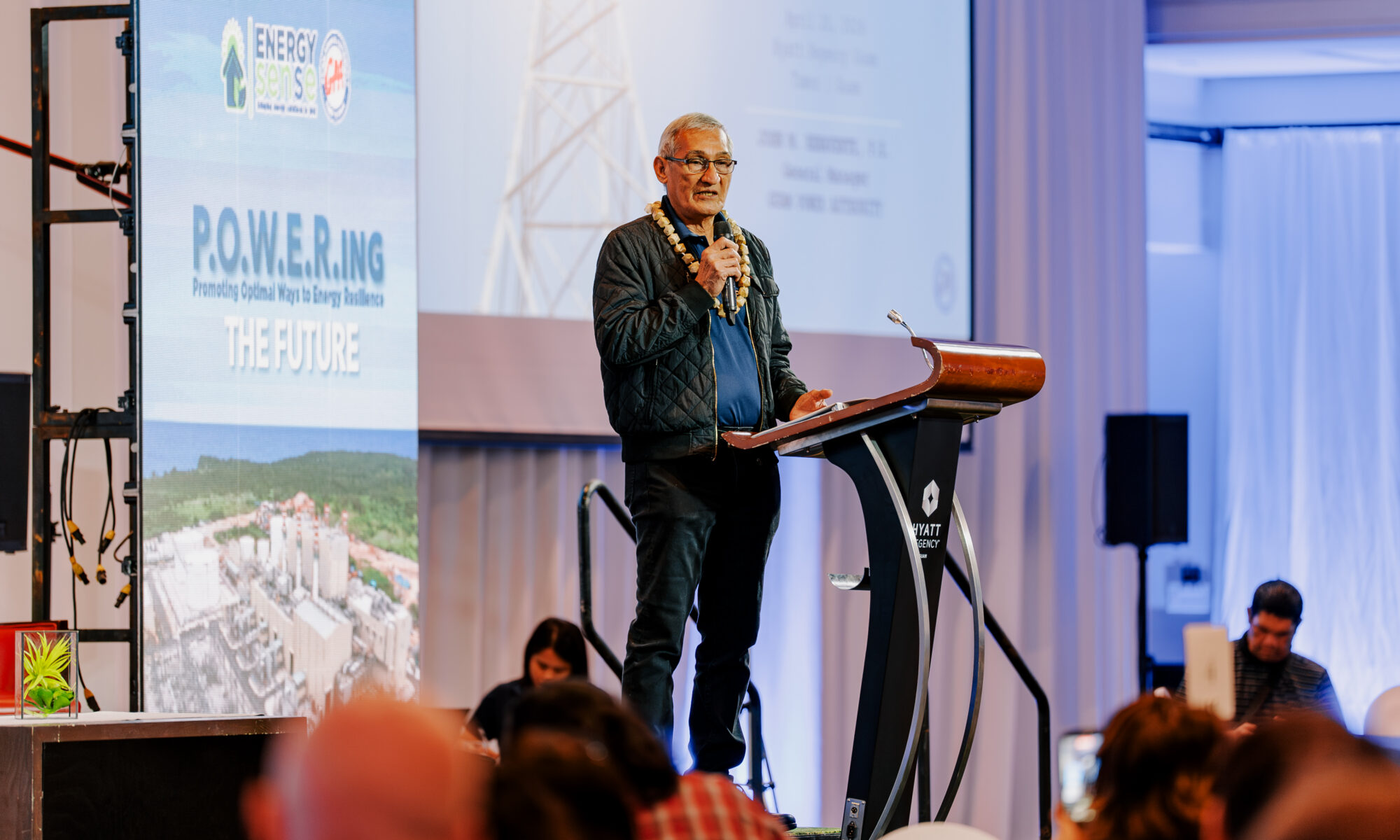
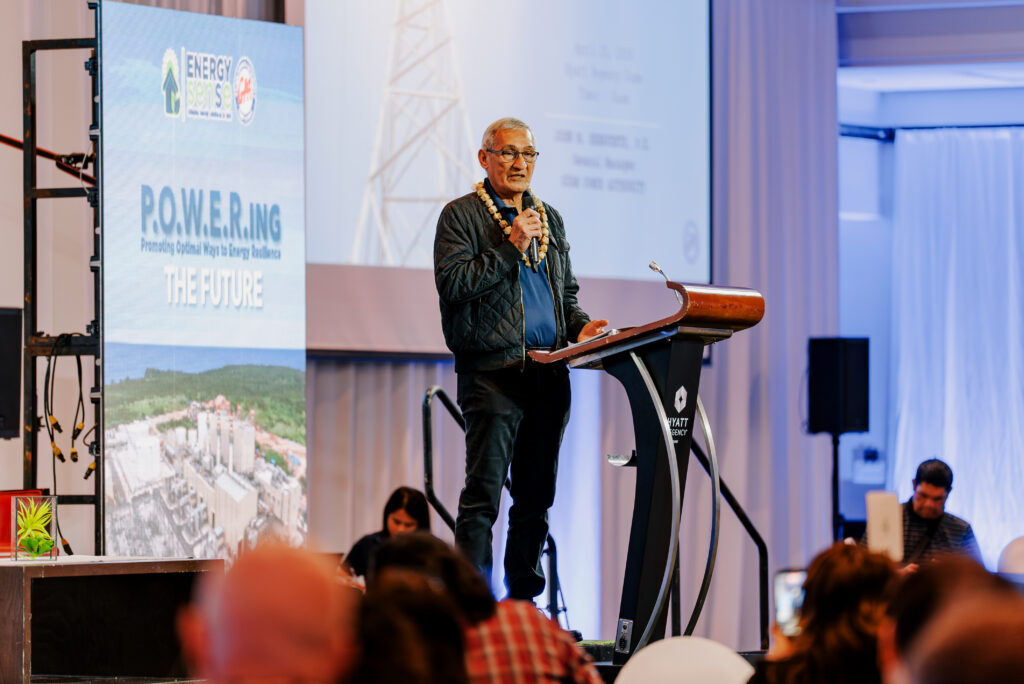
Guam Power Authority General Manager John M. Benavente, P.E. at P.O.W.E.R. symposium

CIS Monday: Powering through the storm: Energy resilience at GPA’s P.O.W.E.R.ING symposium

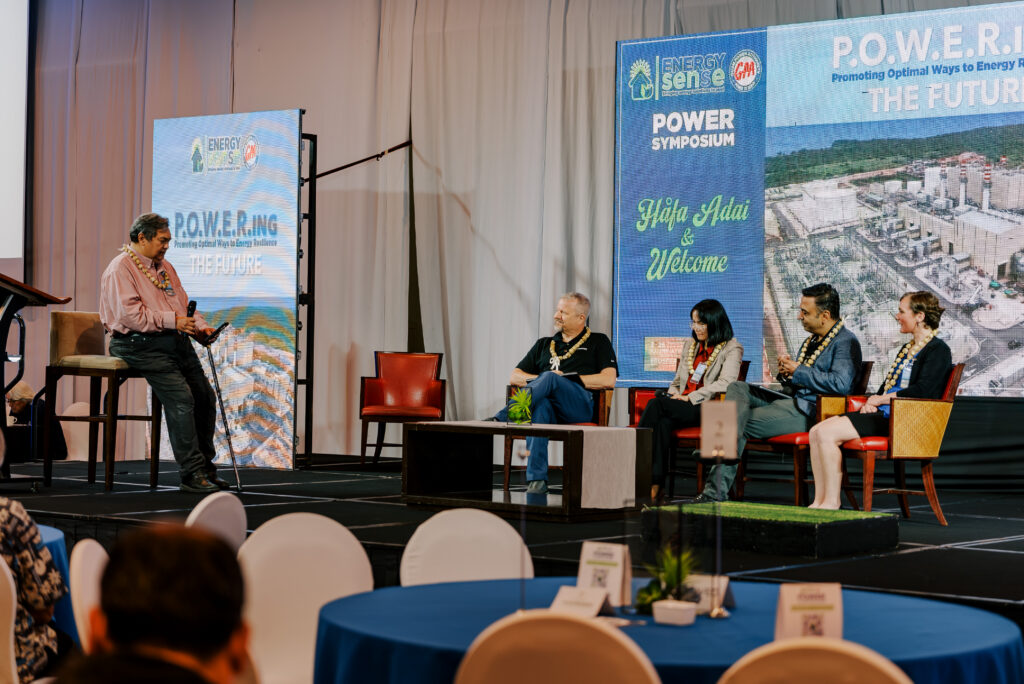
In the wake of Super Typhoon Sinlaku, the Guam Power Authority’s P.O.W.E.R.ING (Promoting Optimal Ways to Energy Resilience) Power Symposium at the 17th University of Guam Conference on Island Sustainability took on renewed urgency, bringing together energy leaders, policymakers, and technical experts to strengthen Guam’s path toward a more resilient grid.

“People talk about us (Guam) being the spear or the tip of the spear for national security, but we are also the tip of the spear for natural disasters….And we can only be that sharp if we have a strong community and a strong resiliency,” said Gov. Lou Leon Guerrero at the symposium, describing how energy resilience is central to Guam’s ability to withstand both geopolitical pressures and natural disasters.

Highlighting the island’s vulnerability, Leon Guerrero underscored the need for a strong, integrated approach that includes undergrounding power lines, expanding alternative energy sources, and exploring more stable fuel options such as liquefied natural gas. She pointed to lessons from recent storms like Typhoon Mawar and Sinlaku as evidence of the urgent need to strengthen infrastructure and ensure continuity of essential services.

For John M. Benavente, P.E., GPA general manager, energy resilience is not a future goal but an active, ongoing effort, especially in the face of recurring typhoons and evolving threats. Echoing earlier themes from past symposiums, he emphasized that reliability, recovery, and modernization must continue even during disasters, with no “pause” in addressing the island’s energy challenges.

Benavente mentioned how restoration efforts after a typhoon prioritize critical infrastructure—such as hospitals, water systems, and communications—while long-term resilience depends on strengthening delivery systems through underground power lines, completing an island-wide transmission loop, and investing in modern facilities like the Ukudu Power Plant.

Connecting to broader discussions on grid and infrastructure transformation, he said that while Guam’s energy supply is improving, ensuring resilient delivery is key to faster recovery and long-term stability. Benavente said, “We are not just restoring power, we are strengthening Guam’s future, one connection at a time.”

At the start of the symposium, John J. Cruz, Jr., P.E., GPA assistant general manager of engineering and technical services described Guam’s energy sector as entering a critical phase of transformation.

“Since the 2008 Integrated Resource Plan and its subsequent updates, GPA has announced and stated a vision and roadmap for transformational change. Almost all of the recommendations made by the 2008 and subsequent IRPs have been launched and are in various states of completion.”

As the island transitions from fuel-based generation to a grid dominated by renewable energy and battery storage, Cruz emphasized the need for deeper scientific, engineering, and operational understanding, since this shift fundamentally changes how the grid functions.

He outlined five strategic priorities guiding this transition: improving affordability by reducing reliance on imported fuel; enhancing customer experience, with satisfaction significantly increasing over the past decade; accelerating grid transformation to reach 50% renewable energy before 2030; advancing digital systems to boost efficiency, among others.

CIS MONDAY: Micronesia Challenge regional workshop tackles conservation financing

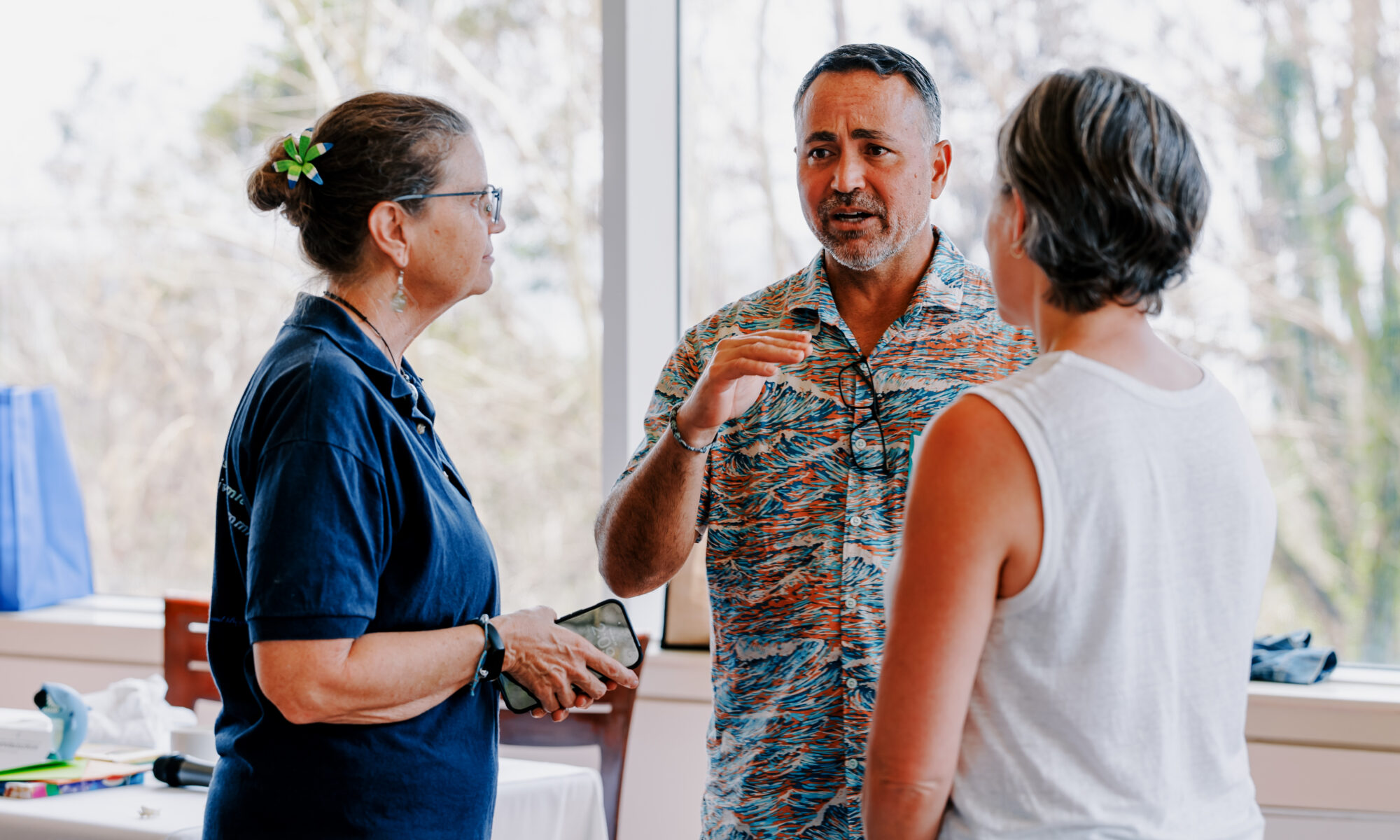
Conservation leaders Trina Leberer and Keobel Sakuma at the Micronesia Challenge Regional Meeting in Guam.

CIS MONDAY: UOG CIS2026 to proceed in Guam following Sinlaku, will highlight storm resiliency

Leaders from across the Pacific convened Monday for a workshop at the 17th University of Guam Conference on Island Sustainability aimed at innovating how conservation efforts are financed in the region, marking a significant step forward for the Micronesia Challenge and its long-term sustainability goals.

Key to the discussion at the Micronesia Challenge Regional Meeting is the Project Finance for Permanence (PFP) model, a large-scale financing approach designed to secure long-term funding for these green initiatives, according to Trina Leberer, director of The Nature Conservancy’s Micronesia Program.

Leberer said the Micronesia Challenge has been selected as a regional PFP initiative through the Enduring Earth Partnership, bringing together governments, nongovernmental organizations, and community partners to begin developing a Conservation and Community Development Plan (CCDP)—a roadmap that will guide conservation strategies, financing, and implementation across participating island jurisdictions.

The Nature Conservancy is a founding member of the Enduring Earth Partnership, according to Leberer. Other members include Pew Charitable Trusts, World Wildlife Fund, and ZOMA LAB.

“We will have a regional CCDP, and then there will be different subsections for Palau, Marshall Islands, FSM, Guam, and for CNMI. But all of them will work through the goals of the PFP track, for the goals of the Micronesia Challenge,” Leberer said.

She said the CCDP will outline shared goals across the region, including conserving 30% of terrestrial, freshwater, and marine ecosystems, achieving full ocean management, and strengthening community resilience and livelihoods. It will also break down specific strategies and costs for each participating location, helping to identify funding needs and align commitments from governments and donors.

Leberer emphasized that a key component of the PFP model is the development of sustainable finance mechanisms, such as environmental fees and protected area funds, which generate long-term revenue to support conservation. These mechanisms, alongside international donor contributions, are expected to form the financial backbone of the initiative over time.

Keobel Sakuma, interim deputy director for The Nature Conservancy’s Micronesia & Polynesia program, highlighted the scale of the effort, noting that the program spans multiple countries and territories across a vast ocean region.

“It’s a multi-sectoral approach, which we have community representation, non-government representation, government representation, even international representation in the form of NGOs and the UN representation as well. So, it’s really the first time this wide variety of stakeholders have come together to approach a deal like this,” Sakuma said.

Sakuma said the PFP model presents an opportunity to move away from piecemeal funding toward a coordinated, large-scale investment strategy that brings together government commitments and donor financing into a single agreement.

“Historically we’ve always approached conservation in the region as kind of an ad hoc basis, on a site-by-site basis, on a country-by-country basis. And in 2006, the countries came together and created the Micronesia Challenge, which is a commitment towards conservation, achieving conservation targets, achieving marine protected areas, ridge-to-reef managed areas, at a large scale. And this was revolutionary at its time,” he said.

Sakuma said the PFP approach aims to support conservation at the scale required to meet regional and global targets.
“The role that we play as The Nature Conservancy is to bring these two together and agree on that deal and have that funding flow to the countries in a one-time closing deal that’s unprecedented, never been done before, so that these countries can fully manage their areas, fully protect their areas for the long term,” he added.

Skip to content