Guam Green Growth looking for 4th Conservation Corps

Resources

Applications are now open for the fourth cohort of the Guam Green Growth (G3) initiative’s Conservation Corps program (G3CC). 

This five-month workforce development program is designed to prepare individuals for careers in the growing green economy while providing valuable hands-on experience in environmental conservation and sustainability initiatives. 

“We are excited to begin the fourth season of the G3 Conservation Corps,” said Austin J. Shelton, PhD, Director of the UOG Center for Island Sustainability and Sea Grant. “This program is preparing our people to enter the growing field of green jobs and help create a sustainable future for our island at the same time.” 

The G3CC program immerses participants in a comprehensive training curriculum that encompasses a wide range of sustainability topics, including: agriculture and aquaculture, island beautification, invasive species removal, reforestation, circular economy, recycling, and renewable energy. 

Through a blend of classroom instruction, hands-on field experiences, and mentorship opportunities, the program empowers participants to: 

  • Develop the skills and knowledge needed to secure employment in the green economy. 

  • Contribute to Guam’s sustainability goals through active engagement in environmental conservation projects. 

  • Gain a deeper understanding of the interconnectedness between human activities and the environment. 

  • Promote environmental stewardship and sustainability within their communities. 

In addition to gaining valuable skills and experience, G3CC participants also have the opportunity to earn up to 80 continuing education units (CEUs) from the UOG Global Learning and Engagement program and receive a stipend for their participation. They will also gain exposure to diverse environmental organizations and initiatives on Guam and the region.  

The G3 initiative spearheads the G3CC program in collaboration with the Office of the Governor of Guam and the G3 Working Group, which comprises representatives from all sectors of society. Guided by the Sustainable Development Goals (SDGs) and the G3 Action Framework, G3 formulates tangible solutions to sustainability challenges and fosters a green economy for the island region. 

Apply online at http://guamgreengrowth.org. Applications close on January 19, 2024. 

Sustainable alliances highlighted at G3 Steering Committee meeting

Resources

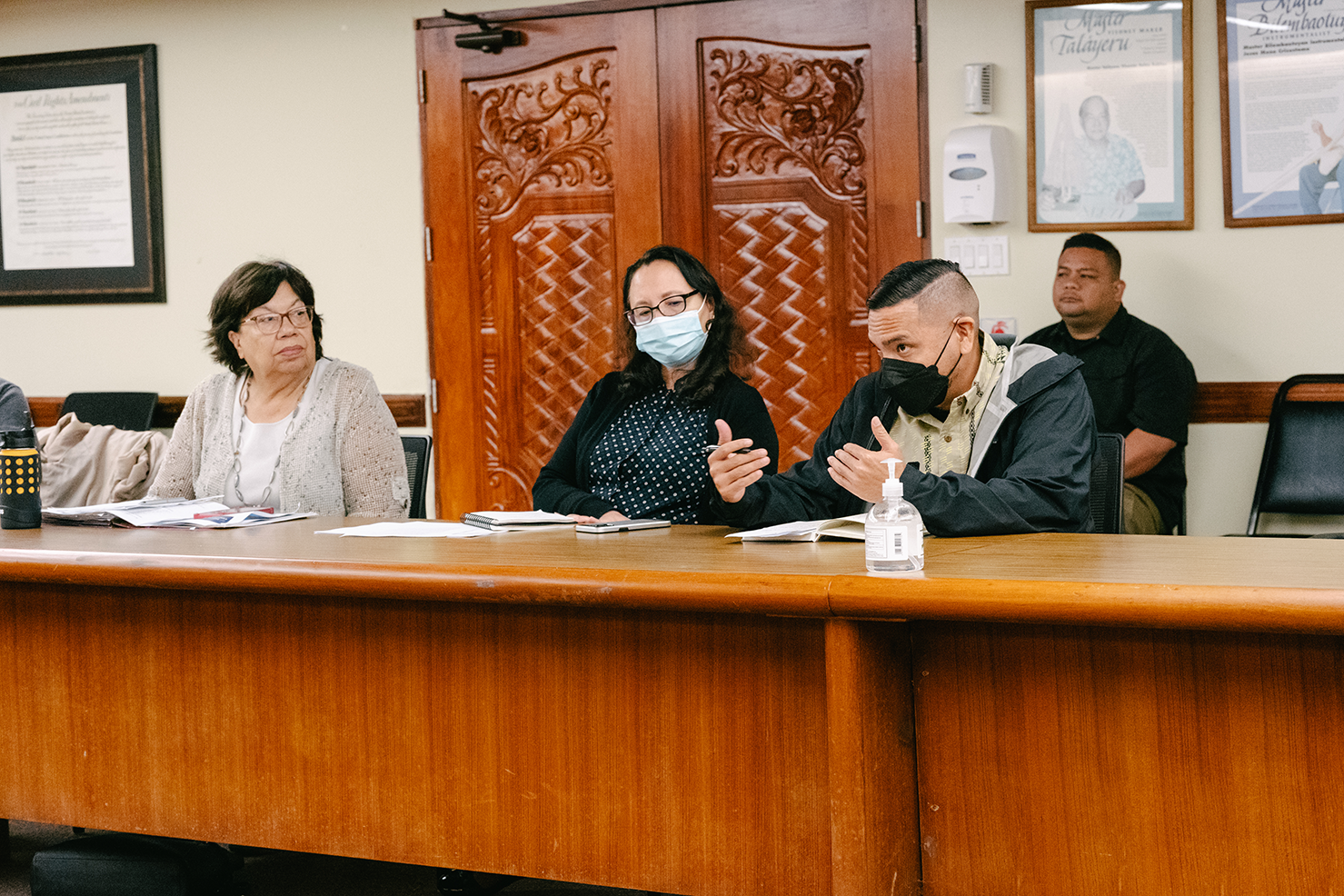
Steering Committee members Carlotta Leon Guerrero, Lola Leon Guerrero and Melvin Won Pat discuss the partnerships and ongoing progress during the Guam Green Growth Steering Committee meeting at Adelup earlier this month.

At the Guam Green Growth (G3) steering committee meeting in October, members discussed the strategic alliances and opportunities that the multi-agency committee could pursue in the near future, including a regional commitment to address climate change and other issues across the Pacific.  

One of these regional commitments, the 2050 Strategy for the Blue Pacific, was recently adopted by the Pacific Islands Forum, an inter-government organization formed by nations and territories across the region.  

Back in 2019, forum leaders endorsed the development of the 2050 strategy as a long-term solution to address the enduring challenges in the Blue Pacific continent. 

Guam supports the strategy, according to Lt. Governor Josh Tenorio, G3 steering committee co-chairperson, adding that the activities in the G3 Action Framework complement the regional blueprint.  

“All the work that we are doing really falls within this area. There is a big effort to really establish a positive regional framework and confront what everybody calls the existential crisis of climate change. That really is the top threat to the entire Pacific,” he said. 

As part of the 2050 strategy, forum leaders developed ten commitments to strengthen collective action and deepen regional collaboration. The strategy contains seven interconnected thematic areas to support these commitments, namely: 

  • Political leadership and regionalism 
  • People-centered development 
  • Peace and security 
  • Resource and economic development 
  • Climate change and disasters 
  • Ocean and environment 
  • Technology and connectivity 

 Like the G3 Action Framework, the thematic areas of the 2050 strategy are based on a set of comprehensive, integrated criteria. Austin Shelton, Center for Island Sustainability and Sea Grant director, said the strategy would be part of the agenda in the upcoming G3 biannual meeting. 

Shelton, who co-chairs the G3 steering committee, also reported on the most recent offshore engagements of the committee members. UOG President and G3 co-president Thomas Krise and Shelton participated in a Local 2030 Islands Network meeting at the Climate Week Summit in New York, which coincides with the UN General Assembly.  

At the meeting, Shelton spoke with the leaders about the impact of the G3 initiatives on the island. “We had the opportunity to speak with these leaders about the work that we’re doing in Guam, particularly our Guam Green Growth implementation projects like our circular economy and Makerspace and Innovation Hub, our G3 Community Gardens. We are making a local impact to be part of this global change towards a sustainable future.” 

Guam is a founding member of the Local 2030 Islands Network. As a United Nations hub, the network focuses on implementing the Sustainable Development Goals in local and culturally effective ways. 

New G3 Community Garden set for ground raising in Dededo

Resources

Dignitaries participate in the Ground Raising festivities at the Guam Green Growth Community Garden in Talo'fo'fo earlier this year. The ground raising for the newest garden is slated for November 1, 2022 at the Dededo Sports Complext.

Through the University of Guam-Guam Green Growth (G3) initiative, a new community garden will be built in Northern Guam this November to provide a space for the residents of Dededo and Yigo to learn sustainable backyard gardening and participatory and equitable food production. 

G3 and Guåhan Sustainable Culture (GSC) are spearheading the ground raising event at the Dededo Sports Complex on November 1.  

The new community garden is part of an islandwide initiative launched by G3, GSC and other government and non-government partners last year. Its long-term goal is to develop gardens in several villages as centers of community engagement where residents participate in growing their own food and learning about sustainable food systems and practices. 

Austin Shelton, UOG Center for Island Sustainability and Sea Grant director, described the G3 community gardens as beacons of education and food security.  “We are bringing more sustainability to different parts of the island through these community gardens. We now have a garden in the South, another in Hagåtña, and soon, in Dededo,” he added.   

Michelle Crisostomo, GSC president, and co-founder, said that the new garden would make a great addition to the village. She said that they plan to incorporate the same features and programs at the Hagåtña community garden into the new site. “It would be another great place where the families can go, where they can also learn about growing their own food and another place where people can live an active lifestyle,” she added.  

GSC co-founder and vice president Marlyn Oberiano designed the first community garden in Hagåtña while the G3 Conservation Corps, AmeriCorps GSC members, and Pacific Federal Management Inc. fabricated the garden beds.  The 1,400-square-foot garden was officially opened to the public in August 2021.  

GSC and the AmeriCorps GSC team continue to manage the Hagåtña site and host volunteer days for community groups and organizations. Later, G3 partnered with AmeriCorps to open another garden in January 2022 in the southern part of Guam, this time at the Jeremy Newby Community Center in Talo’fo’fo’.    

Guided by the United Nations Sustainable Development Goals (SDGs), the project addresses SDG #2: Zero Hunger, SDG #3: Good Health and Wellbeing, and SDG #11: Sustainable Cities and Communities.  

G3 Innovation Hub workshop allows community to make art and learn about traditional medicine

Resources

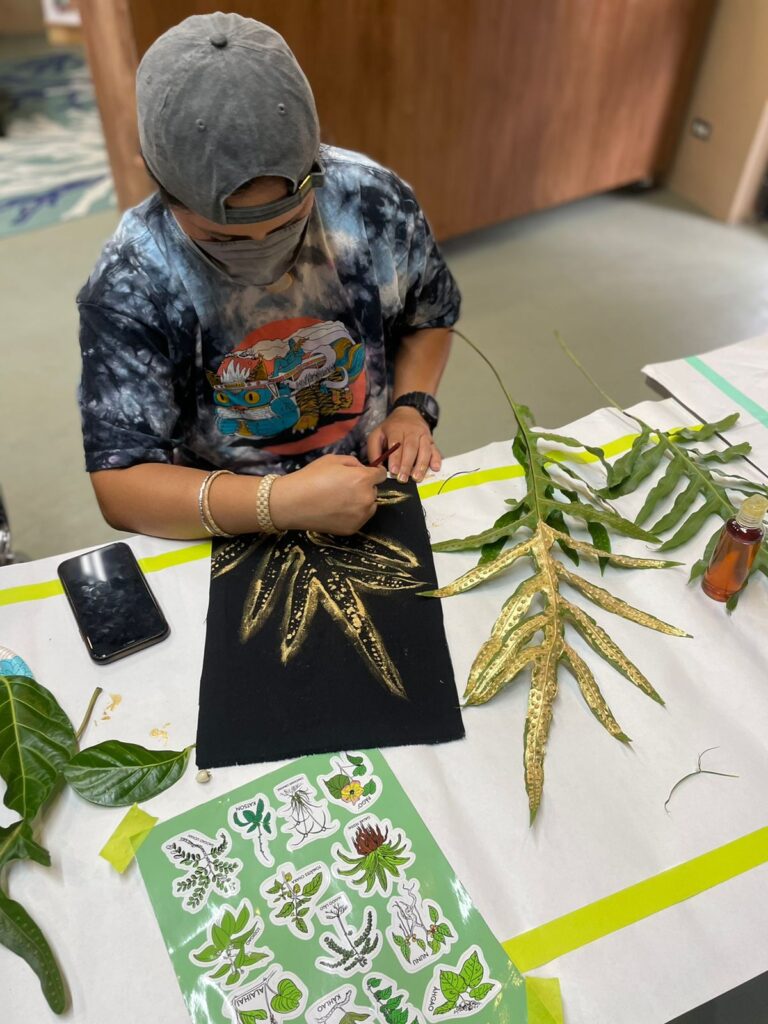
As part of the fourth installment of the Guam Green Growth Circular Economy Makerspace and Innovation Hub’s “Seed Talk Sessions,” the facility held a printmaking workshop facilitated by Roldy Aguero Ablao, a queer mixed CHamoru artist and cultural practitioner who explores culture and identity through printmaking, fashion, and more.  

The “Seed Talk Sessions” are a series of developmental opportunities offered by the facility in which industry professionals engage island community members to stimulate creativity and encourage local entrepreneurship. 

The premise of this workshop involved thinking about ways participants could adorn themselves with imagery reminiscent of Guam.  

“Sometimes when we would go on hikes here such as Litekyan or to different family homes, we would go to the jungle and ask for permission. The folks from that land would give us leaves called pupulu aniti, or “spirit leaf.” You wear it on your body as protection close to your chest and heart,” said Ablao. “I found that very sacred, but it also changed the way I related to the land around me. It made me walk a little more gently. It made me breathe a little more deeply because now the land is on me and I am part of the land. We are always part of the land.”  

According to Ablao, the steam created by boiling these ferns can help decrease congestion. He added that he would gather these ferns from a friend’s house or a neighbor’s yard and paint them onto shirts to always have a remnant of the land with him.  

Participants prepared for the workshop by going on an åmot walk in which they gathered medical plants within the Paseo area. During the walk, they harvested climbing ferns (kahlao) growing on a tree, half-flower (nanåsu) fruit and flowers from the beach strand, as well as leaves from a noni plant near a sidewalk.  

After, they reconvened at the G3 Makerspace and made prints of using the materials they gathered by painting onto flowers and stamping them onto a piece of cloth or painting the outline of leaves.  

The workshop ended with a chant recited by Ablao and Joseph Certeza, the G3 Makerspace attendant.  

When asked about what advice he would give to aspiring creators, Ablao said, “The first word that comes to me is inagofli’e’ which means “to see” or “witness with care.” I want creators to see ourselves with care and know that our stories are worth it even if others do not see that.” 

Participants prepared for the workshop by going on an åmot walk in which they gathered medical plants within the Paseo area. During the walk, they harvested climbing ferns (kahlao) growing on a tree, half-flower (nanåsu) fruit and flowers from the beach strand, as well as leaves from a noni plant near a sidewalk. After, they reconvened at the G3 Makerspace and made prints of using the materials they gathered by painting onto flowers and stamping them onto a piece of cloth or painting the outline of leaves.

Sustainability funding, food security, climate literacy and other updates from Guam Green Growth Steering Committee meeting 

Resources

At this month’s Guam Green Growth (G3) Steering committee meeting, members reported several current initiatives that support food security, renewable energy, healthy communities as well as upcoming funding opportunities to achieve the action items under the G3 Action Framework.  

Austin Shelton, Sea Grant and Center for Island Sustainability director, started the meeting with an update on the University of Guam Sea Grant institutional status ceremony this month. Shelton, the co-chairperson of the G3 Steering Committee, said the status upgrade will be a game-changer for the University, for the island, and for the region.  

That means we are bringing more resources to better research and understand our marine and our coastal resources on our island and help inform policies and management to ensure that there is a wise use of these coastal resources,” he said, emphasizing that Guam has the most diverse coral reef system in the United States.  

Meanwhile, Lt. Governor Josh Tenorio, who co-chairs the G3 Steering Committee with Shelton, reported on the Inflation Reduction Act that was recently signed by President Joe Biden. Tenorio said the landmark law has provisions that support renewable energy projects, tax credits for consumers of energy efficient products, and other initiatives that support G3’s push for one hundred percent renewal energy by 2045.  

Guam Economic Development Authority administrator Melanie Mendiola, who co-chairs the Healthy and Prosperous Communities team, provided updates in food security and economic prosperity. “One of the significant events that happened was the groundbreaking of the Guam Fishermen’s Co-opseawall. This will not only strengthen our fishermen economically but also strengthen access and availability to what is grown here as opposed to what is flown here,” Mendiola said. She also reported on the completion of the 8th cohort under the GUMA incubator training last week and the continuing partnership with Maker Space and Innovation Hub. 

Vangie Lujan, the co-chair of Thriving Natural Resource team, reported on the partnership between the Micronesia Challenge and Sea Grant for the Young Champion program, which seeks to build a generation of conservation leaders in Micronesia. According to Lujan, they are looking for a UOG or GCC student who is interested in interning with the UOG Sea Grant program. Each champion will receive $5,000 a year to cover internship costs.  

Guam Community College President Mary Okada, who co-chairs the Educated, Capable, and Compassionate Island team, reported on the groundbreaking of the newest LEED-certified building at the community college. Regine Biscoe-Lee, who co-chairs with Okada, provided updates on the government’s childcare initiative.  

Sustainable Alliances co-chair Carlotta Leon Guerrero provided updates on the Pacific Island Conference of Leaders next month. According to Leon Guerrero, around 20 Pacific government leaders will be at the meeting. Climate change is on top of the meeting agenda.  

The G3 Steering Committee is preparing for its next biannual meeting next month. At the meeting, the G3 category of action co-chairs will share their progress in achieving the G3 Action Framework items which are aligned with the 17 United Nations Sustainable Development Goals. 

Guam Green Growth shares Sustainable Development Goals with students at Phoenix Center

Resources

A group of lively middle school students at Father Duenas Memorial School gathered in a circle around 17 colorful tiles depicting the United Nations sanctioned Sustainable Development Goals (SDG). The Guam Green Growth (G3) team was there to interact with the students and get a conversation going on how to adapt the goals for the communities in Guam.

A repurposed milk carton with numbers one to seventeen written on it was tossed to a student who then read a number, which corresponded with the number on a goal. G3 team member Tori Manley asked questions of the student, which developed into a conversation that included everyone. The carton was tossed to the next person and the conversation continued.

The G3 initiative involves partners including the government, non-profits, business community members, and schools becoming involved to help the community by finding practical ways of implementing these goals.

Annania Kemp from team G3 spoke of the need for all communities on the island to work together to make the 17 goals a reality.

The students were very participatory and really enjoyed exploring the subjects that were introduced through the goals such as gender equality, life under the sea, quality education, clean water, and more.

Planting the seeds of SDGs for the youth to nurture will ensure that their children will enjoy a healthy environment, good educational opportunities, and the will to make Guam a sustainable place for all.

Japanese School students learn about SDGs and sustainability from Sea Grant 

Resources

Students from the Japanese School learned about the 17 United Nations Sustainable Development Goals from the University of Guam Center for Island Sustainability and Sea Grant teams who conducted an outreach at the Mangilao campus earlier in July. 

The students also learned about the Guam Green Growth or G3 program as a platform for increasing awareness and putting the SDGs into action through concrete programs and activities.  

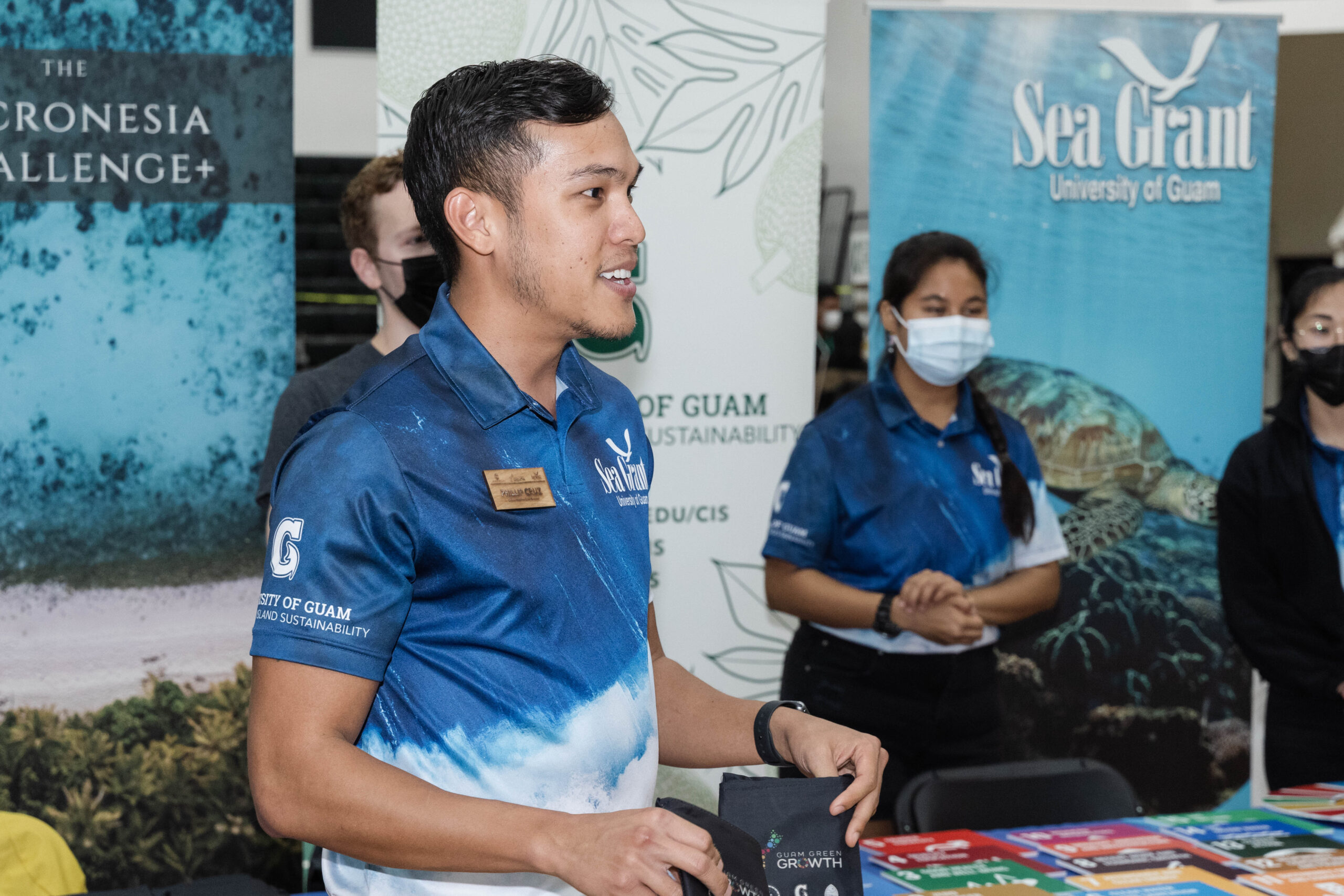
Sea Grant outreach coordinator Tori Manley and CIS sustainability coordinator Phil Cruz, with the help of the teachers at the Japanese School, facilitated a lively discussion on the SDGs and G3 program.  

Cruz told the students, “With these sustainable development goals, the United Nations said that the year from 2020 to 2030 is the decade of action, meaning we have ten years to achieve all of these goals all over the world to have a sustainable, equitable, and prosperous future.”  

The CIS and SG team also facilitated a discussion on G3’s five categories of action, namely: 1) Healthy and Prosperous Communities; 2) Educated, Capable, and Compassionate Island; 3) Sustainable Homes, Utilities, and Transportation; 4) Thriving Natural Resources; and 5) Sustainable Alliances. 

At the end of the discussion, the students wrote down their thoughts about the presentation. Levi, a 7th grade student, thanked the team for conducting the presentation at their school. “Thank you for coming to teach us about what’s happening around us. What we can do about it, and what is already being done to solve these problems. We really appreciate it.” 

Karen, an 8th grade student, said the move to transition to solar-powered public transportation is right for the island. “I thought it was very suitable for Guam because of the strong sunshine.” 

G3 is the island’s most comprehensive public-private partnership created to achieve a sustainable future. Aligned with the UN SDGs, G3 cultivates an ecosystem for transformative action to achieve a sustainable, prosperous, and equitable future for Guam. 

VIDEO: IUCN World Conservation Congress Panel – Partnerships for a Climate-Resilient Pacific

IUCN World Conservation Congress Panel: Partnerships for a Climate-Resilient Pacific

This panel discussion with Pacific Island-based leaders was prepared for the IUCN World Conservation Congress, Marseille, France, 3-11 September 2021. The panel spotlights solutions for nature-based adaptation to climate change. Three panelists describe efforts that they are involved in, sharing with each other and the audience how Pacific Islands are leading the way in building resilient ecosystems and sustainable economic growth.

Panelists:
Erin Derrington, Lead Planner, CNMI Office of Planning and Development (opd.gov.mp/ ; conservation highlights video: https://bit.ly/3kNCt4F)

Georgia Coward, Coral Reef Ecologist, American Samoa Coral Reef Advisory Group (crag.as/)

Austin Shelton, Director, University of Guam Center for Island Sustainability, and Director, University of Guam Sea Grant (uog.edu/center-for-island-sustainability/; guamgreengrowth.org/)

Hosts:
Laura Brewington, Fellow, East-West Center, and Co-Lead Investigator, Pacific RISA
Zena Grecni, Sustained Climate Assessment Specialist, Pacific RISA

Duration: 30 min.

Presented at IUCN World Conservation Congress, Hawaii Pacific Pavilion, Session: Partnerships for a Climate-Resilient Pacific; 6 September 2021

RESOURCE: NEW NATIONAL NETWORK HIGHLIGHTS CHALLENGES AND OPPORTUNITIES FACED BY U.S. ISLANDS IN BUILDING CLIMATE RESILIENCE

RESOURCE: NEW NATIONAL NETWORK HIGHLIGHTS CHALLENGES AND OPPORTUNITIES FACED BY U.S. ISLANDS IN BUILDING CLIMATE RESILIENCE

SUZANNE MACDONALD
POSTED 2021-09-20 
www.islandinstitute.org
 

“Under the weight of climate change impacts—biodiversity loss, debilitating storms, and
swallowing seas—islands are not sinking. Strong and resilient, islands are rising.”

In solidarity, islands are uniting in common purpose….islands are distant, but they are not alone.
Together, Islands Are Rising.”

DR. AUSTIN J. SHELTON
Director of the University of Guam Center for Island Sustainability and Sea Grant
and Co-Chair of the Climate Strong Islands Network Steering Committee


These excerpts from Dr. Austin Shelton, director of the University of Guam Center for Island Sustainability and Sea Grant, in his March 2021 testimony to Congress help get to the heart of why the Island Institute is helping to launch a new, national network focused on increasing the climate resilience of islands across the U.S. The Climate Strong Islands Network is building momentum for local and federal action on climate for islands that are U.S. territories, states, and parts of states, and Shelton serves as a co-chair. As we help to prepare for the network’s September 23rd virtual fall gathering, I want to share why the Island Institute is leaning into this important work.  

Throughout our nearly 40-year history, the Island Institute has often played a role to help connect Maine’s island communities to other, similarly situated communities in the U.S. and beyond. By participating in networkslearning exchanges, and even research publications, we’ve seen the value in helping Mainers expand their networks and even build their confidence as leaders by providing an avenue for them to share the stories of their hard work. Over the past five years, this approach has become an intentional part of our program design: creating opportunities that make it easier for local leaders to access what has worked in other places and partnering beyond Maine to create opportunity for our coast and others.  

Skip to content