UOG plants over 1200 trees at first GROW in Malojloj event of the year

Uncategorized

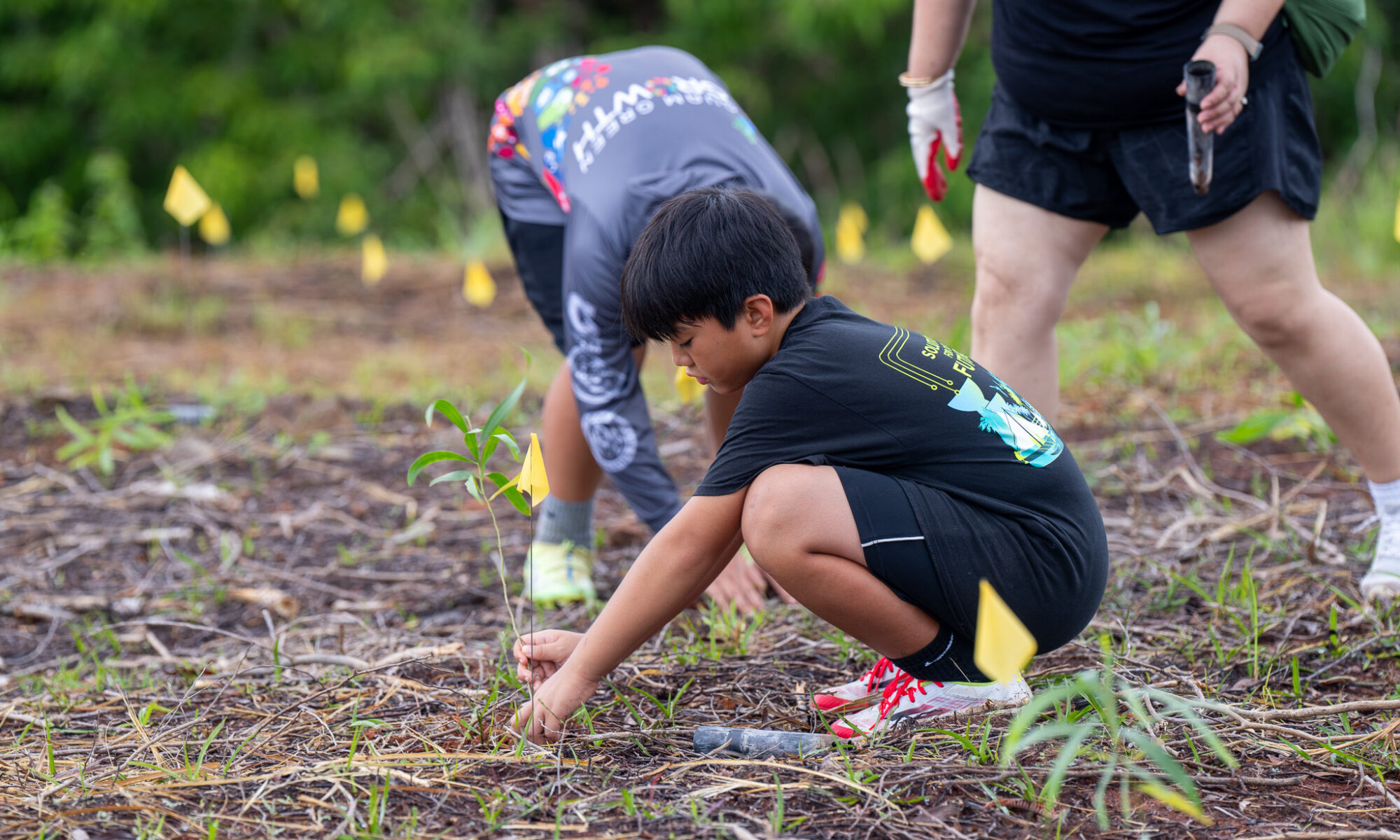
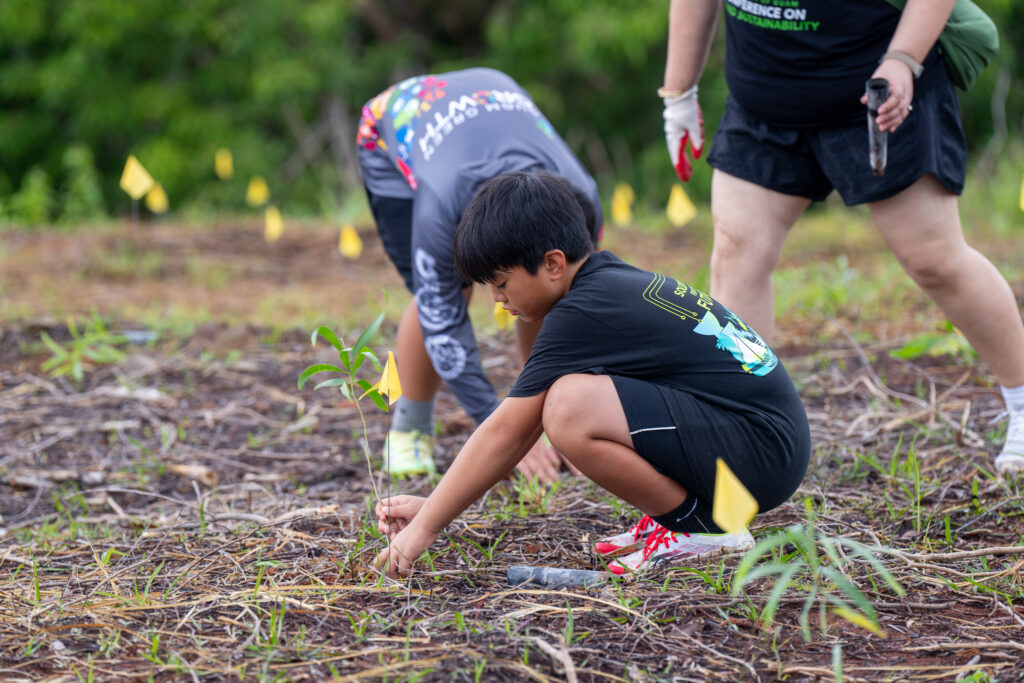
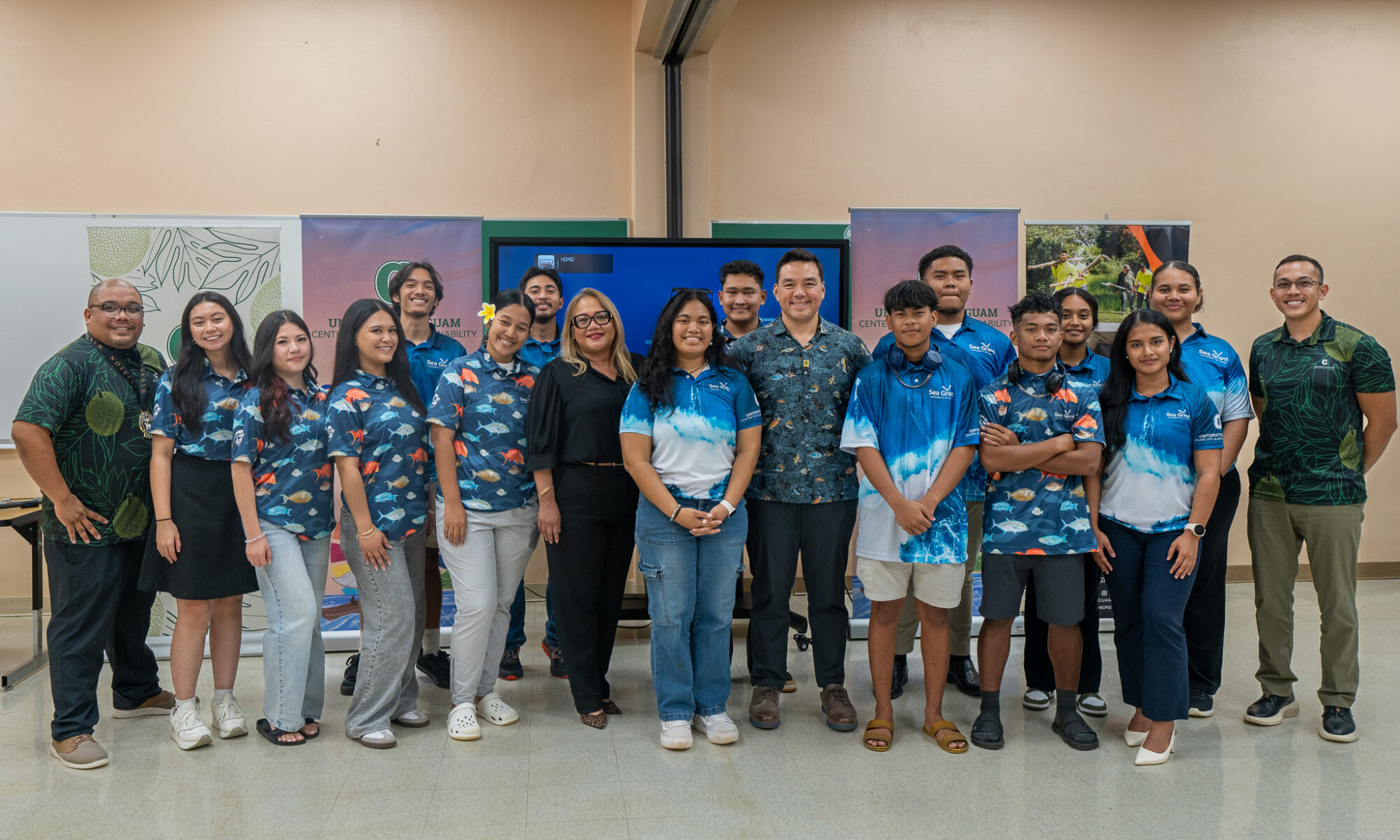
The University of Guam’s Center for Island Sustainability and Sea Grant (UOG CIS & Sea Grant), in collaboration with the Guam Restoration of Watersheds (GROW) Initiative, successfully hosted a community tree planting event this past Saturday, August 2, at the Ugum Watershed project site in Malojloj. The event marked the official start of the year’s planting season, drawing volunteers dedicated to protecting Guam’s natural resources from ridge to reef.

The event brought together dozens of volunteers, including students, conservationists, and community members, working to restore the degraded Ugum Watershed.

The ongoing reforestation efforts are crucial for securing soil and preventing sediment runoff, which can harm southern rivers, interfere with the island’s water treatment systems, and suffocate nearby coral reefs.

“We want to thank everyone who came out and did their part to help protect our lands and prevent as much as we can from ending up in our oceans,” said GROW Project Lead Joshua Muña.

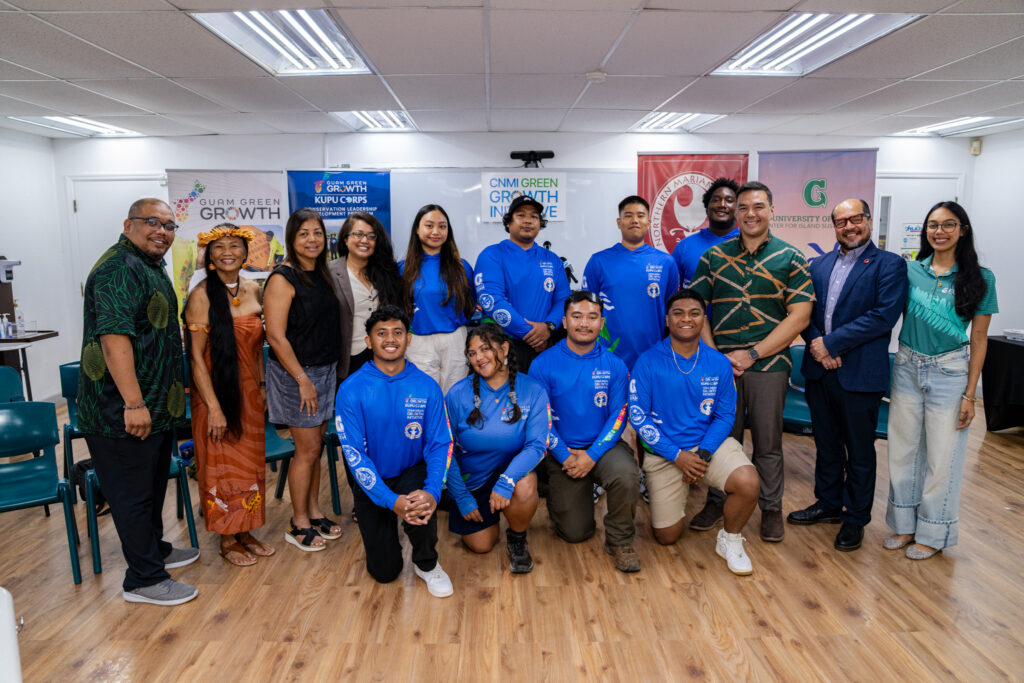
According to Muña, his team spent the past several weeks preparing for the event, alongside the newly launched Guam Green Growth GROW Corps.

“The entire team was doing site preparation for the plantings, we started drilling holes for the new trees, and we created erosion mitigation devices with the use of the dead trees that we cleaned up,” added Muña.

Altogether, organizers touted over 1200 trees planted within the three-hour event.

The GROW initiative, part of the larger Guam Green Growth (G3) partnership, focuses on empowering the community to take an active role in sustainable development. The tree planting series is designed to restore the watershed’s badland areas, which have been severely impacted by erosion.

Austin Shelton Ph.D., Director of UOG CIS & Sea Grant, has emphasized the tangible impact of the volunteers’ work. “Planting trees is a tangible way to contribute to the health and resilience of our island,” Shelton told the GROW Corps, adding that every tree planted is a part of a legacy for future generations.

The event also served as a service-learning opportunity for high school students, offering them a chance to earn credits while contributing to an important environmental cause.

The GROW in Malojloj event series is scheduled to continue select Saturdays throughout the planting season, with the next being prepped for September 6, 2025. The organizers encourage families, community groups, and corporate volunteers to join future events and help make a lasting difference for Guam’s environment.

Plant some trees at UOG’s GROW in Malojloj event this weekend

Uncategorized

The University of Guam Center for Island Sustainability and Sea Grant (UOG CIS & Sea Grant) is hosting a tree-planting event this Saturday, August 2 at the Ugum Watershed project site.

The event is scheduled to take place from 8AM to 10AM and will be coordinated by the Guam Restoration of Watersheds (GROW) Initiative. Volunteers are welcome to participate in this event.

“This is the first GROW in Malojloj event for the year and is going to kick-off our planting season,” said GROW Project Lead Joshua Muña. “We want to welcome everyone down to learn how we can protect our watershed and our coastal ecosystems and to get hands-on experience making a difference.”

According to Muña, the Ugum Watershed is crucial for Guam’s ecosystem, providing habitat for various species and contributing to the island’s water supply. Tree planting efforts in the area help prevent soil erosion, improve water quality, and prevent coral suffocation.

Participants are encouraged to wear appropriate clothing for outdoor work, including closed-toe shoes, hats, and sunscreen. Gloves and water will be provided, but attendees are encouraged to bring their own reusable water bottles to minimize waste.

The GROW in Malojloj event series will continue Saturdays, September 6, October 4, and November 8, 2025, and are open to community group, corporate and service-learning student volunteers.

Participants are encouraged to arrive promptly to receive instructions and tools. For a map to the project site and to stay updated on the GROW in Malojloj event series, please follow @uogseagrant on social media.

G3CC catches snakes and new skills at invasive species training

John Reynold wearing a lime green hood and a red headlamp looking upward at night.

Uncategorized

The Guam Green Growth Conservation Crops (G3CC) went scouting for snakes with the National Park Service and community group, Friends of Islan Dåno, learning how to track, capture and dispose of invasive brown tree snakes that have slithered throughout Guam.

Also known as Boiga irregularis, the brown tree snake continues to have adverse effects on Guam’s ecosystems, specifically ravaging Guam’s native bird population to near extinction.

With National Park Service taking the lead at Asan Beach Park on one night, and Friends of Islan Dåno leading the training in the village of Malesso’ on another, the G3CC received comprehensive training imperative to the removal of this sly snake species.

The team learned to properly bait and set snake traps, helping to lay around 64 at Asan Beach Park; how to track the presence of brown tree snakes by assessing availability of its food sources in a given area (e.g. cane toads, mourning geckos, and bird species), common areas and conditions brown tree snakes inhabit, and extermination.

Although mitigation of invasive species like the brown tree snake has been a challenge for Guam, learning fundamental skills on how to track and remove them is key to protecting the future of the island’s native beauty.

Armed with the knowledge shared by sustainability partners like National Park Service and Friends of Islan Dåno, the G3CC is now in a better position to meet this challenge, protecting our native species today so the people of Guam can continue to enjoy them in a distant tomorrow.

G3CC marches toward sustainability at 81st Liberation Day Parade

G3CC lean over edges of bright blue container filled with thousands of crushed aluminum cans

Uncategorized

The Guam Green Growth Conservation Corps (G3CC) and the G3 GROW Corps worked together with the Governor’s Office and iRecycle to bolster recycling efforts at the 81st Guam Liberation Day Parade with the mission of keeping aluminum cans out of the landfill. 

In preparation for the big community celebration, the G3CC and GROW Corps spent the week leading up to the event preparing several can bins made from chicken wire and distributing them throughout the parade route, making it easier for celebrants along Marine Corps Drive to join in on the recycling efforts.  

On the morning of the 81st Liberation Day Parade, the G3CC were on scene in Hagåtña bright and early, ready for the big day and determined to collect as many aluminum cans as possible.  

At the day’s end, the G3CC, GROW Corps and iRecycle managed to collect 20 55-gallon trash bags filled with aluminum cans, totaling approximately 4,500 cans diverted from the landfill. 

With the cans from the parade collected, they will be distributed to iRecycle bins housed at various public schools throughout Guam, with the funds raised from each recycling bin going to each school.  

For the G3CC’s fifth season and GROW Corps first season members, the mission to mitigate the impact of recyclable waste sent to the landfill through recycling was a success, through collaboration with sustainability partners like the Office of the Governor of Guam and iRecycle, and the island community at large.  

UOG celebrates Marshall Islands’ Green Growth launch, highlights regional collaboration

Uncategorized

The University of Guam Center for Island Sustainability and Sea Grant (UOG CIS & Sea Grant) extends its congratulations to the Republic of the Marshall Islands (RMI) on the recent launch of their ambitious RMI Green Growth initiative.

This significant step towards a more sustainable future for RMI has been greatly supported by the expertise and collaborative framework of Guam Green Growth (G3) and was first announced during the 16th University of Guam Conference on Island Sustainability (CIS2025), where RMI President, Her Excellency, Hilda Heine Ed.D., was the keynote speaker.

“The future of our islands depends on the decisions we make today. Our goal is not just to protect what we have, but to create the future where our islands are stronger, our people are empowered, and our way of life can endure,” said Heine at CIS2025.

The RMI Green Growth initiative, was unveiled during the 27th Micronesian Islands Forum held this month in Majuro, marks a pivotal moment for the island nation, demonstrating a strong commitment to sustainable development aligned with the United Nations Sustainable Development Goals (SDGs).

Austin Shelton Ph.D., director of the UOG Center for Island Sustainability and Sea Grant and co-chair of the G3 Steering Committee, expressed his pride in the regional collaboration.

“We are excited for the Republic of the Marshall Islands as they embark on their Green Growth journey,” said Shelton. “The expansion of the Green Growth movement across Micronesia signifies the critical importance of sustainable development for our island communities. Sustainability is ingrained in islands because it has been critical to our survival for millennia. Together, the Pacific is rising to the forefront of global efforts to secure a sustainable future for our planet.”

Guam Green Growth, a comprehensive public-private partnership facilitated by UOG CIS & Sea Grant, has played a crucial role in laying the groundwork for green growth expansion, recently celebrating the launches of CNMI Green Growth and Palau Green Growth initiatives as well.

The G3 team, in collaboration with Hawai’i Green Growth, Hawaii Sea Grant and the Local2030 Islands Network, has provided support in developing RMI’s Green Growth dashboard and assisting with grant-writing efforts to establish a circular economy makerspace in the Marshall Islands.

“As UOG continues to strengthen collaborations throughout Micronesia, we are so happy for our partners in the Republic of the Marshall Islands and the launch of their RMI Green Growth initiative. As we stood on stage together earlier this year at CIS2025 and Her Excellency, President Heine announced her commitment to green growth, we offered our support. Now, we see the forward movement we Micronesians are known for, in action. Biba RMI Green Growth and Biba UOG,” said UOG President Anita Borja Enri quez D.B.A.

The RMI Green Growth program is set to continue the nation’s efforts towards a more resilient, prosperous, and inclusive economy. It builds upon RMI’s existing climate change priorities, including their 2050 Climate Strategy which aims for net-zero emissions and 100% renewable energy by 2045.

UOG CIS & Sea Grant remains dedicated to fostering regional partnerships and sharing successful models like G3 to empower other island nations in their pursuit of sustainability. The launch of RMI Green Growth is a testament to the power of collaboration and a promising sign for a more sustainable and resilient Pacific.

UOG to distribute free can bins and support recycling at 81st Guam Liberation Day Parade

Uncategorized

The University of Guam’s Guam Green Growth Conservation Corps (G3CC) announced its plans to promote environmental stewardship and enhance recycling efforts at the upcoming 81st Guam Liberation Day Parade by distributing free can bins to parade attendees and aiding with aluminum can recycling along the parade route.

Alongside partners iRecycle, this initiative aims to empower the community to participate actively in waste reduction and proper recycling, contributing to a cleaner and more sustainable Guam. The Liberation Day Parade, one of the most attended events of the year, generates a significant amount of recyclable waste, particularly aluminum cans.

By providing convenient recycling solutions, the group hopes to keep these materials from the landfill and foster a culture of environmental responsibility.

“This is the biggest event of the summer and G3 is ready to do our part to help with the celebration,” said Austin Shelton Ph.D., director of the University of Guam Center for Island Sustainability and Sea Grant (UOG CIS & Sea Grant). “Our team will be working hard to help parade goers divert these cans from the landfill and onto iRecycle where they will be donated to schools to raise money to support their students.”

G3CC members and team members from the UOG CIS & Sea Grant will be moving along the parade route to distribute the reusable can cages, which are designed to make collecting aluminum cans simple and efficient for families and groups enjoying the festivities. They will also guide attendees on where to deposit their collected cans for proper recycling.

“UOG is proud to support the festivities in celebration of Liberation Day,” said Anita Borja Enriquez D.B.A, president of the University of Guam. “We cannot wait to see everyone out there enjoying the parade and helping them to protect our resources and keep our island beautiful through these sustainability efforts.”

The Guam Green Growth initiative encourages all parade-goers to take advantage of these resources and join in the effort to make the 81st Guam Liberation Day Parade the most environmentally friendly yet. This effort aligns with G3’s broader mission to advance sustainable development goals across the island.

Guam Green Growth Conservation Corps clears path for youth at Island Girl Power

John Reynold holding a tree trunk

Uncategorized

The Guam Green Growth Conservation Corps (G3CC) spent the week with Island Girl Power (IGP), a non-profit organization based in the village of Dededo which focuses on empowering young girls and their families, and a sustainability partner determined to teach the importance of food security through its community gardens and other activities.  

While at the Dededo facility, the G3CC learned about agroforestry, a form of agriculture relative to cultivating and conserving trees, how to identify native plant species via the iNaturalist app, and even lent a hand in IGP’s community garden to ensure fresh fruits and vegetables are available to the surrounding community.  

Despite scattered showers throughout the week, nothing could dampen to the spirits of the G3CC who managed to transform a portion of the IGP property from a wild jungle brimming with an overgrowth of invasive plant species to a freshly landscaped space ready for native plants. Among these invasive species removed were Leucaena leucocephala and Spathodea campanulata, two invasive species of tree, and Antigonon leptopus, most known as the Chain-of-Love vine.  

For the G3CC, the time spent with IGP was a fruitful one ripe with new ideas and skills geared toward a more sustainable community. For some members of the cohort, the fruits of their collective labor is further sweetened in the helping of IGP and the entire island to further empower young girls and their families to envision a greener Guam.  

Budding scientists tackle real-world challenges at UOG INCLUDES STEM Symposium

Uncategorized

Three high school students earned top honors at the 2025 NSF INCLUDES Supporting Emerging Aquatic Scientists (SEAS) Islands Alliance STEM Symposium, where they presented innovative projects tackling some of Guam’s pressing environmental and ecological challenges.

Held at the University of Guam School of Business and Public Administration, the symposium featured posters from a total of six high school students. Their topics ranged from invasive species, waste recycling to biodiversity — each project highlighting the real-world applications of STEM education in island communities.

The students were part of the STEM High School Summer Internship Program, an initiative supported by the NSF INCLUDES SEAS Islands Alliance. Over the course of the summer, they worked alongside mentors to develop and conduct their own scientific projects. 

Speaking to the interns, UOG Center for Island Sustainability and Sea Grant (UOG CIS & Sea Grant) Director Austin Shelton, Ph.D., emphasized the value of their experience. “What’s really great about your high school internship is that you’re getting place-based education with very top-tier science, and that is something that you can bring with yourself anywhere in the world,” Shelton said. “What you have earned this summer is a National Science Foundation-funded summer internship—that’s something that you’ll be able to put on your college applications.”
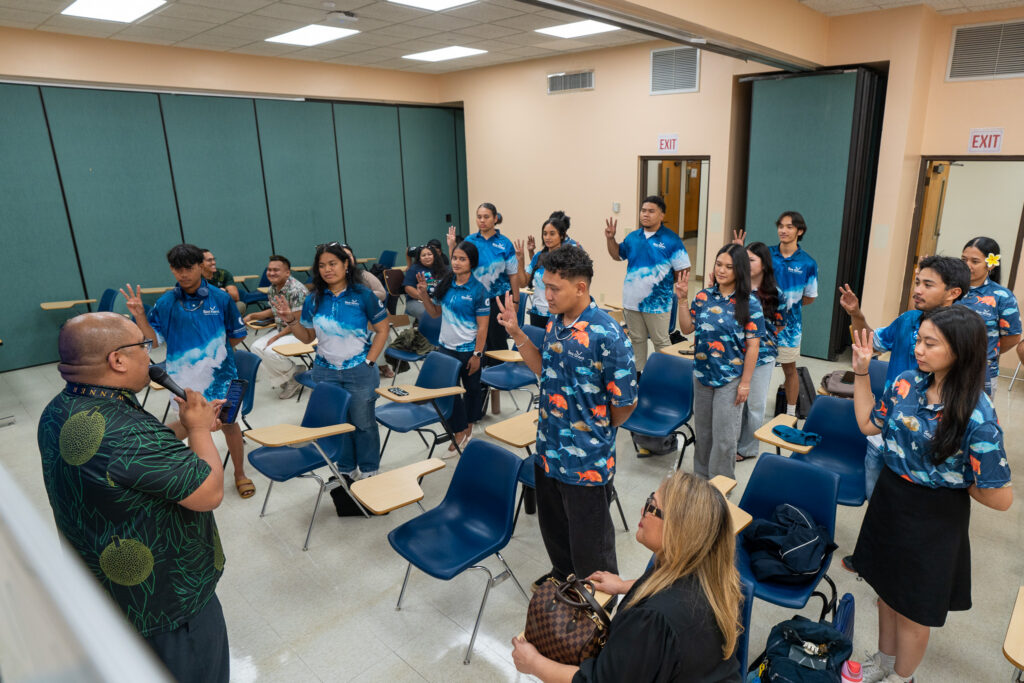
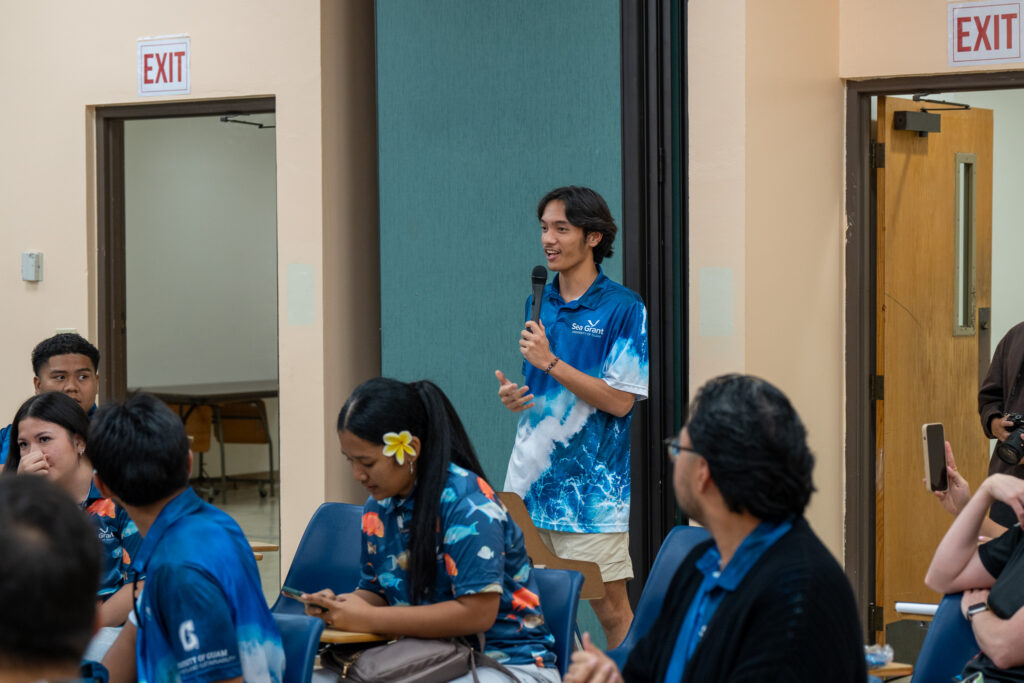
Cheryl Sangueza, Ph.D., co-principal investigator for NSF INCLUDES SEAS Islands Alliance Guam and lead for the capacity building team at the UOG CIS & Sea Grant, said that this is the culminating event for the high school interns of the program.

Here are the high school interns who placed in the symposium:

1st Place: Marley Aldan (Junior, Tiyan High School)

Project: “It’s Getting Sticky: Comparing Seed Adhesion to Natural vs. Synthetic Materials”
Mentor: Else Demeulenaere, Ph.D.

Aldan explored a common but overlooked cause in the spread of invasive species— different types of clothing. Her project focused on how seeds from the invasive plant Bidens alba stick to various fabric types. Testing materials like polyester, spandex, cotton, and linen, Aldan found that natural fabrics tend to collect more seeds than synthetics.

“By doing this I am hoping to see which clothing materials people shouldn’t wear outside so they can lessen the spread of Bidens alba because it is an invasive species on Guam that takes over its environment,” Aldan said. 

Aldan’s research suggests that even small choices, like what we wear, can impact Guam’s biodiversity. She recommends future studies explore seed retention rates to better understand how seeds drop and travel from one area to another. Her research also suggests that containing invasive species like Bidens alba increases the chances for native species to thrive and helps protect biodiversity.


2nd Place: Caleb Ngiratereged (Senior, Simon Sanchez High School)

Project: “Effect of Waste Tire Rubber in Cement-Based Mortar”
Mentor: Ernesto Guades, Ph.D.

Faced with a growing tire waste problem on Guam—where an estimated 120,000 scrap tires are produced each year— the project examined whether shredded tire rubber could be safely incorporated into cement-based mortar.

By testing 15 concrete specimens with varying amounts of tire rubber (0%, 2.5%, and 5%), Ngiratereged discovered that while the compressive strength slightly decreased with more rubber content, this method still shows promise for non-load-bearing applications.

“Around Guam there is a lot of wasted tires, just dumped on the side of the road. I proposed that we use tire rubber in cement-based mortar to increase the strength of it, as well as for sustainability,” Ngiratereged said.


3rd Place: Ashley Castaneda (Senior, John F. Kennedy High School)

Project: “Taxonomic Reassessment of Two Mastogloia Species: M. baldjikiana and M. indonesiana”
Mentor: Christopher Lobban, Ph.D.

Castaneda investigated the microscopic world of diatoms—photosynthetic, plant-like microorganisms important to aquatic ecosystems. Her research focused on the taxonomy of two closely related diatom species: Mastogloia baldjikiana and Mastogloia indonesiana.

Using light and scanning electron microscopy, Castaneda compared diatom samples with historical records, finding no trace of M. baldjikiana.

Instead, she found that evidence pointed to the samples being M. indonesiana, suggesting a possible misidentification in previous scientific studies.

On winning third place, Castaneda said, “This is my first science fair and my first award from a science fair. I am grateful to have been given this opportunity.” 

The internship program has opened research opportunities for students on the island who are interested in various science fields, including botany, ecology, marine biology, sustainability, and other areas of environmental science.
UOG School of Engineering research at G3 Makerspace explores plastic as construction material

Uncategorized

The Guam Green Growth (G3) Circular Economy Makerspace & Innovation Hub is collaborating with Ernesto Guades, Ph.D., an assistant professor at the University of Guam School of Engineering, on a research project exploring how certain types of recyclable plastic can be prototyped into construction materials.

According to Guades, the project received funding through the Pacific Regional Integrated Sciences and Assessments (Pacific RISA) Economic Valuation of the G3 Initiative, a program administered by the UOG Center for Island Sustainability and Sea Grant.

The broader goal of the economic valuation is to assess and quantify the economic impact and return on investment of the G3 initiative, including components such as the G3 Makerspace & Innovation Hub and the G3 Conservation Corps workforce development program.

“We are working on projects on sustainable materials, particularly plastics,” Guades said. “They provided some seed funds to study how we can convert recycled plastics into materials that can be used in construction.”

The project, which began in January, focuses on creating plastic lumber using specific types of recyclable plastic. While plastic lumber is commercially available, Guades said they are usually costly and limited in application.

“The strength of what we found is comparable to what is commercially available,” he said. “We would like to make it affordable so the result is quite comparative,” Guades said.

Initially, Guades used polypropylene, also known as Type 5 plastic, which is commonly found in food containers. With promising results, the research is now entering a second phase, which expands both the scope of materials and the scale of production.

“Previously, we only studied one type of plastic—Type 5, which is polypropylene. So, what we are doing now in the next stage is we try to also cover the other types of plastic,” he said. “We are now going to Type 2, which is called high-density polyethylene.”

This next phase includes combining—or hybridizing—different types of plastics to evaluate their combined strength and usability.

“We try to combine them … and find out what’s the effect. Whether we can include them as one or we can separate them,” he said.

All fabrication and prototyping are being done at the G3 Makerspace & Innovation Hub using specialized equipment, including a shredder and an extruder machine.

The shredder breaks down plastic waste into smaller flakes, making it easier to process. The extruder melts the shredded plastic and pushes it through a mold to create new products.

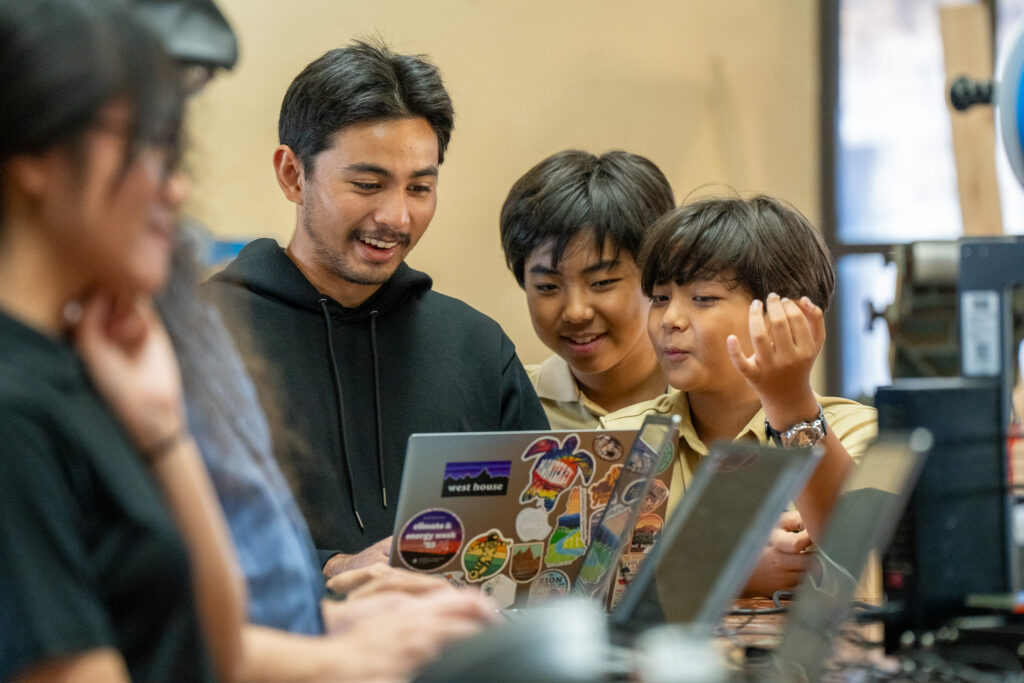
Guades is also working with the COMPASS NextGen grant program to engage six undergraduate intern researchers over the summer. Some of these students, from the UOG School of Engineering, are conducting hands-on work at the G3 Makerspace, assisting with the operation of the shredder and extruder, and researching plastic combinations to achieve the right balance of Type 2 and Type 5 plastic for strong, commercial-grade plastic lumber.

The project also aims to create larger sample sizes that could be tested in practical construction scenarios.

“Because now we have limited sections—only very small—we would like to make a bigger section so that we can apply that in several applications,” Guades said.

Potential uses include bridge and housing construction. “Well, it is for plastic lumber. This can actually replace timber or wood. But we would like to do more than that. So, the applications will be for bridges or maybe for structural components of houses. So that’s the target,” he added.

“This is based on the initial experience that we have—it’s promising,” he said. “We are getting a comparable result and even better than what is available commercially.”

The Guam NSF EPSCoR program and the G3 Makerspace are connected through their shared mission to advance sustainability and innovation in Guam.

Guam NSF EPSCoR is a catalyst for G3, supporting research and workforce development in STEM fields that feed directly into the initiatives at the G3 Makerspace. With collaborative projects like this one with the UOG School of Engineering, researchers and students transform scientific knowledge into sustainable products and technologies, helping to drive Guam’s green economy forward.
Guam Green Growth reports regional and local initiatives at July meeting

Uncategorized

At the July Guam Green Growth (G3) Steering Committee meeting, members highlighted progress toward the 17 U.N. Sustainable Development Goals—both locally and regionally—including the launch of a new Green Growth hub in Micronesia and a watershed restoration workforce initiative that expands the G3 Conservation Corps. 

One of the regional highlights described by Austin Shelton, Ph.D., director of the University of Guam Center for Island Sustainability and Sea Grant and co-chair of the G3 Steering Committee, was the launch of the Marshall Islands Green Growth initiative, unveiled during the 27th Micronesian Islands Forum held this month in Majuro. 

Marshall Islands President Hilda Heine, Ed.D., first revealed plans to start their own Green Growth hub back in April. 

“During our conference on Island Sustainability, that the Governor co-chaired with the University of Guam President Enriquez back in April, there was a commitment that President Heine made to launch Green Growth in the Marshall Islands — that is coming to fruition this week and we are really excited for them to build on that,” Shelton said. 

According to Shelton, to lay the foundation for the Marshall Islands’ hub, the G3 team—alongside Hawai‘i Green Growth and the Local2030 Islands Network—has been helping develop their dashboard and supporting grant-writing efforts to establish a circular economy makerspace. 
Another major announcement at the steering committee meeting was the creation of the G3 Guam Restoration of Watersheds (GROW) Corps—a program focused on watershed restoration. During the program, members will work closely with the UOG Sea Grant GROW team and the Guam Department of Agriculture’s (Guam DoAg) Division of Forestry and Soil Resources. “That’s for six months. That’s going to be more jobs and more trained individuals to go into our green workforce,” Shelton said. 

Under the leadership of UOG and the Governor’s Office, G3 working groups also shared local initiatives under different action categories contributing to the UN Sustainable Development Goals. These achievements are integrated into the G3 action framework dashboard to monitor island-wide progress. 

The reports included the following highlights:  

  • Healthy and Prosperous Communities: Guam DoAg helped develop the first regional Pacific Food and Agriculture Strategy through partnerships with the SPC and other island nations. Guam’s Forest System Plan has been adopted and includes the designation of green spaces and conservation areas. The department is now developing rules and regulations to support its implementation. 
  • Educated, Capable, and Compassionate Island: The GCA Trades Academy reported plans to launch the first maritime courses on Guam and to create airline industry training programs. Meanwhile, the working group also reported the groundbreaking of a new campus of the Northern Marianas Technical Institute in Saipan this month. 
  • Sustainable Homes, Utilities, and Transportation: The Guam Energy Office received a $1.5 million Energy Efficiency and Conservation Block Grant for improvements in government-owned buildings. Projects include installing solar panels, outdoor solar LED lighting in selected parks, and working with mayors to identify other public lighting locations. 
  • Sustainable Alliances: Guam has reaffirmed its request for a UN visiting mission during the UN C-24 (Special Committee on Decolonization) Pacific Regional Seminar in March 2025, according to Melvin Won Pat-Borja, executive director of the Guam Commission on Decolonization.  He said the C-24 has adopted a resolution that reflects this request.  
  • Thriving Natural Resources: The GROW team planted over 5,000 trees in Ugum last year, according to Fran Castro, associate director for operations and development at UOG Sea Grant. Also, UOG Sea Grant and Guam DoAg, Division of Aquatic and Wildlife Resources held a series of fisheries stakeholder meetings across the island, where they shared and gathered community feedback on proposed fishery management measures, including size limits, mandatory licensing and catch reporting, ban on the harvesting of atuhong (bumphead parrot fish), ban on commercial sale of six species, and limiting night time spear fishing.  

After the reporting, Shelton acknowledged the efforts of the working groups, saying, “Thank you to all of you, our G3 working group, for all the amazing work that you are doing. It is being tracked in our Guam Green Growth dashboard, and I think the world is really taking notice of that.” 

Shelton also reported that Guam was recently featured by the American Leadership on the SDGs—an initiative led by the UN Foundation and the Brookings Institution’s Center for Sustainable Development that recognizes individuals and communities advancing the 17 UN Sustainable Development Goals. 

Skip to content