G3 Innovation Hub workshop allows community to make art and learn about traditional medicine

Uncategorized

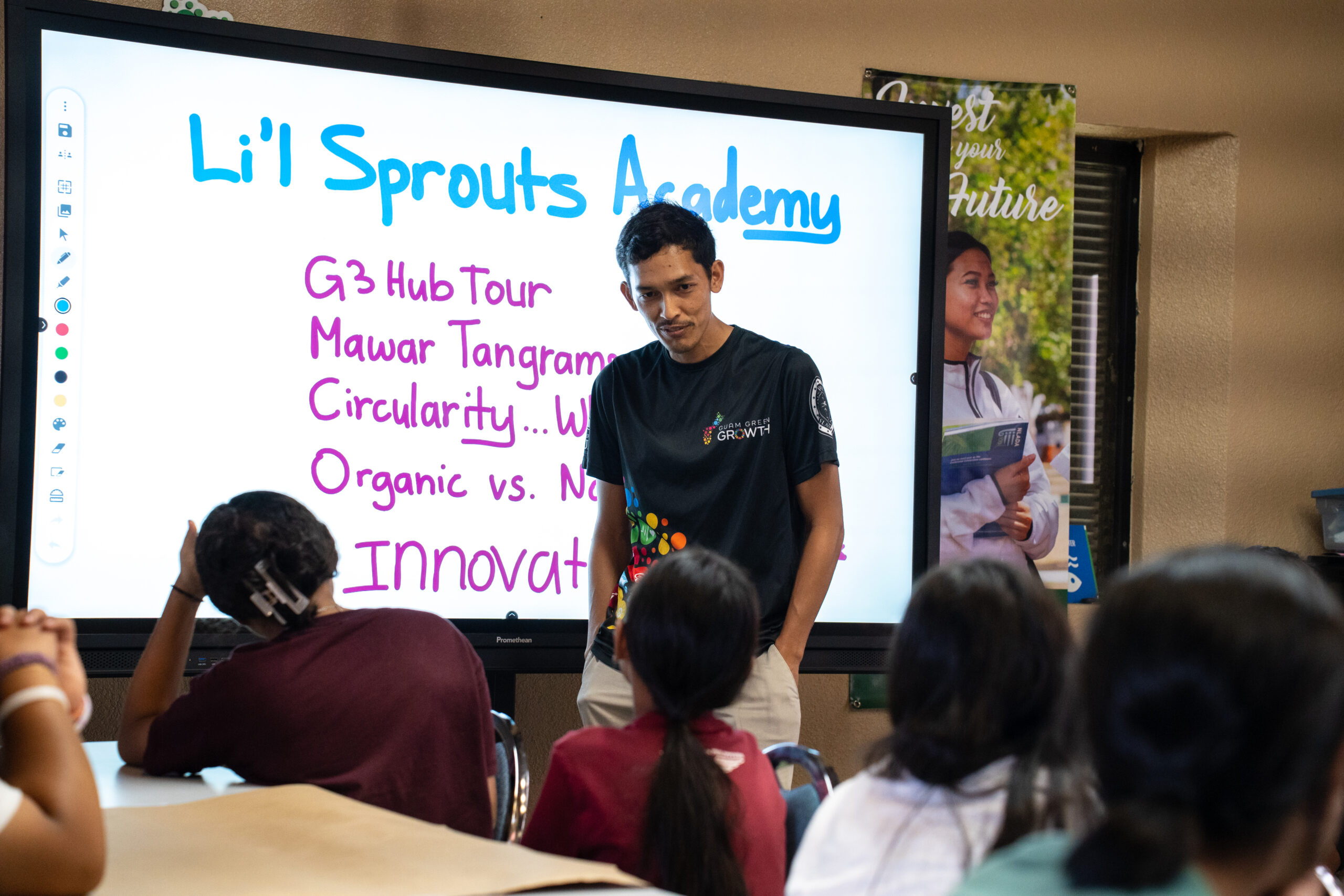
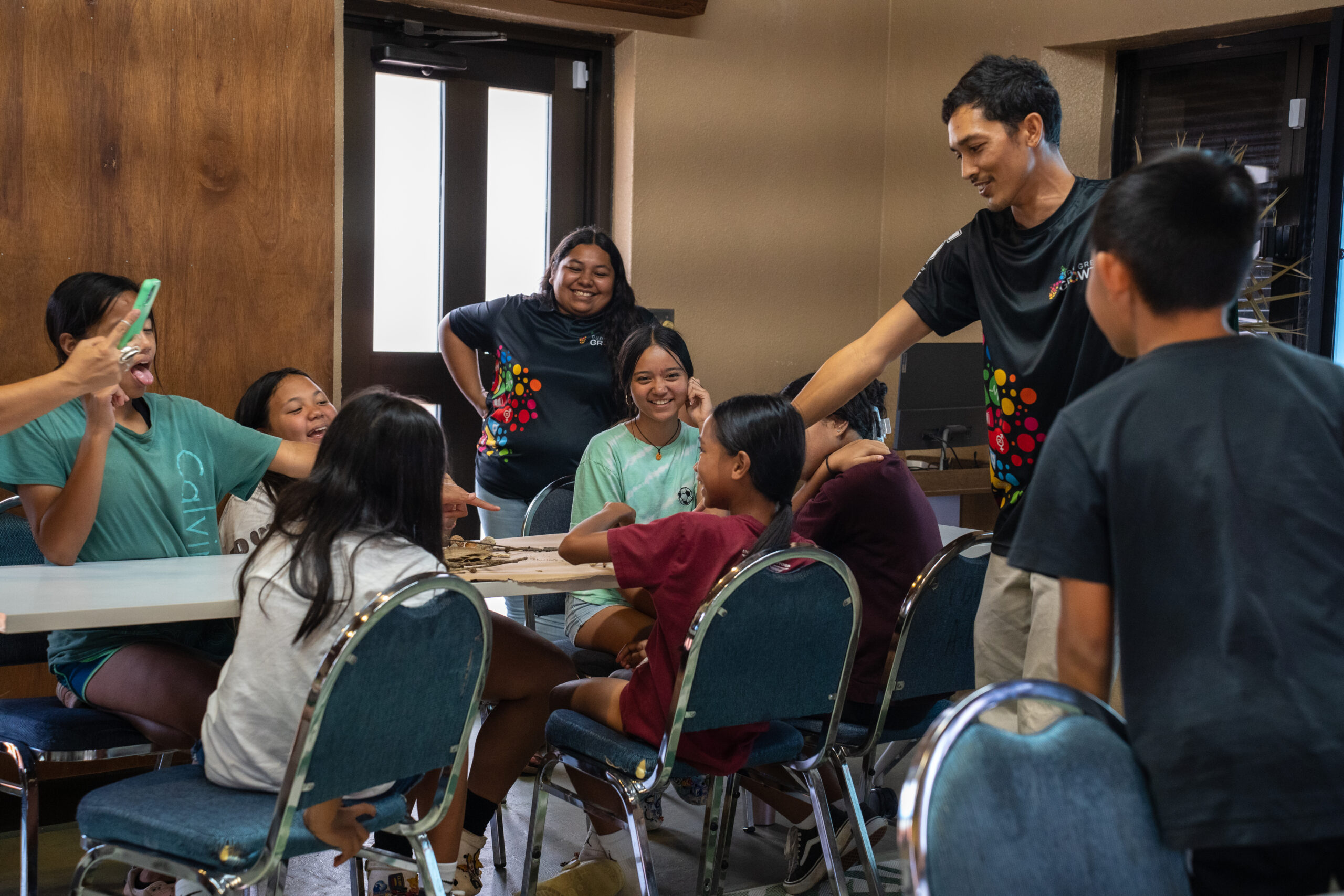
As part of the fourth installment of the Guam Green Growth Circular Economy Makerspace and Innovation Hub’s “Seed Talk Sessions,” the facility held a printmaking workshop facilitated by Roldy Aguero Ablao, a queer mixed CHamoru artist and cultural practitioner who explores culture and identity through printmaking, fashion, and more.  

The “Seed Talk Sessions” are a series of developmental opportunities offered by the facility in which industry professionals engage island community members to stimulate creativity and encourage local entrepreneurship. 

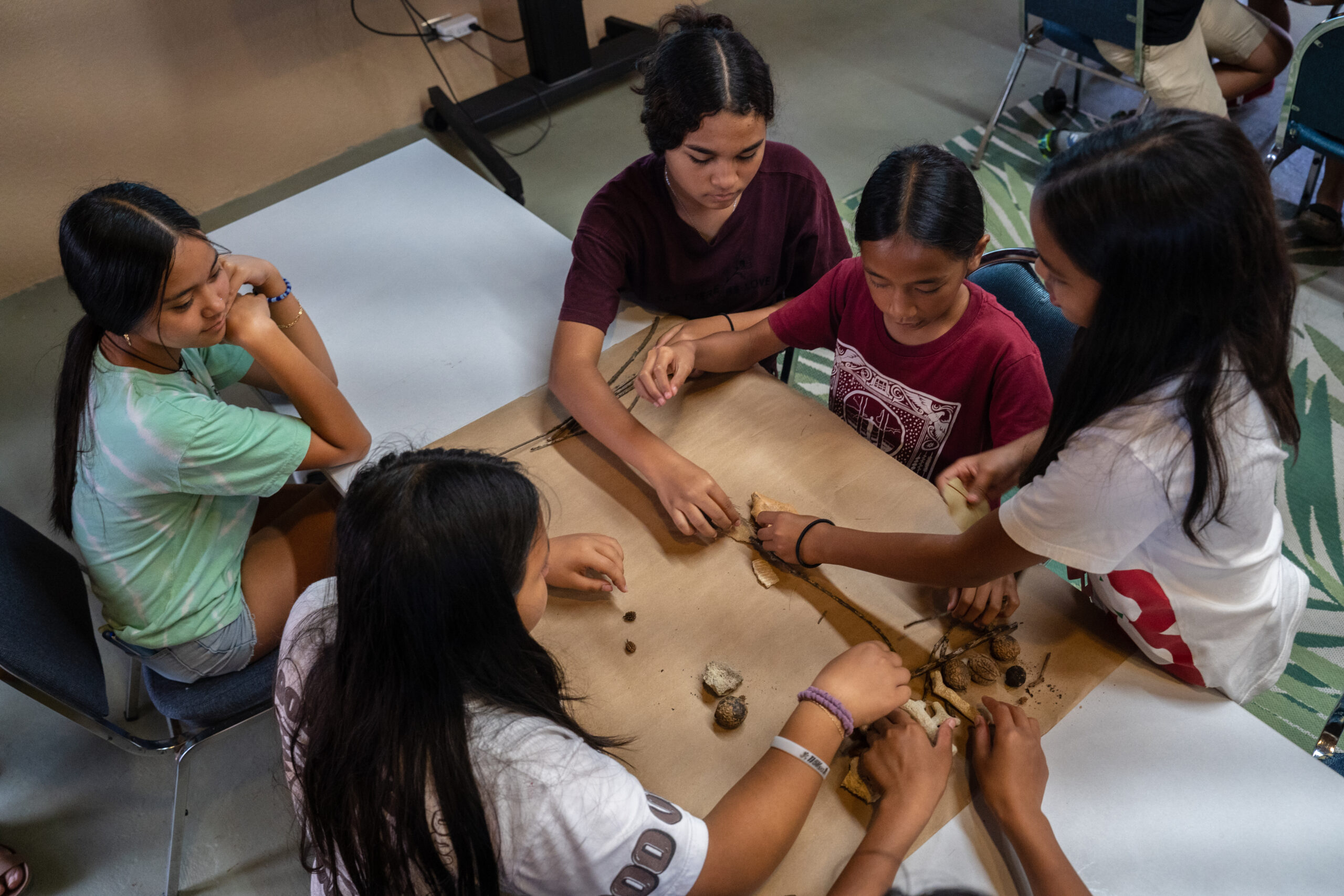
The premise of this workshop involved thinking about ways participants could adorn themselves with imagery reminiscent of Guam.  

“Sometimes when we would go on hikes here such as Litekyan or to different family homes, we would go to the jungle and ask for permission. The folks from that land would give us leaves called pupulu aniti, or “spirit leaf.” You wear it on your body as protection close to your chest and heart,” said Ablao. “I found that very sacred, but it also changed the way I related to the land around me. It made me walk a little more gently. It made me breathe a little more deeply because now the land is on me and I am part of the land. We are always part of the land.”  

According to Ablao, the steam created by boiling these ferns can help decrease congestion. He added that he would gather these ferns from a friend’s house or a neighbor’s yard and paint them onto shirts to always have a remnant of the land with him.  

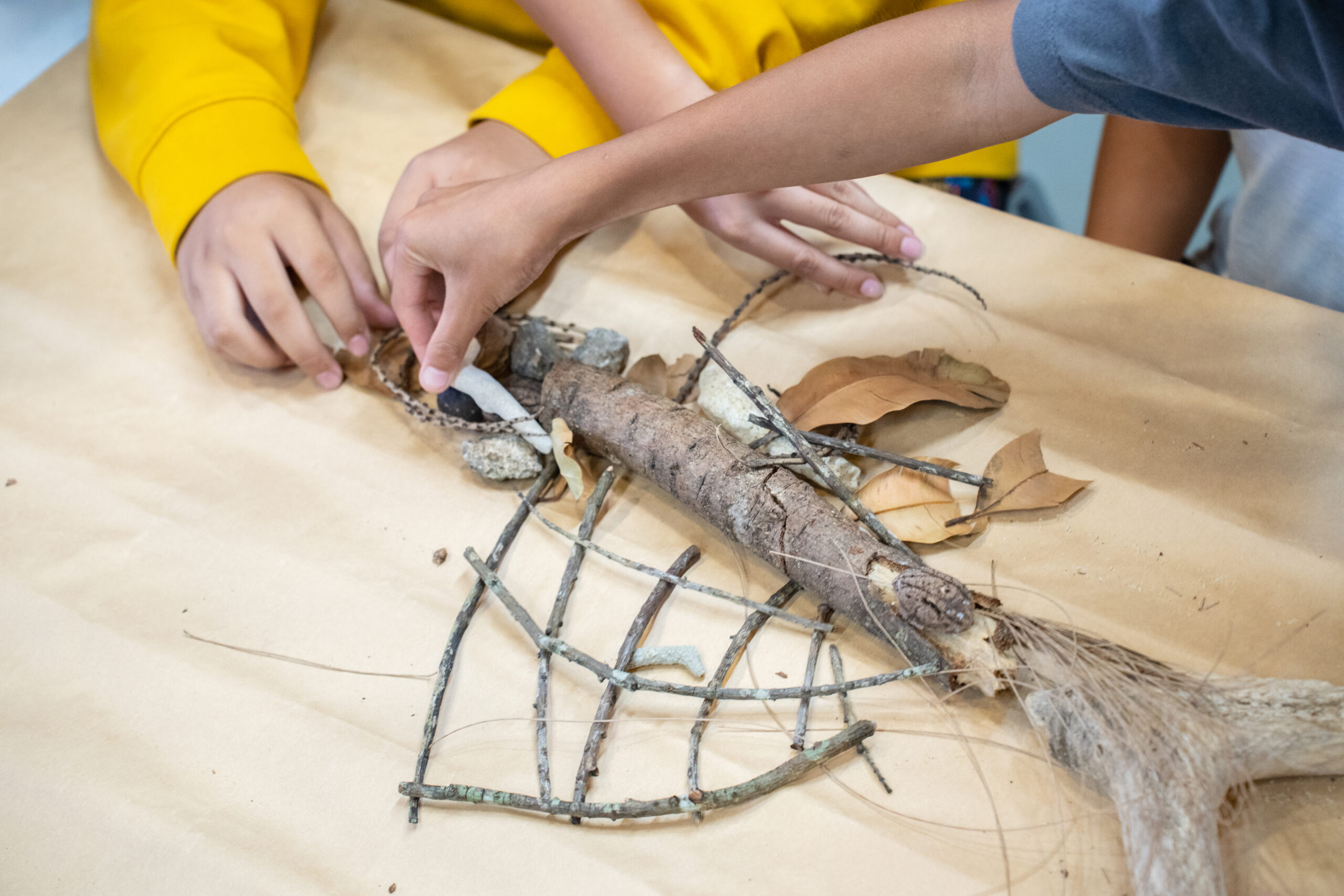
Participants prepared for the workshop by going on an åmot walk in which they gathered medical plants within the Paseo area. During the walk, they harvested climbing ferns (kahlao) growing on a tree, half-flower (nanåsu) fruit and flowers from the beach strand, as well as leaves from a noni plant near a sidewalk.  

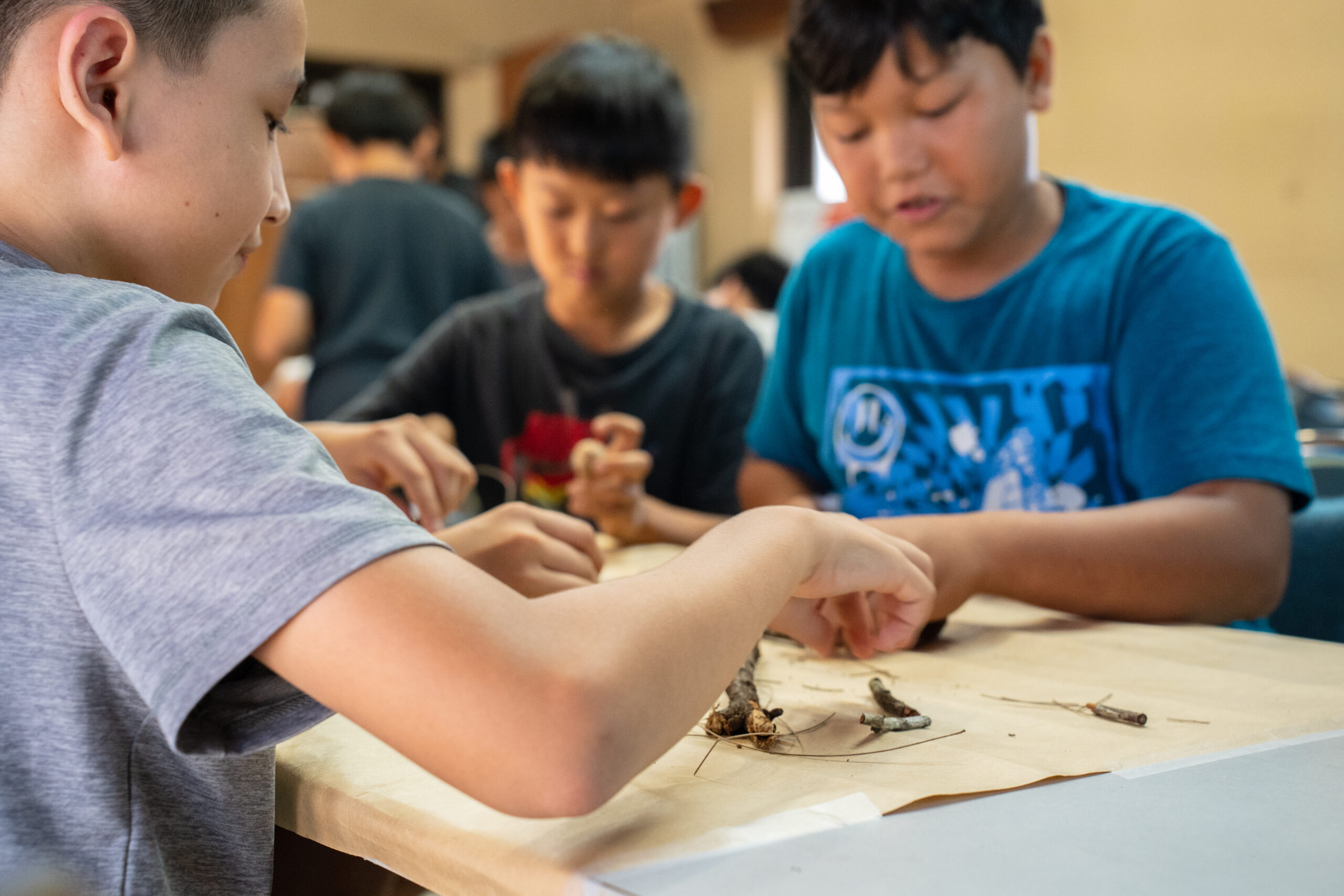
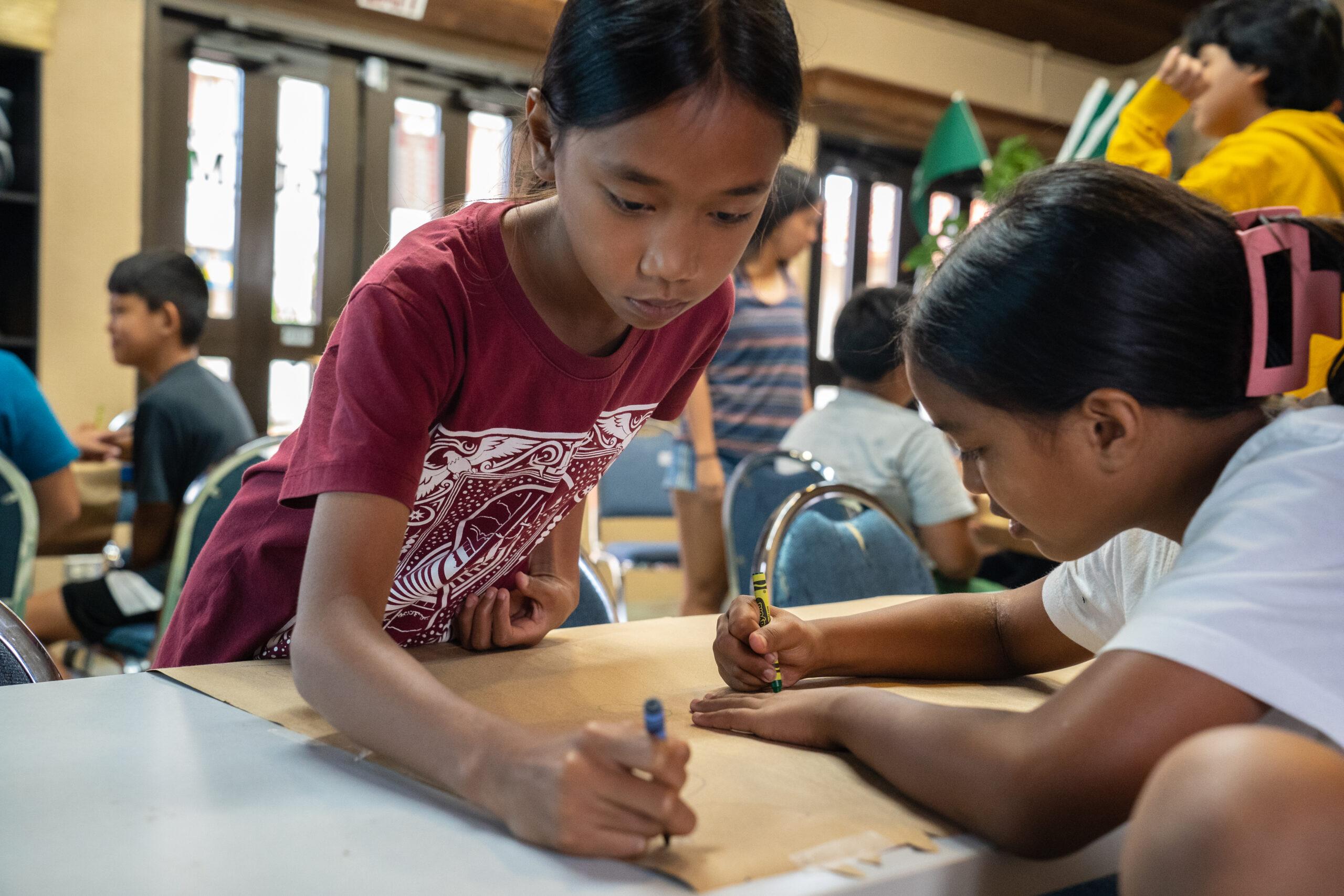
After, they reconvened at the G3 Makerspace and made prints of using the materials they gathered by painting onto flowers and stamping them onto a piece of cloth or painting the outline of leaves.  

The workshop ended with a chant recited by Ablao and Joseph Certeza, the G3 Makerspace attendant.  

When asked about what advice he would give to aspiring creators, Ablao said, “The first word that comes to me is inagofli’e’ which means “to see” or “witness with care.” I want creators to see ourselves with care and know that our stories are worth it even if others do not see that.” 

Participants prepared for the workshop by going on an åmot walk in which they gathered medical plants within the Paseo area. During the walk, they harvested climbing ferns (kahlao) growing on a tree, half-flower (nanåsu) fruit and flowers from the beach strand, as well as leaves from a noni plant near a sidewalk. After, they reconvened at the G3 Makerspace and made prints of using the materials they gathered by painting onto flowers and stamping them onto a piece of cloth or painting the outline of leaves.

Sustainability funding, food security, climate literacy and other updates from Guam Green Growth Steering Committee meeting 

Uncategorized

At this month’s Guam Green Growth (G3) Steering committee meeting, members reported several current initiatives that support food security, renewable energy, healthy communities as well as upcoming funding opportunities to achieve the action items under the G3 Action Framework.  

Austin Shelton, Sea Grant and Center for Island Sustainability director, started the meeting with an update on the University of Guam Sea Grant institutional status ceremony this month. Shelton, the co-chairperson of the G3 Steering Committee, said the status upgrade will be a game-changer for the University, for the island, and for the region.  

That means we are bringing more resources to better research and understand our marine and our coastal resources on our island and help inform policies and management to ensure that there is a wise use of these coastal resources,” he said, emphasizing that Guam has the most diverse coral reef system in the United States.  

Meanwhile, Lt. Governor Josh Tenorio, who co-chairs the G3 Steering Committee with Shelton, reported on the Inflation Reduction Act that was recently signed by President Joe Biden. Tenorio said the landmark law has provisions that support renewable energy projects, tax credits for consumers of energy efficient products, and other initiatives that support G3’s push for one hundred percent renewal energy by 2045.  

Guam Economic Development Authority administrator Melanie Mendiola, who co-chairs the Healthy and Prosperous Communities team, provided updates in food security and economic prosperity. “One of the significant events that happened was the groundbreaking of the Guam Fishermen’s Co-opseawall. This will not only strengthen our fishermen economically but also strengthen access and availability to what is grown here as opposed to what is flown here,” Mendiola said. She also reported on the completion of the 8th cohort under the GUMA incubator training last week and the continuing partnership with Maker Space and Innovation Hub. 

Vangie Lujan, the co-chair of Thriving Natural Resource team, reported on the partnership between the Micronesia Challenge and Sea Grant for the Young Champion program, which seeks to build a generation of conservation leaders in Micronesia. According to Lujan, they are looking for a UOG or GCC student who is interested in interning with the UOG Sea Grant program. Each champion will receive $5,000 a year to cover internship costs.  

Guam Community College President Mary Okada, who co-chairs the Educated, Capable, and Compassionate Island team, reported on the groundbreaking of the newest LEED-certified building at the community college. Regine Biscoe-Lee, who co-chairs with Okada, provided updates on the government’s childcare initiative.  

Sustainable Alliances co-chair Carlotta Leon Guerrero provided updates on the Pacific Island Conference of Leaders next month. According to Leon Guerrero, around 20 Pacific government leaders will be at the meeting. Climate change is on top of the meeting agenda.  

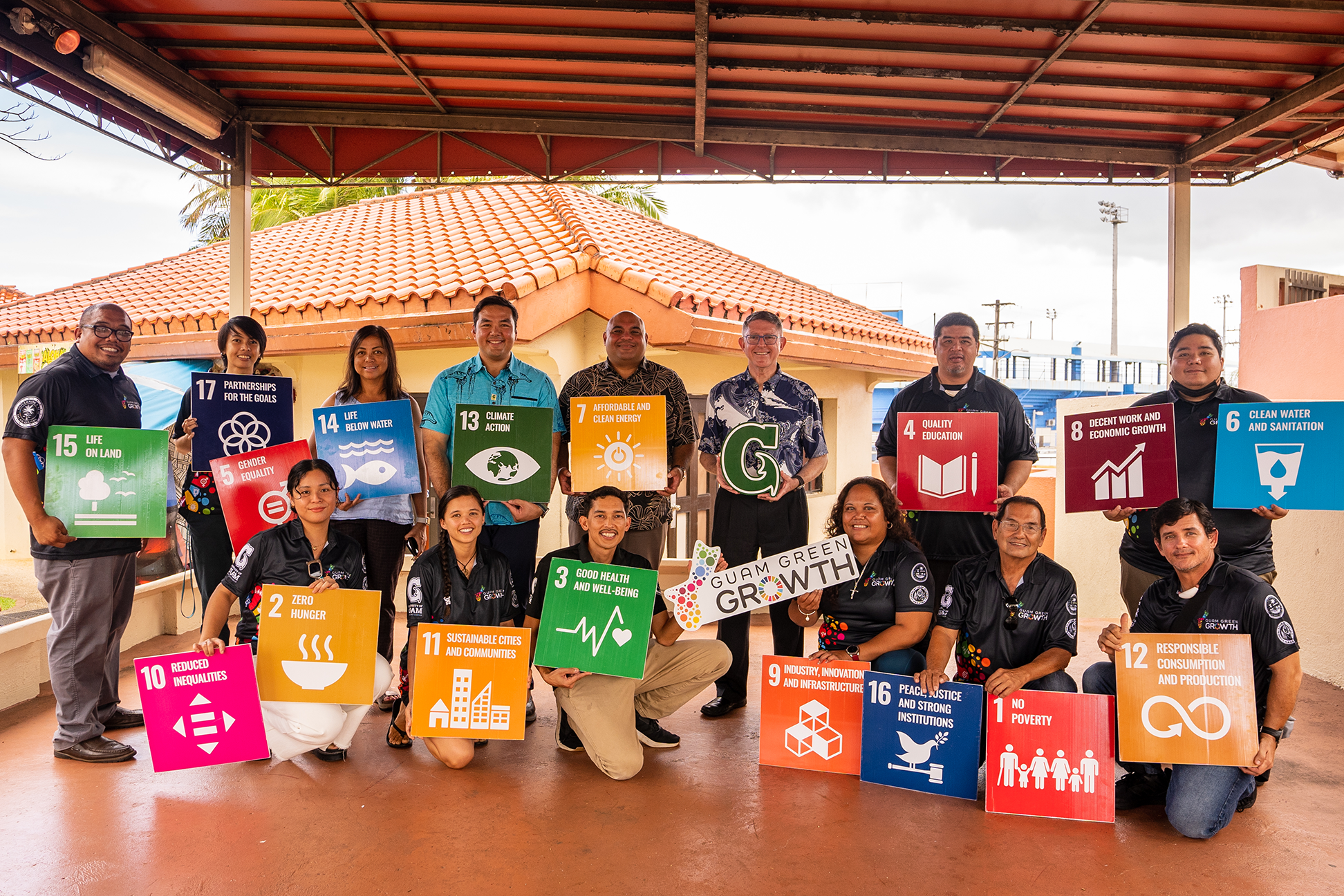
The G3 Steering Committee is preparing for its next biannual meeting next month. At the meeting, the G3 category of action co-chairs will share their progress in achieving the G3 Action Framework items which are aligned with the 17 United Nations Sustainable Development Goals. 

Guam Green Growth shares Sustainable Development Goals with students at Phoenix Center

Uncategorized

A group of lively middle school students at Father Duenas Memorial School gathered in a circle around 17 colorful tiles depicting the United Nations sanctioned Sustainable Development Goals (SDG). The Guam Green Growth (G3) team was there to interact with the students and get a conversation going on how to adapt the goals for the communities in Guam.

A repurposed milk carton with numbers one to seventeen written on it was tossed to a student who then read a number, which corresponded with the number on a goal. G3 team member Tori Manley asked questions of the student, which developed into a conversation that included everyone. The carton was tossed to the next person and the conversation continued.

The G3 initiative involves partners including the government, non-profits, business community members, and schools becoming involved to help the community by finding practical ways of implementing these goals.

Annania Kemp from team G3 spoke of the need for all communities on the island to work together to make the 17 goals a reality.

The students were very participatory and really enjoyed exploring the subjects that were introduced through the goals such as gender equality, life under the sea, quality education, clean water, and more.

Planting the seeds of SDGs for the youth to nurture will ensure that their children will enjoy a healthy environment, good educational opportunities, and the will to make Guam a sustainable place for all.

Guam Green Growth celebrates Conservation Corps graduates

Uncategorized

Members of the Guam Green Growth Conservation Corps capped off their five months of full-time hands-on training through a graduation ceremony held on Wednesday, August 18, 2022, at the Ricardo J. Bordallo Governor’s Complex (Adelup) in Hagåtña.  

The ceremony recognized its second batch of conservation corps graduates since the members were recruited in March 2022.  

The graduates include Jenelle Aguilar, Rejean Benavente, Johnny Borja, Jacob Concepcion, Remilou Hannigan, Dulce Imbo, Wade Kitalong, Ryan Perez, Christopher Quichocho, Hila’an San Nicolas, and Tre Starr. 

Over the course of the last five months, the cohort gained experience through various aspects of sustainability such as agriculture and aquaculture, island beautification, invasive species removal, reforestation, circular economy and recycling, and renewable energy.  

“What you’ve done is tremendous,” said UOG President Thomas W. Krise as he addressed the graduates. “You’ve inspired other people just by your efforts. In terms of the cleanups, when you see somebody on the road and improving the road, it deters you from throwing something away as you drive by. You’re helping to change the feeling of how people treat the environment. You’ve done tremendous work and I’m very proud of you.”  

During the graduation, Austin Shelton, director of the Center for Island Sustainability and Sea Grant program, highlighted the cohort’s contributions to the community. 

“You have this training. You have this awareness and skills that you’ve built over these past five months that you can take into any career that you go into. That’s a very powerful force and you’re a part of this movement and we’re very proud to have you as part of G3. We’d love to continue to support you in any way that you may need in the future,” said Shelton.  

From March 14 to August 18, the G3 Conservation Corps:  

  • Collected and recycled 55,618 aluminum cans;  
  • Planted 1,705 food crops and pruned 2,986 trees;  
  • Built 81 feet of erosion control devices;  
  • Removed 321 white goods and bulky waste;  
  • Removed 19 brown tree snakes, 40 invasive frogs, and 27 gallons of invasive algae;  
  • Completed 15 roadside cleanups and 5 beach cleanups;  
  • Participated in 2 painting projects.  

 
During the ceremony, Lt. Governor Joshua Tenorio commended the cohort for their service to the island.  

“The five months you were able to embark and work together collectively not only has benefited yourself, but it has also benefited the people of Guam. For that, I want to thank all of you for your individual role. I hope you’ll be able to maintain that advocacy through your work,” said Tenorio.  

Dulce Imbo, a Conservation Corps graduate, was elected as the cohort’s representative to celebrate their completion of the program.  

“Sustainability starts within our own lives and habits by knowing and understanding our own story and truth,” said Imbo. “The past five months has allowed us to deepen our own understanding and reflect on who we are as individuals and use our own healing and as a way to propel ourselves in the work that we do.”  

About Guam Green Growth  

Guam Green Growth (G3) is the island’s most comprehensive public-private partnership created to achieve a sustainable future. Aligned with the 17 UN Sustainable Development Goals, G3 cultivates an ecosystem for transformative action to achieve our island’s sustainable, prosperous, and equitable future. UOG facilitates the island-wide initiative in cooperation with the  Office of the Governor of Guam and the 99 members of the G3 Working Group representing all sectors of our society.     

G3 first launched the Conservation Corps in partnership with UOG Center for Island Sustainability and UOG Global Learning and Engagement department to establish a foundation for workforce development to support an emerging green economy in June 2021.  

Japanese School students learn about SDGs and sustainability from Sea Grant 

Uncategorized

Students from the Japanese School learned about the 17 United Nations Sustainable Development Goals from the University of Guam Center for Island Sustainability and Sea Grant teams who conducted an outreach at the Mangilao campus earlier in July. 

The students also learned about the Guam Green Growth or G3 program as a platform for increasing awareness and putting the SDGs into action through concrete programs and activities.  

Sea Grant outreach coordinator Tori Manley and CIS sustainability coordinator Phil Cruz, with the help of the teachers at the Japanese School, facilitated a lively discussion on the SDGs and G3 program.  

Cruz told the students, “With these sustainable development goals, the United Nations said that the year from 2020 to 2030 is the decade of action, meaning we have ten years to achieve all of these goals all over the world to have a sustainable, equitable, and prosperous future.”  

The CIS and SG team also facilitated a discussion on G3’s five categories of action, namely: 1) Healthy and Prosperous Communities; 2) Educated, Capable, and Compassionate Island; 3) Sustainable Homes, Utilities, and Transportation; 4) Thriving Natural Resources; and 5) Sustainable Alliances. 

At the end of the discussion, the students wrote down their thoughts about the presentation. Levi, a 7th grade student, thanked the team for conducting the presentation at their school. “Thank you for coming to teach us about what’s happening around us. What we can do about it, and what is already being done to solve these problems. We really appreciate it.” 

Karen, an 8th grade student, said the move to transition to solar-powered public transportation is right for the island. “I thought it was very suitable for Guam because of the strong sunshine.” 

G3 is the island’s most comprehensive public-private partnership created to achieve a sustainable future. Aligned with the UN SDGs, G3 cultivates an ecosystem for transformative action to achieve a sustainable, prosperous, and equitable future for Guam. 

G3CC gains insight with module on renewable energy and solar power 

Uncategorized

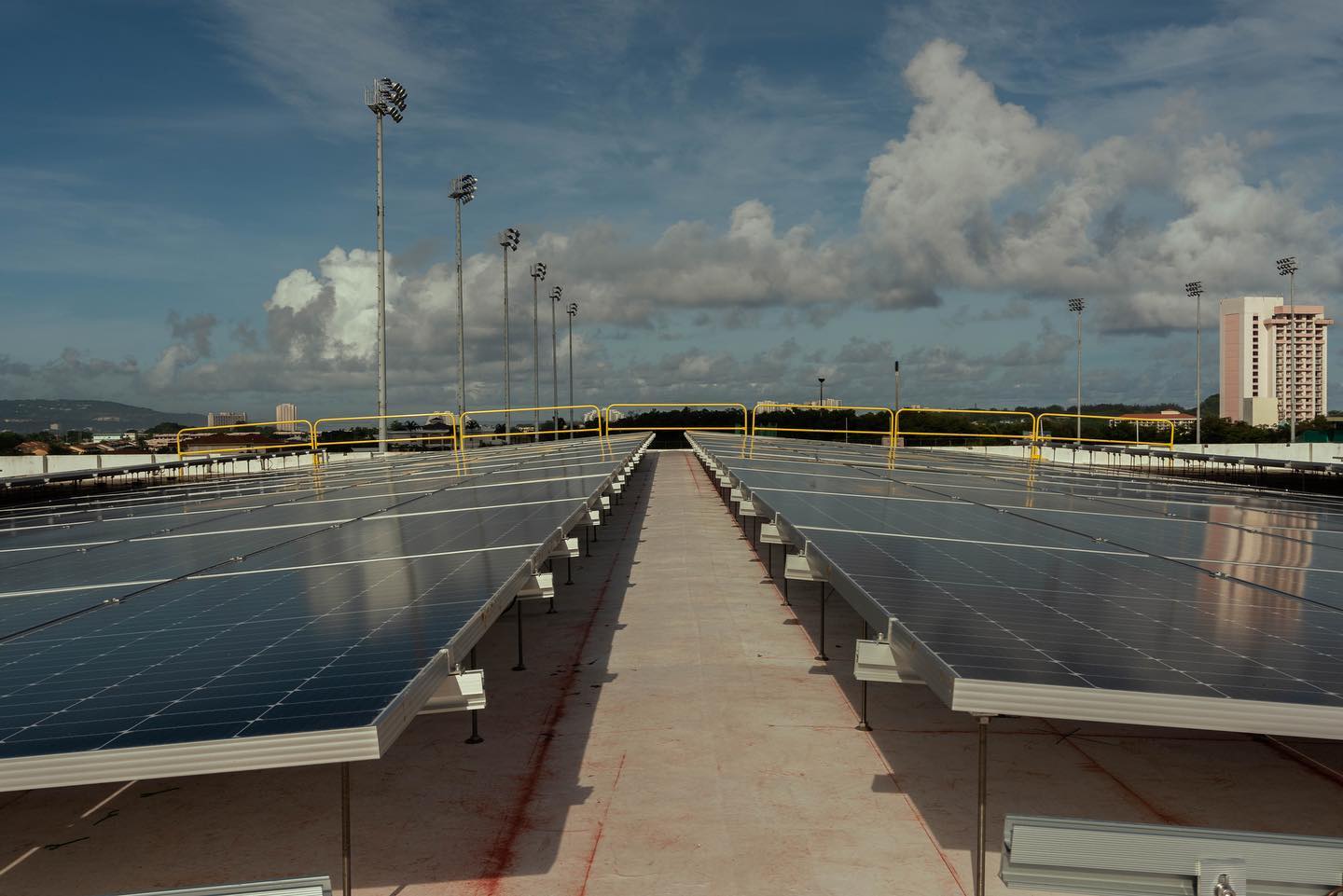
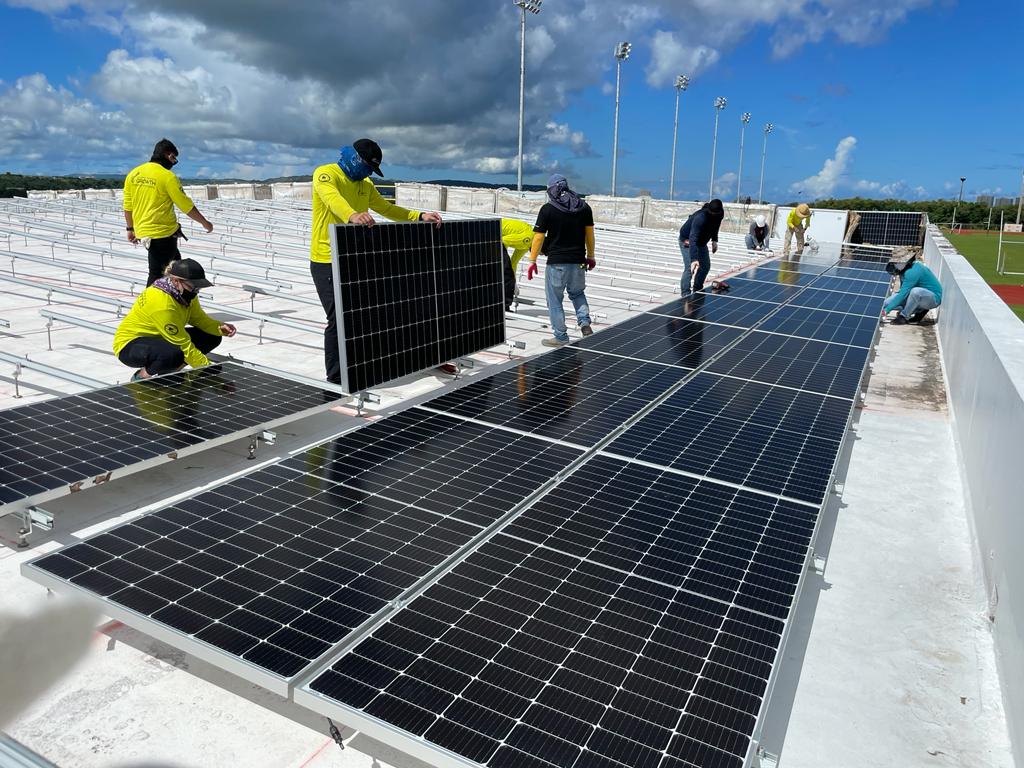
A tour organized by a local solar energy company spurred interest among the members of the University of Guam – Guam Green Growth Conservation Corps to explore the available career opportunities in this growing industry on island.  

A team from Pacific Solar & Photovoltaics, led by general manager Scott Hagen, organized the tour on July 11 for the G3CC members. The company has been setting up photovoltaic systems for residential, commercial, educational, and military clients on Guam and in the Marianas since 2008. The University of Guam and the Guam Community College are among the multiple clients of the company. 

The G3CC members visited commercial and residential sites and heard about the current career programs offered by the company. The Pacific Solar team also showed their new hydroponics system in Dededo.  

The G3CC members said the orientation offered a glimpse into career opportunities that could help boost the development of a renewable energy workforce on island.  

According to G3CC member Ryan Perez, the Pacific Solar team encouraged them to take classes because there is a shortage of renewable energy staff on Guam. “He showed us these different courses that we can take off-island or online,” Perez said.  

For those who are interested in expanding their career path, the company could help them get a foot in the door by supporting them while they get certified for certain high-demand jobs, according to G3CC member Johnny Borja. 

Borja added that Pacific Solar also has a program that encourages more women to enter the renewable energy industry. “With that whole push of getting females into STEM (Science Technology Engineering and Mathematics), they are trying to get them out into the field or to try designing the systems themselves,” he said.  

G3CC member Rejean Benavente agreed that the incentive provided by the company to help get more women into the renewable energy industry is a good step for widening interest in STEM. But she said getting the word out into the community also helps increase awareness and interest in the program.  

The G3 Conservation Corps program prepares the community for the emerging green economy. All program cohorts participate in a 5-month workforce development program that covers various industries —- from invasive species management to energy conservation and renewable energy.   
About G3 
Aligned with the 17 U.N. Sustainable Development Goals, the Guam Green Growth Initiative, or G3, cultivates an ecosystem for transformative action to achieve a sustainable, prosperous, and equitable future for Guam. The University of Guam facilitates the island-wide initiative in cooperation with the Office of the Governor of Guam and the 100 members of the G3 Working Groups, representing all sectors of society. 


Comic publisher inspires artists in first Seedtalk Session event at Makerspace

Uncategorized

The Guam Green Growth (G3) Makerspace welcomed Jean Marie Munson, a Guam-raised publisher, cartoonist, podcaster, and educator as a facilitator of one of its latest workshops, the first in their recently launched “Seedtalk Sessions” series offered at the facility’s innovation hub in CHamoru Village on June 29, 2022. 

Munson is a founding member of Plot Twist Publishing, a Nevada-based publishing house that specializes in comics. She is also a professor at the University of Nevada, Las Vegas. 

Inspired by cartoons and comics such as Sailor Moon, Archie, and Peanuts, Munson developed an art style that reflected her identity and desire for diversity within media.  
 
“What influences my art style is women empowerment, body positivity, and a lot of feminist themes,” said Munson. “I always have a sort of homage to Guam. In my dedications and branding, I would say that I’m from an island because I want people to know that great literature and art can come from a non-U.S. place.”  

During a presentation at the G3 innovation hub, Munson talked about her journey creating a sustainable art career. After, she facilitated a workshop in which she taught and encouraged participants to tell their own stories in a short format.  

Munson’s workshop is a part of a series of developmental opportunities provided by the G3 Makerspace in which industry professionals interact with island community members to stimulate creativity and encourage local entrepreneurship.  

“The island has done a lot for me as a human being. Giving back is non-negotiable for me,” said Munson. “I want to spend this part of my life paying it forward and I really want to be part of the larger driving force that claims Guam as a creative hub and a place of innovation.”  

Guam Green Growth Conservation Corps faces invasive species problem with snake hunt

Uncategorized

In a recent lesson, the Guam Green Growth Conservation Corps (G3CC) took on the most notorious invasive species on island, the Brown Tree snake (BTS).  

No matter what their level of comfort for handling snakes, they all enthusiastically entered the classroom at the United States Geological Survey (USGS) in Ritidian and got down to the business of learning about the invasive pests. 

USGS biologists Charlene Hopkins and Marijoy Viernes delivered a PowerPoint presentation with photographs of snakes in various species of trees and tangled vines to help the Corps hone their BTS search image.  

Afterwards, they brought out colorful rubber snakes to allow everyone to practice handling skills and field stress-free euthanasia. Then, the live snakes were released from their snake bags and things got very animated! 

Divided into two groups, participants got hands-on experience in using a snake stick as well as how to safely pick up snakes in a controlled environment. It was difficult for the snakes to get traction on the shiny, waxed floors, but for some first-time wranglers it still was a challenge. 

As the sun went down, it was time to head outside to search in the wilds of Harmon. 

Dividing into three teams with a USGS biologist leading each, everyone began walking slowly and purposefully along the roadside near Two-Lovers Point meticulously searching the vegetation for snakes. 

The extra-bright headlamps provided by USGS made it easier to see the shine on their sinuous bodies as they slid through the trees. 

One team was successful in capturing seven snakes with one snake each from the other two teams. In total, nine snakes were captured and euthanized. Viernes said of the G3CC team, “They were wonderful to work with. Everyone in my group during the search had many good questions about BTS, which showed their interest.” 

Feedback from G3CC participants was positive. “After the training, I felt more educated on the topic of invasive snakes in Guam, learning there are no deadly venomous snakes here. My level of comfort for handling snakes is much higher now and I am better at spotting them,” said Chansey Rios. 

Ryan Perez stated, “The training was very good. I have killed snakes before when they have come around my house, but now I know how to handle them properly and humanely.” 

This G3 cohort continues to make advancements toward a healthy, sustainable environment for Guam. 

The Corps will continue work with invasive species through the rest of the program’s run including a scheduled module removing invasive algae from Guam’s beaches and shores.  

Conservation Corps members get their hands dirty at the Triton Farm

Uncategorized

The Guam Green Growth Conservation Corps participated in a week-long training in June at the University of Guam Triton Farm, where members gained real-life skills while learning about various sustainability topics.  

For several days, the Conservation Corps members learned about food security, invasive pest management, and culturally appropriate agricultural and horticultural techniques under the guidance of farm manager Jessica Nangauta and staff.  

We are an integrated farm system. We have four acres here. We do aquaponics. This is where we raise tilapia, and grow leafy greens like lettuce, basil, and mint. We have a horticulture field where we plant a lot of native plants on the ground like taro, tapioca, calamansi, lemmai, banana, and different types of ground and seasonal crops. And then we have an animal husbandry area where we raise over 800 egg-laying hens for the community,” Nangauta said. 

The main goal of the farm is to increase food security, food sovereignty, and to invite the public over to learn about what it is like to grow food on Guam, according to Nangauta. The farm provides fresh farm products to the community as well as local restaurants, hotels, and other businesses.  

During their service at the farm, the Conservation Corps members: 

  • Culled approximately 40 invasive frogs/toads as part of aquaponics pest management.  
  • Planted approximately 430 plus lettuce sprouts in the aquaponics raceway and harvested and prepped 5 lbs. of lettuce for sale. 
  • Collected and washed approximately 300 eggs from the hen houses. 
  • Prepped around 200 ft or drip irrigation. 
  • Planted around 200 taro seedlings, air layered 7 branches of lemmai, and planted 17 lemmai seedlings in pots. 

Conservation Corps member Ryan Perez, the training experience at the farm exposed him to another aspect of sustainability. “This is an eye opener to see what other people on Guam are doing for food security and sustainability.” 

The multi-acre organic farm in Yigo provides training, research, and outreach opportunities to the community in sustainable agriculture and food production. As a unit affiliated with the College of Natural and Applied Sciences and other colleges and schools of the University of Guam, the farm also hosts demonstrations and workshops on farming systems that integrate the island’s environmental, socio-economic, and cultural conditions. 

“We are open from Monday thru Friday, between 9 to 4, and people usually call-in advance to let us know what they would like to order and to know what is available in the week. We also do farm tours. So, we invite the public over, from pre-school to the manamko to have them tour around the farm and do some hands-on work and volunteer,” Nangauta said.   

For more information about the UOG Triton Farm, check out https://www.facebook.com/UOGTritonFarm 

Mo’na Manhoben Youth Summit concludes with action plan addition to G3 Action Framework

Uncategorized

At the conclusion of the Mo’na Manhoben Youth Summit last month at the Senator Antonio M. Palomo Guam Museum, the organizers officially launched the Youth Action Plan, a blueprint created by the youth sector in alignment with the University of Guam-Guam Green Growth (G3) Action Framework. 

The Summit was planned and facilitated by youth organizers from the Guam Youth Congress, the Governor’s Youth Advisory Council, and the G3 Youth Ambassadors, with support from the Offices of the Governor and Lieutenant Governor, Guam Community College, and University of Guam. More than 100 youths from schools and various organizations and groups around the island contributed to the development of the plan. 

For UOG President Thomas Kriese, the youth action plan’s integration into the G3 Action Framework energizes the continuing commitment to accomplish the 17 United Nations Sustainable Development Goals. “The prospect of climate change and all the attendant problems around that is really a tough, heavy thing to face. The more we can make it enjoyable, fun, collaborative, and connected to our culture — the better off we will all be. So, part of our mission is to make this enjoyable, this kind of togetherness to accomplish these big goals,” Kriese said at the summit.  

The plan outlines goals and priorities for addressing the following areas: health and wellbeing, equality and equity, education, sustainability and climate action, and youth opportunities and activities. Specific action items are prioritized into 10-year goals, 3–5-year SMART goals, and FY 2021-2022 action items.  

Under the sustainability and climate action category, team members identified several key long-term goals including the full integration of sustainability projects and curricula into existing school programs; limiting imports to promote local buying to mitigate the effects of the Jones Act. For equality and equity, the top long-term goal is to increase and promote cultural awareness in the school community. For education, the team members ranked quality pay for teachers and an enhanced curriculum as top priorities. The health and well-being team identified consistent training and education on Guam about mental health issues. For the youth opportunities team,  

According to the summit organizers, the integration of the Youth Action Plan into the G3 Action Framework ensures long-term commitment among stakeholders to achieve the goals outlined in the plan.   

“We as youth are very clearly experiencing and concerned about a variety of issues. With this summit and action plan, however, we’re taking active, meaningful steps toward addressing them,” said Nolan Flores of the Mo’na Manhoben Steering Committee in a release. “We’re excited to unveil this Youth Action Plan and even more excited to put it into action and bring it to life alongside our government and community partners.”  

Skip to content