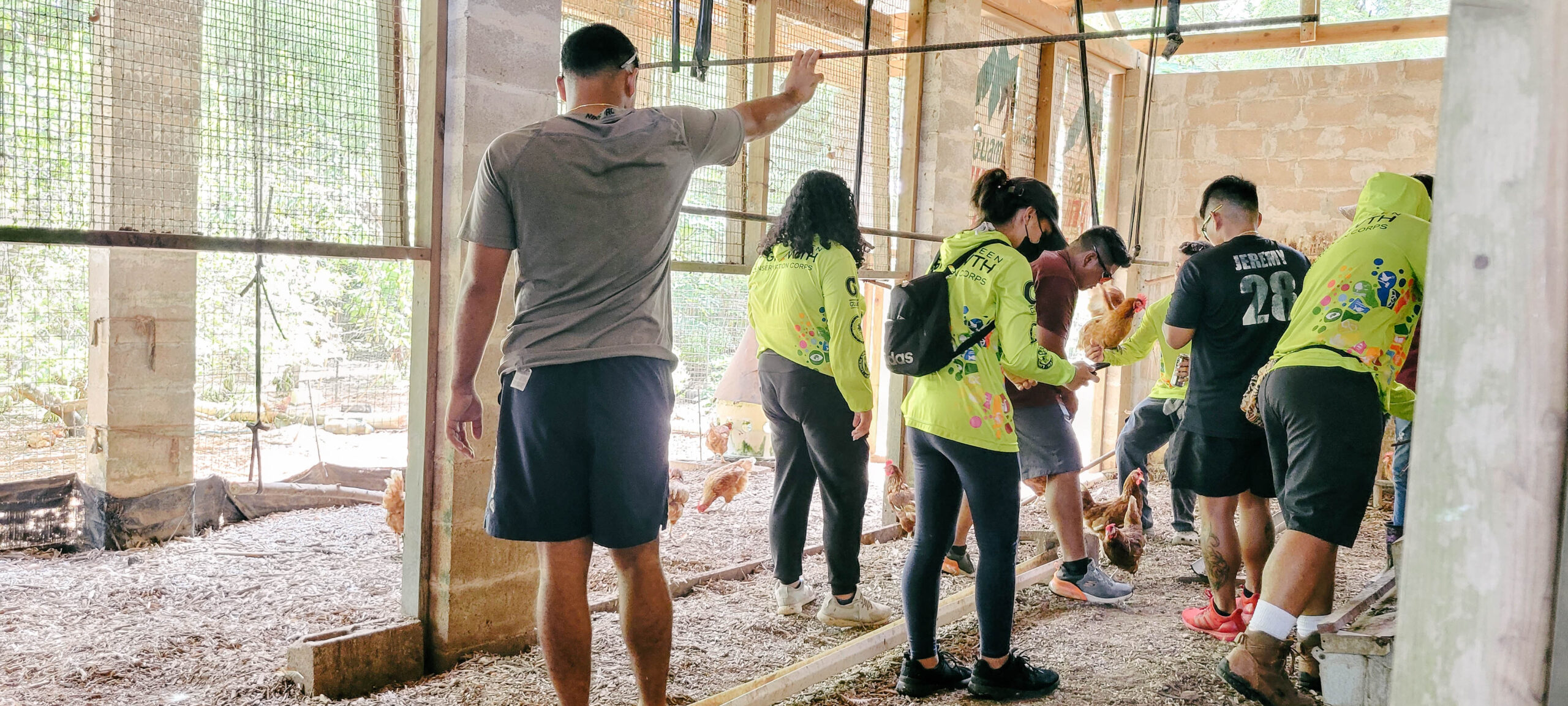
UOG CIS brings Guam Green Growth to Green Night 

UOG CIS brings Guam Green Growth to Green Night

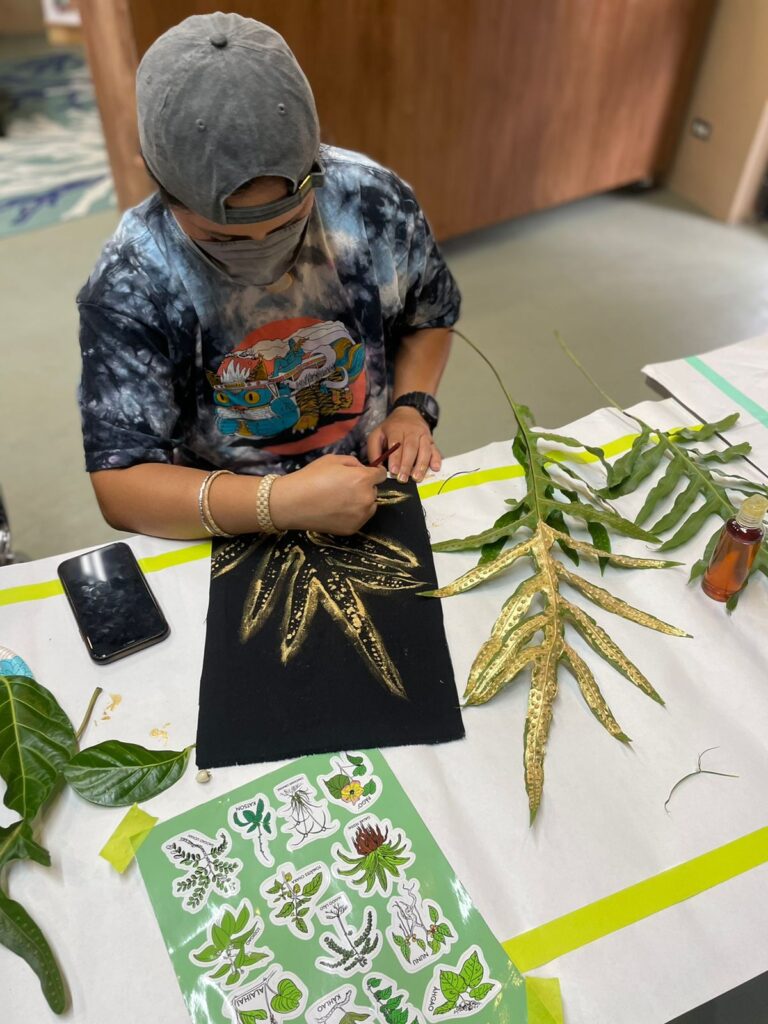
At the University of Guam’s Green Night event, the Center for Island Sustainability team highlighted the fun side of the circular economy loop with an activity that featured repurposing discarded materials and green waste into a creative fabric.  

The College of Natural & Applied Sciences hosted Green Night on Wednesday, April 20, in celebration of the University’s 50 years as a land-grant institution.  

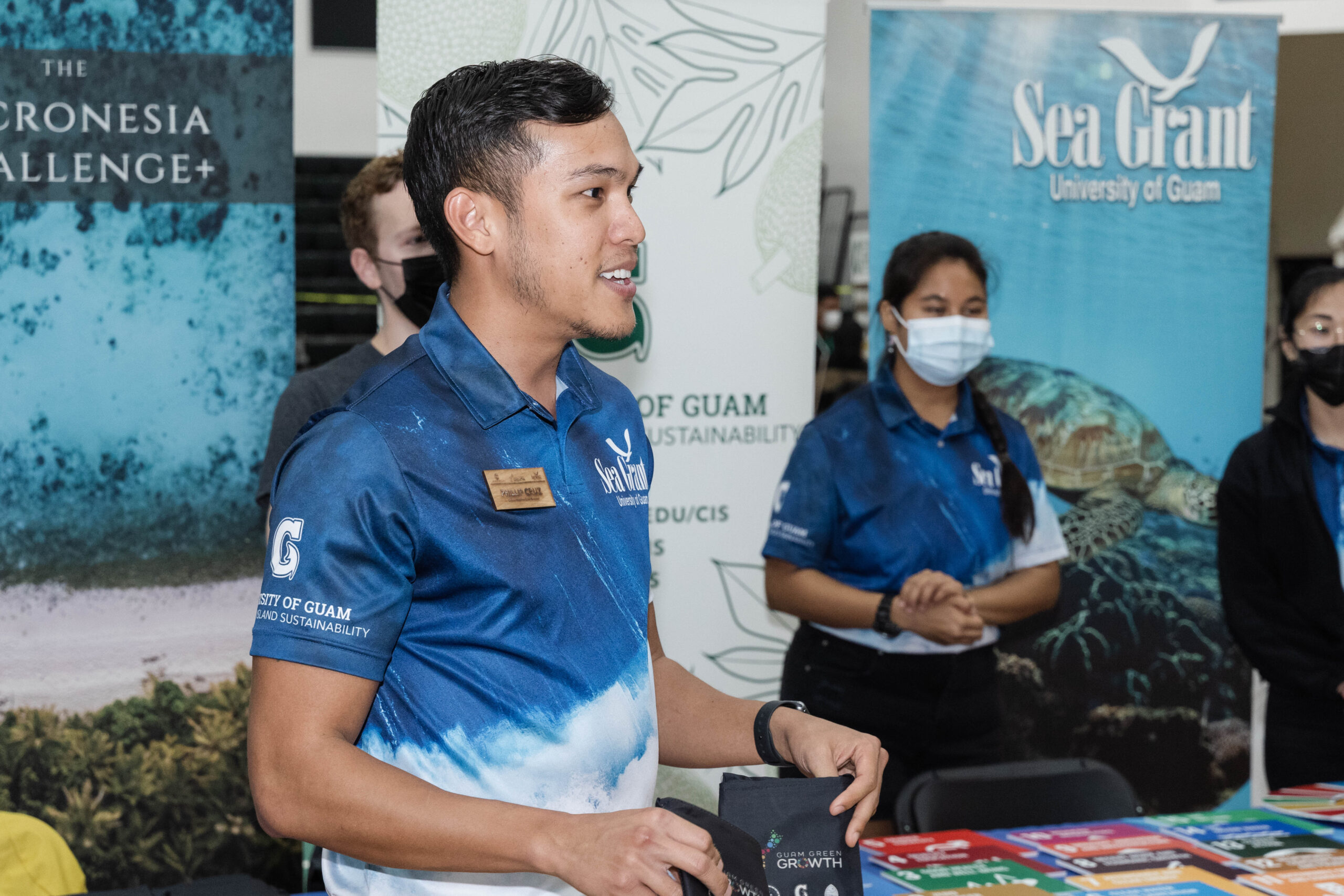
The UOG CIS, Sea Grant, and EPSCoR teams shared information about the United Nations 17 Sustainable Development Goals and distributed SDG stickers and the latest Sea Grant tide chart calendar.  

At the event, CHamoru artist and Makerspace and Innovation Hub staff Joey Certeza demonstrated the textile printing process using an old blanket, paint, and leaves. Four distinct types of leaves were collected from the green waste pile at the CNAS garden for their distinct pattern — the lemmai (breadfruit), kåhlao (a type of fern), laguanå (soursop), and kaffo’ (a type of pandanus). 

“We are textile printing with nature. We have collected four different leaves in our House 2 garden. We want the community to be involved in textile printing so we at Guam Green Growth can upcycle the fabric into different products that you will be able to purchase at the G3 Makerspace and Innovation Hub at the Chamoru Village,” Certeza said. 

Myracle Mugol, Guam Green Growth circular economy coordinator added, “Whatever design we make we are going to turn it into a tote bag, pouches or any other product at the Makerspace and Innovation Hub. The proceeds (from the products) will support the Center for Island Sustainability.” 

 The circular economy closes the loop by prolonging the product life cycle and finding another purpose for waste that would otherwise end up in the landfill. Doing so keeps materials in use and, eventually, lessens the burden on natural resources and regenerates natural systems.   

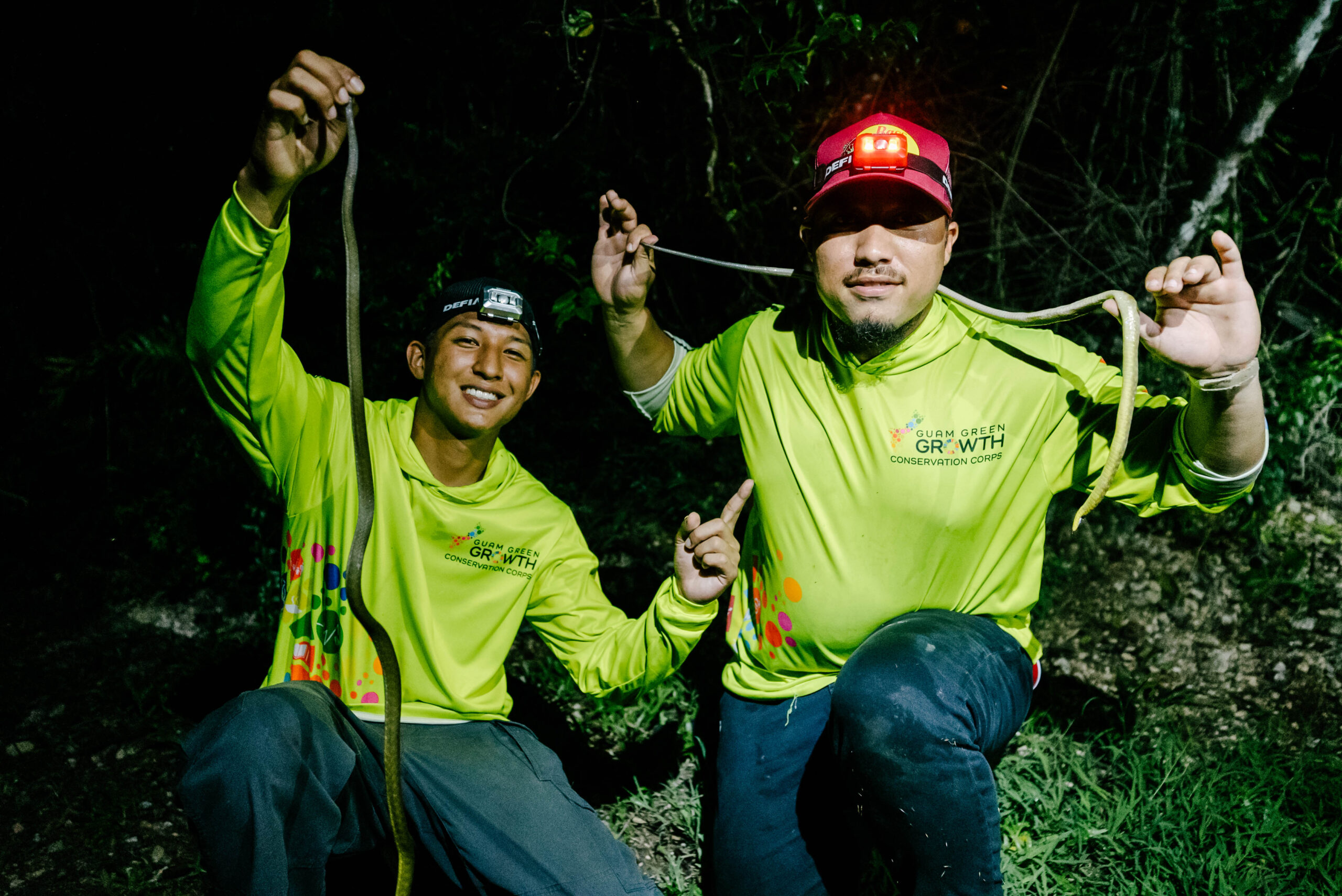
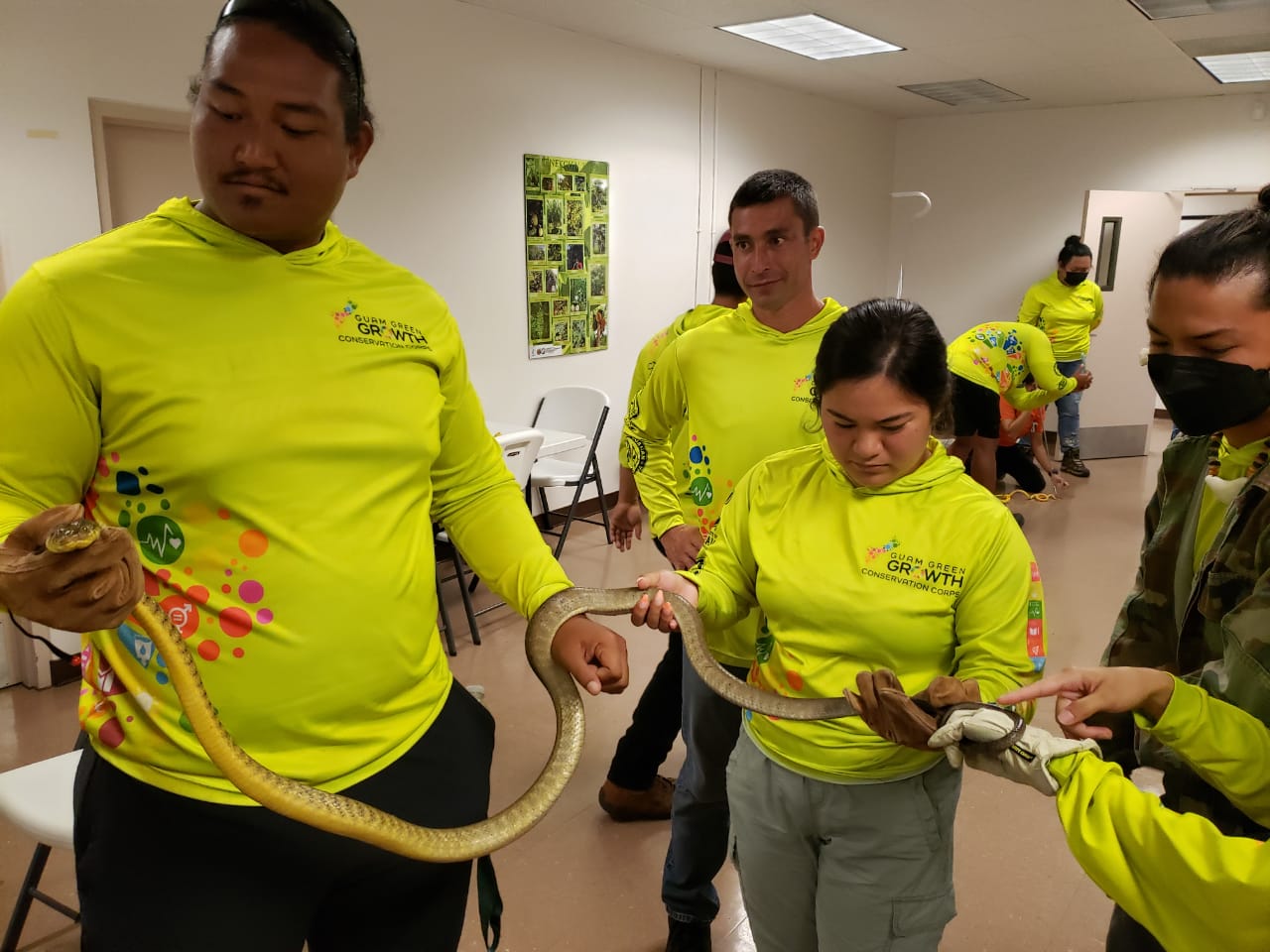
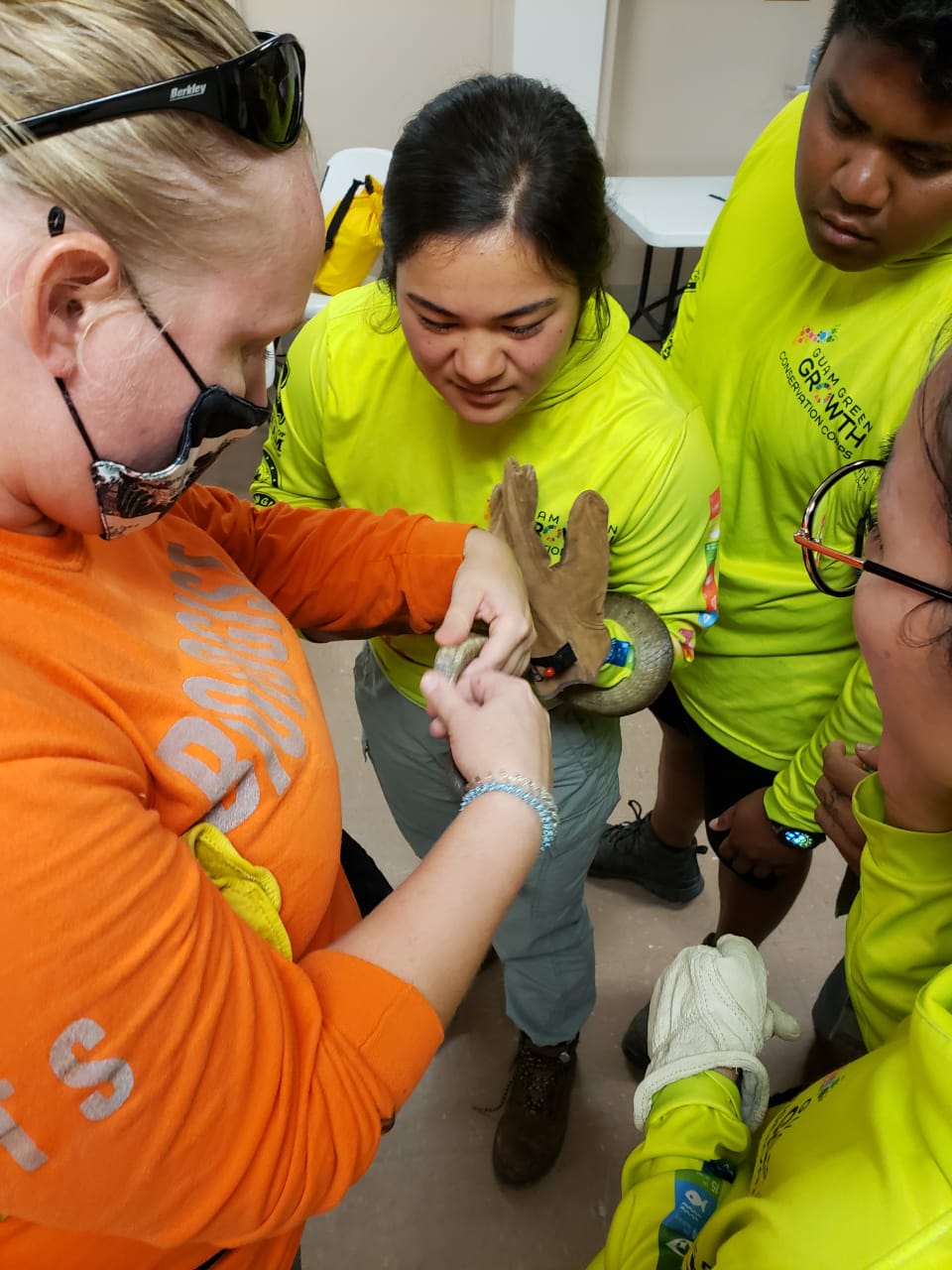
The Green Night event also featured food trucks, a farm animal petting zoo, after-hours yoga, cycad garden tours, snake wrangling, local produce and craft sales, plant sales, giveaways, and a glow-in-the-dark family fun run/walk. 

 ‘Islands are still rising’: CSIN biannual gathering promotes policy framework, connections for climate change resiliency  

‘Islands are still rising’: CSIN biannual gathering promotes policy framework, connections for climate change resiliency

Resolute in their undertaking to build communities resilient to the effects of climate change, dozens of representatives across the U.S. islands convened virtually for the sixth Climate Strong Islands Network (CSIN) Biannual Gathering, March 24.   

At the core of the agenda was the introduction to and discussions surrounding the CSIN’s National Policy Framework presented by members of the network’s policy team and High Street Strategies, a government relations and consulting firm.   

The framework indicated seven key issue areas common to island communities that will support climate change preparedness, if acted upon. The framework also offered corresponding policy recommendations to help guide the implementation of or amendments to policies.  

“We’ve captured those issues and developed solutions,” said Jason Donofrio, CSIN Steering Committee advisor and external relations officer for The Ocean Foundation. 

“We see the National Policy Framework as an outline to begin addressing islands’ needs and a pathway to becoming more climate resilient.” 

The key needs were identified as clean energy, watershed planning, food security, disaster preparedness, marine economy, waste management, and transportation, as presented by CSIN policy team members, Matthew Mullin, High Street Strategies president and CEO; Norah Carlos, High Street Strategies associate; and Erin Gaines, High Street Strategies consultant.   

The team determined that island representation in federal decision-making processes, development of island capacity through significant investments in its people, and access to affordable information and technology were cross-cutting themes that will enable sustainable action in response to the issues at hand.   

Network members were encouraged to continue advocating for their islands and to present the framework to their local decision makers, while also supporting and elevating progressions in innovation and ingenuity.  

“Our common purpose is to achieve a sustainable future together. The good news that I share with you today is that islands are still rising,” said Austin Shelton, CSIN Steering Committee co-chairperson and director of the University of Guam Center for Island Sustainability (CIS) and UOG Sea Grant. “Despite the global pandemic physically separating us, we have not been isolated. We have strengthened our bonds through these networks, and now, we are building on our momentum of the past few years and sailing ahead. Please stick with us and encourage your island friends to join in this Climate Strong movement.” 

“For a long time, people saw living on islands as a separation, a barrier, or a boundary. I am so proud to see how all of us from islands around the world have bonded together in this gathering to show that the whole planet is like an island itself, and our connections to each other are a lot closer than anyone could’ve imagined,” said Thomas Krise, UOG president. “Our efforts, through the work of the UOG CIS and the Guam Green Growth (G3) Initiative, and our other programs and partnerships, have motivated and inspired people all around our island to step up and do what they can to help this mission. We stand together with everyone here today, who believes, that, while as individual islands, we are firm and sturdy and rooted, together, as a network, we are really strong – island strong.” 

This year’s gathering was hosted by the UOG CIS and G3.  

The CSIN biannual gatherings fuse dozens of U.S. island community leaders and partners in philanthropy, business, academia, and government throughout the continental U.S., nation states, Caribbean Sea, and Pacific Ocean territories to expand their capacity to mitigate the impacts of extreme climate events. The CSIN is governed by an independent steering committee of island leaders, co-hosted by The Ocean Foundation and the Global Island Partnership as a member of the Local2030 Islands Network. 

Guam contributes to sustainable future dialogue at Our Oceans Conference

Guam contributes to sustainable future dialogue at Our Oceans Conference

Guam’s position as a leader in the worldwide sustainability movement was evident at the Our Oceans Conference in Palau. 

The conference hosted by the Republic of Palau and the United States consisted of five days of panel presentations, featured speakers and side events. 

The Guam delegation attending the conference consisted of Governor Lou Leon Guerrero, longtime environmental advocate and the Governor’s Chief Advisor for Military and Regional Affairs, former Senator Carlotta Leon Guerrero along with members of the University of Guam Center for Island Sustainability and Sea Grant and Guam NSF EPSCoR.  

The Governor addressed the congregation during a special welcoming reception alongside Palau President Surangel Whipps, Jr. and United States Special Presidential Envoy for Climate and former Secretary of State John Kerry.  

“The bottom line is, through the (United Nations Sustainable Development Goals) we are creating a sustainable community.” said Leon Guerrero. “Through these goals, we are going to lift people from poverty. We are going to try and eliminate hunger. We are going to have a better educated workforce. These are all the ingredients for a better quality of life for all of us.”  

Kerry noted the importance of regional leadership taking part in the efforts for worldwide sustainability and to protect our oceans. 

“It is fair to say that the ocean is our lifeblood, 51% of the oxygen we breathe comes from the ocean. So much of the food we eat, so many of the livelihoods that are provided to people come from the ocean,” explained Kerry.  “We need the full-throated voice of the island states because you speak with a particular moral imperative, a particular capacity to be persuasive. We need you to make the difference.” 

Guam was also represented as the governor was a featured panelist at a side event coordinated by the Micronesian Challenge, a groundbreaking commitment by the leaders of the five jurisdictions of Micronesia – Federated States of Micronesia, Palau, Republic of the Marshall Islands, Guam and the Commonwealth of the Northern Mariana Islands. 

The Micronesian Challenge recently expanded their goals and now moves to effectively manage 50% of marine resources and 30% of terrestrial resources by 2030 after realizing great progress up to their first deadline in 2020. 

“We feel like we are isolated out here and we just have each other to work with,” explained Leon Guerrero. “I do believe strength in unity and us having one voice is going to move us into success.” 

Director for the University of Guam Center for Island Sustainability and Sea Grant Austin Shelton was a featured panelist in a special event hosted by the Local2030 Islands Network, of which Guam is a founding member, aimed at highlighting the successful use and implementation of a progress dashboard used by Hawaii Green Growth and recently launched with Guam Green Growth.  

 “Together with other islands around the world, we are tracking our local actions on sustainability through the island-wide Guam Green Growth initiative. The public and transparent G3 Dashboard demonstrates to how Guam is contributing to a global sustainable future,” said Shelton.  

At the special event, it was also announced that the Government of Palau is committed to launching their own Palau Green Growth dashboard in alignment with Guam and Hawaii in hopes of sharing information and developing solutions across the network. 

While heads of state, conservation leaders and sustainability activists from the biggest countries and governments around the world took to the main stage during the conference, the voice of University of Guam student and the founder of Deep Pacific Collective of Pacific Peoples Kalani Reyes, a youth delegate selected for this year’s conference, commanded the attention of the audience. 

“I’ve made it a part of my life’s mission to advocate for and with the young people of the Pacific. To believe in their power through hearing other islands speak of their experiences especially in my home islands of the Marianas,” said Reyes. 

Reyes closed her featured speaker presentation calling for the formation of a group to continue the focus on and expand youth inclusivity in future conferences. 

“We propose the formation of a taskforce of previous Our Ocean youth delegates that facilitates the further integration of young people,” urged Reyes. “This will ensure the continuity and passing of knowledge from conference to conference and youth inclusion in the dialogues and decision-making processes.”  

According to the conference website, the Our Oceans Conference closed with 410 commitments worth $16.35 billion across the six issue areas of the conference from countries, organizations, and attendees.  

Full videos of panels and presentations can be viewed at https://ourocean2022.pw 


G3 Conservation Corps starts village beautification projects

G3 Conservation Corps starts village beautification projects

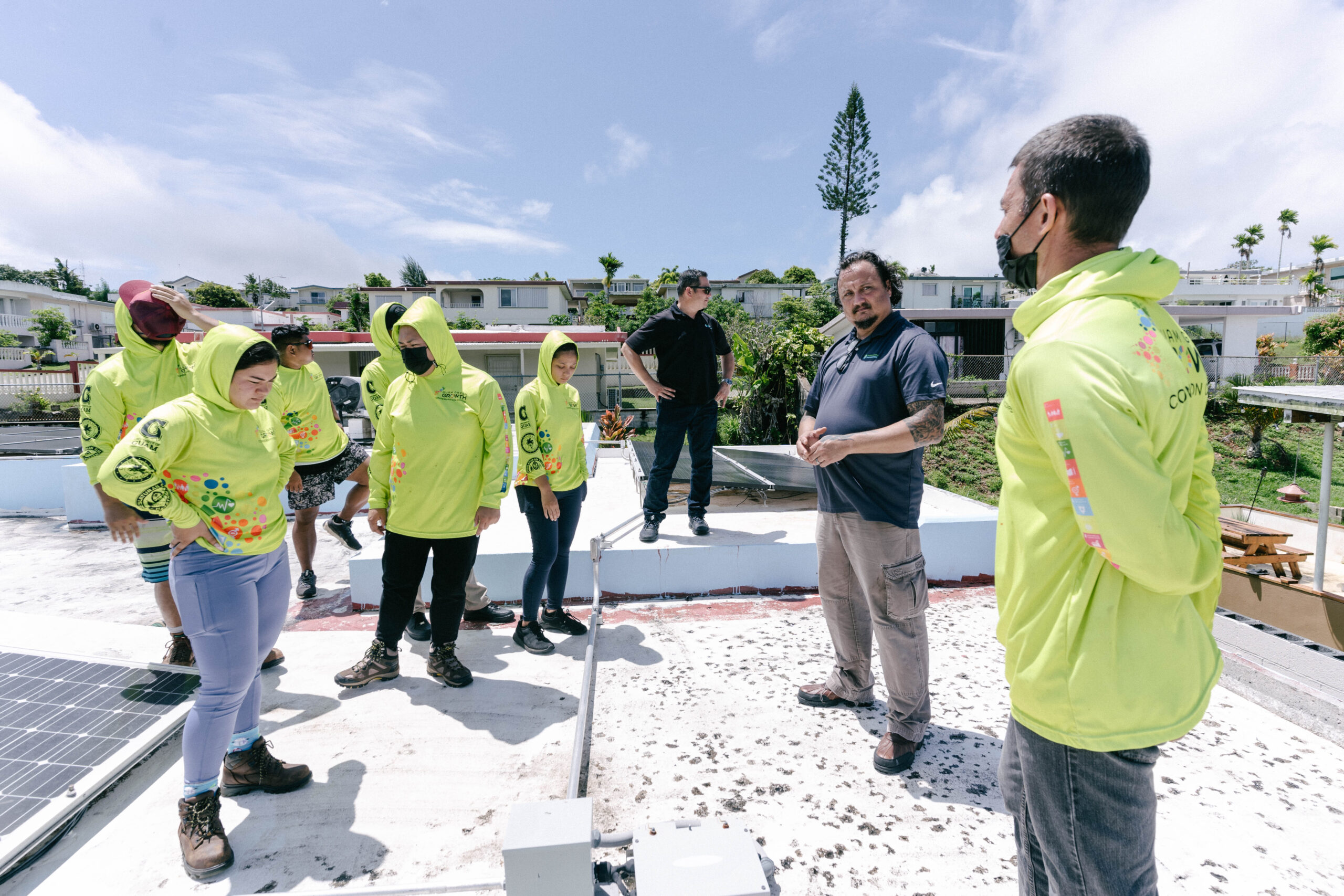
The second cohort of the Guam Green Growth (G3) Conservation Corps program headed to Yigo on Friday, March 18, to participate in their first island beautification event. 

G3 launched the second cohort of the conservation corps program in partnership with the University of Guam, the Office of the Governor and the 36th Guam Legislature.  

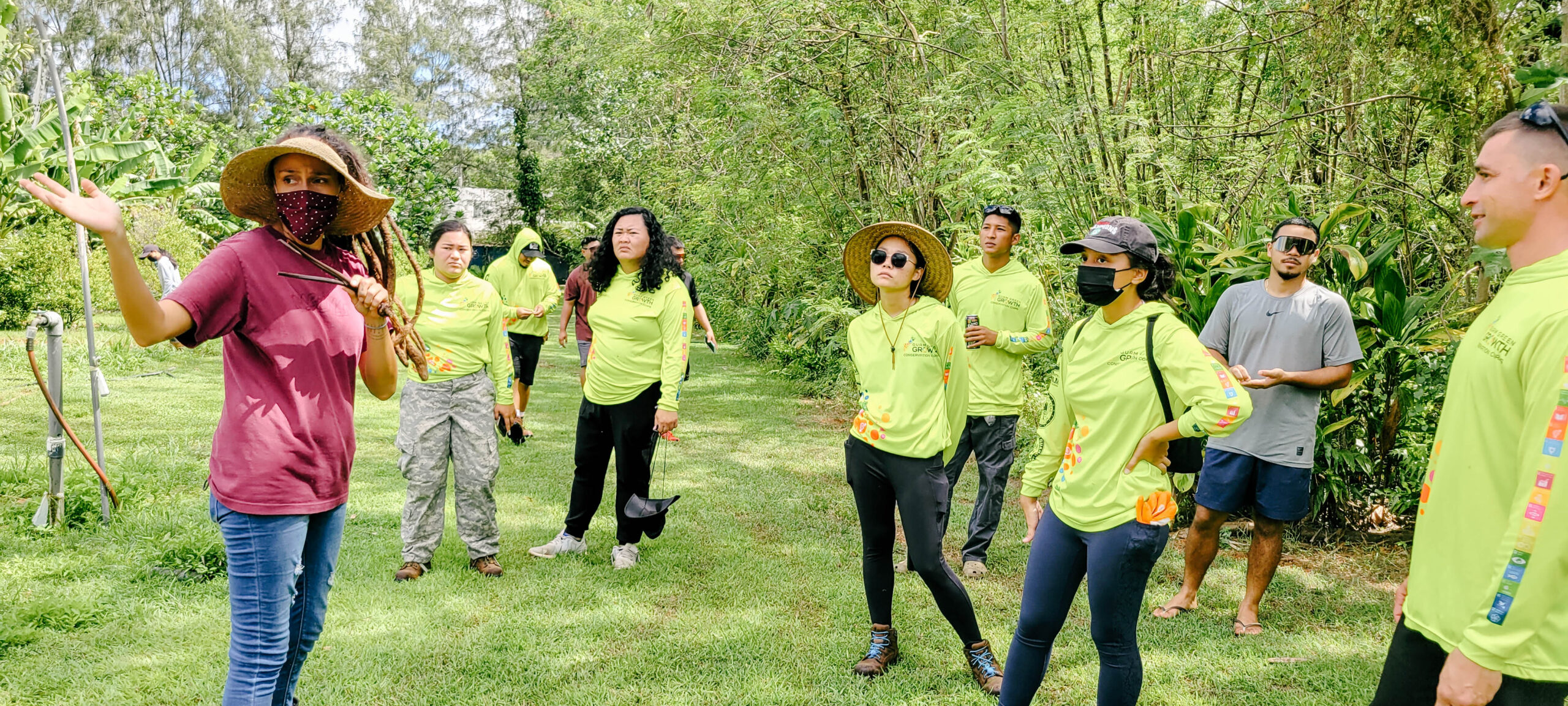
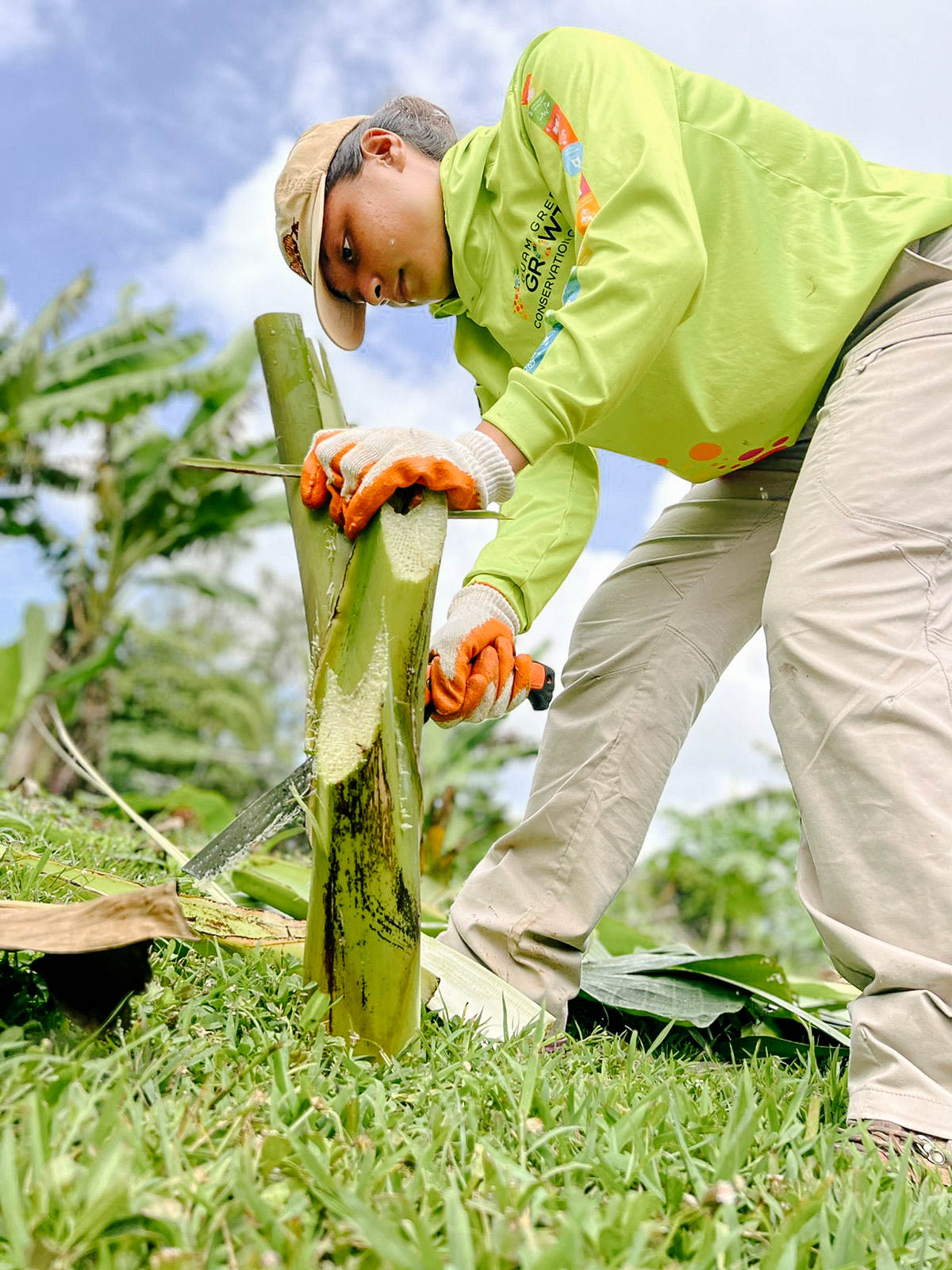
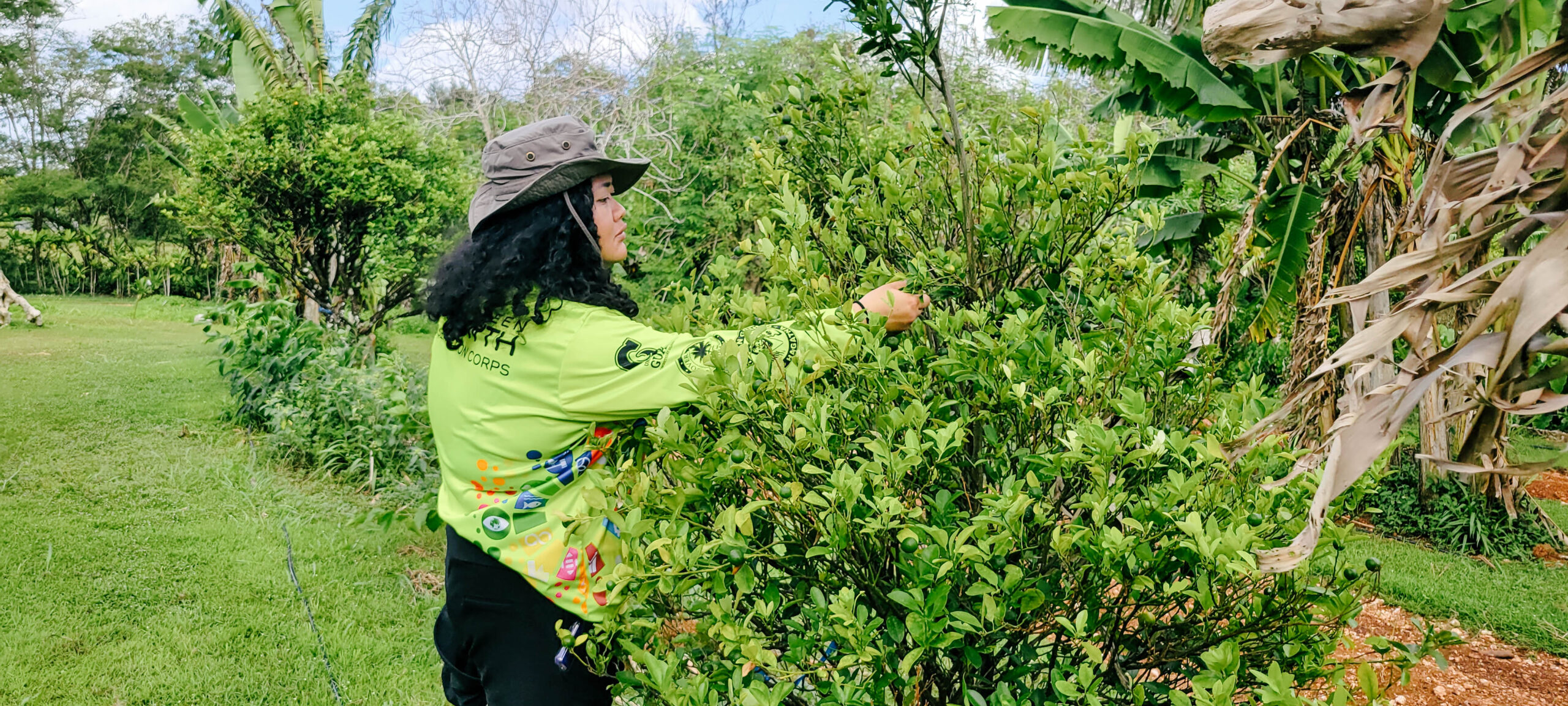
The G3 Conservation Corps is workforce development program preparing our community for the emerging green economy. For the next five months, the 12 new members are expected to train full-time on various sustainability topics, such as agriculture and aquaculture, invasive species removal, reforestation, circular economy, recycling, renewable energy and island beautification. 

At the Yigo beautification site, the G3CC members picked up trash along Marine Corps drive and sorted recyclables with the Yigo Mayors’ Office.  

Yigo resident and G3CC member Tre Starr said while he is disappointed to see the amount of trash at the site, he is excited to go back to the village and help with the cleanup. 

Christopher Quichocho, another G3CC member, said that activity allowed them to serve the community in their own way.  

“The cleanup is great. We are helping the community and able to give back and assist with beautification. It is one of the things that we should look forward to —- where we take the initiative and assisting the community as much as we can,“ said Quichocho. 

For the two new members, the G3CC program allowed them to explore other opportunities or to expand their current interests. 

Starr said, “I have always wanted to go into farming, but I have to work. You must make money. Before this, I was in construction. Working here gives me the opportunity to be able to get into the things that I want to do and be able to provide for myself and learn. With the knowledge that I gain from here, I am looking forward to applying it to my life so I can put myself in a better position to do the things that I want with farming and agriculture.” 

Quichocho, a former teacher at Inalahan Middle School, said, “It is a different lifestyle. I was always in the classroom and assisting (students). So, coming out here and being part of the community and assisting the community gives a different perspective, a different view of life in general. I am forever thankful for the fact that I have joined the Guam Green Growth conservation corps.” 

For the first time, the island wide village cleanups will be tied to another G3 program: the “Guam Green Growth Waste and Recycling Bin Initiative.” 

“The initiative is a project under Guam Green Growth which is facilitated by the University of Guam’s Center for Island Sustainability and supported by the Office of the Governor of Guam,” said Phil Cruz, UOG Center for Island Sustainability coordinator. 

“At each village where the conservation corps conducts the island beautification event, not only will we pick up trash at the village, but we will also be assisting with sorting and painting the G3 bins. There will be preliminary training on site and another more comprehensive training for the Conservation Corps,” Cruz added.  

Meanwhile, Yigo Mayor Anthony “Tony” Sanchez commended the overall goal of the beautification program. “It is a good program for getting people involved in what’s going on around the island.”  

He added that the program raises awareness and spurs the community to act on issues such as illegal dumping. “It does not only affect one village. It affects the whole island,” he said. 

For the next three weeks, the G3CC members will be at the following villages for the beautification program: 

  • Tamuning: March 31 
  • Barrigada: April 15 
  • Mongmong-Toto-Maite: April 22 

WHAT IS G3? 

Guam Green Growth or G3 is the island’s most comprehensive public-private partnership created to achieve a sustainable future. Aligned with the 17 UN Sustainable Development Goals, G3 cultivates an ecosystem for transformative action to achieve our island’s sustainable, prosperous, and equitable future. UOG facilitates the island-wide initiative in cooperation with the Office of the Governor of Guam and the 99 members of the G3 Working Group representing all sectors of our society.    

New G3 Conservation Corps members in motion 

New G3 Conservation Corps members in motion

A second cycle of sustainability leaders kicked off their first week under one of the Guam Green Growth (G3) Initiative’s most highly mobilized programs on March 14 at the University of Guam.  

Out of over 100 applicants, 12 members were selected to participate in the G3 Conservation Corps, entering a five-month workforce development program preparing our community for the emerging green economy. This week started with an orientation offering key program guidelines, remarks from G3 leadership, team building exercises, tips from a panel of inaugural cohort members, and the recitation of the new Conservation Corps pledge.  

The G3 Conservation Corps completed their first island beautification project – gardening at UOG’s colorful cliffside planter boxes highlighting the U.N.’s 17 Sustainable Development Goals (SDGs). 

The following new members will partake in various conservation activities to support the resilience of our island community and natural resources: Jenelle Aguilar, Rejean Benavente, Johnny Borja, Jacob Concepcion, Remilou Hannigan, Dulce Imbo, Wade Kitalong, Andrea Murer, Ryan Perez, Christopher Quichocho, Hila’an San Nicolas, and Tre Starr.  

“The Corps will bring together hundreds of different members from our community… to do amazing things to move our island forward toward a sustainable future,” Austin Shelton, UOG Center for Island Sustainability (CIS) director and G3 Steering Committee co-chairperson, said to the members. “At the same time, the Corps will receive valuable workforce training to join the green workforce when they complete the program.”  

“Growing up on this island, we really get a lot of love for our culture and our environment. Seeing some of it deteriorate in our young lives, I feel like it’s really good to be able to set the foundation for the future, to teach better ways, so our island stays beautiful, and we can share it with everyone,” Borja said.  

Imbo, who is also a UOG graduate student pursuing a master’s degree in counseling, plans to incorporate the knowledge she’ll gain from the program into her guidance for future clients.  

“We see that the SDGs are intersectional, I want to be there to pay it forward in terms of mental health and how that relates to our environment, as well as how that relates to our sustainable development and our sustainable community here in Guam,” she said.  

“One of the things the lieutenant governor and I always talked about is how we can sustain our island, how we can provide the resources for our island, so that there’s food sustainability, so that our environment is protected, so that our culture is protected, so that our practices continue. I want you to learn as much as you can and send that knowledge out and apply that knowledge out to the community. This pandemic has shown us how necessary it is for us to sustain ourselves within our resources, and we have a lot of resources. Our island is very fragile. I love our island. I’m sure you all do. We live here. No one else is going to do it, but ourselves, and I really appreciate your commitment and your efforts,” Gov. Lourdes Leon Guerrero, G3 Steering Committee chairperson, said. 

“Thank you for choosing to be change agents. The whole spirit of Guam Green Growth, especially the Conservation Corps, is to try and enable people to do what they can individually, collectively as a cohort, then collaboratively with the CIS, with the government of Guam, and with the people of Guam,” Lt. Gov. Joshua Tenorio, G3 Steering Committee co-chairperson, said. “When I was going to college, people would tell us we don’t have any resources, that we can’t survive on our own, and the governor was always one of those that (said) ‘No, that’s not true.’ We have been here for thousands of years. We just have to calibrate what’s out here and make sure we share the knowledge.” 

In their first few weeks, the members are scheduled to assist with the expansion of the community garden in Hagåtña, familiarize with Guam’s waste management and zero waste operations, and partake in regular village revitalization projects. 

The G3 Conservation Corps is supported by Guam’s Recycling Revolving Fund with approval from the Guam Environmental Protection Agency Board of Directors. 

About G3 
Aligned with the 17 U.N. Sustainable Development Goals, the Guam Green Growth Initiative, or G3, cultivates an ecosystem for transformative action to achieve a sustainable, prosperous, and equitable future for Guam. The University of Guam facilitates the island-wide initiative in cooperation with the Office of the Governor of Guam and the 100 members of the G3 Working Groups, representing all sectors of society. 

UOG CIS director at TEDx Malaysia: ‘Islands are reclaiming its sustainable past’ 

UOG CIS director at TEDx Malaysia: ‘Islands are reclaiming its sustainable past’

Colonialism changed the sustainable and self-sufficient ways of the islands. But islanders are now taking action to build resilience against climate impacts by reducing local environmental stressors and taking action to become more sustainable,” according to Austin Shelton, University of Guam Center for Island Sustainability and Sea Grant director, who told the virtual audience at TEDxJA Malaysia.   

Shelton, a Junior Achievement Guam alumnus, discussed the concept of “circular economy” as it applies to Guam and the other islands at the “TEDxJAMalaysia Virtual Webinar Countdown: Youth Action for Sphere Sustainability (YASS).” JA Malaysia hosted the event. 

Shelton said transforming waste into resources is how islands give back to the circular economy. He added that looping back into the circular economy is also a meaningful way to build resilience against climate change.  

 The circular economy closes the loop by prolonging the product life cycle and finding another purpose for waste that would otherwise end up in the landfill. Doing so keeps materials in use and, eventually, lessens the burden on natural resources and regenerates natural systems.  

Shelton said, “Today, we are working on blending our island wisdom with modern innovations to loop back to the circular economy. We now have a Guam Green Growth circular economy Makerspace and Innovation Hub.” 

“At the beginning of 2020, over a hundred people represented all sectors of our society. Together we committed to achieving the 17 United Nations Sustainable Development Goals — in locally and culturally effective ways — through the Guam Green Growth initiative. Guam Green Growth now serves as an engine of solutions to sustainability challenges and contributes to the emerging green economy for our island. We were sustainable before, and we can be again,” he said. 

The implementation of a circular economy on the island contribute to achieving multiple UN SDGs (Sustainable Development Goals), including # 6 (clean water and sanitation), # 8 (economic growth), # 12 (sustainable consumption and production), # 13 (climate change), among others. 

Junior Achievement Malaysia hosted the TEDx virtual event as part of its commitment to promoting youth-led action to address climate change.  

JA Malaysia is part of the global network of youth organizations that allow students to participate in experiential programs that focus on topics such as work readiness and entrepreneurship. 

Asheesh Advani, President and CEO at JA Worldwide said that the event is focused on the most pressing issues of the day: climate change. “Entrepreneurs and entrepreneurial solutions are critical to the future of addressing sustainability and the issue of climate change for our world,” he said.  

“I see the struggles that policymakers and world leaders have in cooperating across boundaries (to address climate change),” Advani said, but he saw the strengths of entrepreneurs who are moving past these barriers through creativity and innovation.  

Guam Green Growth Makerspace and Innovation Hub now open at CHamoru Village  

Guam Green Growth Makerspace and Innovation Hub now open at CHamoru Village

Entrepreneurs and creators can now transform waste material into marketable products through the Guam Green Growth Circular Economy Makerspace and Innovation Hub.  

Guam Green Growth and its partners celebrated the grand opening of its G3 Circular Economy Makerspace and Innovation Hub on Tuesday, Feb. 15, in three houses at the CHamoru Village in Hagatña.  

Designed to support Guam’s emerging green economy, the spaces will allow entrepreneurs to upcycle discarded materials into marketable products using a variety of tools and resources. These spaces also support the island’s effort to rely less on imported goods and create less waste. 

“What we are doing is moving forward with our vision of helping people become successful in business. Small businesses are the backbone of our community and government,” said Governor Lou Leon Guerrero. “This concept is a win-win for our business, academia, our island’s environment, and all of Guam.” 

Equipped with 3D printers, a laser cutter, computer numerical control router, vinyl cutter, and power tools, the industrial makerspace can process materials such as wood, metal, and plastic.  

“This is an effort to diversify the economy and to do things to benefit multiple parts of our community,” said University of Guam President Thomas Krise. “We have this opportunity to think of a new kind of economy and a new way of dealing with visitors and to be attractive to visitors. I think this is a really great opportunity.”  

The second makerspace house has equipment from Precious Plastic, a plastic recycling project that uses machines to grind, melt, and mold recycled plastic into new products such as furniture, jewelry, and more.  

“What this G3 Circular Economy Makerspace and Innovation Hub will be is a beacon to tell everybody on our island that we do not have scarcity – in fact, we have lots of resources. The problem is that we’ve been calling it waste this whole time,” said Austin Shelton, director of the UOG Center for Island Sustainability and Sea Grant. “The circular economy is about changing this linear economy where all of our products come in from our ports and waste products end up at the landfill. We can bend that line into a loop, regenerate natural systems, and design out waste and pollution to keep our materials in use. We can then create new green economic activity and this is where we can do it together.”   

Once entrepreneurs create products in the makerspace, they can sell them on consignment at the G3 Green Store to test the market.  

The innovation hub supports part of the G3 initiative’s mission to establish sustainable and profitable cottage industries and support regional economic development. Business advisement seminars, creative workshops, and training sessions for the makerspace’s equipment will be held at the facility.  

Creators can access the space and tools available for $50 a month or $500 per year, with a 20% discount applicable for yearly memberships.  

The facility’s hours will be Tuesday to Saturday from 10 a.m. to 6 p.m.  

The G3 Circular Economy Makerspace and Innovation Hub was made possible by funding from Guam NSF EPSCoR, the Guam Economic Development Authority, Office of the Governor of Guam, 36th Guam Legislature, and partnerships with the UOG Center for Island Sustainability, UOG Sea Grant, the School of Business and Public Administration, and Guam Unique Merchandise and Arts. 

For more information about the G3 Circular Economy Makerspace and Innovation Hub, please contact G3 Circular Economy Coordinator Myracle Mugol at mugolm@triton.uog.edu 

Rotary Club of Tumon Bay makes donation in support of Guam Green Growth initiative

Rotary Club of Tumon Bay makes donation in support of Guam Green Growth initiative

Bonnie and Austin pose with donation
RCTB President Bonnie Alig presents UOG CIS Director Austin Shelton with a donation towards CIS’ Guam Green Growth initiative.

The Rotary Club of Tumon Bay made a donation to the University of Guam Center for Island Sustainability in support of the Guam Green Growth imitative at their members meeting earlier this month.   

President Bonnie Alig presented Center director Austin Shelton with the donation after he served as the club’s featured speaker.  

“Supporting the environment and fostering in sustainability is one of the areas of focus for the Rotary Club of Tumon Bay,” explained Alig. “This distinct area of focus to support the environment will give our Rotary members even more ways to bring out positive change for our island and increase our impact.  Our contribution to CIS and Guam Green Growth will assist them in this effort to continue in the path toward a sustainable future for our island.” 

Highlights of Shelton’s presentation included a recap of accomplishments of the first cohort of the Guam Green Growth Conservation Corps and updates on other implementation projects including island-wide recycling bin distribution which began in January.  

“Guam Green Growth is our island’s most comprehensive public-private partnership ever created to achieve a sustainable future for Guam,” We thank the Rotary Club of Tumon Guam from joining the movement and supporting action on sustainability.”  

The club donated one-thousand dollars to the initiative. 

Donations to the UOG Center for Island Sustainability can be made through the University of Guam Endowment Foundation.  

Seeds sewn, service praised in new Talo’fo’fo community garden

Seeds sewn, service praised in new Talo’fo’fo community garden

Empowered by Martin Luther King Jr.’s legacy, Guam’s leaders and volunteers at the forefront of community service came together to raise ground in a new community garden, Jan. 17, at the Jeromy Newby Community Center in Talo’fo’fo’.  

Gov. Lourdes Leon Guerrero, Lt. Gov. Joshua Tenorio, representatives from the Serve Guam Commission (SGC), 36th Guam Legislature, University of Guam (UOG), Guam Department of Education, and military took to the soil to plant some of the first crops in the garden, bolstering the Guam Green Growth (G3) initiative. 

This was the second community garden established in partnership with G3, as the SGC’s AmeriCorps VETCORPS team answered the call to promote food security, healthy food choices, and increased island sustainability through education and community involvement, with a particular focus on veterans.  

“This is the idea of placemaking; going to where all the conversations, of what makes a community, occurs,” said Peter Barcinas, SGC board chairperson and Associate Director for UOG Cooperative Extension & Outreach. “Today, this significant ushering of new programs and focusing more on our military community is an important milestone to guide the work we do.”  

“Service, as we know, is such a sacred, sacred action that we give as a people. You will see how a community will come out and work with each other to promote food sustainability on our island to continue with the U.N. Sustainable Development Goals (SDG). As we raise another community garden for our people, let us shine the love of our souls upon all those who need our help and need our heart,” said Gov. Leon Guerrero.   

The community garden supports SDG Goal 2, Zero Hunger; Goal 3, Good Health and Well-being; and Goal 11, Sustainable Cities and Communities.  

Present on site were a newly erected aquaculture system and set of recycling bins, also brought forth through collaboration with G3 and UOG Sea Grant.  

“‘We are now faced with the fact that tomorrow is today. We are confronted with the fierce urgency of now. In this unfolding conundrum of life and history, there is such a thing as being too late,’” said Austin Shelton, UOG Center for Island Sustainability and Sea Grant director, quoting a speech by Martin Luther King Jr. “I am confident, and I am hopeful that we are not too late. We are in the right place, and we are doing the things that need to be done. This is the last decade that we have to act, to treat a future that is sustainable, prosperous, and equitable.”  

UOG President Thomas Krise spoke on the strength of communities uniting for change and prosperity.   

“The persistence of this demonstration of people showing what they care about and doing it peacefully is incredibly powerful. We need to do what we can with our neighbors, friends, and people who can make a difference, who can demonstrate that it’s possible to be upbeat, to be positive, to be an example to other people. It’s especially nice that we’re here in Talo’fo’fo’ to celebrate an example of a community that shows us all how to live as a community. Keep up the peaceful fight for positive change in our environment,” he said.  

“All of the programs are in place. They are ready to serve our constituents. Our future is very promising. We have good people behind us. I have faith in them,” said Vicente Taitague, Talo’fo’fo’ mayor.  

AmeriCorps Guahan Sustainable Culture member, Ysa Mercado, emphasized the program’s purpose of educating, influencing, and inspiring without profit.  

With everything that we’ve already done, and with this new startup, it just encourages sustainability for the island. The most important part is to want the island to continue to progress, so we stay safe and healthy, and, overall, sustainable and beautiful,” she said.  

Residents are encouraged to collaborate with VETCORPS to work toward a successful garden and aquaculture system.  

About G3 
Aligned with the 17 U.N. Sustainable Development Goals, the Guam Green Growth Initiative, or G3, cultivates an ecosystem for transformative action to achieve a sustainable, prosperous, and equitable future for Guam. The University of Guam facilitates the island-wide initiative in cooperation with the Office of the Governor of Guam and the 100 members of the G3 Working Groups, representing all sectors of society. 

Skip to content