RECAP: Guam Green Growth Conservation Corps week eighteen
RECAP: Guam Green Growth Conservation Corps week seventeen
RECAP: Guam Green Growth Conservation Corps week sixteen
G3 Conservation Corps installs solar panels on JFK to help with renewable energy
Alongside the maintenance contractors for the school, the Corps installed over four hundred twenty solar panels on the school’s gym, cafeteria, annex and classrooms.
“It gives me hope that there are alternatives for energy saving and renewable energy sources,” explained Corps member Drake Kemp. “It gives us a way to get away from using our ancient practices and do some good for the environment.”
The Corps spent two weeks assisting with the project which falls in line with United Nations Sustainable Development Goal 7, Affordable and Clean Energy, which aims to ensure access to affordable, reliable, sustainable and modern energy for all.
“Renewable energy is very important for Guam in that it will help with reducing costs that goes towards energy,” said Kemp. “That money can be used in other areas to help with other problems.”
The project led Conservation Corps members through the basics of solar power generation, panel installation and system maintenance.
“We learned that it is possible to power up a whole school with solar energy,” said Kemp. “It’s something they say, but you don’t really understand it until you see it in action.”
Along with the installation of solar panels, the group also learned about energy efficiency and helped replace outdated and less efficient lighting fixtures throughout the campus.
New energy plan, other gains highlighted at G3 biannual meeting
At the Guam Green Growth (G3) 2nd biannual meeting in September, committee co-chairs reported several program milestones and successes, including a new project that will create a renewal energy road map for Guam.
The G3 working group leads presented their updates and reports to Governor Lou Leon Guerrero and UOG President Dr. Thomas Krise at the virtual event. The two serve as chairs of the G3 biannual meetings.
Austin Shelton, UOG Center for Island Sustainability and Sea Grant director and G3 steering committee co-chair, said the Department of Interior Office of Insular Affairs’ Energizing Insular Communities (EIC) program selected G3 to develop an updated Guam Strategy Energy & Action Plan in partnership with the Guam Energy Office.
“Now we will be able to lead the development of a plan to create our island’s road map to one hundred percent renewal energy by 2045 to meet the ambitious mandate of Public Law 35-46 that Governor Lou Leon Guerrero signed into law in 2019,” he said.
Aside from the OIA-funded project, working group leads also highlighted the following G3 initiatives:
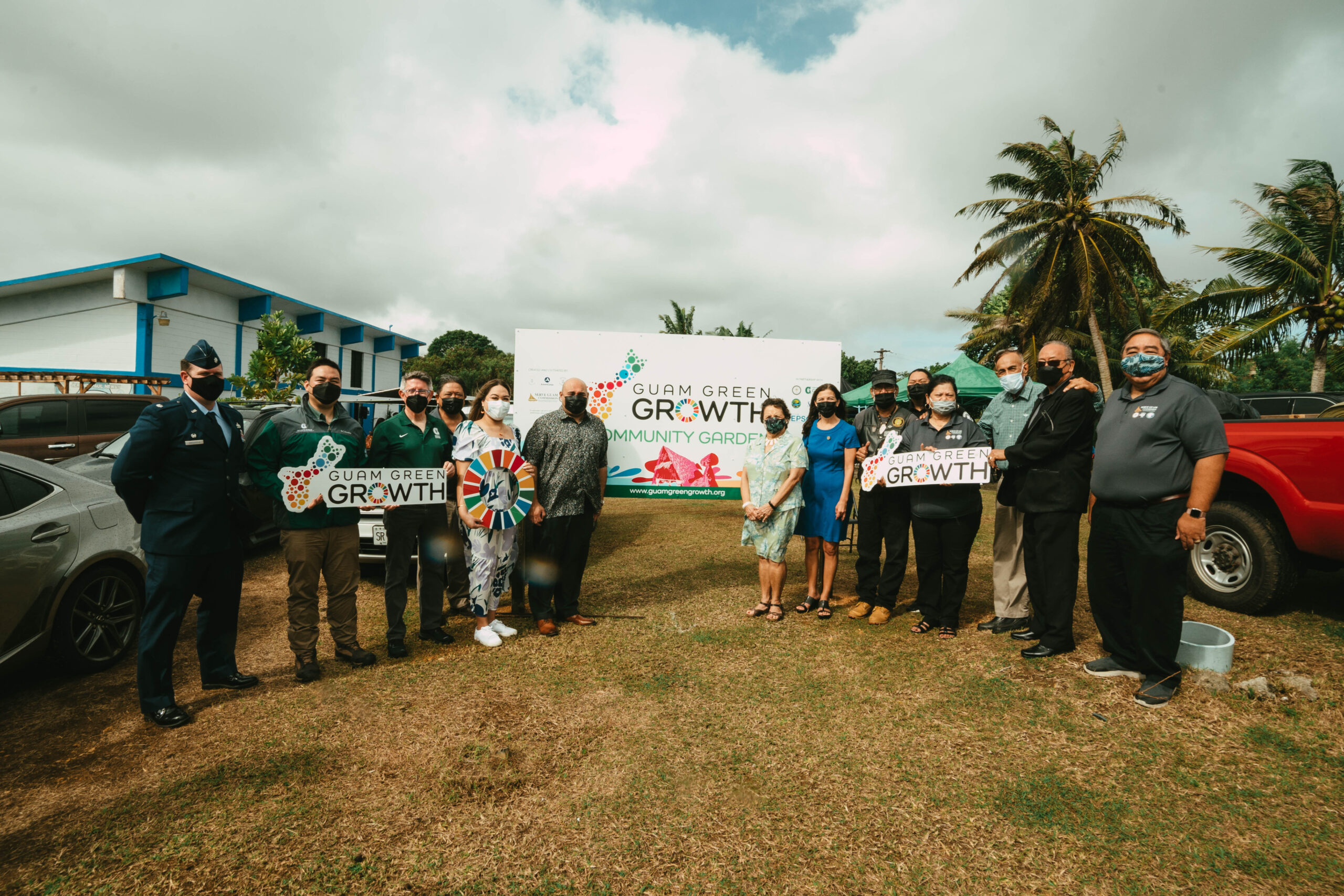
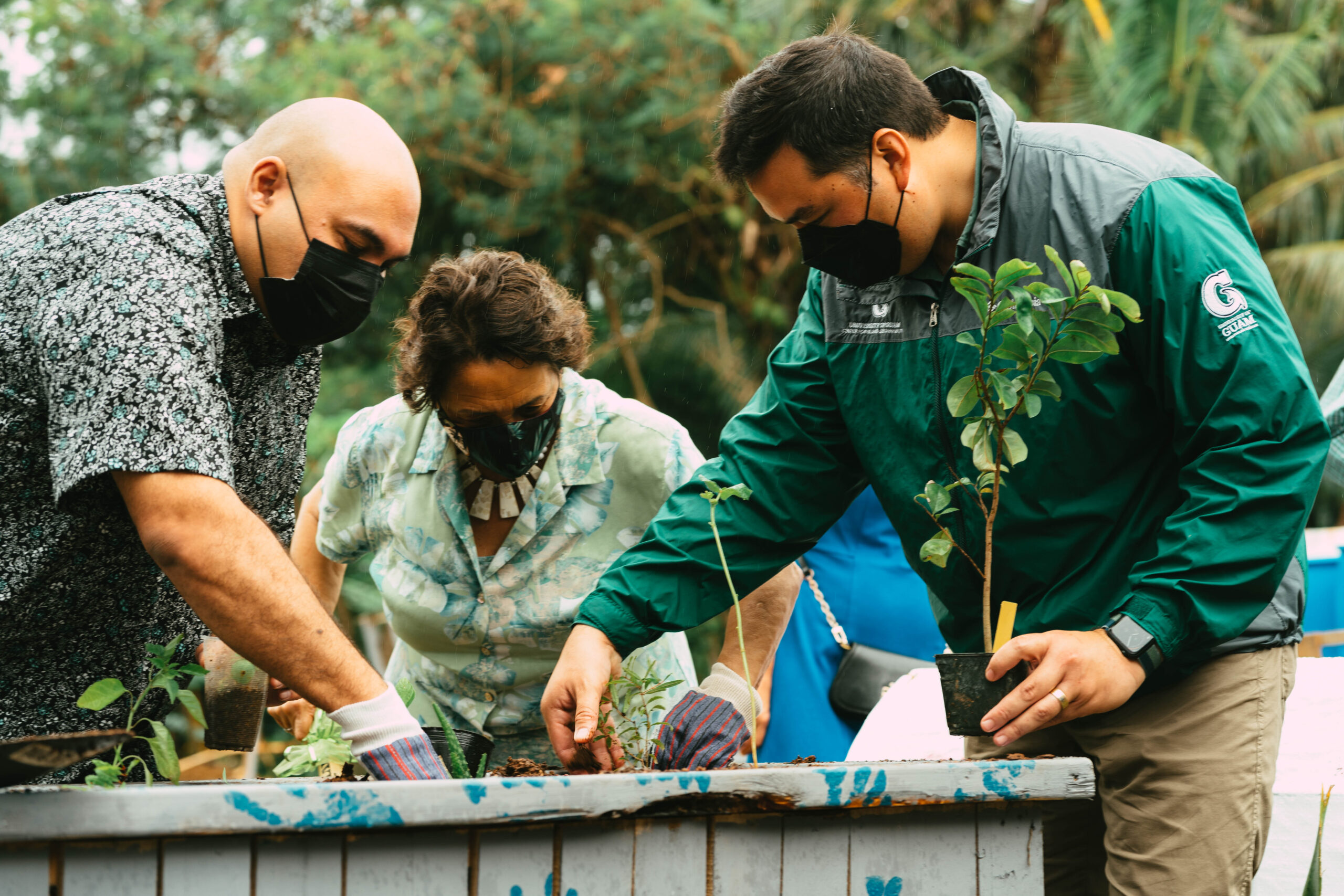
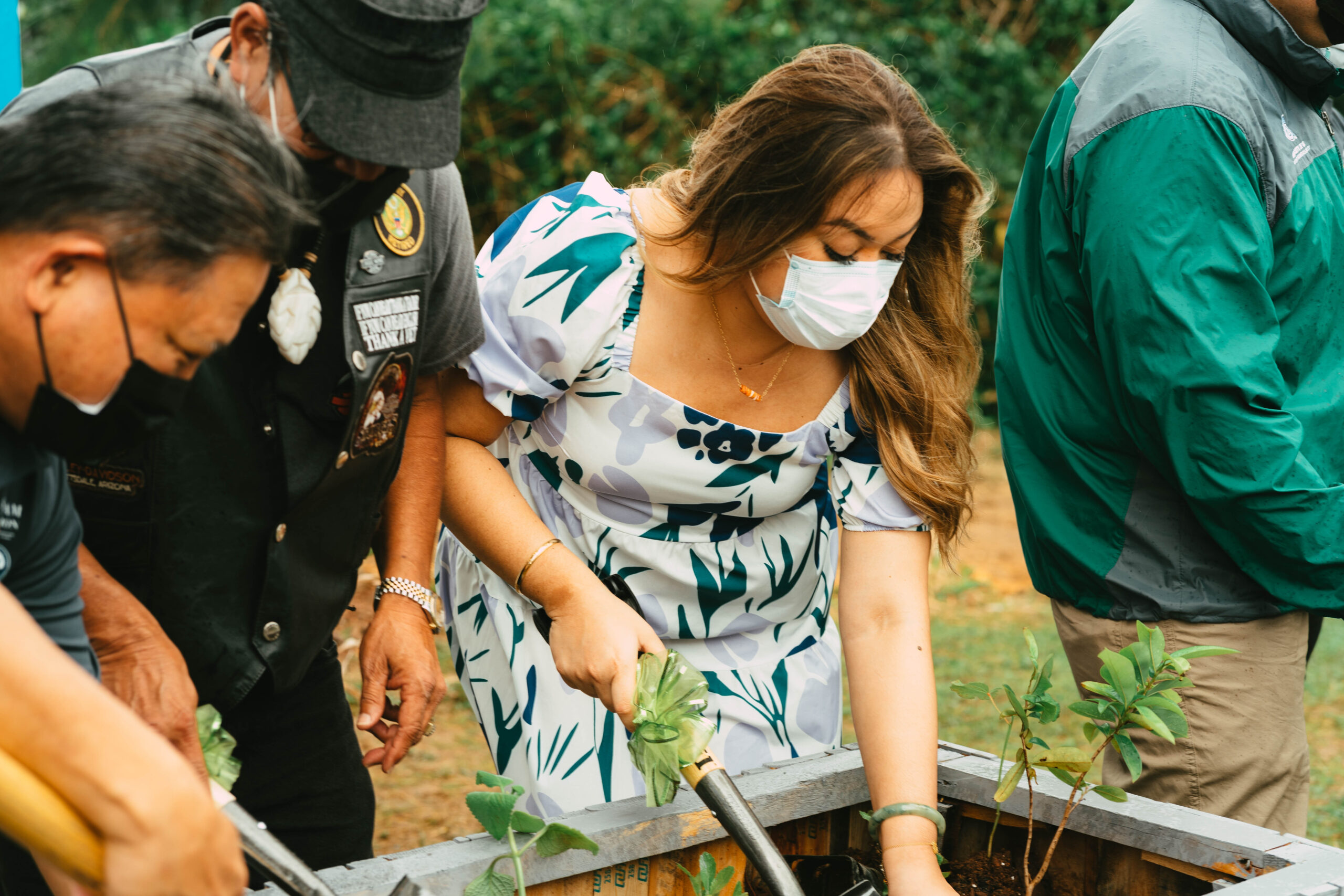
- Community garden in Hagåtña: G3 kicked off a new partnership with Guåhan Sustainable Culture, Guam Legislature, and the Serve Guam Commission’ AmeriCorps to launch the community garden in August. The garden is now fully active and serves as a beacon of education and production to inspire local food security.
- Village aquaculture program: G3 held an aquaculture showcase and fish fry in Adelup to share the first harvest of tilapia from the UOG Sea Grant aquaponics system. The event kicks off a new community-based aquaculture and aquaponics program in partnership with the UOG and University of Hawaii Sea Grant programs. Training started with mayors’ offices and community groups in September.
- New recycling and waste bins: Guam’s mayors’ offices and public parks will soon receive 23 new recycling bins and 50 waste bins to support island beautification efforts. G3 partnered with the Micronesia Islands Nature Alliance (MINA) to coordinate the fabrication of the containers and Matson for shipping to Guam. i*Recycle will manage the bins to ensure local schools benefit from the aluminum and metal redemptions.

- Reusable bag campaign: All plastic bags will be banned in January 2022. And by July 2022, local retailers will phase out paper bags in compliance with government directives. G3 is preparing to launch an educational in-store and public service campaign to get the word out in partnership with the Guam EPA.
- Circular Economy Makerspace and Innovation Hub: The program offers local entrepreneurs, artists, and creators the tools to transform discarded lumber, plastics, metals into new marketable products. G3 partners with the National Science Foundation EPSCoR, Guam Economic Development Authority, the UOG School of Business and Public Administration, and the Guam Unique Merchandise and Art for the program.
- G3 Conservation Corps program: In June, G3 launched the conservation corps program in partnership with UOG Global Learning and Engagement. The workforce development program prepares the community for the emerging green economy. The corps members are training full time on various sustainability topics — agriculture, aquaculture, invasive species removal, reforestation, renewable energy, and energy efficiency.
Lt. Gov Joshua Tenorio, the steering committee co-chair, said that G3 has transformed from an initiative into a movement through the community’s support.
“Sustainable development has been garnering more support than ever before. We are working together here on our island. We are working together with the federal government. And we are working with islands throughout the globe and with the United Nations to truly make commitments and actions,” Tenorio said.
WHAT IS G3?
Guam Green Growth or G3 is the island’s most comprehensive public-private partnership created to achieve a sustainable future. Aligned with the 17 UN Sustainable Development Goals, G3 cultivates an ecosystem for transformative action to achieve our island’s sustainable, prosperous, and equitable future. UOG facilitates the island-wide initiative in cooperation with the Office of the Governor of Guam and the 99 members of the G3 Working Group representing all sectors of our society.
Guam Green Growth Beautification Recap: Hågat
RECAP: Guam Green Growth Conservation Corps week fourteen & fifteen
RECAP: Guam Green Growth Conservation Corps week fourteen and fifteen
Conservation Corps assists with energy audit to help cut costs at GAIN animal shelter
The University of Guam’s Guam Green Growth Conservation Corps participated in a hands-on energy survey of the Guam Animals in Need facility in Yigo under the guidance of Guam Power Authority staff.
After completing a basic orientation in September, the G3 Conservation Corps members conducted the energy assessment alongside GPA energy auditors at the Northern facility.
The energy survey involved an evaluation of the energy needs and efficiency of the facility, with the end goal of being able to recommend measures to improve energy efficiency, reduce energy consumption, and promote energy savings for the nonprofit organization.
Alison Hadley, GAIN executive director, emphasized the need for nonprofits to invest in sustainability, and one way to do that is to manage their overall energy consumption.

“For the shelter, our form of sustainability is dealing with spaying and neutering of animals. But we still operate a facility and we still utilize utilities, so we have a responsibility to the community to demonstrate that type of responsibility as a nonprofit, especially since we are the ones that tend to struggle quite a bit financially,” she said.
As part of the energy survey, G3 Conservation Corps members participated in a walkthrough of the facility and conducted interviews with the GAIN team. The interview questions ranged from energy consumption patterns to the operations and functions of each room at the facility. Corps members also looked at interior and exterior lighting for wattage size and checked windows and doors for possible air leaks. The team also looked at the air conditioning units and located areas that may cause energy wastage.
According to Phil Cruz, sustainability coordinator at the UOG Center for Island Sustainability and Sea Grant, the survey data will be compiled into a report and forwarded to GPA for review. Then, the corps will send a final version of the report to GAIN, outlining the final list of recommendations.
“We also hope to reach out to GAIN a few months down the line and see if there are reductions to their power consumption based on the changes,” Cruz said.
Cruz stated that working with the nonprofit group was a win-win situation.
“We are so glad that we got the chance to learn about energy efficiency with GPA this week and had the chance to apply what we learned to help a group like GAIN that does so much for Guam. We are so glad to help them out in any way that we can,” he said.
Check out GPA’s website for more information on do-it-yourself and professional energy audits.
About the G3 Conservation Corps
The G3 Conservation Corps program prepares the community for the emerging green economy. The program is aligned with the island-wide efforts to achieve sustainability and other United Nations Sustainable Development Goals. It is a joint program of the UOG Center for Island Sustainability, the Office of the Governor, and Guam NSF EPSCoR’s Education & Workforce Development objective.
Taijeron’s G3 internship will have lasting impact on her future
While studying off island in Hawaii, Lauren Taijeron was ready to come home for the summer and put in some internship hours. ![]()
Little did she know, that two months later, she would be returning to school to start her junior year with more insight, confidence, and a renewed spirit for her people.
Taijeron was a Guam Green Growth Summer intern and was assigned to the Commission on Decolonization (COD) in Adelup. The team worked closely with the Department of CHamoru Affairs (DCA) under Director Melvin Won Pat-Borja.
Taijeron is pursuing her bachelor’s degree in Pacific Island Studies and Political Science at the University of Hawaii (UH), where she says she learns about the Pacific and Oceania in a broader sense which grew her interest in learning more about Guam.
“Coming home and working with Melvin and DCA I learned a lot more about Guam’s history and it was really great,” said Lauren. “I felt like I didn’t really get that growing up, so getting to work with them directly, I got to learn everything I needed and wanted to learn about our island.”
During her internship with the COD Lauren spent some time working at the Guam Museum, and had the chance to assist on major projects including one that involved heads of state from all around the region.
“I learned ways to keep in contact with regional organizations and to continuously connect with them no matter the political status,” added Lauren. “Continuing those connections is very important.”
According to Taijeron, she did not find herself committed to any career path before she began her G3 summer internship, but found working with the COD left an immensely powerful impression on her.
“I want to work with decolonization,” explained Taijeron. “I’ve never seen a group that put that much work, that much heart, into their work.”
During her time with the group, she learned several things about important community subjects including healthcare, language preservation, and education, but said one of the biggest lessons she learned will influence her life moving forward. ![]()
“It has inspired me to believe in myself more,” explained Taijeron. “It just inspired me to not be afraid and know how capable I could be and it also taught me that I have so much to learn, and that’s okay.”
Taijeron will return to UH to finish her final semesters and plans to return to Guam and pursue work in support of decolonization following her graduation.
Guam Green Growth is a public-private partnership that develops tangible solutions to sustainability challenges and contributes to a green economy. For more information visit guamgreengrowth.org.